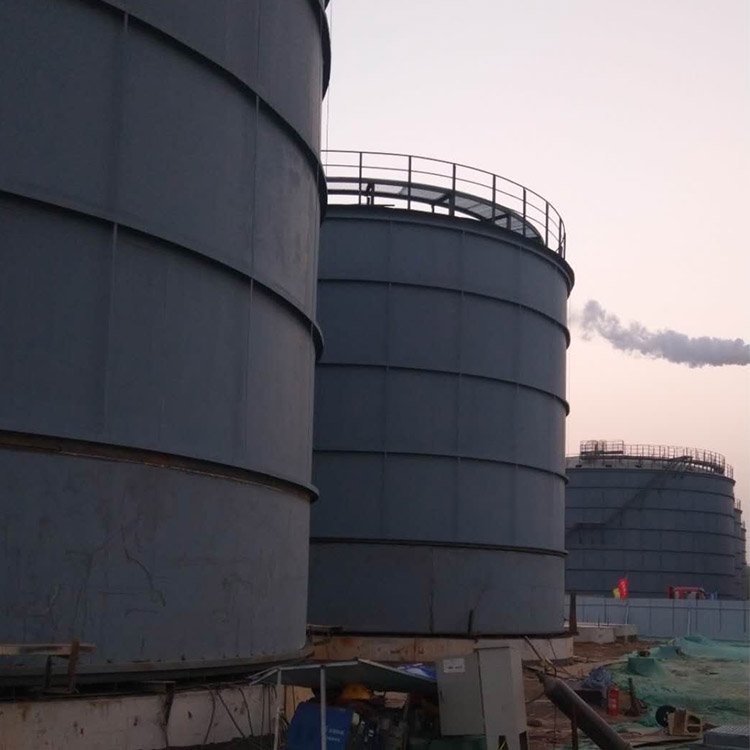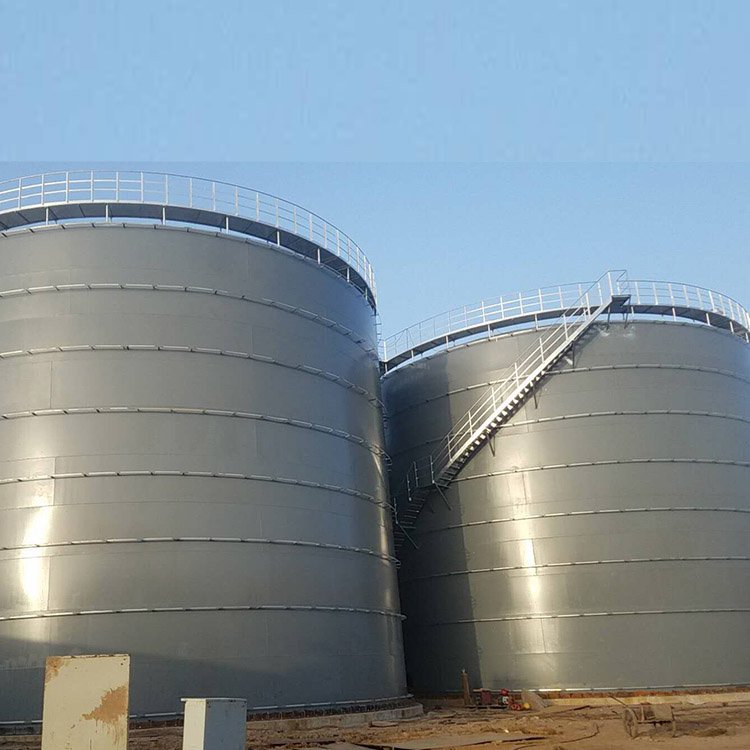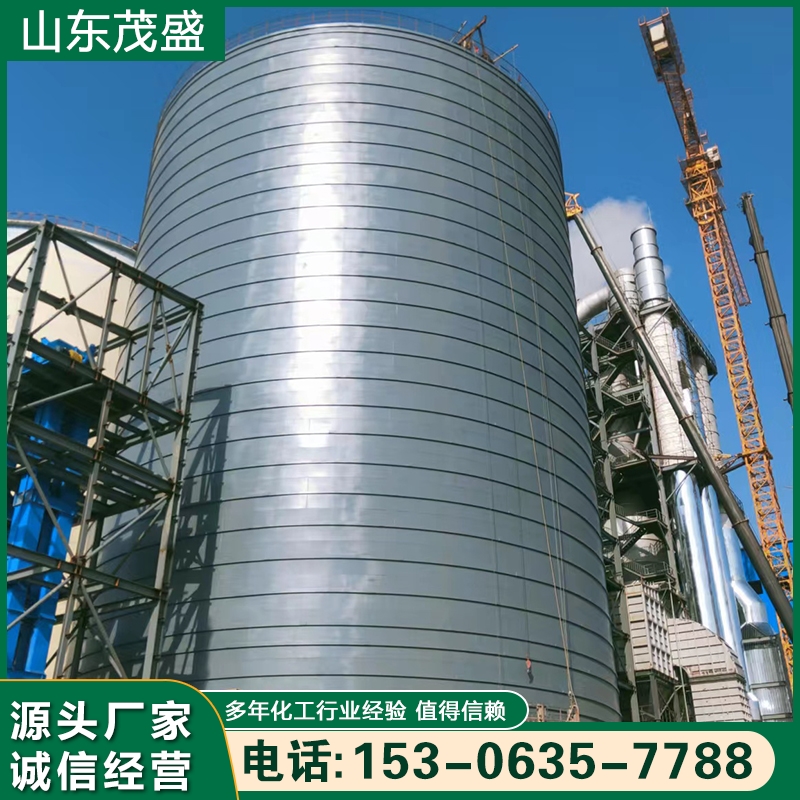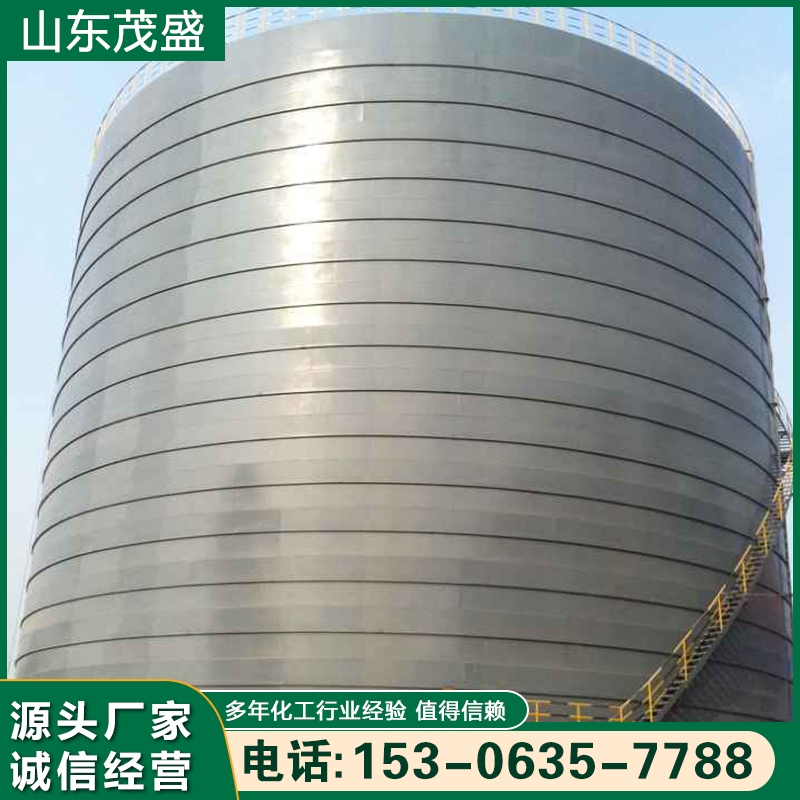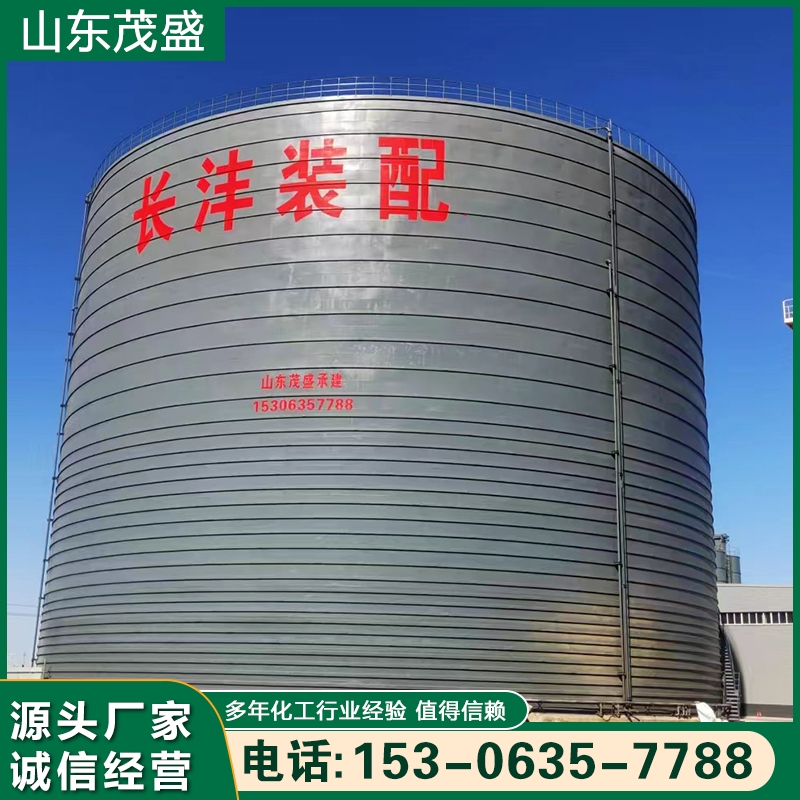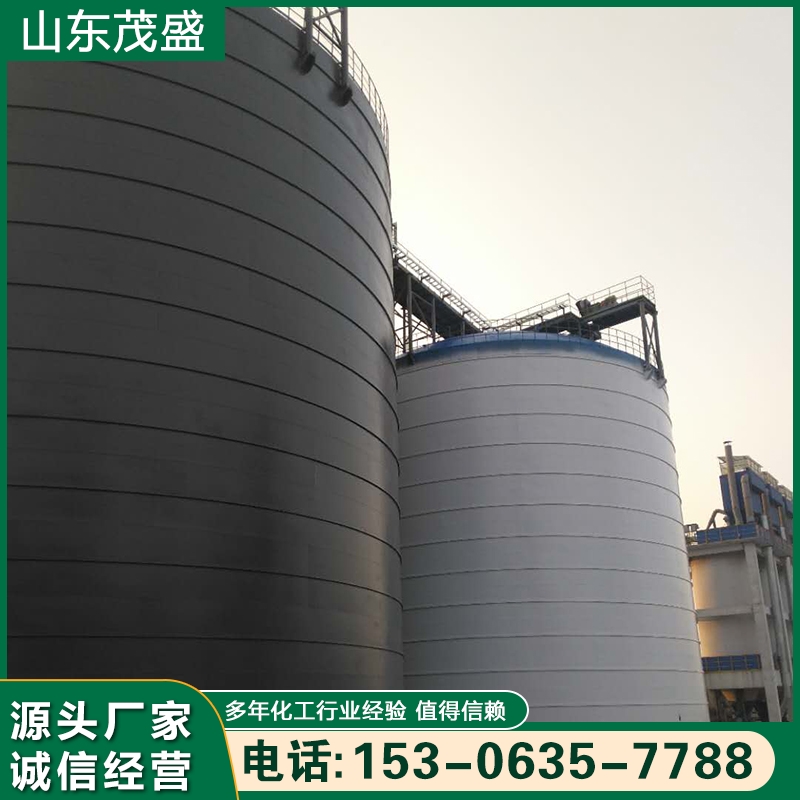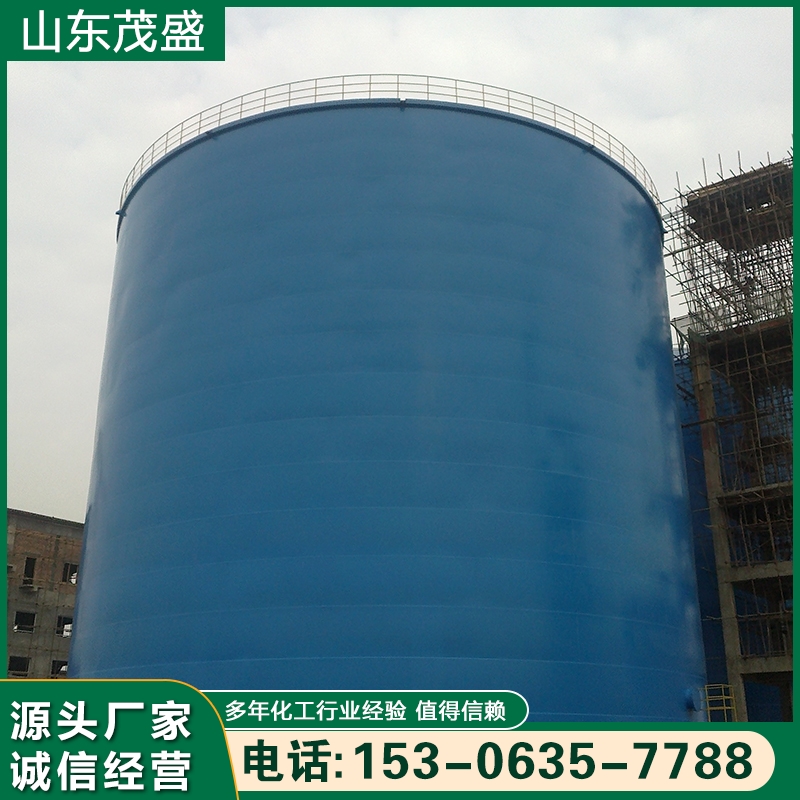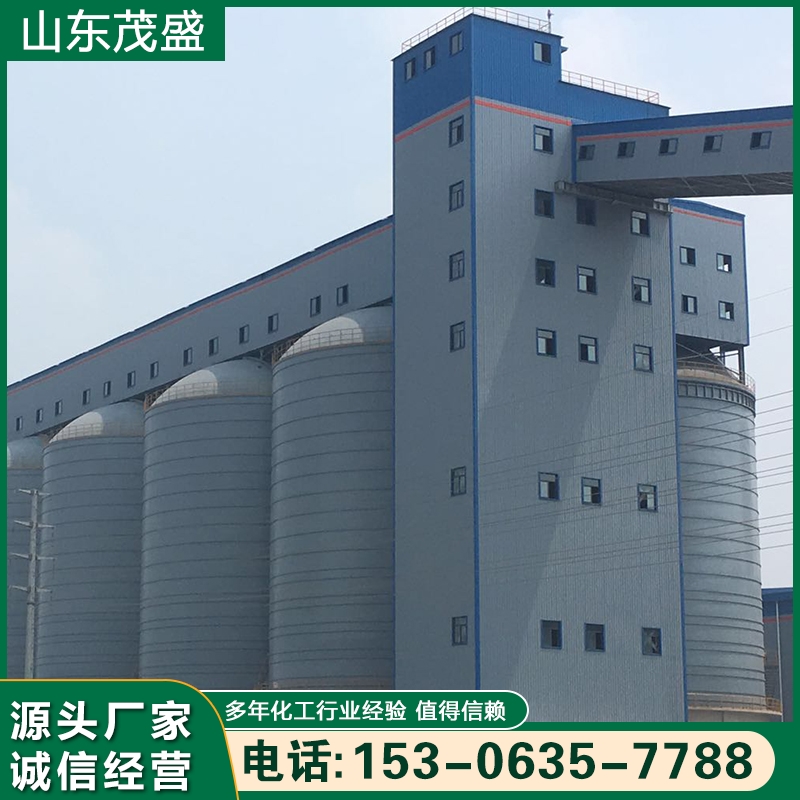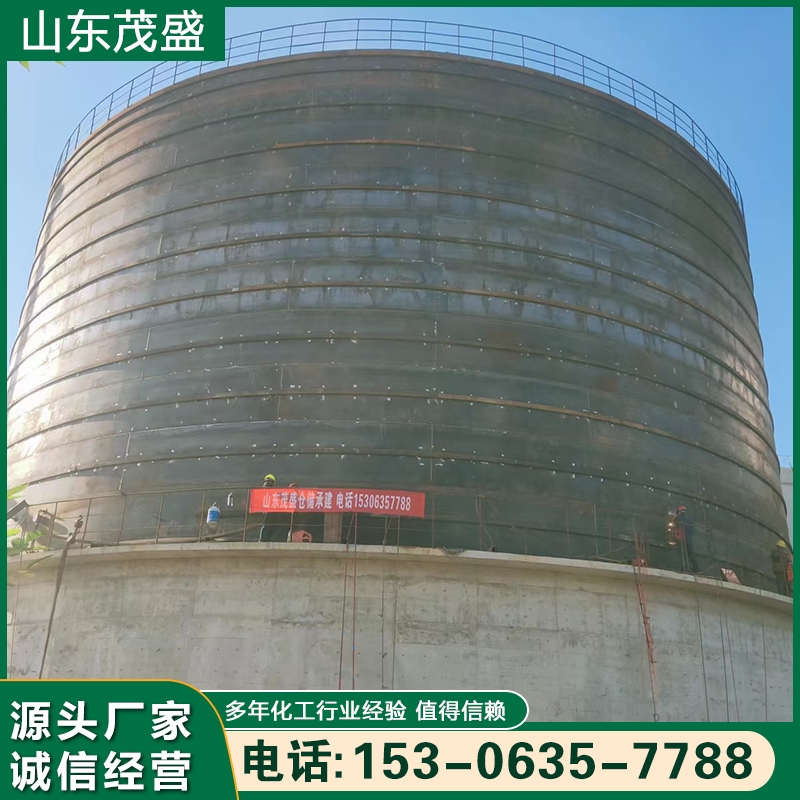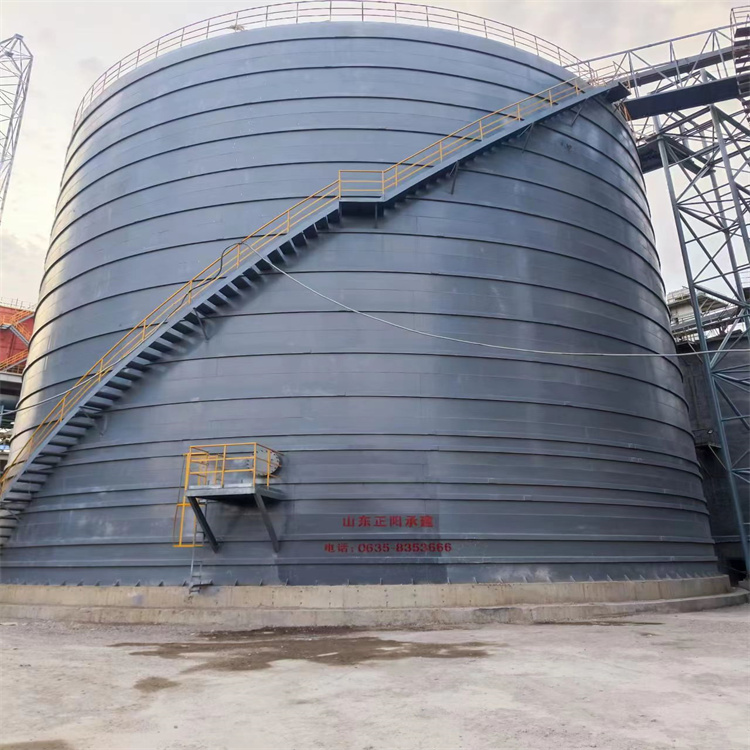


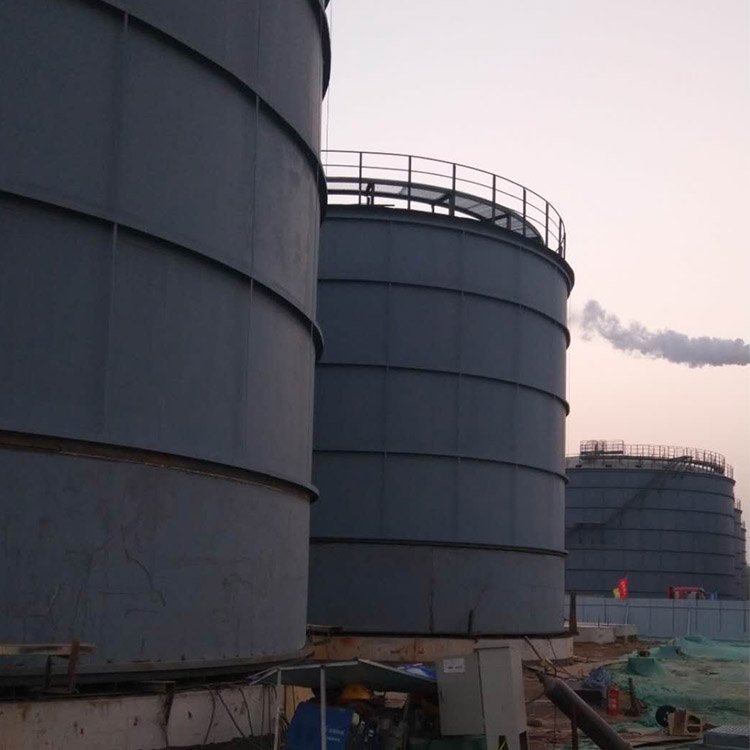
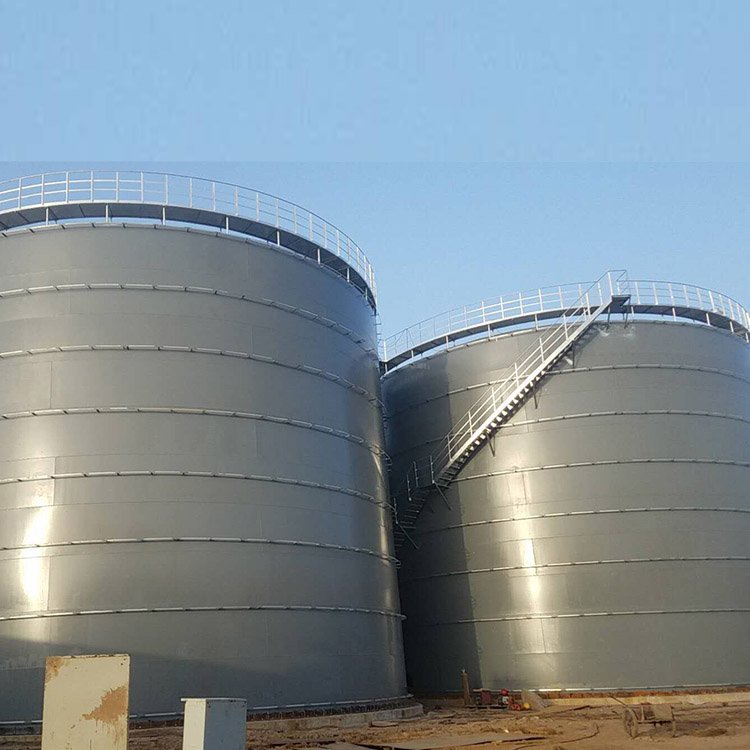







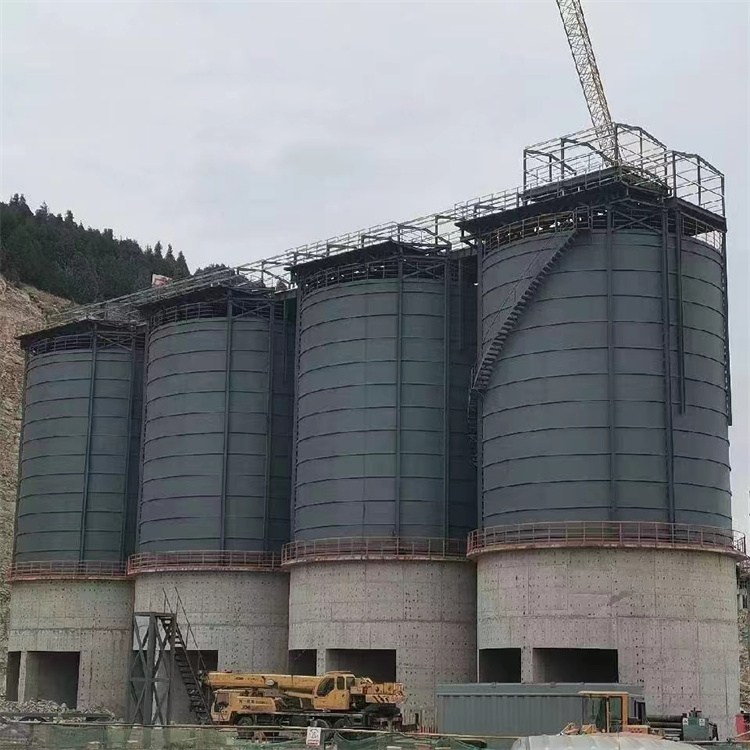
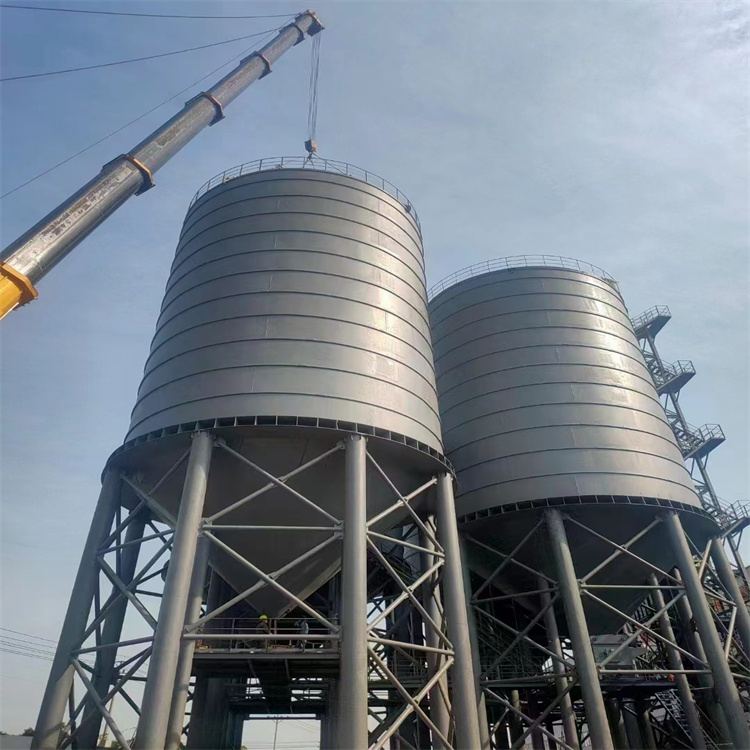
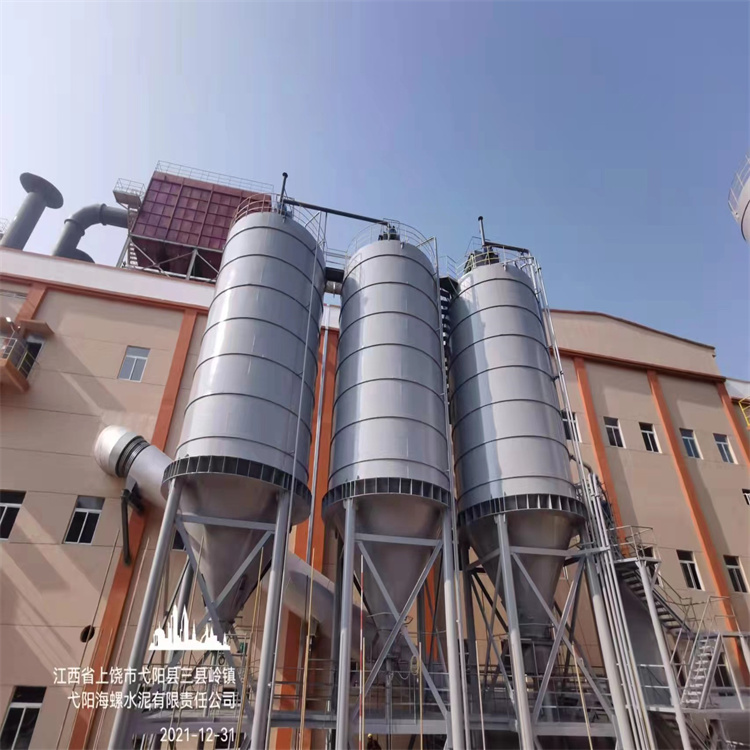
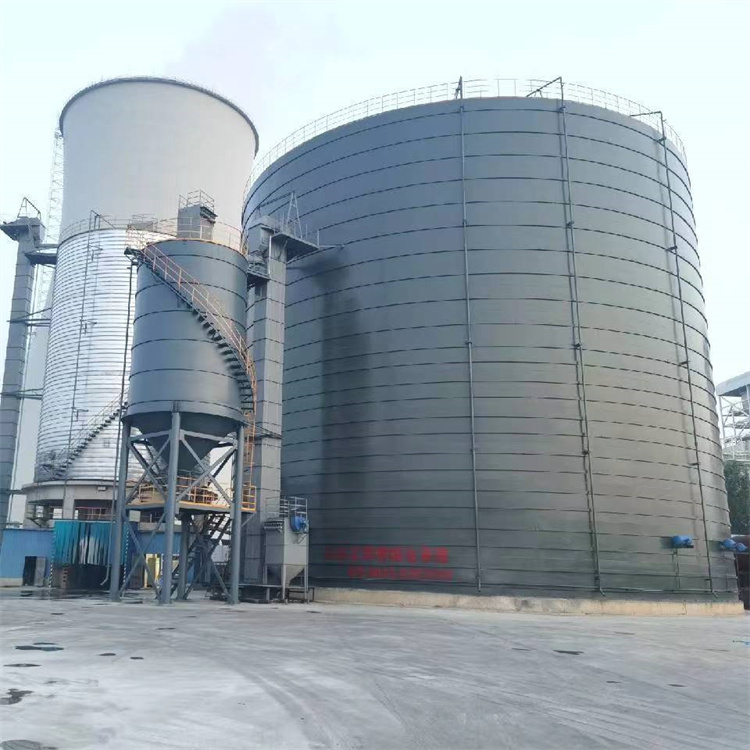
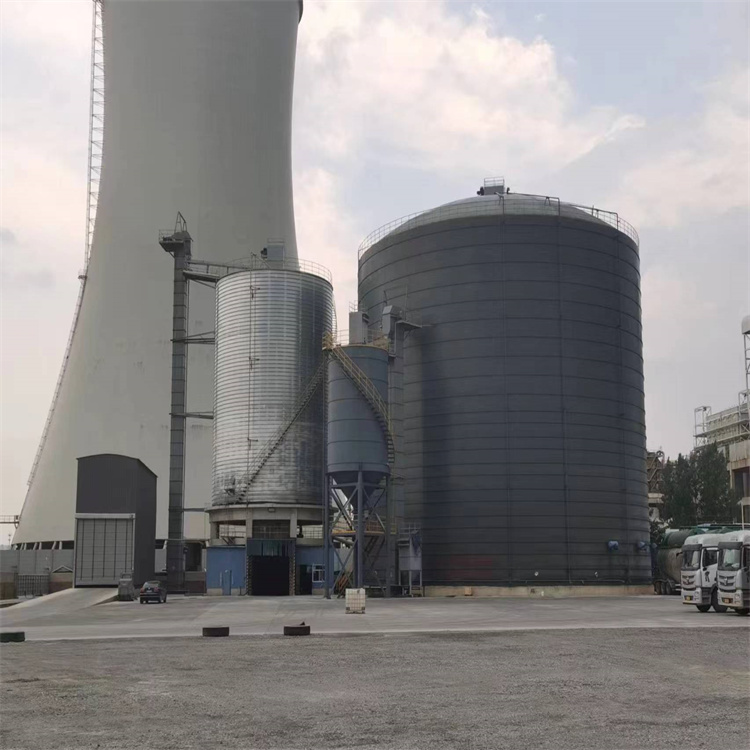

Steel silos are highly adaptable and widely used, capable of storing granular, powdered, and liquid materials. They have mature applications in industries such as cement, fly ash, grain, oil, flour, food, brewing, starch, feed, chemicals, light industry, water treatment, environmental protection, electricity, and ports. Large steel silos are buildings or groups of buildings constructed with steel plates for storage, suitable for storing granular, powdered, and liquid materials. Compared to traditional warehouses, large steel silos are designed advanced, structurally unique, have high storage capacity, are easy to load and unload, require low initial investment, are safe and reliable, energy-efficient and environmentally friendly, versatile, and cost-effective.
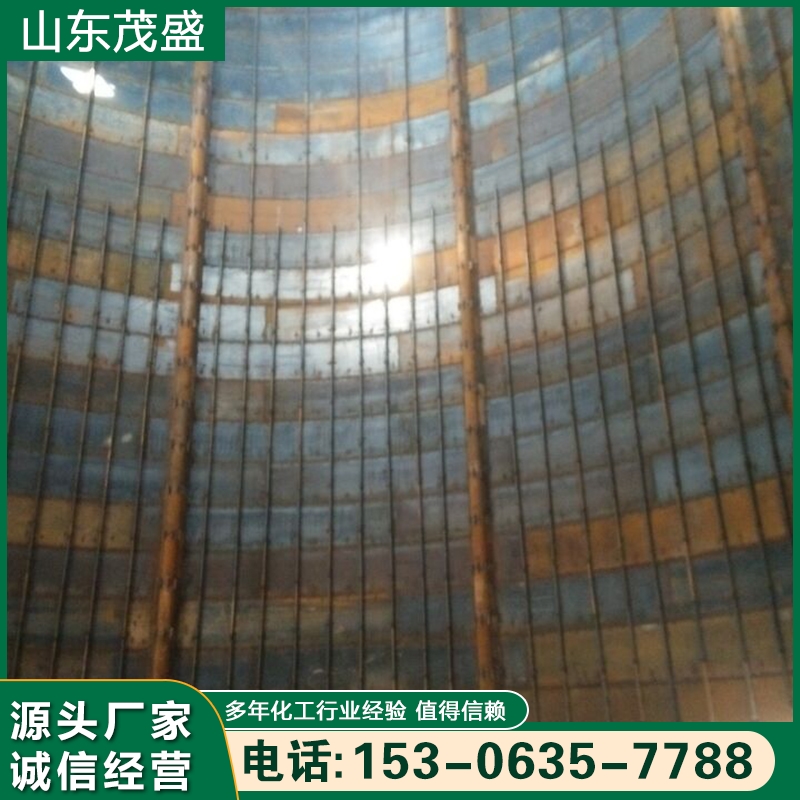
The storage body of a large steel plate silo consists of three parts: the steel plate roof, the steel plate walls, and the steel plate floor.
Our steel plate storage facility, ranging from 10 meters in diameter to the storage silo, is currently the most scientific and environmentally friendly storage equipment with energy-saving and electricity-saving functions. When the process requires a large amount of discharge, a vertical discharge pipe is connected to another discharge spout pipe, serving as an auxiliary discharge pipe, forming a dual-discharge system with the main discharge spout pipe at the end of the corridor. Each spout pipe is an independent discharge system, and the two discharge spout pipes can work simultaneously without affecting each other, thereby meeting the requirements for discharge. The effective diameter of large steel plate storage facilities can reach several meters to tens of meters, with a height-to-diameter ratio of about 1:1. The storage body is cylindrical, with a spherical-convex hemispherical roof, and the walls are welded with steel plates. The hemispherical roof is a unique architectural structure formed by special structural design and the combination of multiple arch beams, which gives the dome reliable load-bearing capacity. The bottom of the storage facility is concave in shape, designed using the wedge force pressure principle, with different design parameters under various climatic conditions and geological structures. The steel plate storage facility occupies a small area, is convenient to store, has a high discharge efficiency, with a discharge rate over 95%, and there is no dust or pollution during the storage process. The storage cost is low. Additionally, the fluidizing rods produced by our company are essential equipment for homogenization at the bottom of the storage facility, receiving unanimous praise from customers.