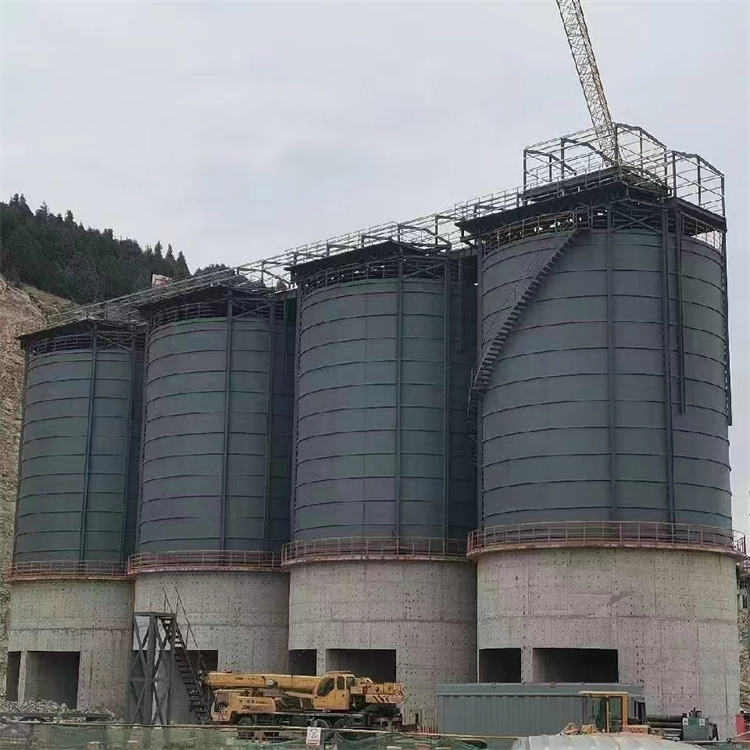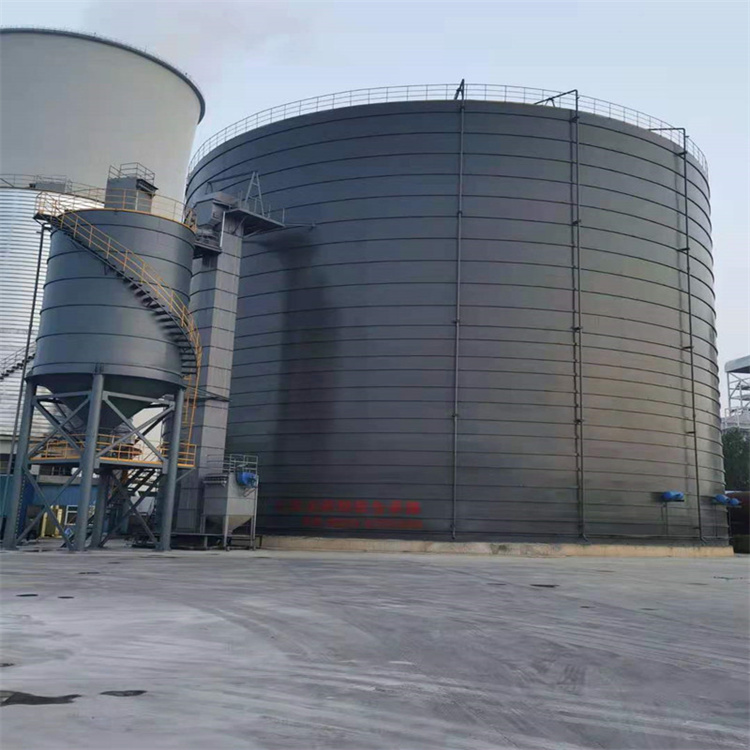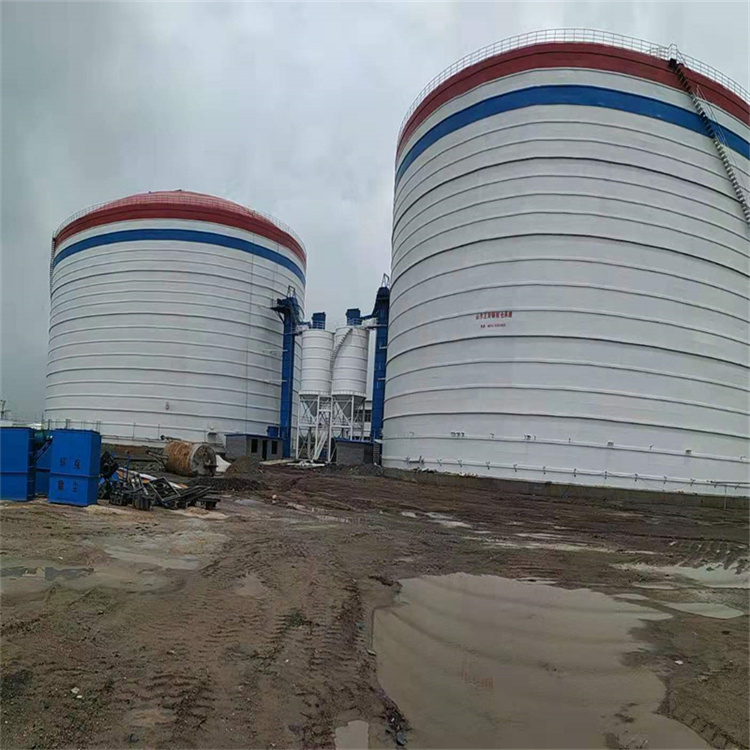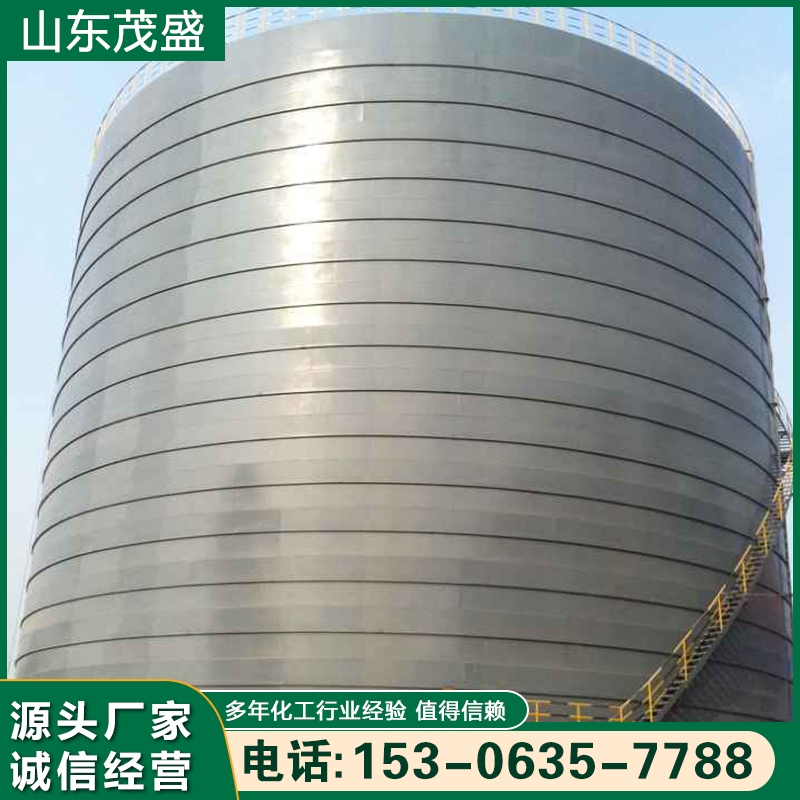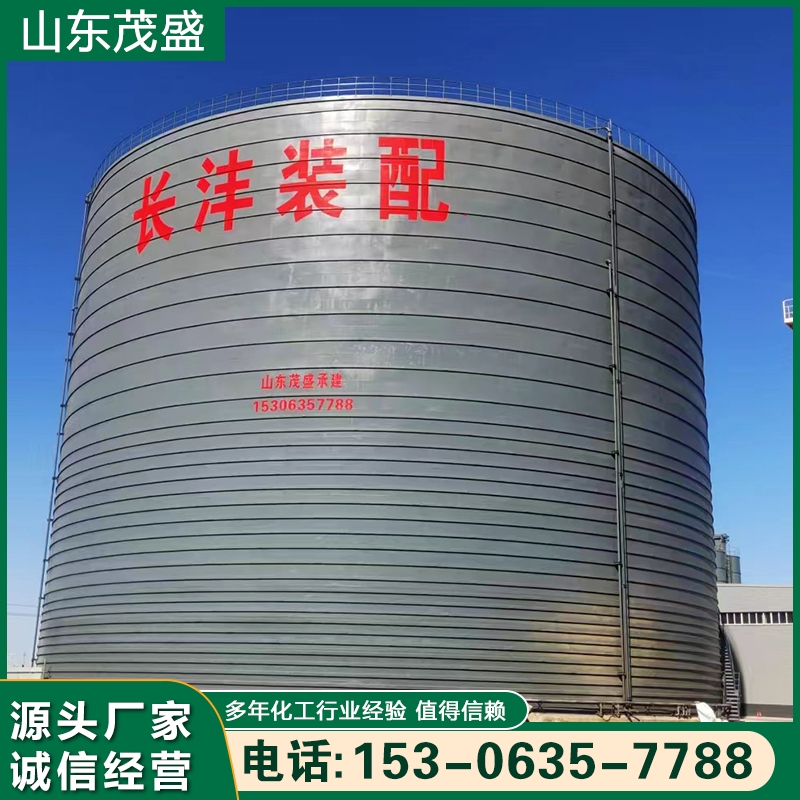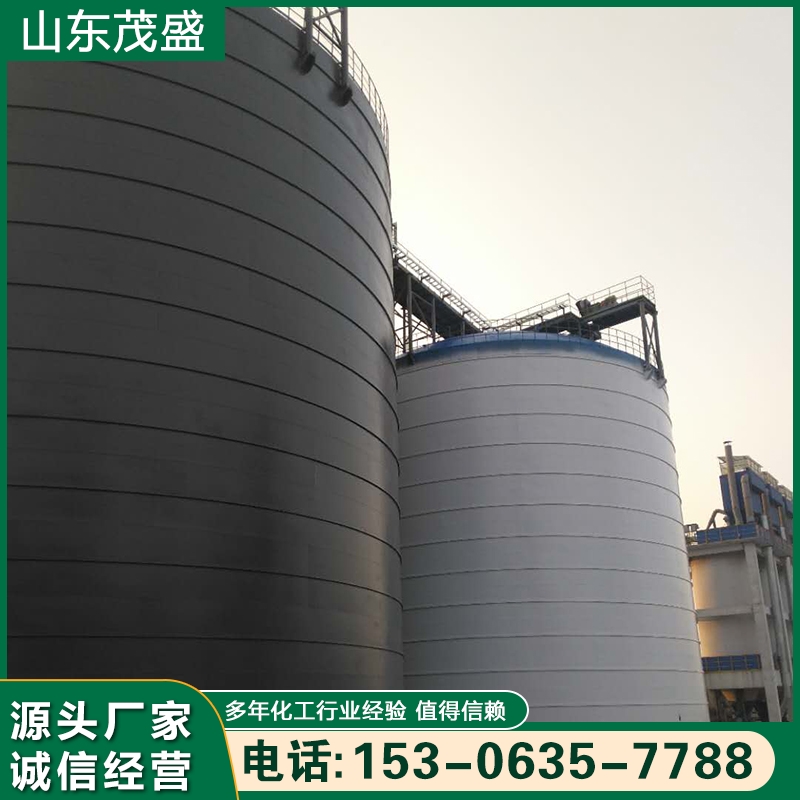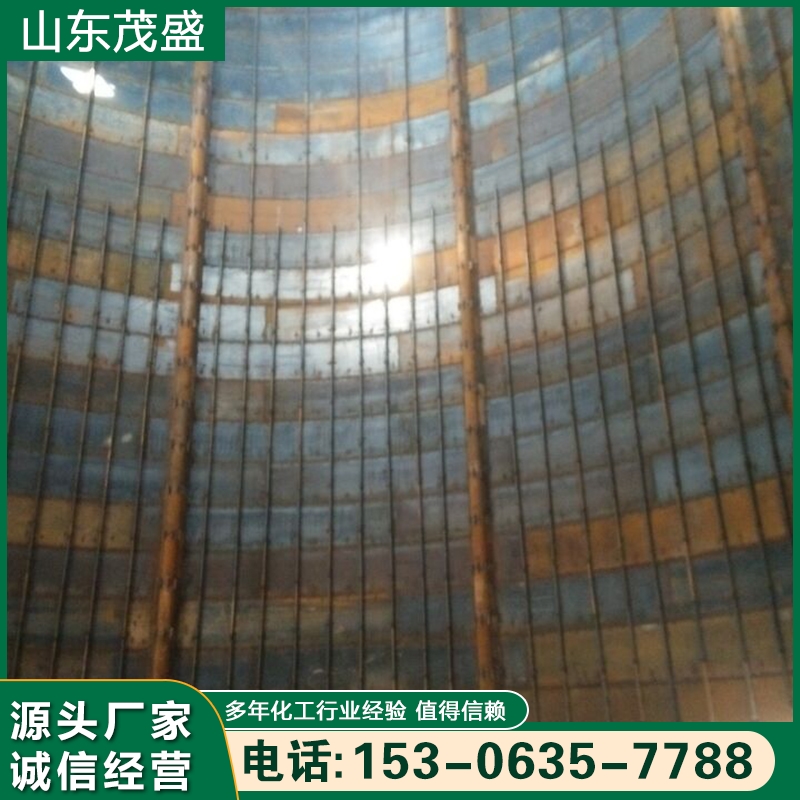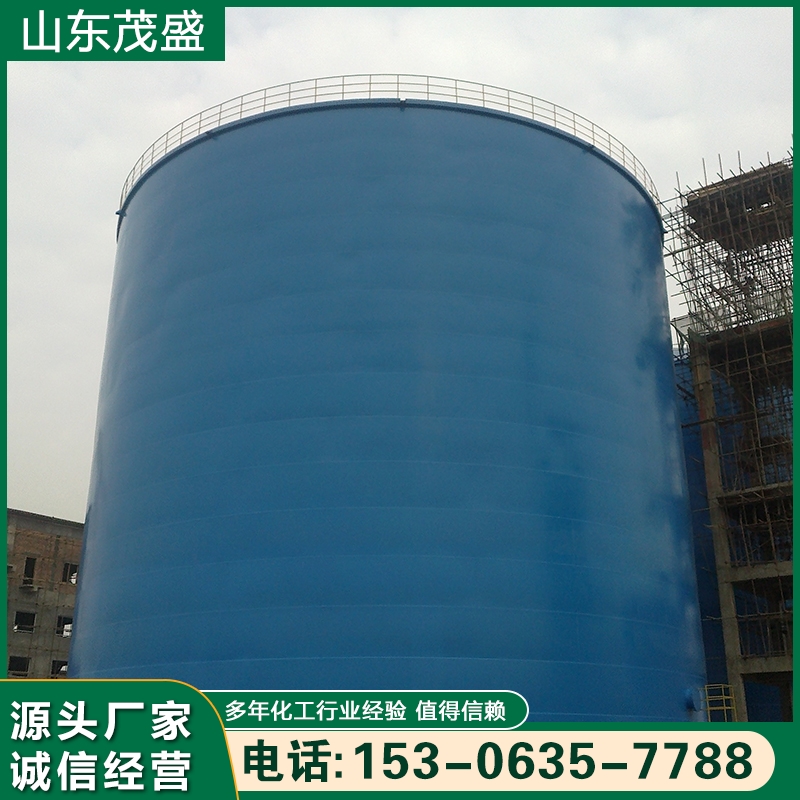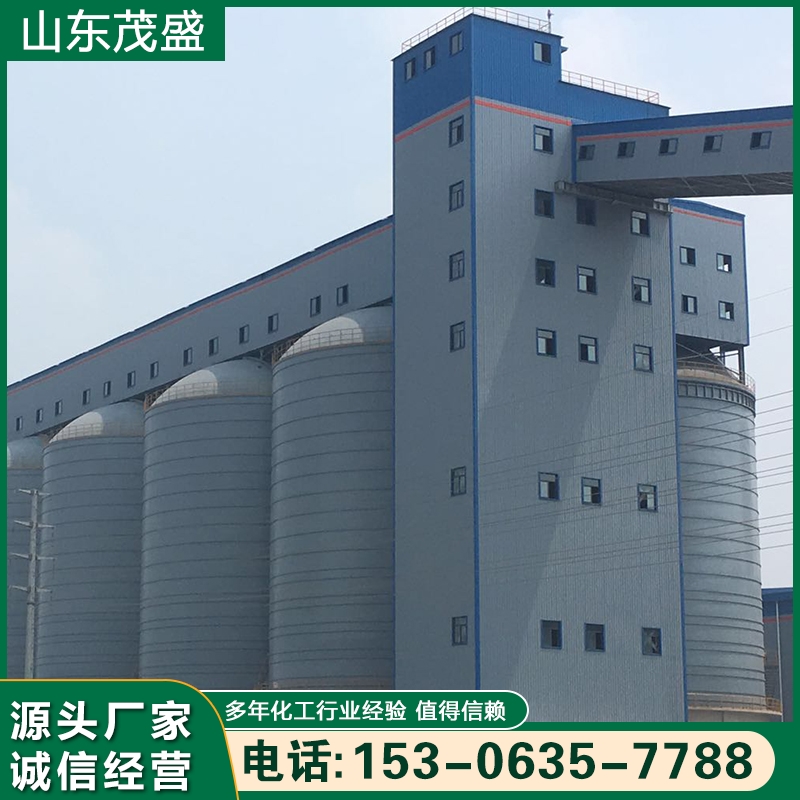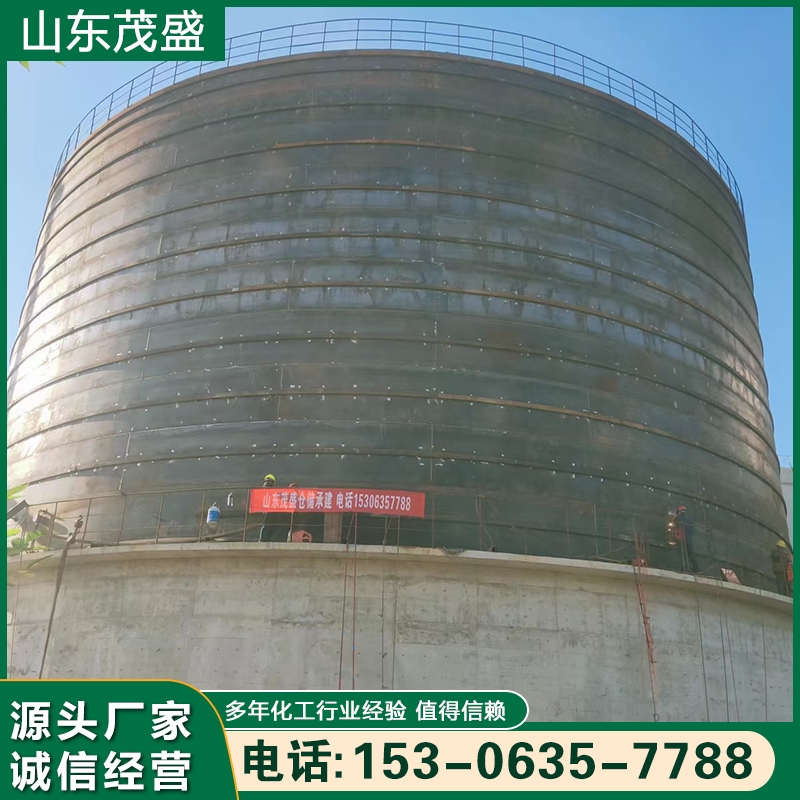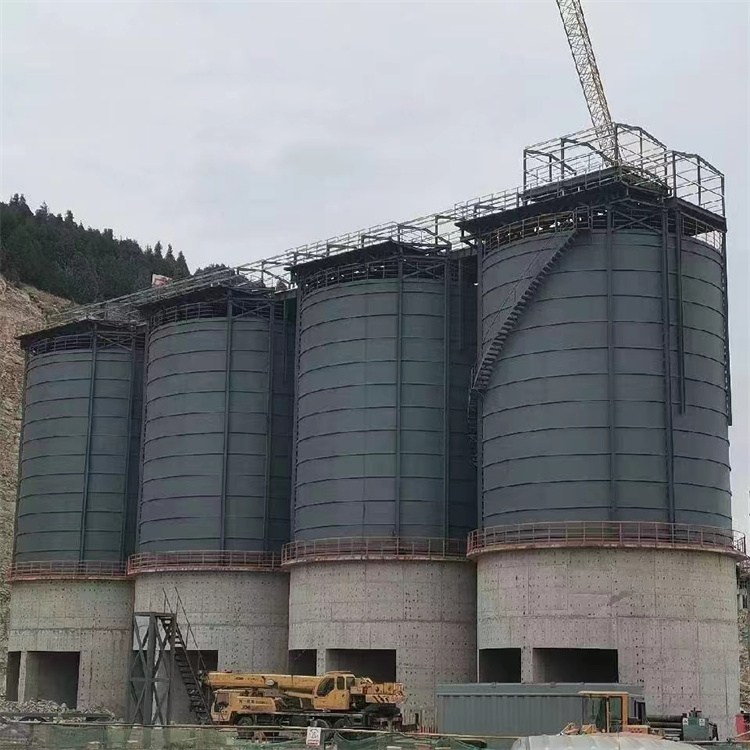







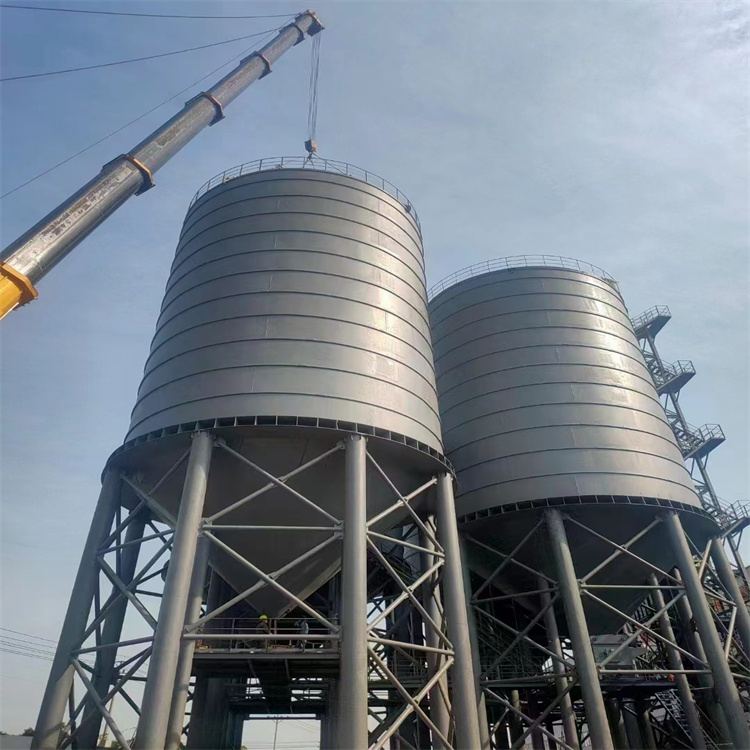
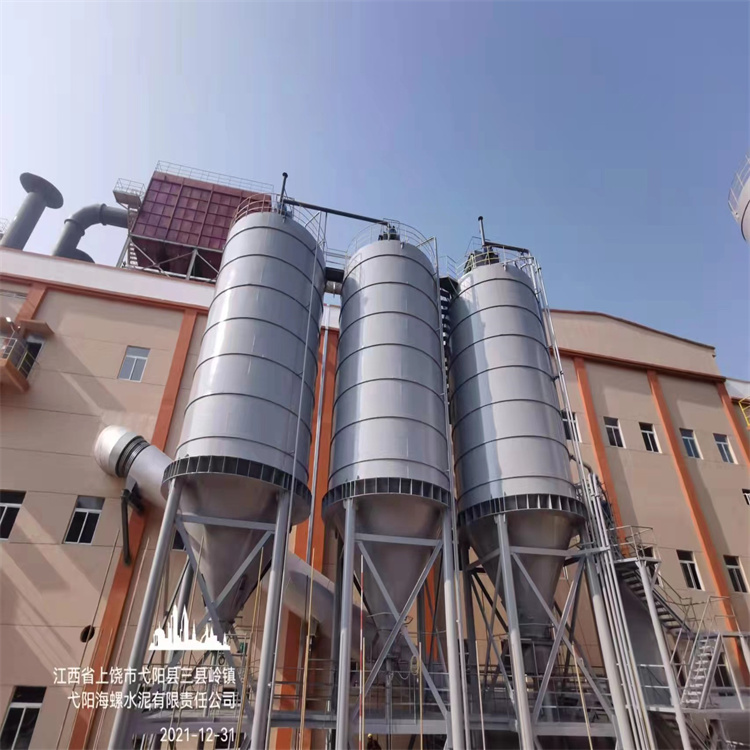

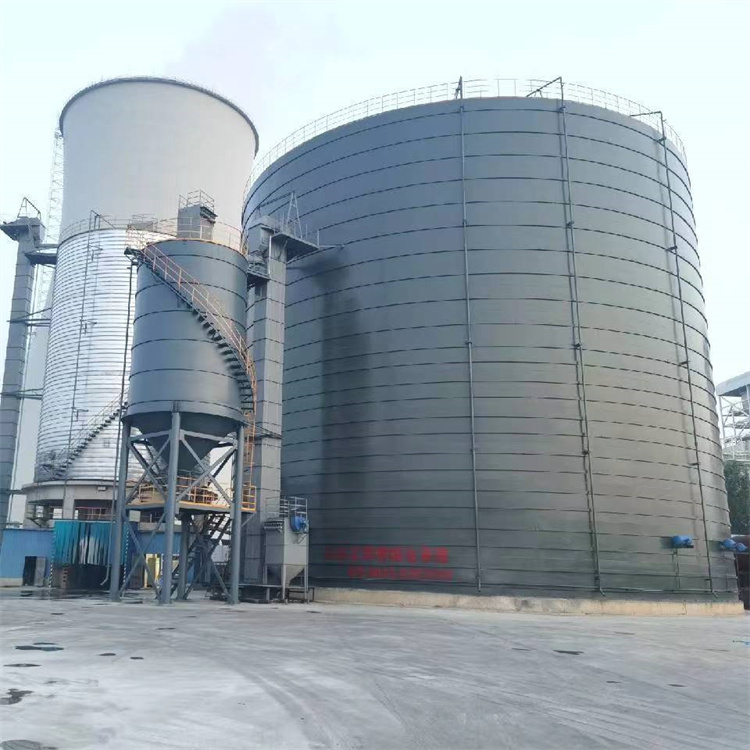
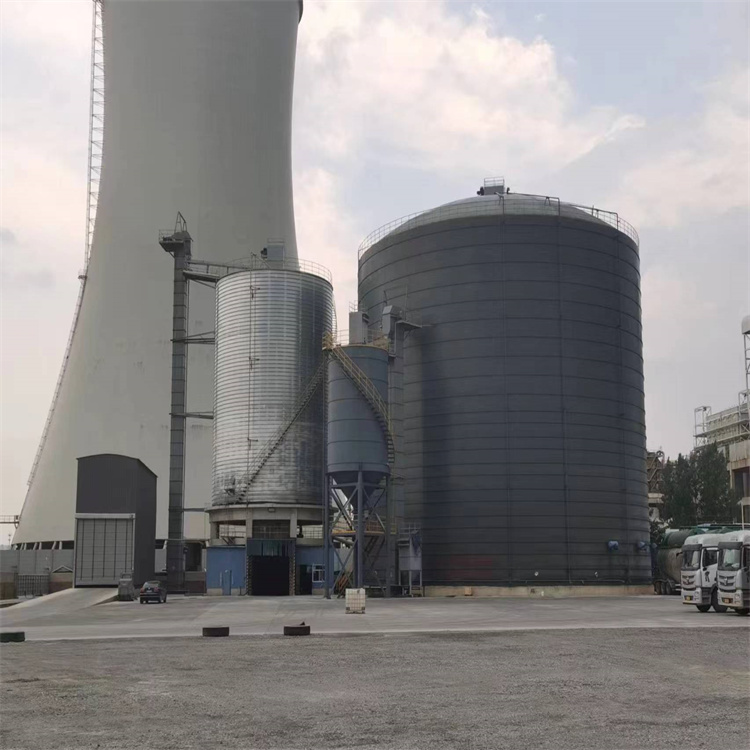

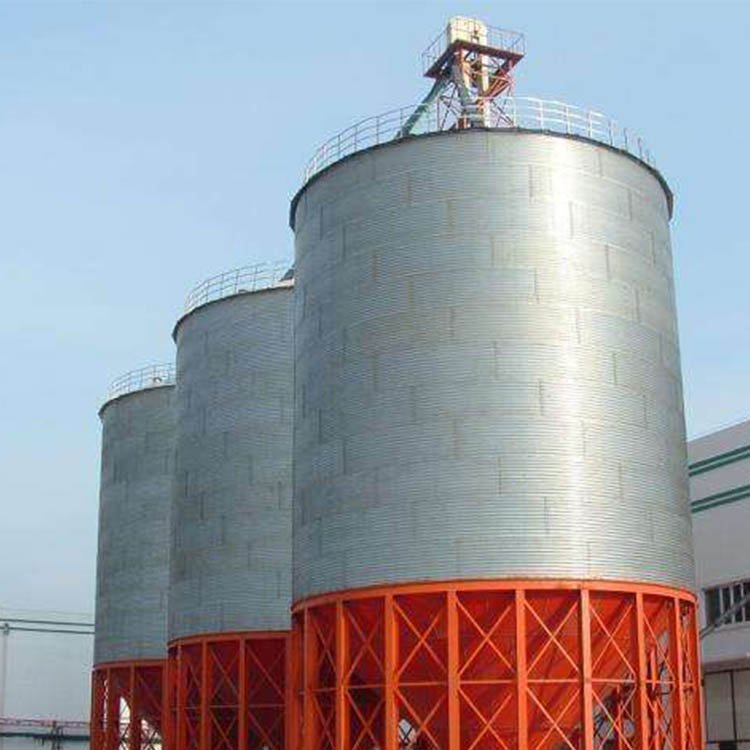
The structural principle of the steel plate silo is fundamentally different from the traditional concrete silo concept. It represents a new concept of load-bearing storage body, distinct from steel plate silos produced by other domestic manufacturers. It incorporates multiple patented technologies and boasts complete independent intellectual property rights. The storage capacity per silo can reach 1-40,000 tons, with a storage investment of 70-240 yuan per ton, saving nearly 50% or more compared to traditional silos. It is the only on-site conical large-scale storage facility in China. The scope of work includes civil engineering foundations, the body of the silo, gas homogenization discharge system, and fully automated discharge control system. The highlight of the steel plate silo is its large storage capacity, low investment, short construction period, minimal land use, and high degree of automation. This technology has been fully utilized in the construction of cement storage facilities, yielding significant economic and social benefits. Our company's recently filed "Completely Discharge Intelligent Digital System" addresses the challenges of storage and discharge in domestic steel plate silos, filling the gap of incomplete discharge in large-scale steel plate silos. Applications include fly ash steel plate silos, cement steel plate silos, and mineral powder steel plate silos. Since the foundation of the steel plate silo is concrete, the diameter of traditional concrete silos can only reach Φ22 meters. Large-scale steel plate silos divide the interior into several unloading areas and densify fluidization rods along the inclined surface from the silo wall to the discharge mouth. To further expand the application scope of large-scale steel plate silos, enhance their functionality, and improve automation, tests have been conducted on the feeding and discharging parameters of various silo types to determine more economically and reasonably parameter values, achieving greater economic and social benefits. As a result, in the processes of incoming, storage, discharge, transportation, and loading (ship) of cement and other powdered materials, we provide more standardized, scientific, and standardized system services. Zhengyang Steel Plate Silos are the choice for large-scale storage of powdered materials in industries such as large-scale cement, thermal power, iron and steel, and grain storage.
1. Determine the purpose of the steel plate storage; by purpose, we mean whether it's for turnover or storage. The choice varies between cement factories and power plants, thus affecting the storage capacity. Steel plate storage in the north is more focused on storage (except for ports), while in the south, it's more for turnover. Storage facilities generally have larger capacities, while turnover facilities have relatively smaller capacities. Storage facilities are emptied less frequently each year, typically 2-3 times, whereas turnover facilities may be emptied daily. Therefore, determining the purpose is crucial.
2. Calculate the lifecycle cost; some owners opt for schemes with lower initial investments during selection, compounded by the chaotic market of steel plate warehouses and severe price competition, which provides a survival space for some small companies. Different philosophies among practitioners lead to significant price variations. Some practitioners come solely for the project's construction, showing no concern for the project's structural or operational issues, merely catering to the owners' psychology, winning bids at low prices, leading to an irreversible situation; while others consider the owners' perspective, ensuring operational safety while taking into account the full costs over the lifecycle. Naturally, this results in higher costs, which are often not well-accepted.
3. Competing on the same level; by "same level," it is referred to as competing under the same design drawings for processes, structures, electricals, and so on. Many bidding projects are designed independently by the bidding companies, resulting in significant differences in processes and structures, which naturally lead to different budget estimates. However, owners generally opt for the lowest bid method, often not fully aware of the differences and similarities, leading to substantial price variations. Since 2003, the country has promoted the use of itemized quantity listing for pricing, but this has not been implemented in the steel plate storage industry to date. It is suggested that comprehensive competition on the same level is the right approach.