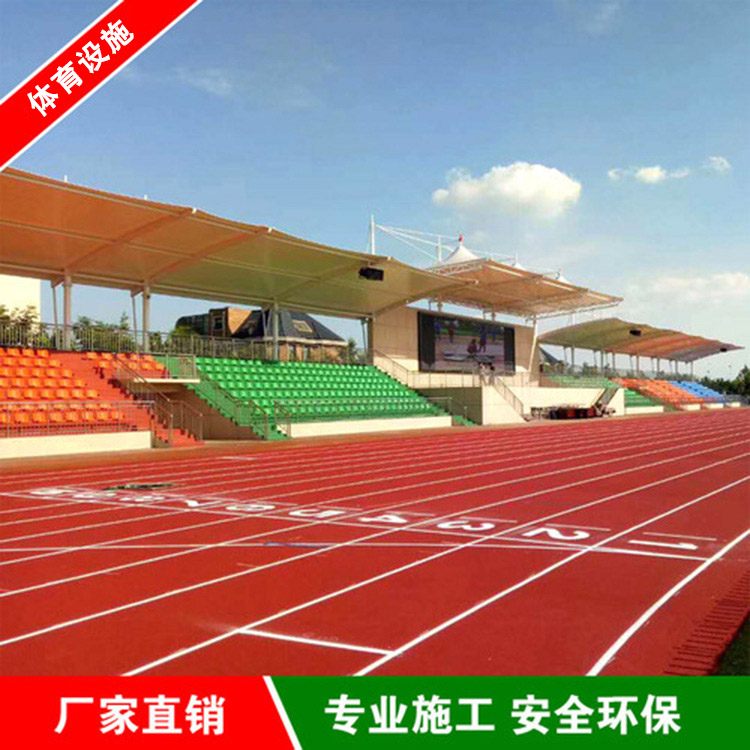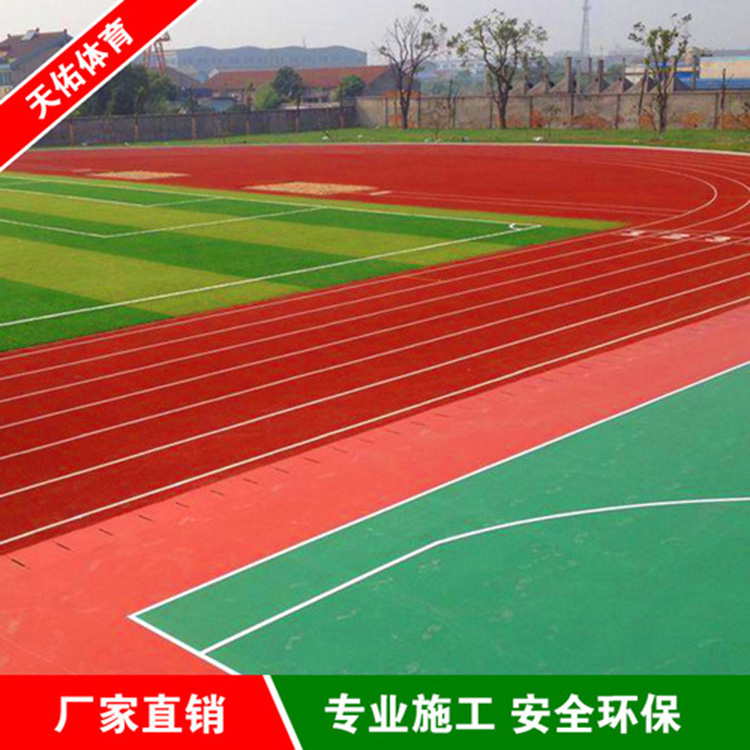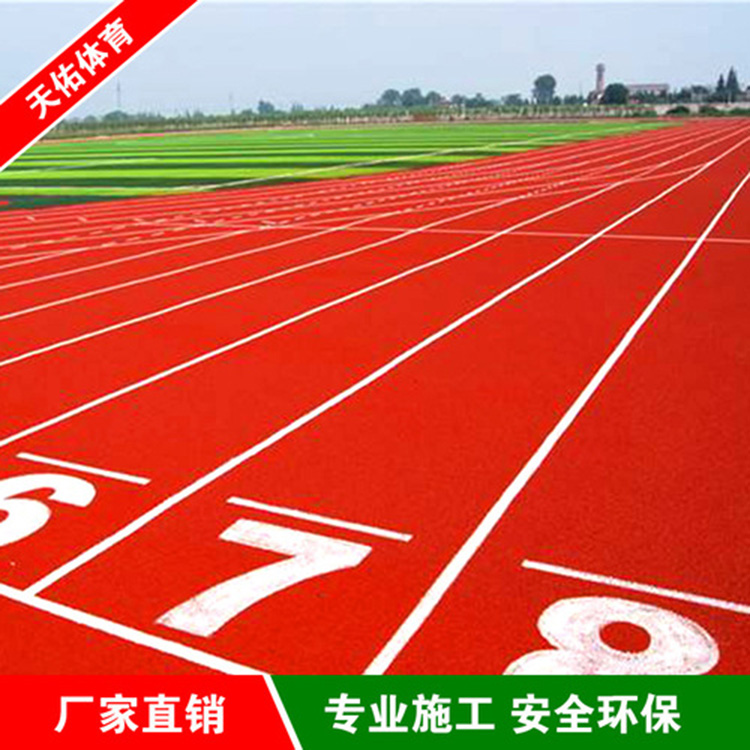

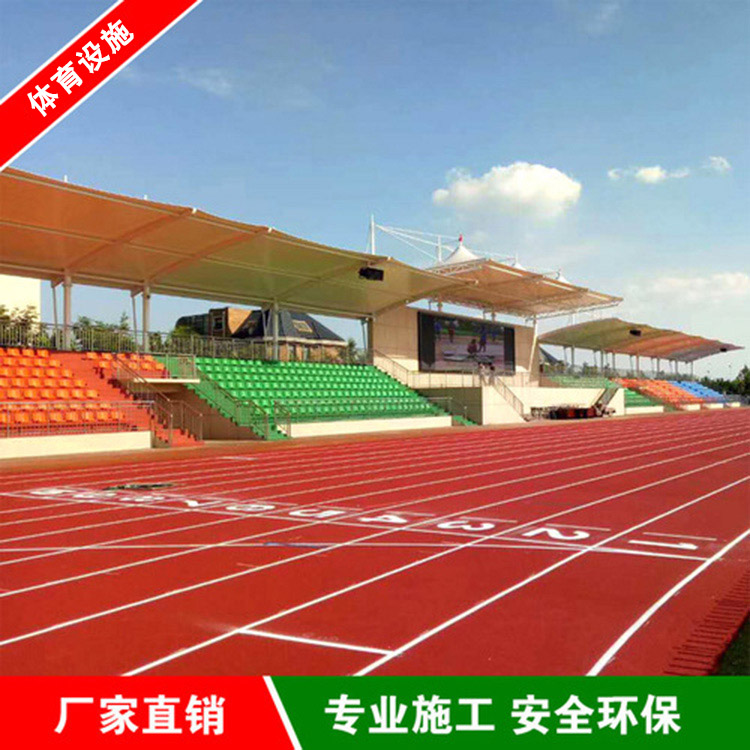
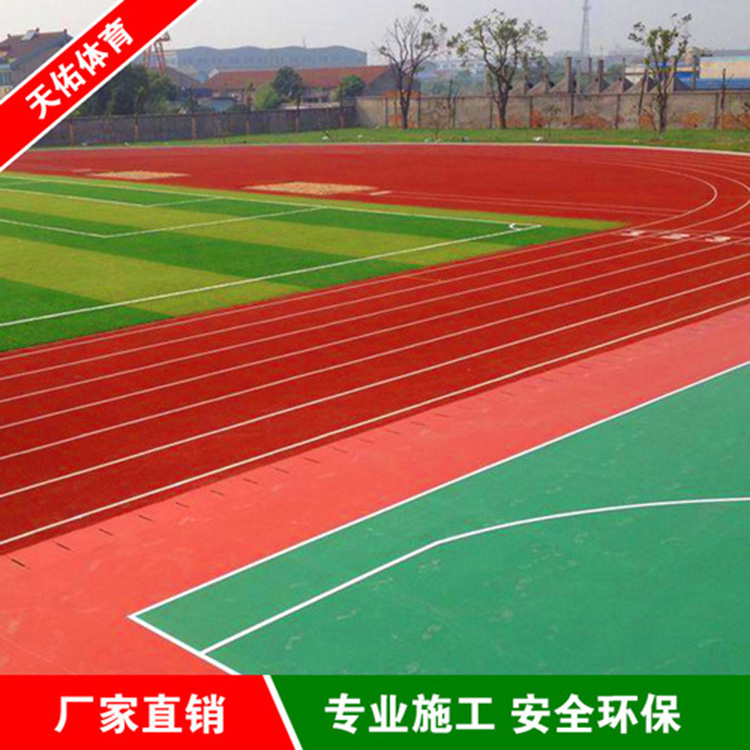
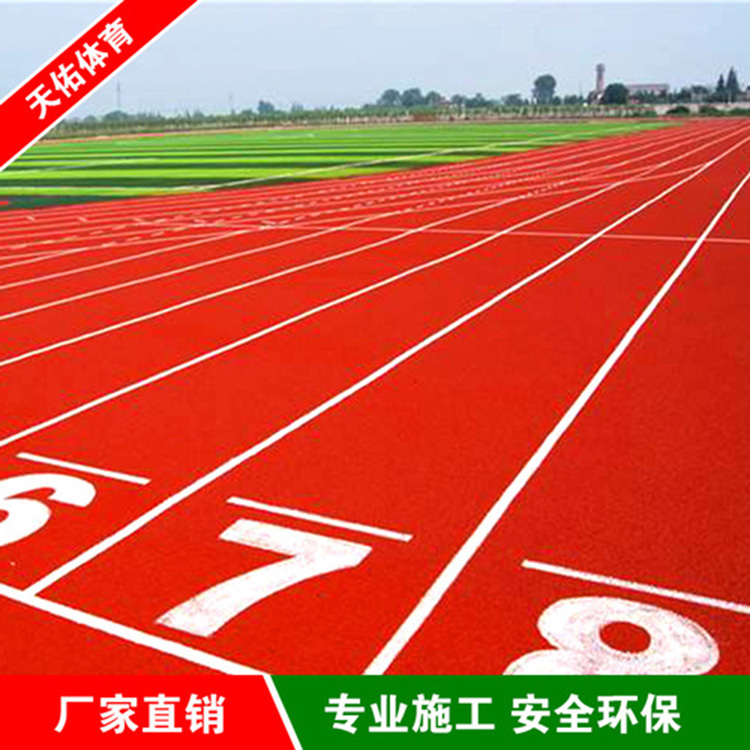











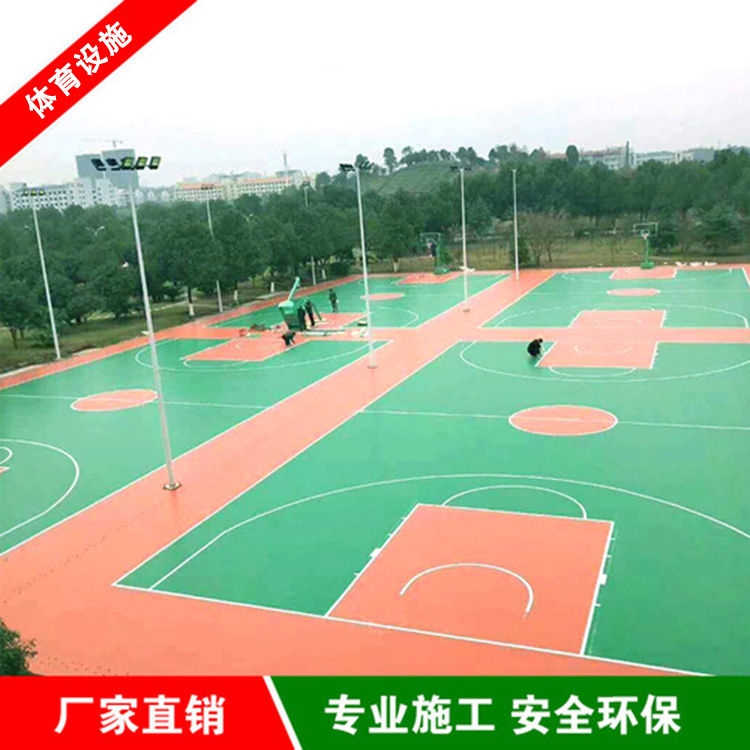
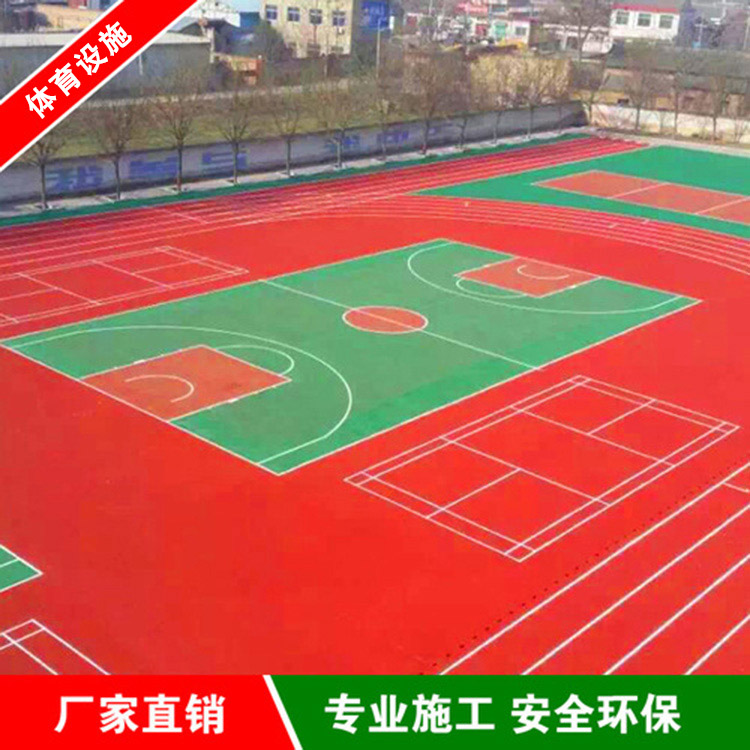
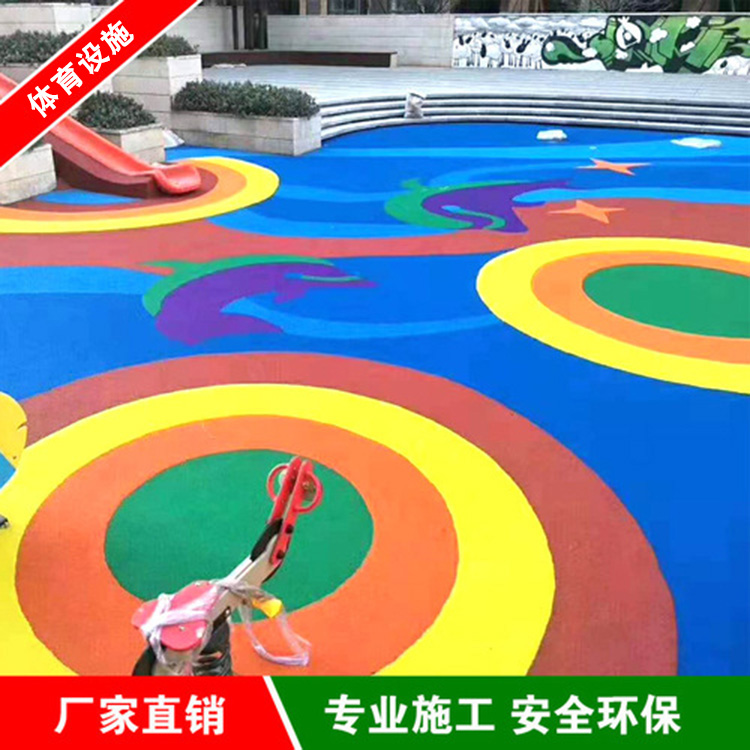

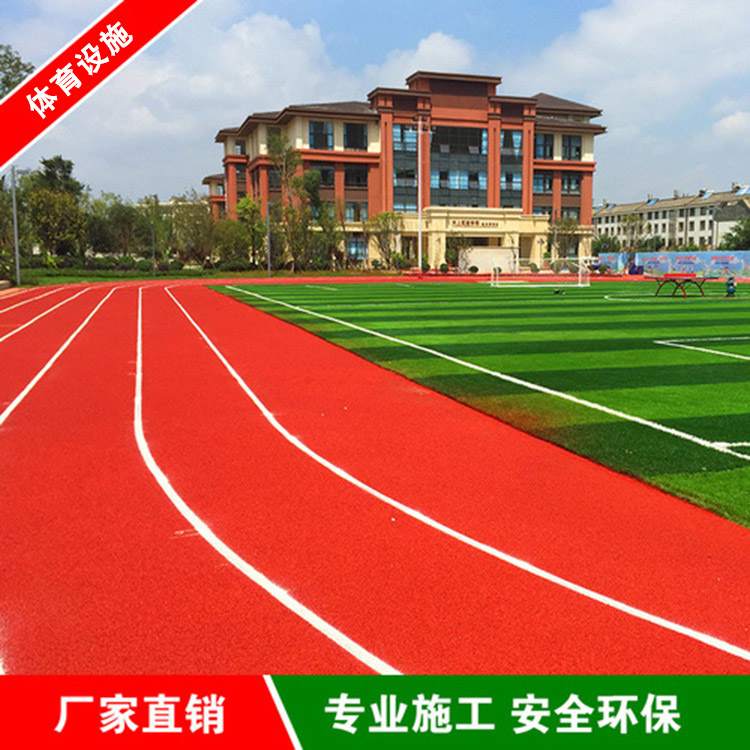

The rubber surface used for plastic running track materials is divided into two layers. The base layer is similar to the breathable track. Elastic rubber granules and polyurethane adhesive are bonded together through the installation equipment.
A buffer elastic layer with a thickness of approximately 10mm. The surface is coated with a 2~3mm thick polyurethane adhesive slurry, sprinkled with EPDM rubber granules as the wear-resistant surface. The base layer is a
An eco-friendly product that combines a single-component adhesive with elastic rubber granules. It features ventilation. At high temperatures, the steam generated by the base is quickly released.
Steam pressure cannot be accumulated, and no bubbling phenomenon will occur. Meets professional requirements with good elasticity. The surface is treated with EPDM rubber granules, providing high resistance to ultraviolet radiation.
The thread is proven to remain colorfast for over a decade.
Rubber tracks are suitable for kindergartens, schools at all levels, professional stadiums, track and field, semi-circular areas, auxiliary zones, national fitness paths, and indoor gymnasiums.
Training tracks, playground paths, sidewalks, indoor and outdoor tracks, parks, residential community areas, and other activity spaces. Features include: wear-resistant, non-fading, non-shedding, and not easily damaged by shoes.
Low-grade hard objects can cause scratches. Durability: The composite plastic tracks can meet the requirements for long-term and frequent use. Anti-slip: Prevents slipping during running. Resistant to fading, and with
Time always seems new with the passage.
Construction Process of Plastic Tracks:
1. Surface treatment at the grassroots level, inspect the flatness of the foundation, measure flatness within 3mm using a 3m ruler, ensuring the entire site is level.
2. Apply primer coating using PU adhesive mixed with 30% black rubber powder or talcum powder to seal the black rubber granules, maintaining the seal for 24 hours.
3. Black rubber granules spreading: Mix high elasticity black rubber granules with high strength monocomponent rubber, ensuring thorough blending, then pour into the spreading machine. Spread to a thickness of 9mm and cure for 24 hours.
4. Lay EPDM elastic layer, mix PU track elastic coating with EPDM evenly, lay, level, and smooth; fill holes and level.
5. The surface is sprayed with adhesive, mixed evenly with red胶powder and other fillers, then applied to the laid black rubber EPDM granule layer.
Maintenance and care of the plastic track: Can be used all day under certain drainage facilities; The track is only for sports practice, competitions, and students' rest and fitness training, not suitable
Other Uses; special static-resistant shoes are required for sports. The length of individual nails must not exceed 7 mm, and the height of individual jump shoes must not exceed 11 mm. If static shoes are worn with long nails, not
OK to use on plastic tracks; the track requires 7-10 days of maintenance after installation before use; the edges of the track should be protected and not be moved randomly. In case of damage, report immediately.
Repair; No vehicles allowed on the runway; Avoid scratching heavy objects and sharp items; Prevent contact with organic solvents, chemicals, cigarette butts, etc., sources of fire; Clean frequently with water spray.
After cleaning, wipe away excess water from the adhesive surface with a dry cloth. Grease stains can be cleaned with 10% ammonia water or a detergent and laundry powder.
Acceptance Standards: Color – the color should be basically uniform across all areas, and multi-color track designs should not be dazzling to avoid confusion during related events. Flatness: The 3-meter ruler should not have errors at any location.
Over 3 millimeters. The thickness in the runway area must be less than 13 millimeters, with a tolerance of ±2 millimeters, and must be above 90%. The minimum thickness at any point on the runway must not be less than 9 millimeters, including the thickened areas (such as pole vault).
Take-off runway for long jump, thickened area for high jump) shall not exceed 18mm, the thickness of the auxiliary area shall not exceed 9mm. Drainage: The runway should have an inclination of about 8‰ from the outside to the inside, which can ensure
About 40 minutes after the rain, the site is basically water-free.