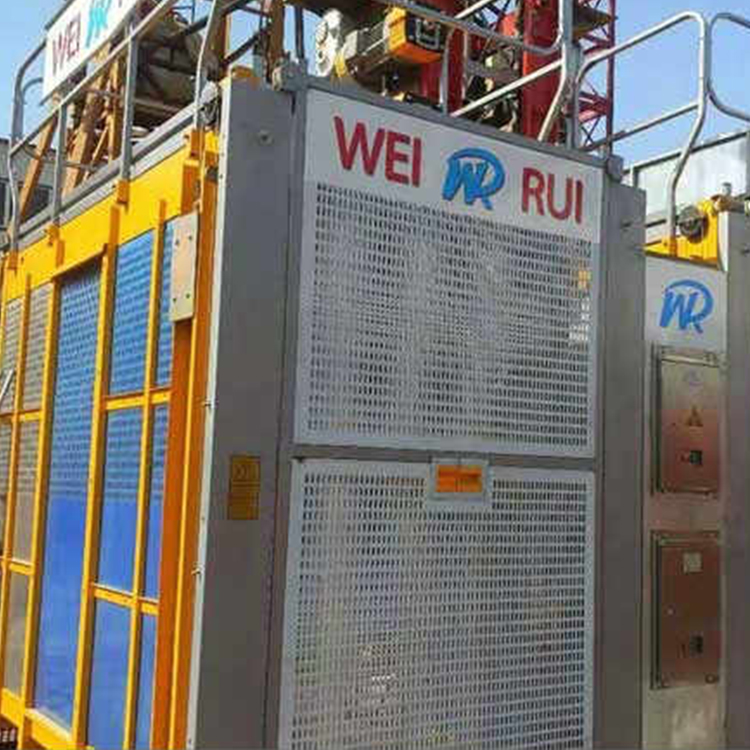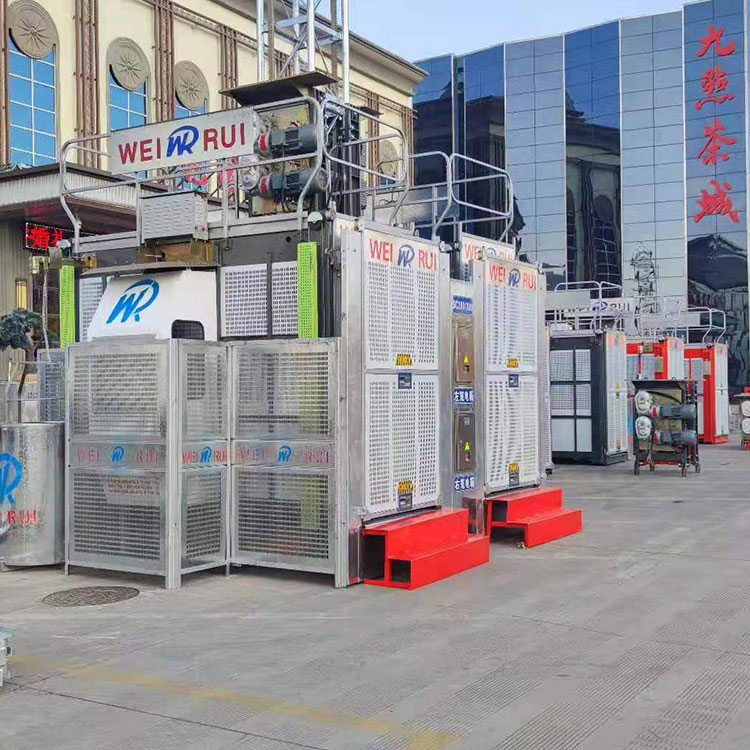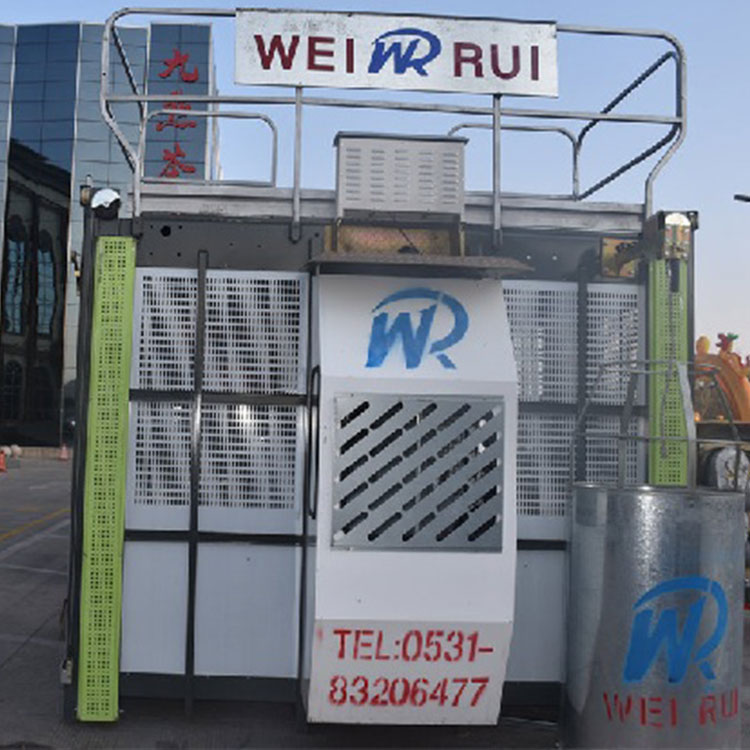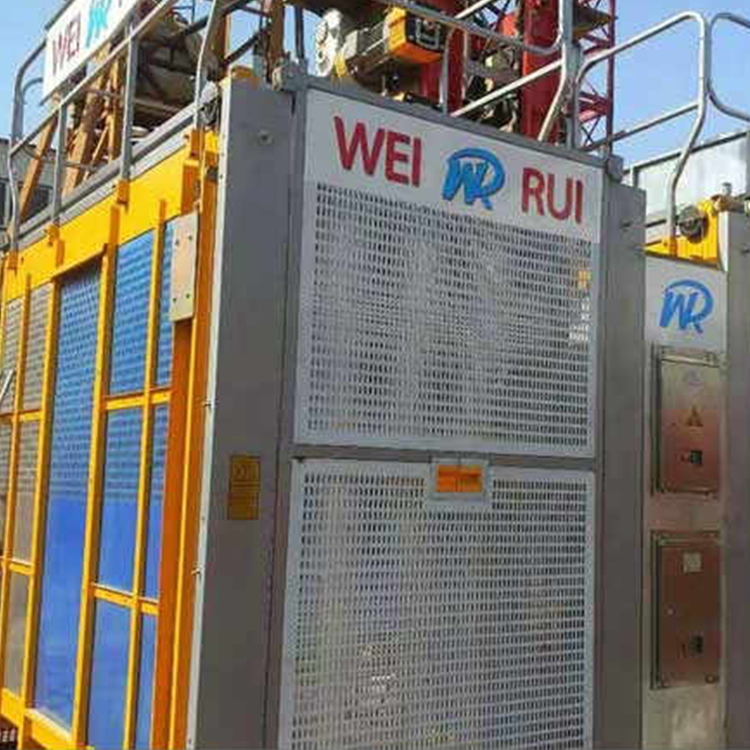

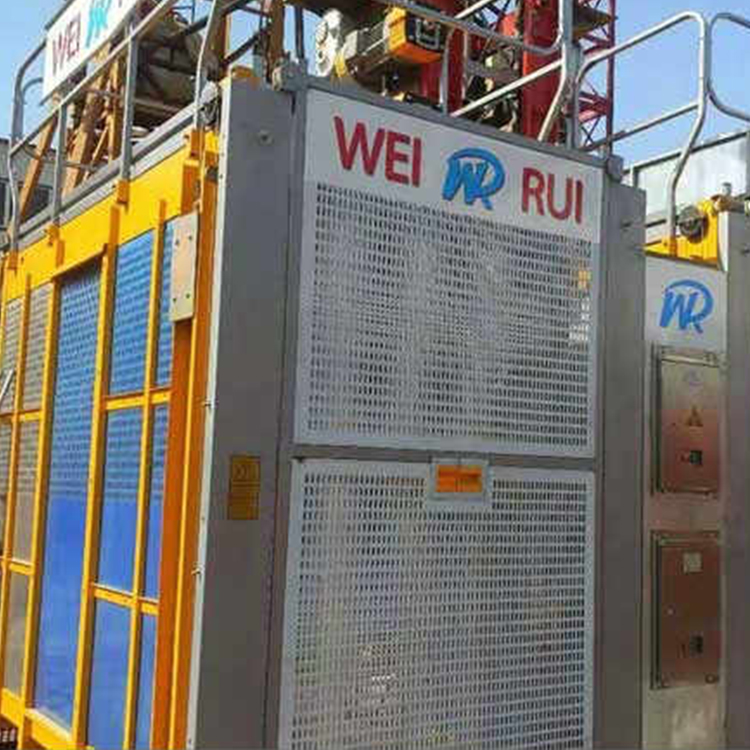
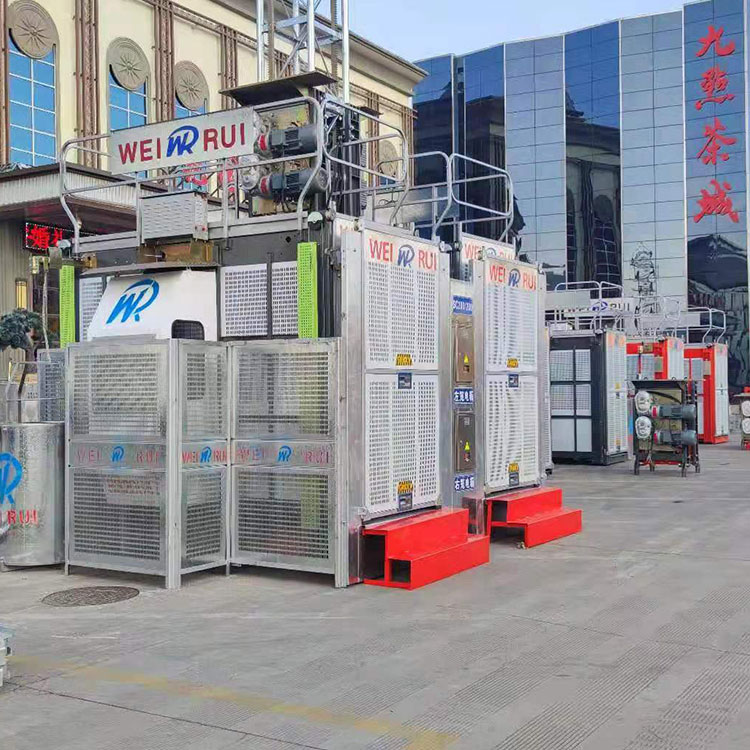
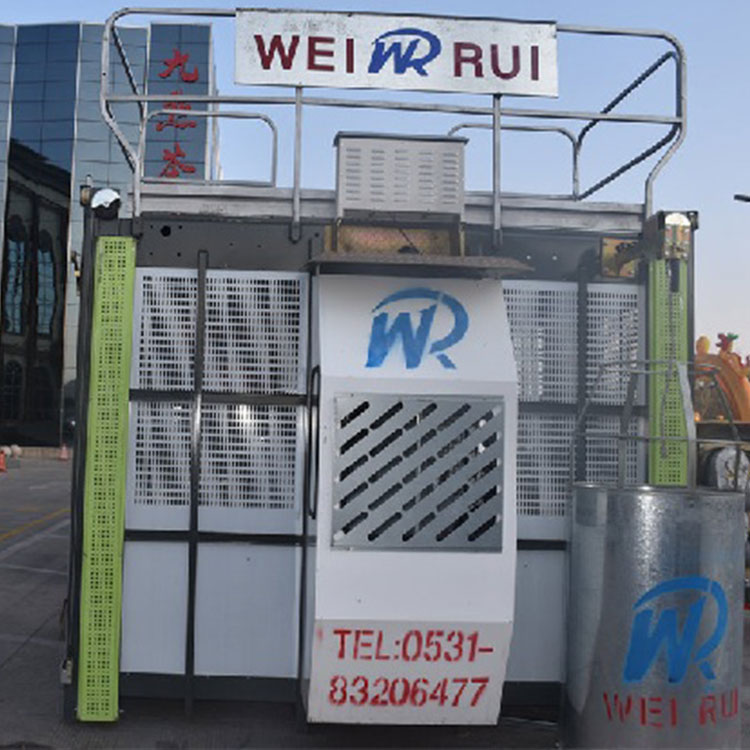


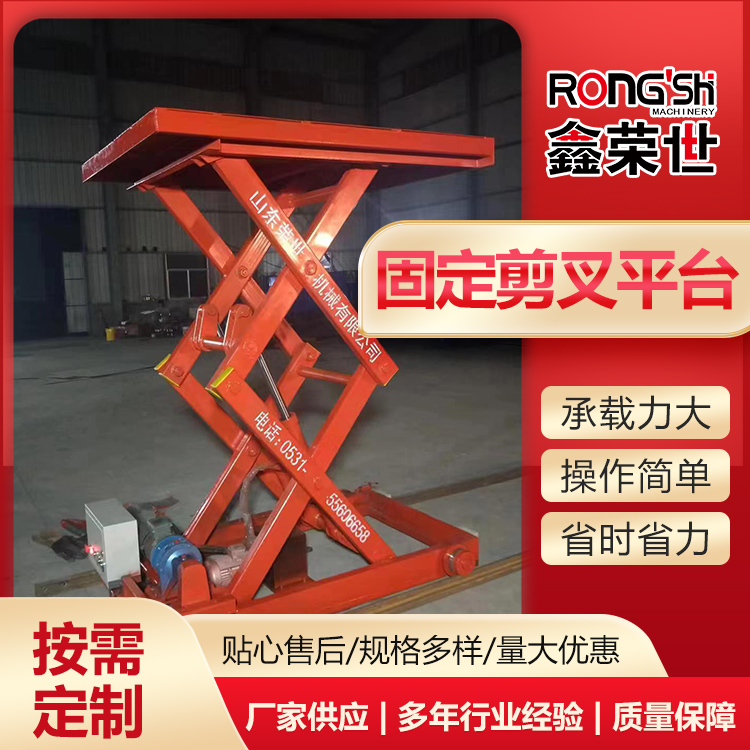
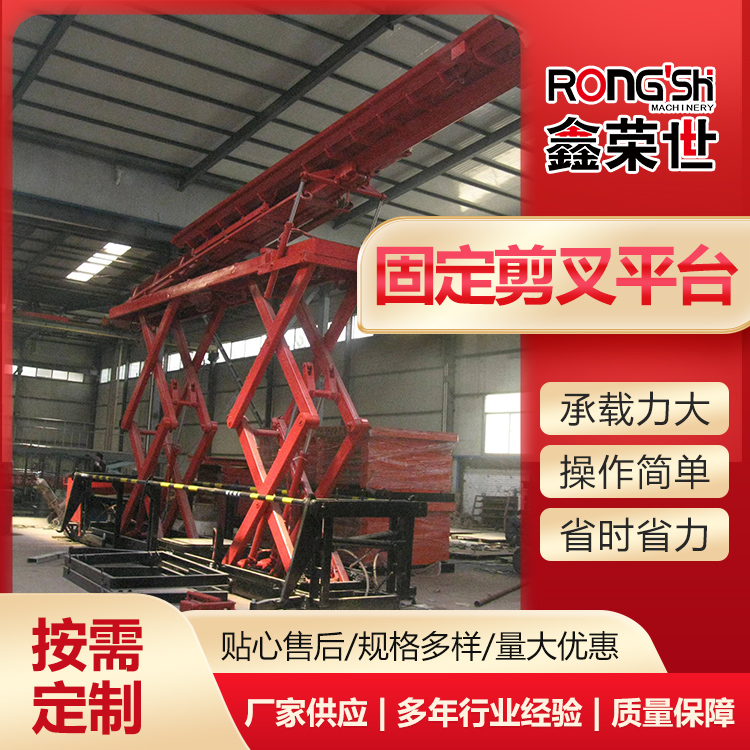
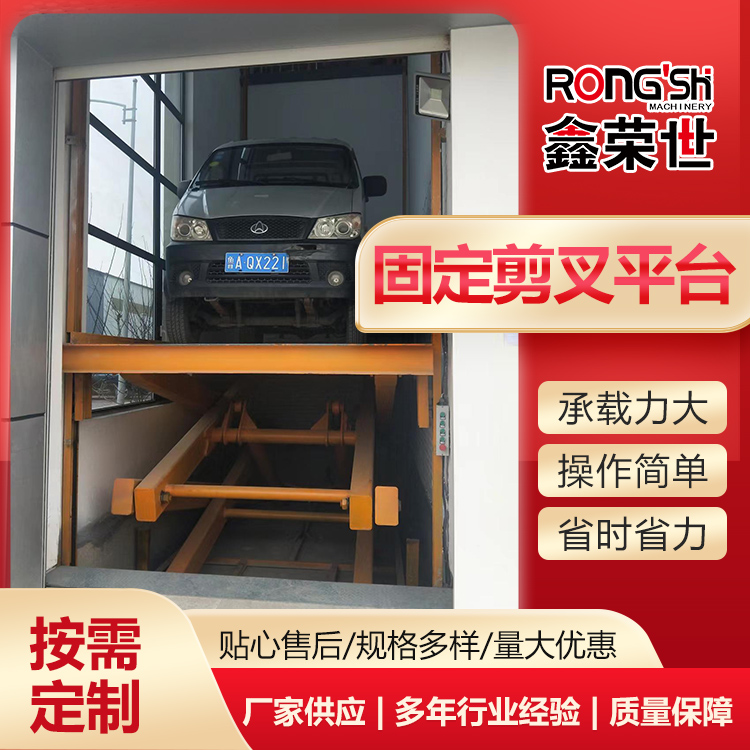





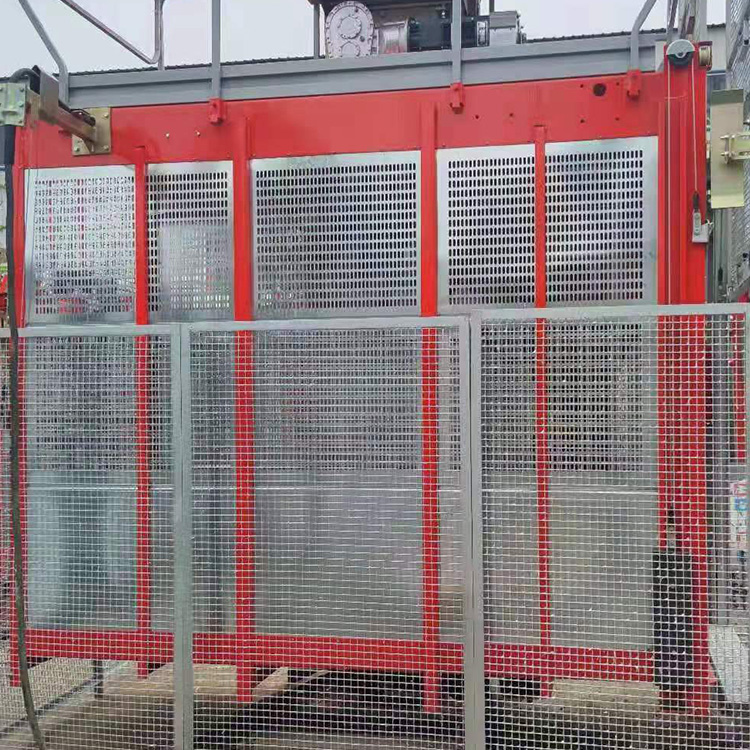
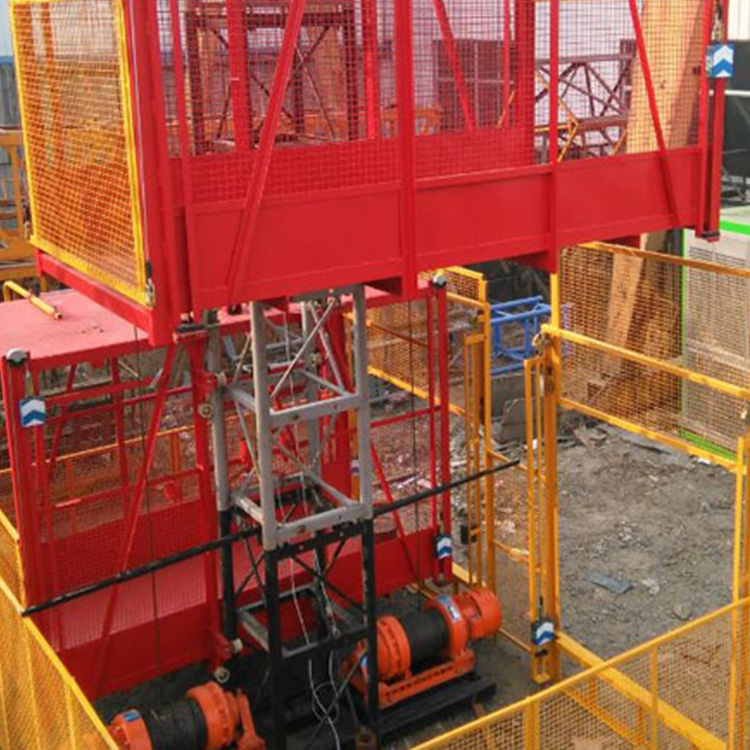
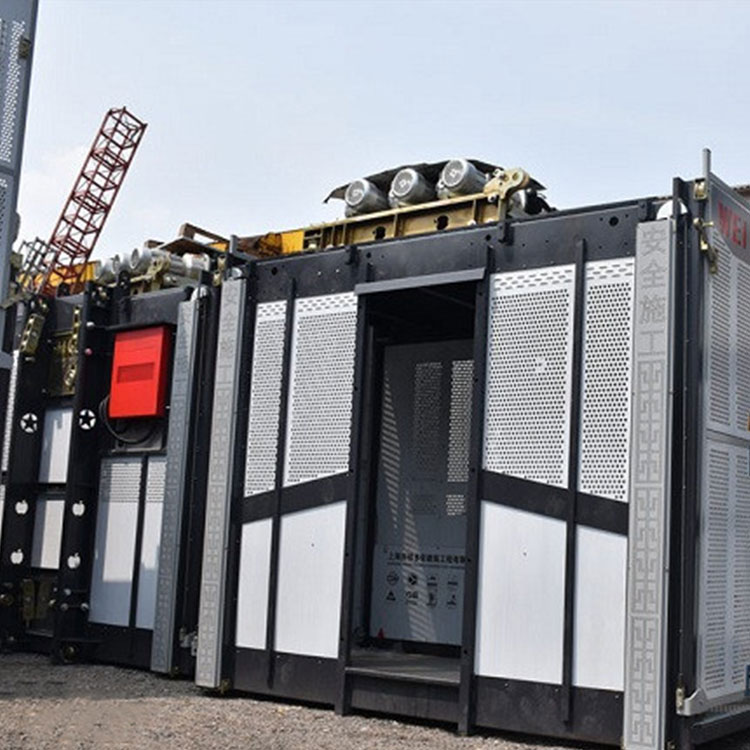
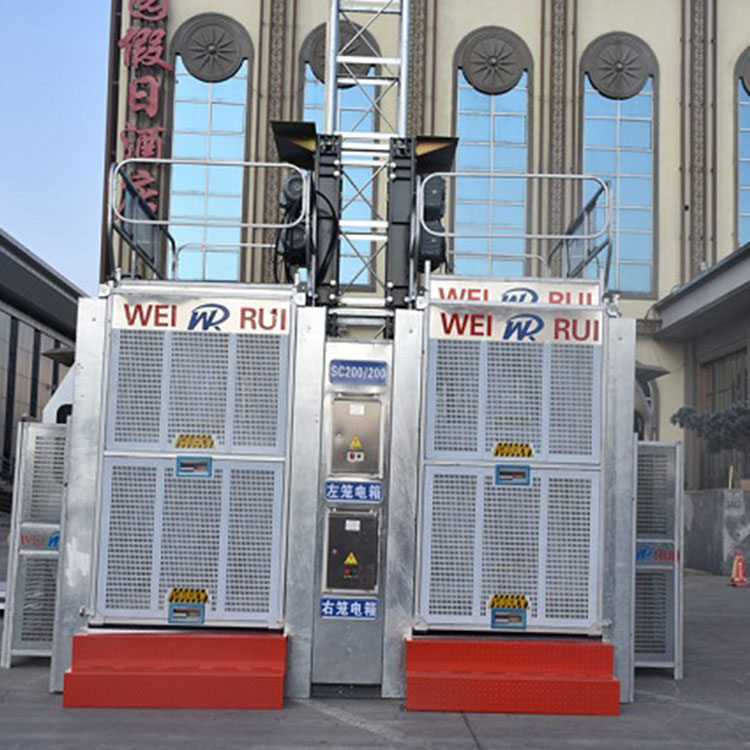
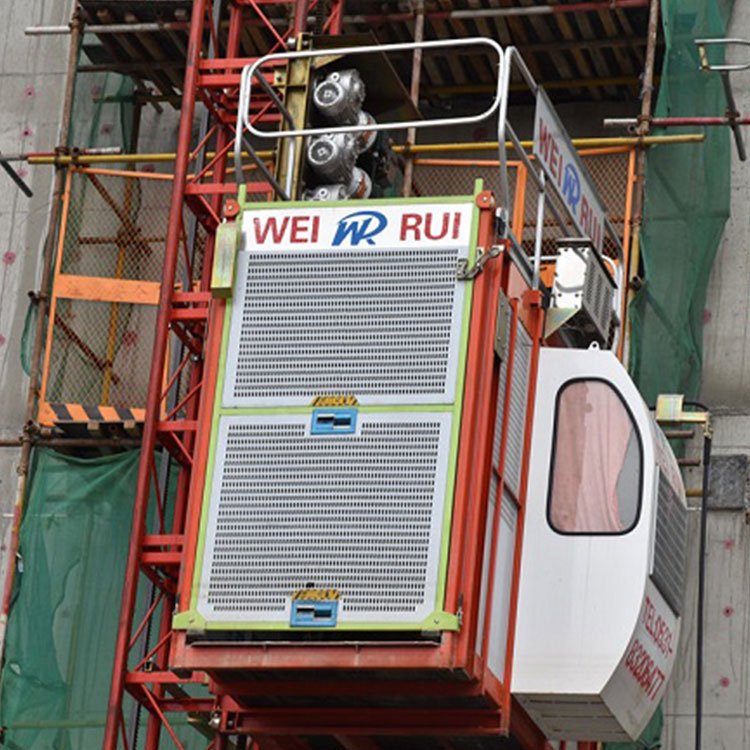
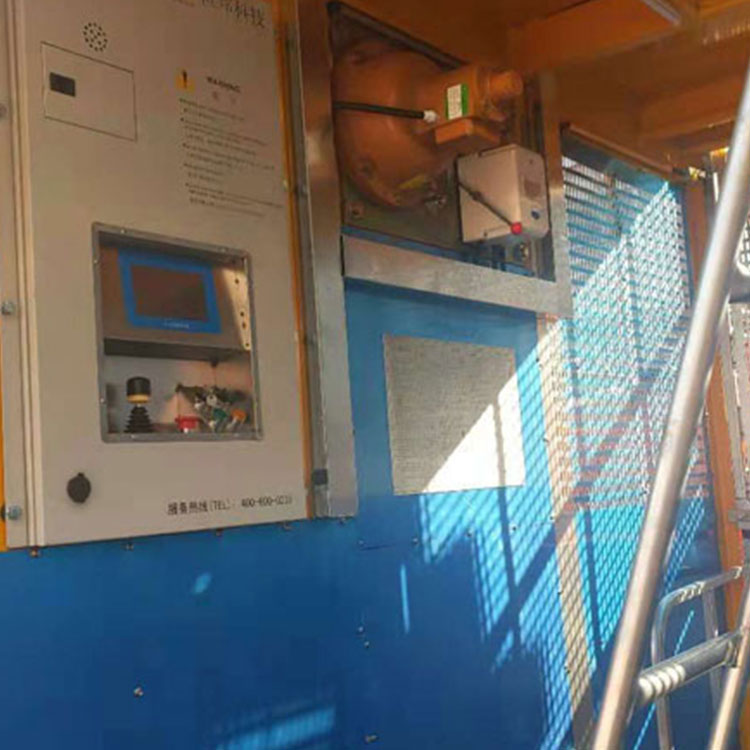
The SC200/200 construction hoist is composed of the boom, transmission mechanism, lifting cage (with guardrails), and standard sections. The boom is mounted on top of the lifting cage and is used to lift the guide rail frame or attachment parts during installation or disassembly of the guide rail frame, equipped with guide rail frame lifting accessories.
The mounting device is only used during the installation and disassembly of the guide rail frame. It should be removed and placed on the ground during normal operation.
Operation Specifications for Construction Hoists
1. After the construction hoist is installed, the safety equipment must pass testing and inspections before operation. The hoist must be operated by a certified professional driver.
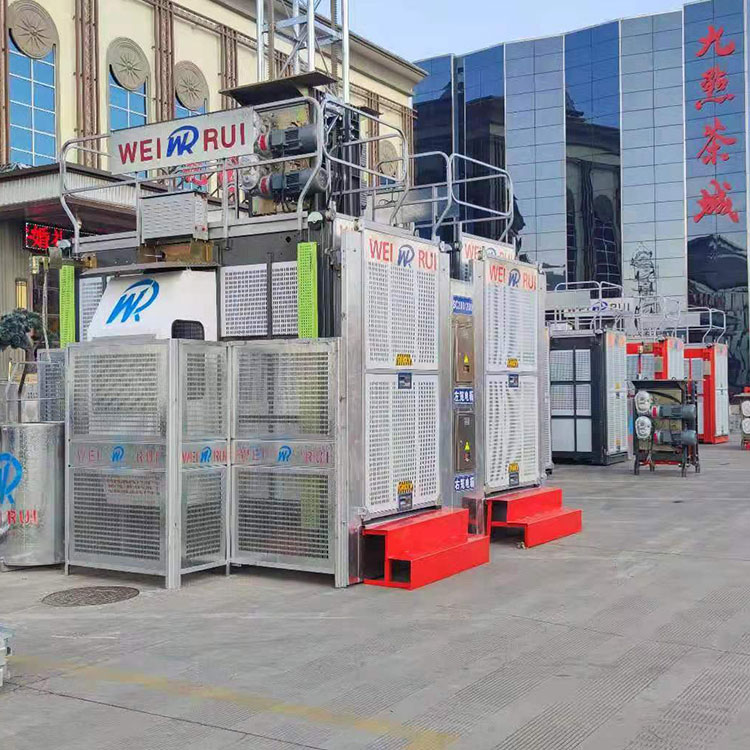
2. Surrounding the elevator pit, sturdy guardrails must be installed. The overbridges and transportation passages at each stop level should be even and solid, and the gates should be safe and reliable.
3. Upon the first operation of the elevator shift, it should be tested under both empty and full load conditions. Elevate the elevator cage about 1 meter from the ground, stop, check the brake's responsiveness, and confirm normal operation before commencing regular use.
4. Speed limiters, brakes, and other safety devices must be managed by a designated person and regularly adjusted and inspected according to regulations to ensure their sensitivity and reliability.
5. Ensure even distribution of the load when lifting goods in the crane cage, strictly prohibit overloading, and control the weight transported meticulously.
6. Operators must press the control buttons when the elevator is moving to the upper and lower levels; it is strictly prohibited to stop by automatically colliding with the travel limit switch.
7. When using elevators for construction with cross operations, clear communication signals must be established. Elevator use should cease and the elevators should be lowered to the ground floor when wind speeds reach 6 levels or above.
8. Barricades or safety gates should be installed at the channel entrance, while other surrounding areas should be enclosed with barriers and wire meshes.
9. The operator must not leave the control position until the main power switch of the elevator is turned off. After completion of the operation, lower the elevator to the bottom floor, return all control switches to the zero position, shut off the power, and securely lock the gate box and elevator door.