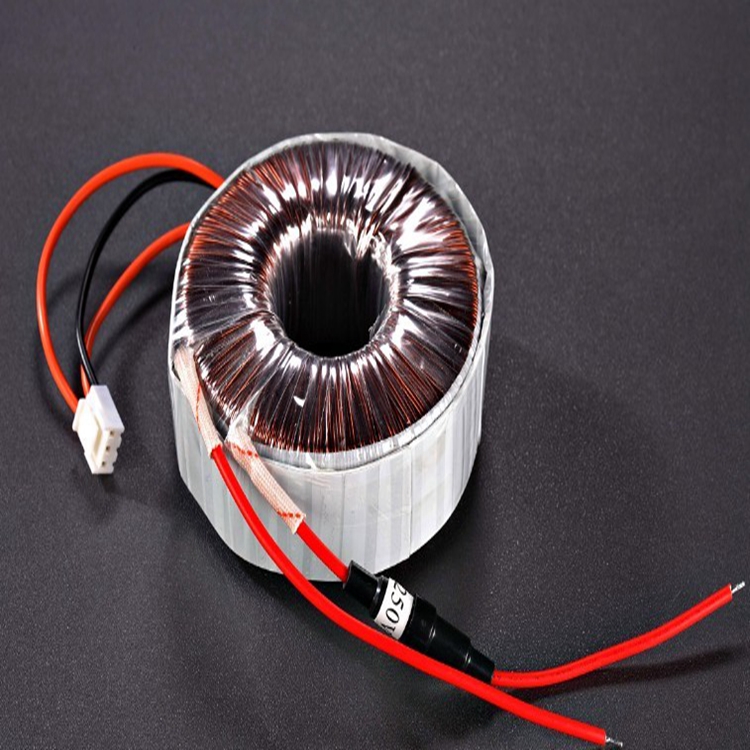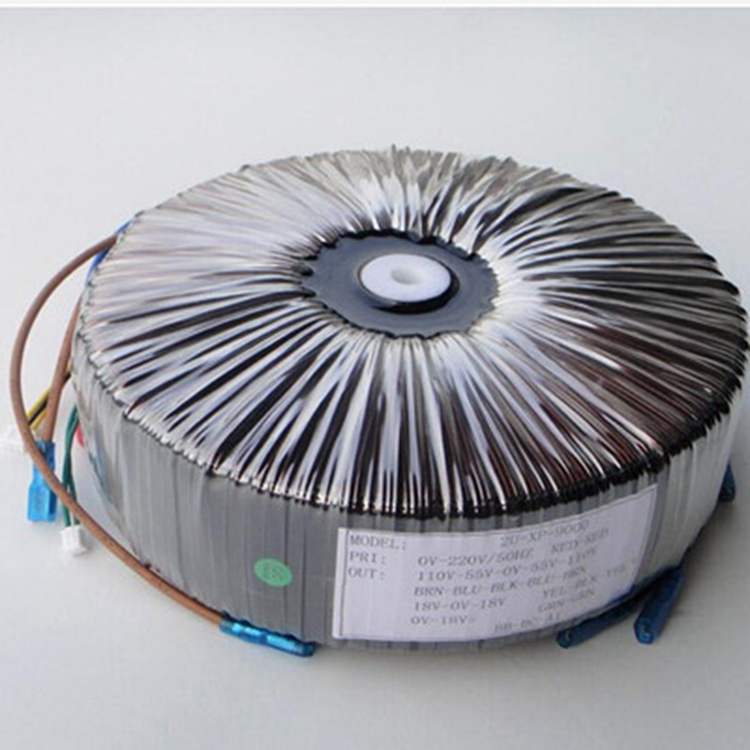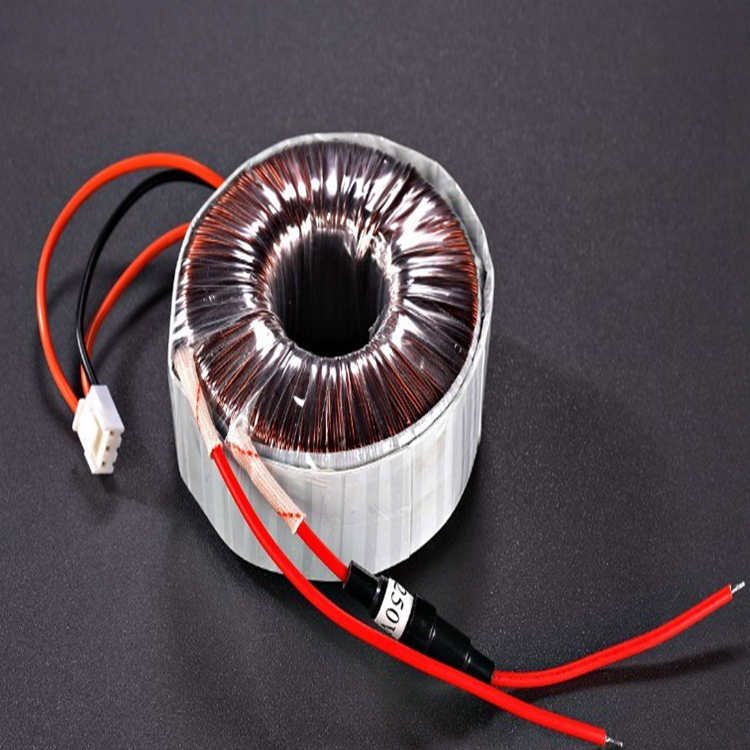

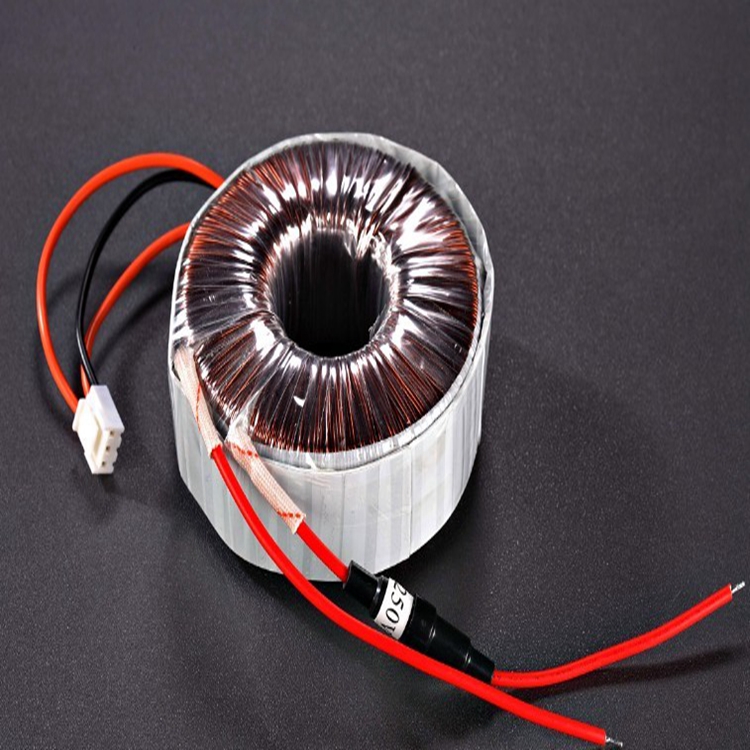
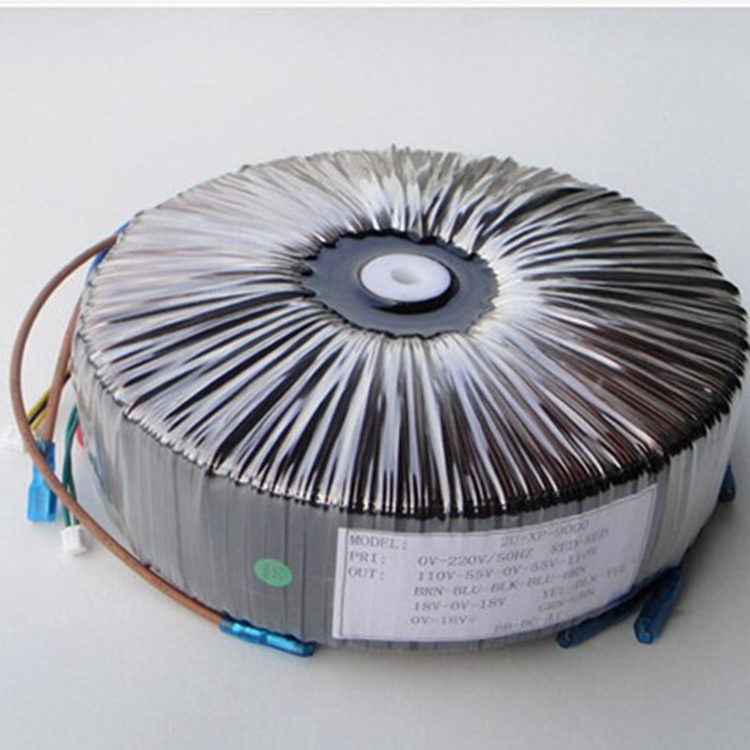







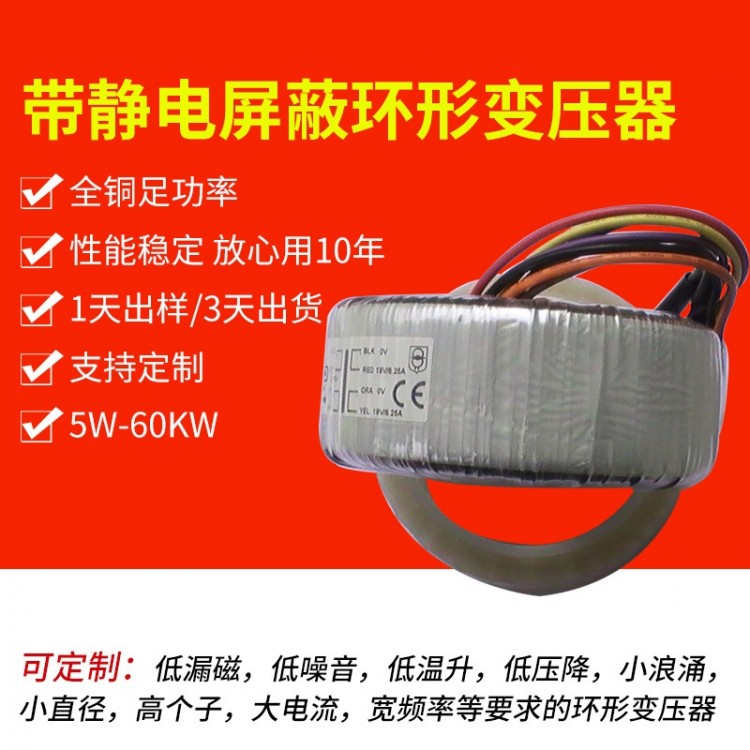
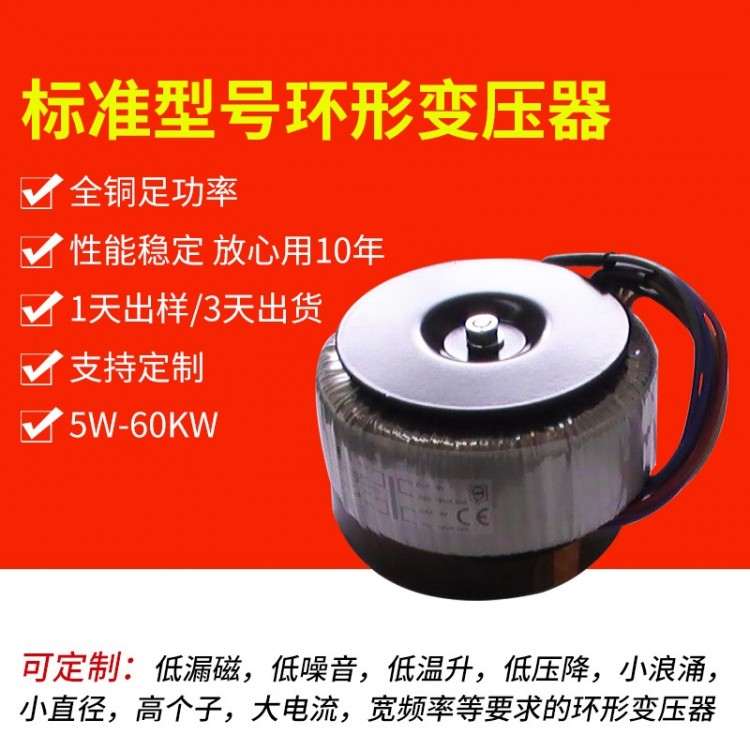
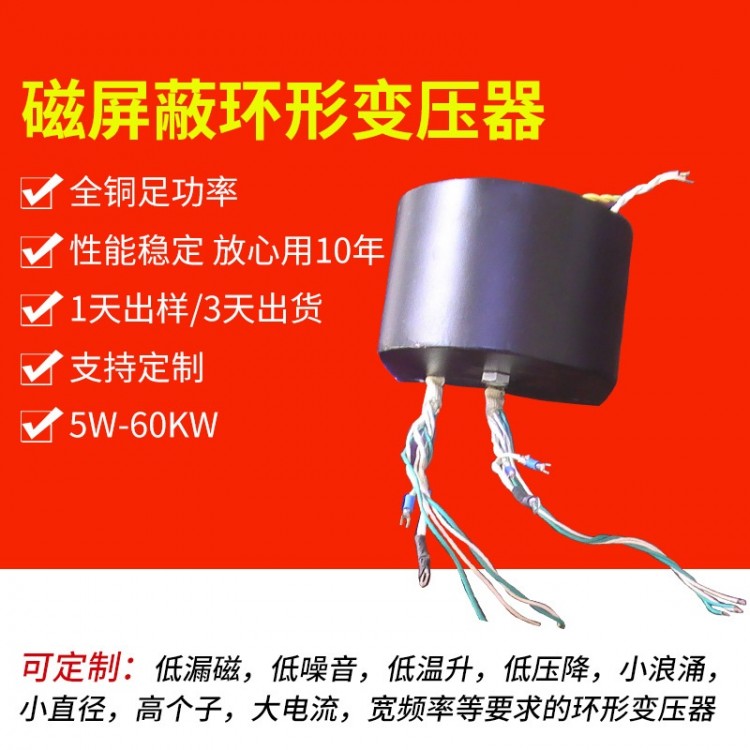
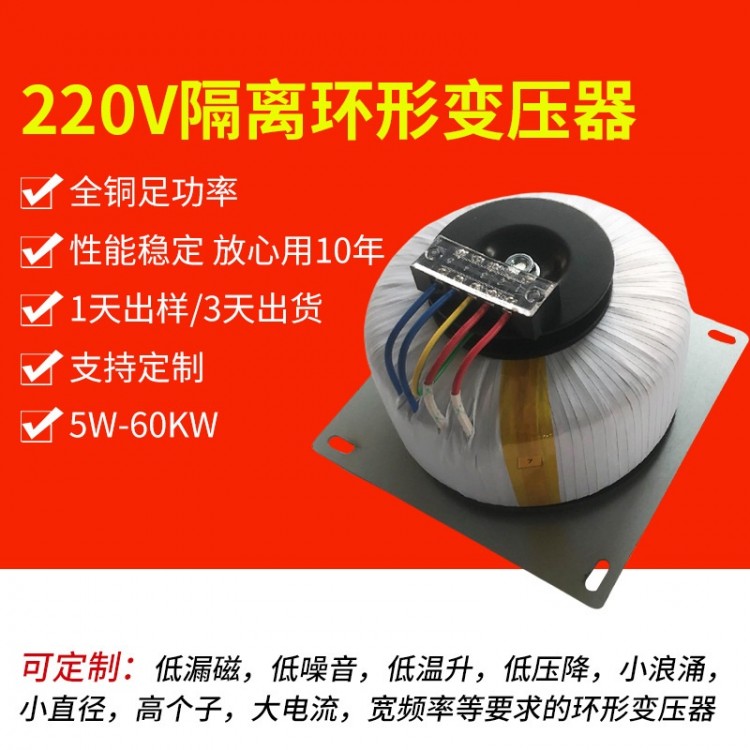
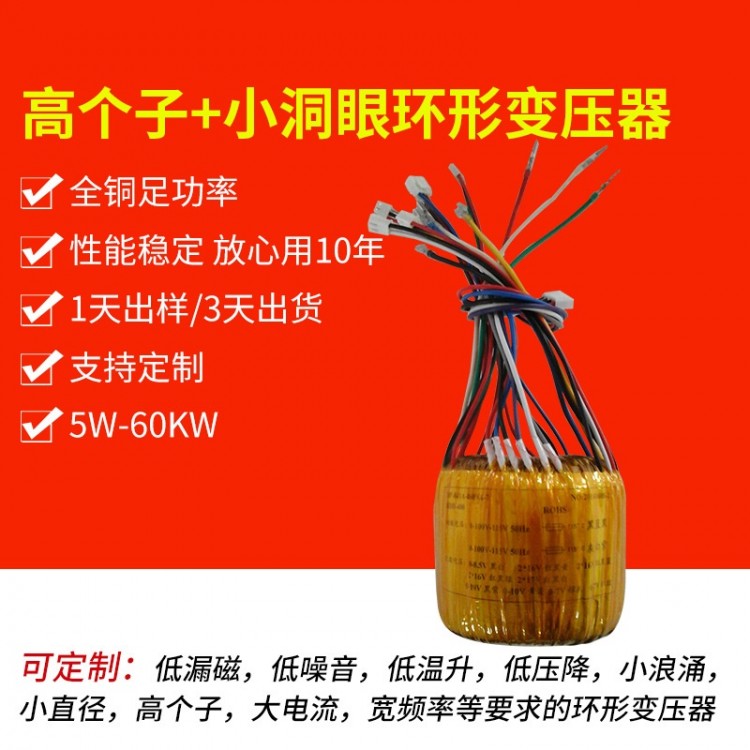
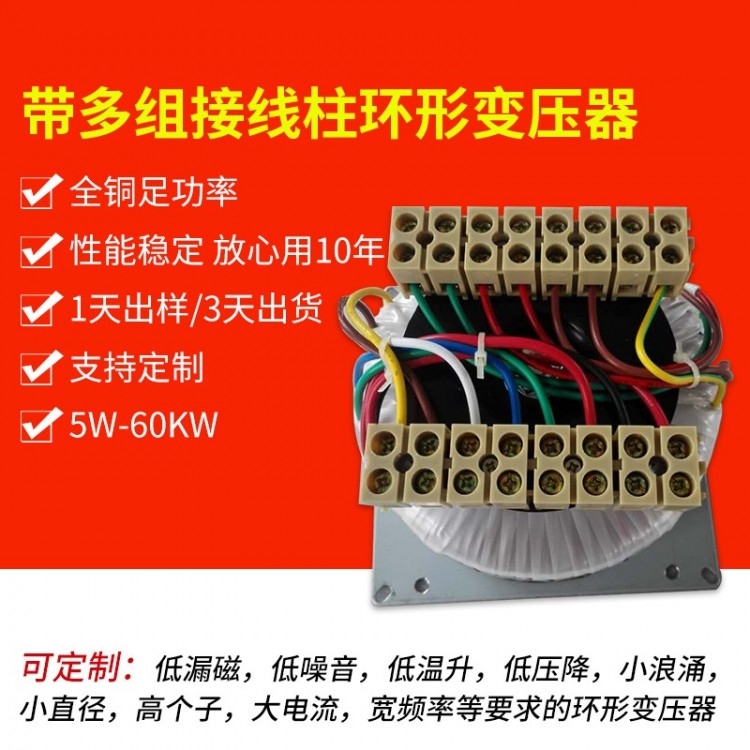
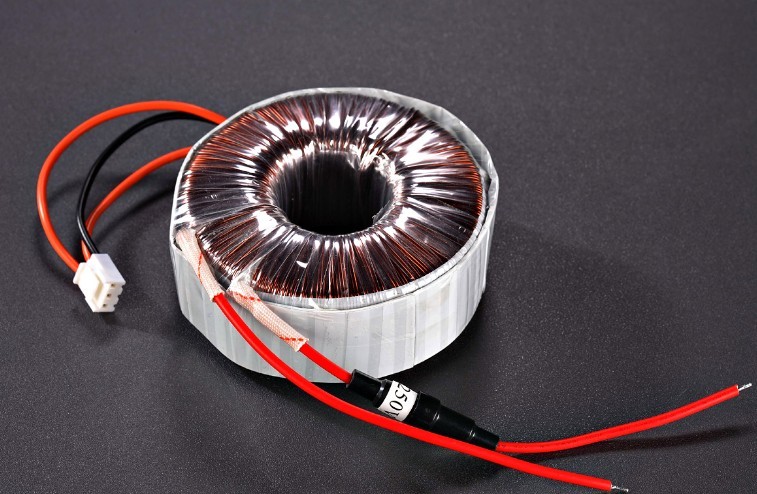
Circular transformers for automatic curtains; power surplus doesn't need to be excessive due to short-term usage, rarely used for long periods. However, high reliability is required, as it affects the brand reputation. It is continuously connected to the power grid, operates unsaturated at 264V, and normally at 240V.
Automatic curtain ring transformer performance features:
Working Voltage: ~220V 50Hz ±10%
Channel Frequency Response: 20Hz - 20KHz
Main channel output power: 100W + 100W
Total Harmonic Distortion: ≤0.1% (1W)
Signal-to-Noise Ratio: ≥85dB(A-weighted)
Tone Control: High Tone: ±12dB (10KHz)
Low Frequency: ±12dB (at 100Hz)
Midpoint Output Power: (RMS 4Ω) 25W
Surround Output Power: (RMS 4Ω) 25W + 25W
Isolation: NORMAL: Standard mode > 35dB
WIDE: Wideband mode > 25dB
Ring transformer for automatic curtains; power surplus doesn't have to be excessive due to short-term usage, rarely used for long periods. However, high reliability is required, as it affects the brand reputation. It is connected to the power grid for extended periods, operates at 264V unsaturated, and 240V for normal use.
Linear Power Supply
Linear Power Supply (Swiss Foot)
Direct Current (DC) Power Supply Categories:
Direct current (DC) power sources are divided into two main categories: linear DC power supplies and switching power supplies.
Linear Power Supply Overview
A linear power supply first reduces the voltage amplitude of AC power through a transformer, then rectifies it through a rectifying circuit to obtain pulsating DC power. After filtering, it yields a DC voltage with minor ripple. To achieve high-precision DC voltage, it must be stabilized through a voltage regulation circuit.
Basic Operation Principle of Linear Power Supply
The working process of the linear power main circuit involves the input power first being subjected to preliminary AC voltage stabilization through a pre-regulation circuit, then isolated and rectified into DC power through the main transformer. Subsequently, under the intelligent control of the control circuit and a single-chip microprocessor, the linear adjustment elements are finely regulated to produce a high-precision DC voltage source.
1. Power Transformers and Rectifiers: Convert 380V AC to the required DC power.
2. Pre-regulation circuit: Utilizes relay elements or thyristor elements to pre-adjust and initially stabilize the input AC or DC voltage, thereby reducing the power consumption of linear adjustment elements and enhancing work efficiency. Additionally, it ensures a high precision and stability of the output voltage source.
3. Linear Adjustment Components: Fine-tune the filtered DC voltage to achieve the required input voltage value and precision.
4. Filtering Circuit: Filters out pulsations, interference, and noise from direct current power supply
Maximum prevention and absorption ensure a low ripple, low noise, and low interference output voltage for direct current power supply.
5. Microcontroller-based Control System: The single-chip microprocessor compares, judges, calculates, and analyzes various signals detected, and then issues corresponding control commands to ensure the overall DC power supply stabilization system operates normally, reliably, and coordinately.
6. Auxiliary power supply and reference voltage source: Provides a high-precision reference voltage source for DC stabilized power systems and power supply required for electronic circuits to operate.
7. Voltage Sampling and Regulation: Monitor and set the output voltage value of the DC stabilized power supply.
8. Comparator Amplification Circuit: Compares the output voltage of a DC stabilized power supply with the voltage of a reference source to obtain an error voltage signal, which is then amplified and fed back to control the linear adjustment element, ensuring the stability of the output voltage.
9. Current detection circuit: Obtain the output current value of the DC stabilized power supply for current limiting or protective control information.
10. Drive Circuit: A power amplification circuit set up to drive executable components.
11. Display: Display of the output voltage and current values of the DC regulated power supply. [1]
Linear Power vs. Switched-Mode Power Supply
The voltage feedback circuit of a linear power supply operates in a linear state, whereas a switching power supply refers to tubes used for voltage adjustment working in the saturated and cutoff regions, i.e., in the switching state.
Linear power supplies typically sample the output voltage and compare it with a reference voltage, which is then fed into a comparator voltage amplifier. The output of this amplifier serves as the input to the voltage regulating tube, controlling it so that the junction voltage varies with the input, thereby adjusting the output voltage. However, switching power supplies alter the output voltage by changing the on and off times of the regulating tube, i.e., the duty cycle!
In terms of its main features: linear power technology is well-established, with a lower manufacturing cost and capable of achieving high stability and minimal ripple. Additionally, it lacks the interference and noise associated with switch-mode power supplies. However, its size is relatively larger compared to switch-mode power supplies, and it requires a higher input voltage range. Conversely, switch-mode power supplies are the opposite.
Linear Power Supply, Silicon Controlled Rectifier (SCR) Power Supply, and Switched-Mode Power Supply Circuit Comparison
Regarding circuit structure, whether it's a linear power supply, a silicon-controlled rectifier (SCR) power supply, or a switching power supply, it depends on the specific application and should be chosen appropriately. All three types of circuits are widely used both internationally and domestically, each with its own characteristics. The SCR power supply, with its powerful output power, cannot be replaced by linear or switching power supplies. Linear power supplies are widely used due to their high precision and superior performance. Switching power supplies, by eliminating the bulky power transformers, reduce both size and weight, and are also extensively applied in many scenarios where output voltage and current are relatively stable.
One, the circuit structure of the Silicon Controlled Rectifier (SCR) power supply is as follows:
In layman's terms, a thyristor is a device that controls voltage. Since the conduction angle of a thyristor can be controlled by a circuit, it varies with the change in the output voltage Uo. Consequently, the voltage Ui applied to the primary of the main transformer also changes.
The ~220V AC power is only partially applied to the primary winding of the main transformer after being controlled by a thyristor. When the output voltage Uo is high, the thyristor's conduction angle is large, allowing most of the AC voltage to pass through (as shown in the figure above), thus increasing the voltage applied to the transformer's primary winding, Ui, which is naturally higher after rectification and filtering, resulting in a higher output voltage. Conversely, when the output voltage Uo is low, the thyristor's conduction angle is small, blocking most of the AC voltage (as shown in the figure below), leaving only a low voltage applied to the transformer's primary winding, Ui, which is naturally lower after rectification and filtering, resulting in a lower output voltage.
II. The main circuit of the linear power supply is as follows:
Linear power supplies essentially involve串联 a high-power transistor (actually multiple transistors in parallel) at the output of a silicon-controlled rectifier (SCR) power supply. The control circuit only needs to output a small current to the base of the transistor to control the transistor's output of large current. This results in the power supply system being voltage-stabilized once again on top of the SCR power supply, hence the voltage-stabilization performance of this linear voltage regulator is superior to that of switching power supplies or SCR power supplies by 1-3 orders of magnitude. However, the power transistor (also known as an adjustment tube) typically requires 10 volts, and for every 1 ampere of current output, an additional 10 watts of power must be consumed internally. For instance, a 500V 5A power supply incurs a loss of 50 watts in the power tube, accounting for 2% of the total output power. Therefore, the efficiency of linear power supplies is slightly lower than that of SCR power supplies.
Section 3: The main circuit of the switching power supply is as follows:
The circuit shows that after the mains power is rectified and filtered, it becomes a 311V high voltage. Through the sequential operation of power switches K1 to K4, it is transformed into a pulse signal and applied to the primary of the high-frequency transformer, with the pulse height consistently at 311V. When K1 and K4 are turned on, the 311V high-voltage current flows positively into the primary of the main transformer through K1 and exits through K4, forming a positive pulse at the transformer primary. Similarly, when K2 and K3 are turned on, the 311V high-voltage current flows negatively into the primary of the main transformer through K3 and exits through K2, forming a negative pulse at the transformer primary. Thus, a series of positive and negative pulses are formed at the transformer secondary, which, after rectification and filtering, produce a DC voltage. When the output voltage Uo is high, the pulse width is wide; when Uo is low, the pulse width is narrow, making the switching tube essentially a device that controls the width of the pulses. Our company generally supplies linear power supplies to customers without specific size requirements, mainly because:
1. Linear power supplies offer high accuracy (exceeding switching or thyristor power supplies by 1-3 orders of magnitude), suitable for various applications. Generally, users do not have questions regarding performance, accuracy, or technical specifications.
2. Easy to repair, as most users have repair personnel familiar with linear power supplies and the necessary spare parts. Basic repair can be achieved with a multimeter, and a more meticulous electrician can also handle the task.
3. Post-repair, there are typically no lingering issues, and the fault can be completely resolved, with performance fully restored. As long as it's used correctly and maintained promptly, a power supply can easily last 10 years.
Linear Power Supply Applications
Linear power products are widely used in scientific research, colleges and universities, laboratories, industrial and mining enterprises, electrolysis, electroplating, charging equipment, and more.