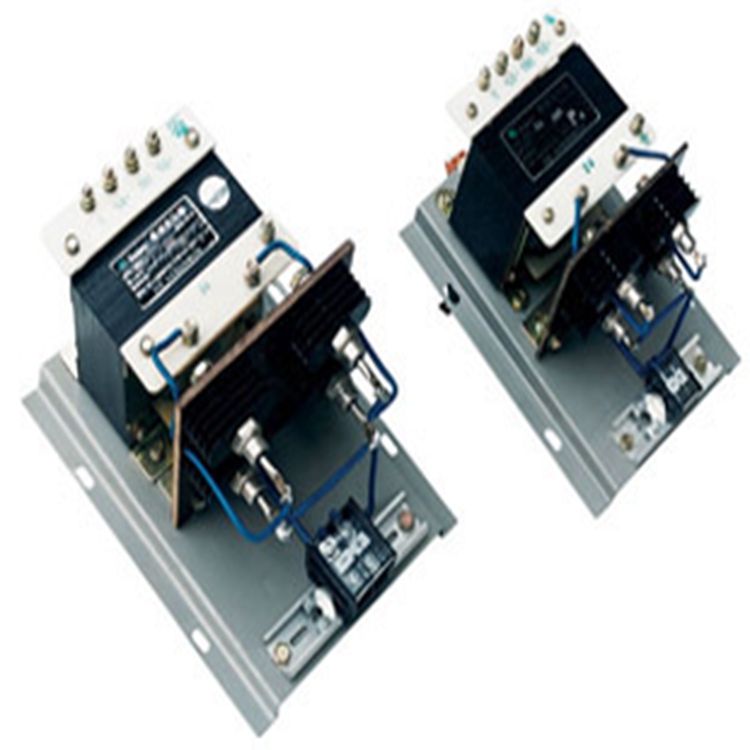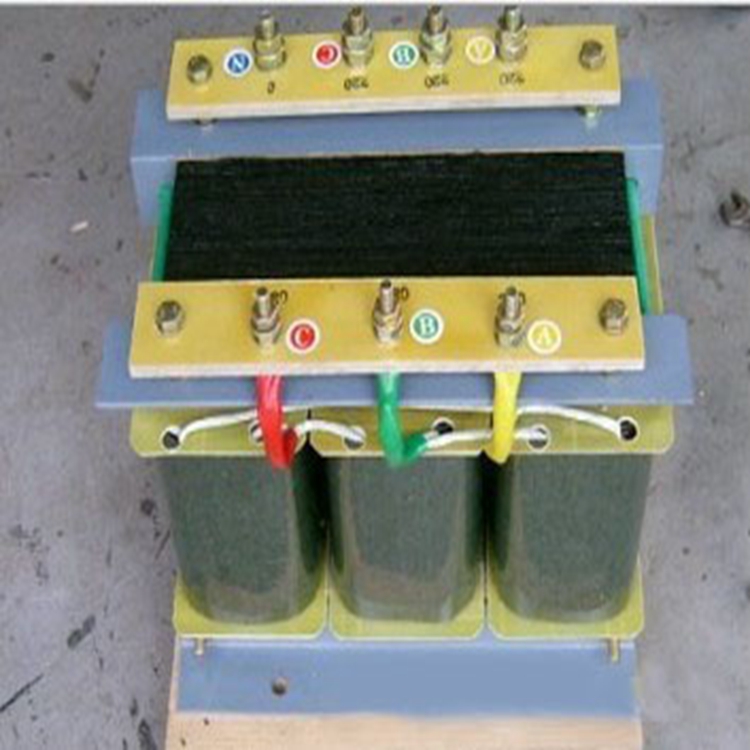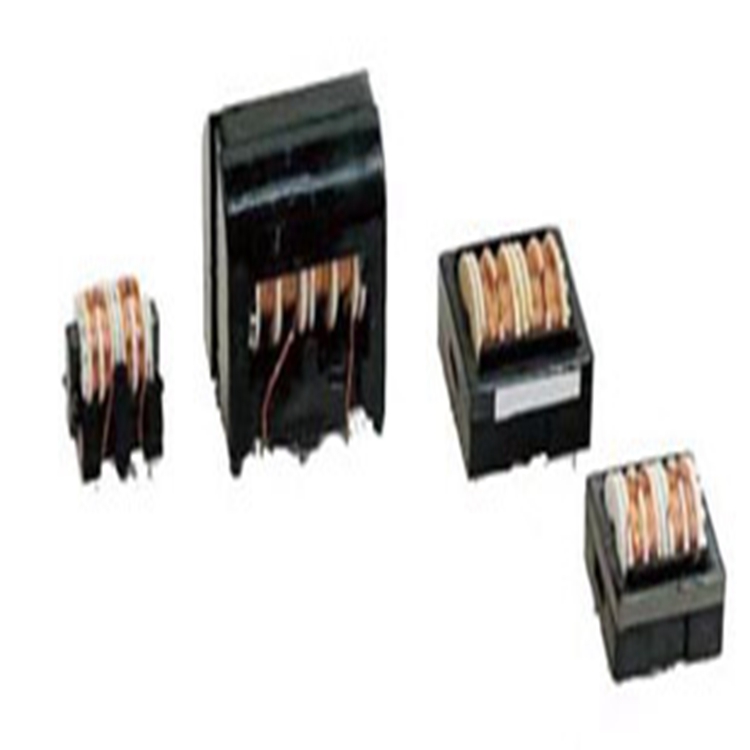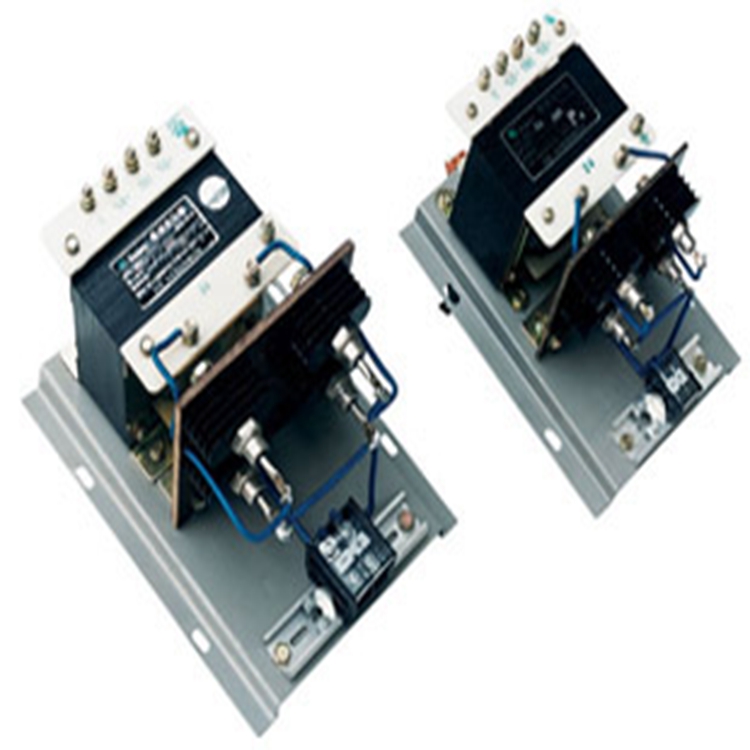

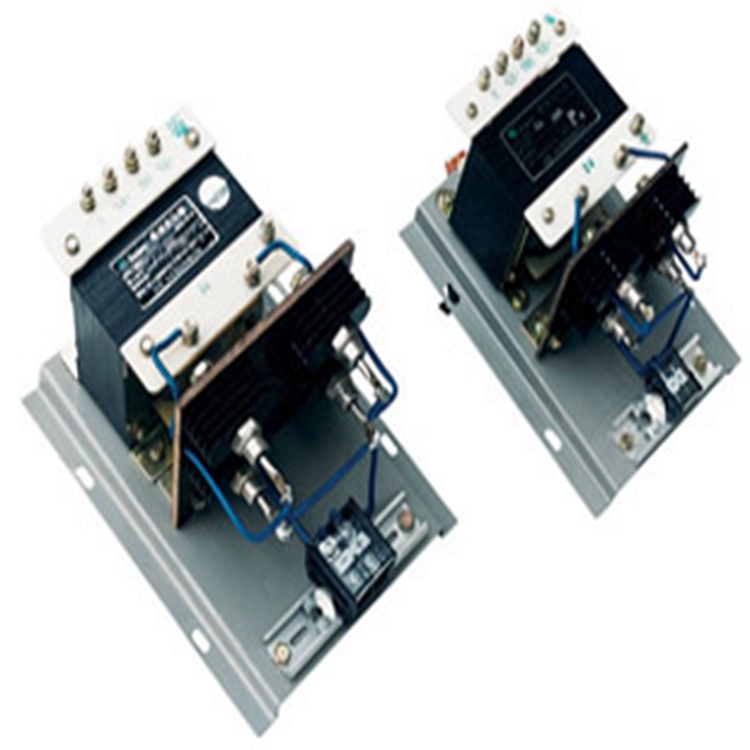

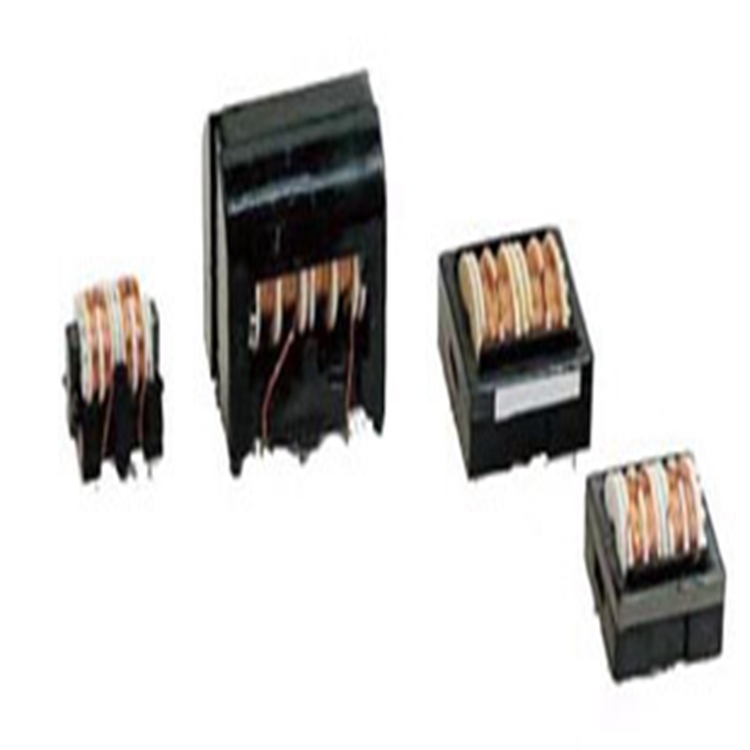







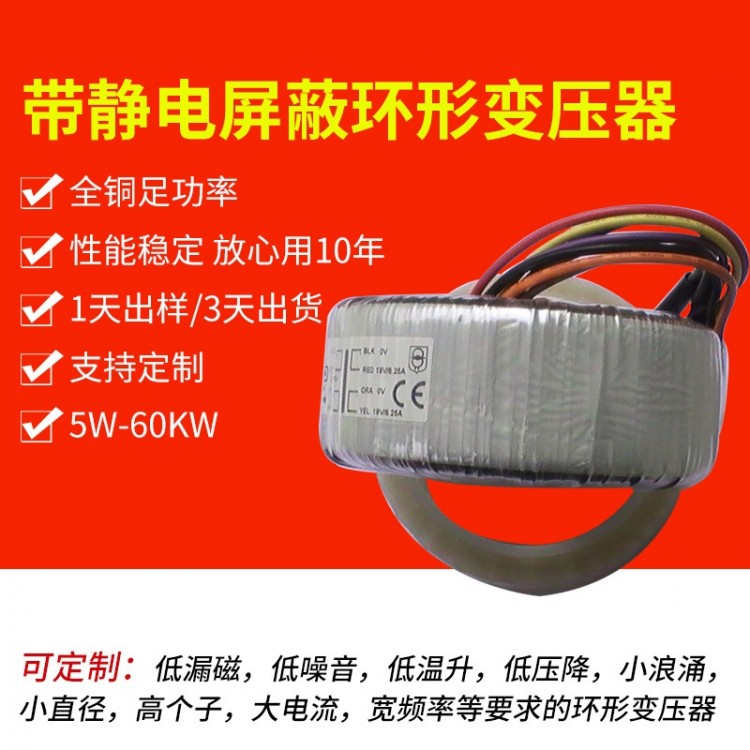
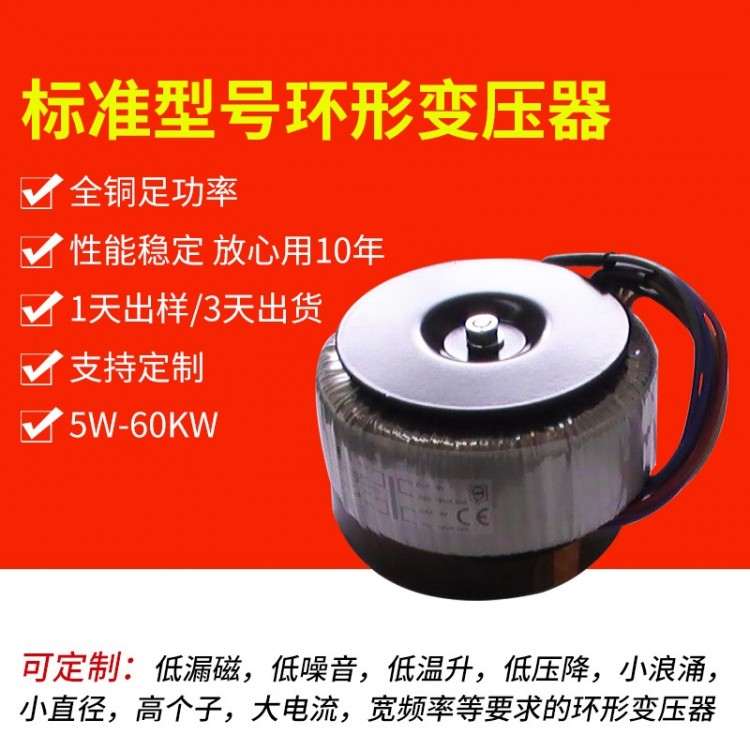
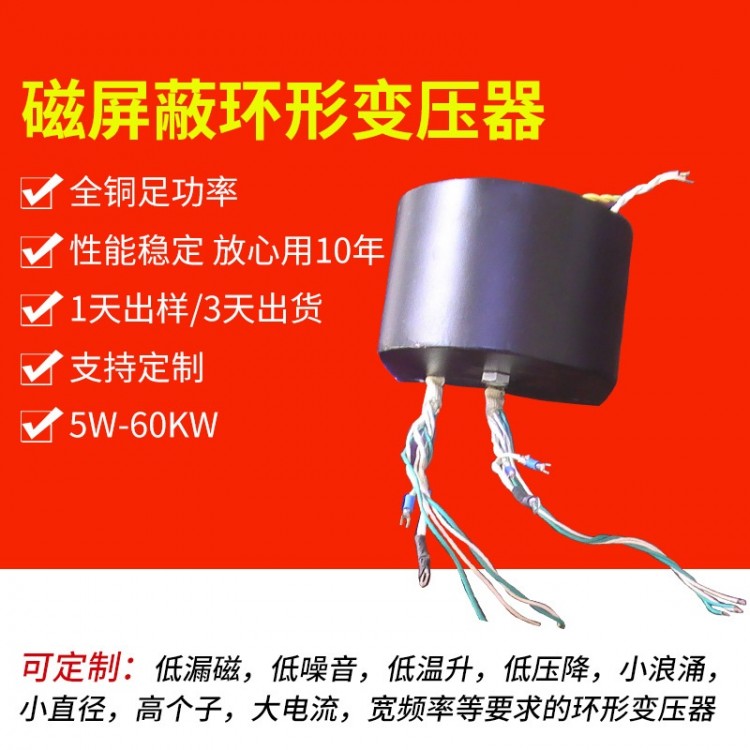
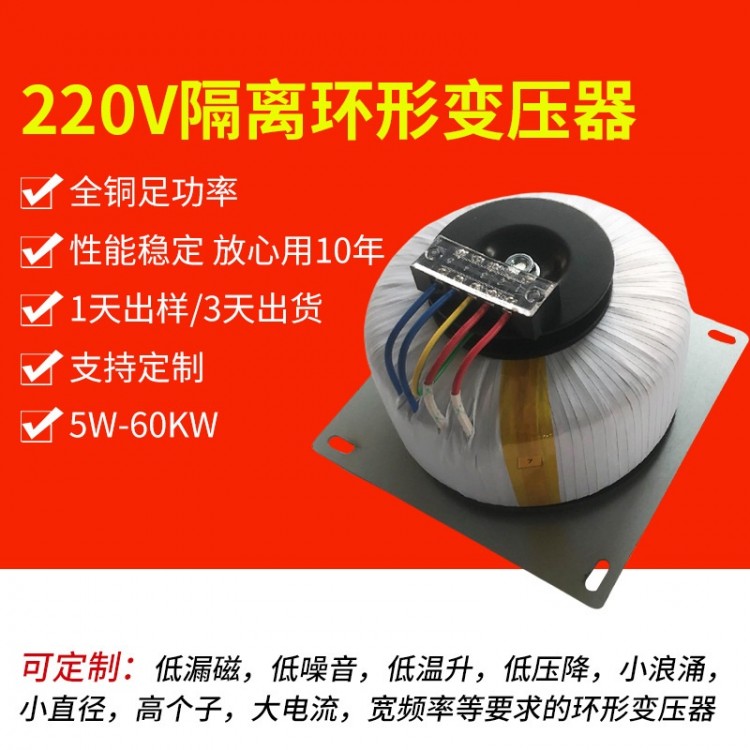
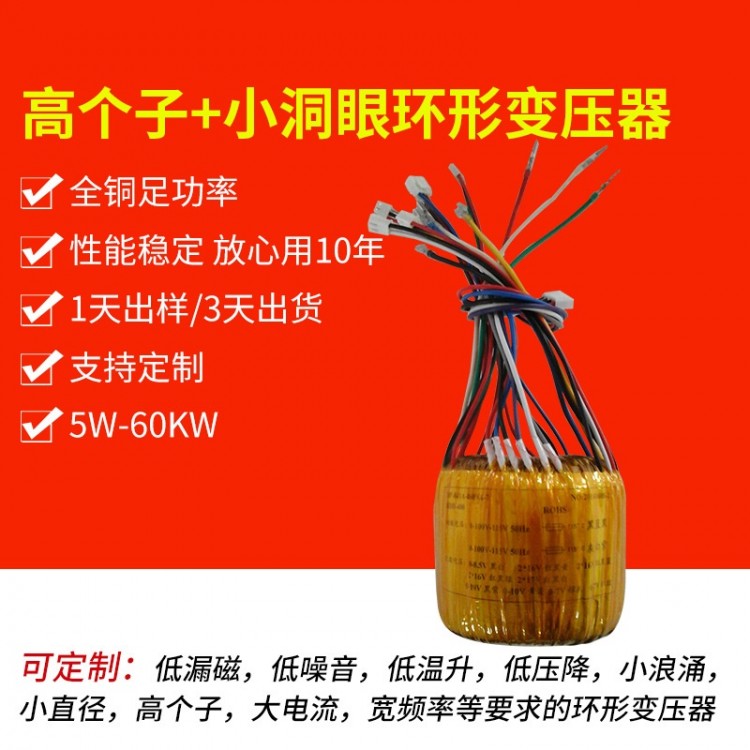
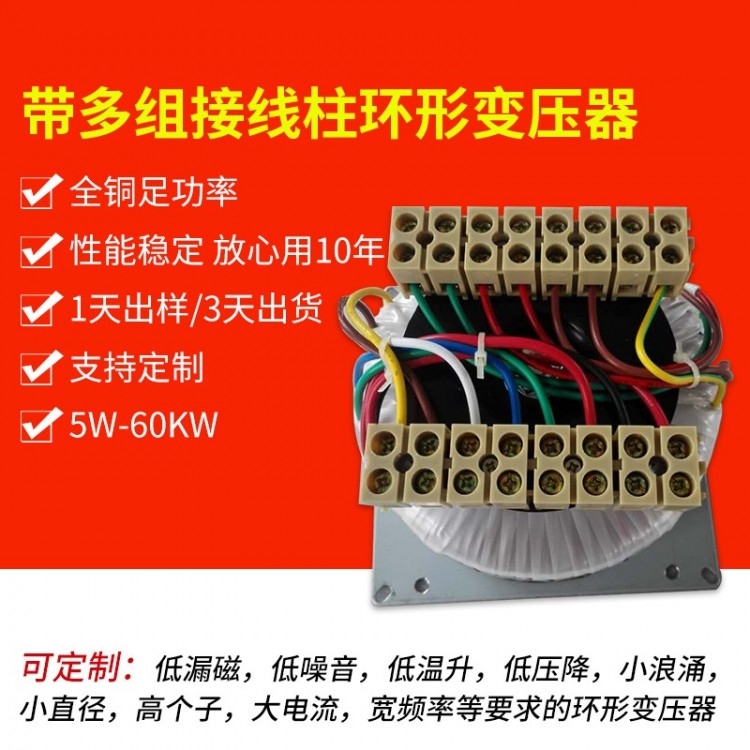
ED Landscape Lights Circular TransformerRequired to prevent overvoltage, unsaturated at 264V, normal operation at 240V, large power margin, sometimes moisture-proof required, high reliability needed. Repair cost high for a single faulty unit.

Parameters of circular transformers for LED landscape lighting:
| Voltage Ratio: | 220 |
| Number of phases for power supply: | Single-phase |
| Rated Power: | 0.02 |
| Moisture-proof method: | Open-ended |
| Cooling Method: | Oil-immersed air-cooled |
| Cooling Method: | Dry |
| Frequency Characteristics: | Low Frequency |
| Winding Configuration: | Dual-wound |
| Magnetic Core Shape: | Ring |
| Magnetic Core Shape: | Ring-shaped |
| Exterior Structure: | Vertical |
| Efficiency (η): | 95% |
| Type: | Ring |
| Custom Processing and Tailoring: | Is |
| Application Scope: | Power Supply |
LED Transformer Technical Parameters
Technical requirements for transformers of different types are expressed through corresponding technical parameters. For example, the main technical parameters of power transformers include: rated power, rated voltage and voltage ratio, rated frequency, working temperature class, temperature rise, voltage regulation, insulation properties, and moisture resistance. For general low-frequency transformers, the main technical parameters are: voltage ratio, frequency characteristics, non-linear distortion, magnetic shielding and electrostatic shielding, efficiency, etc.
A. Voltage Ratio:
The primary and secondary windings of the transformer have N1 and N2 turns respectively, with N1 being the primary and N2 the secondary. When an AC voltage is applied to the primary winding, an induced electromotive force (EMF) is generated across the secondary winding. If N2 is greater than N1, the induced EMF is higher than the applied voltage, and this transformer is called a step-up transformer. Conversely, if N2 is less than N1, then N1 is greater than N2, V1 is greater than V2, and the transformer is a step-down transformer. The opposite configuration is a step-up transformer.
Efficiency of LED Transformers:
At rated power, the ratio of the transformer's output power to input power is called the transformer's efficiency.
When the transformer's output power P2 equals the input power P1, the efficiency η equals, and the ring transformer would not generate any losses. However, such a transformer does not exist. Whenever transformers transmit electrical power, losses are inevitable, primarily consisting of copper losses and iron losses.
Copper loss refers to the loss caused by the resistance of transformer windings. When current passes through the winding resistance and heats it up, a portion of electrical energy is converted into heat and lost. Since the windings are generally made of insulated copper wire, it is called copper loss.