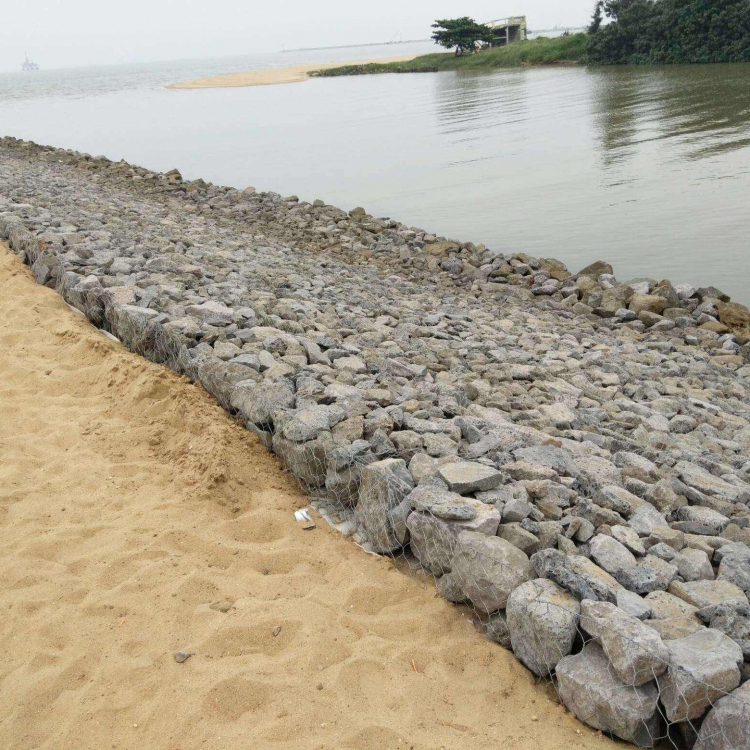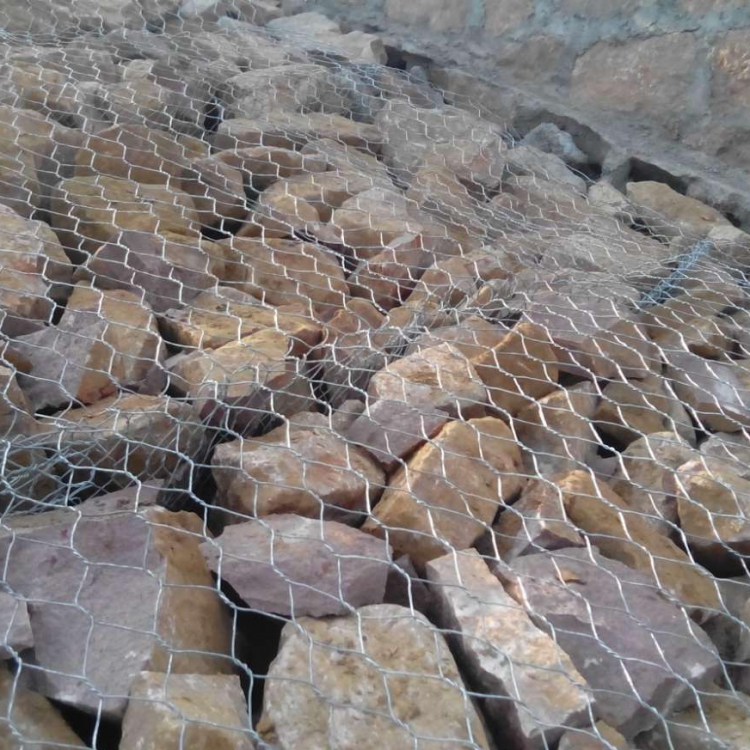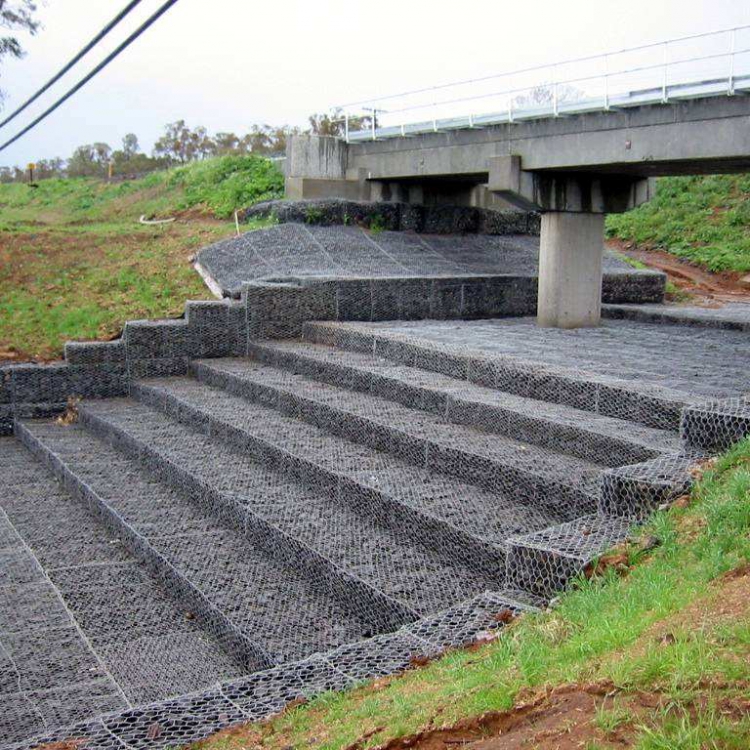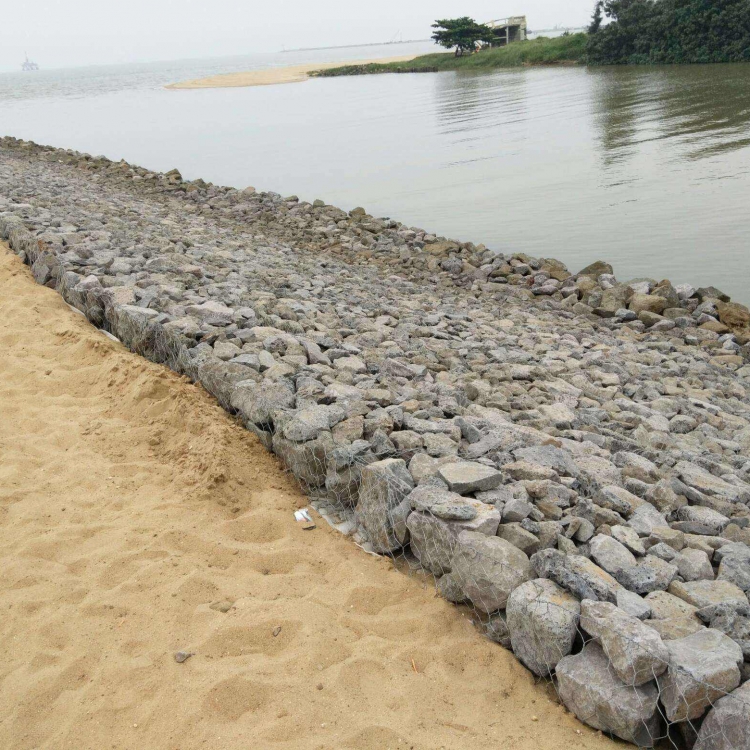

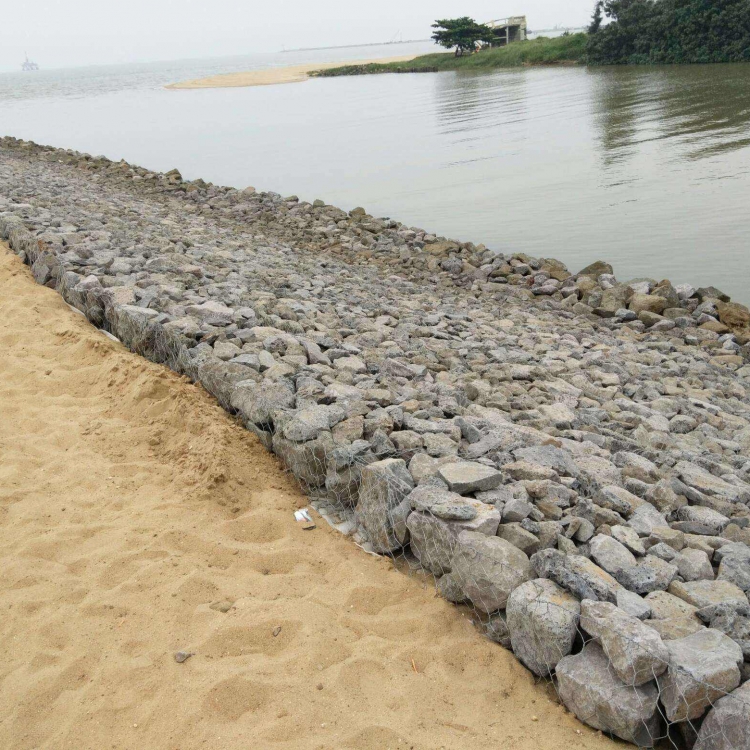













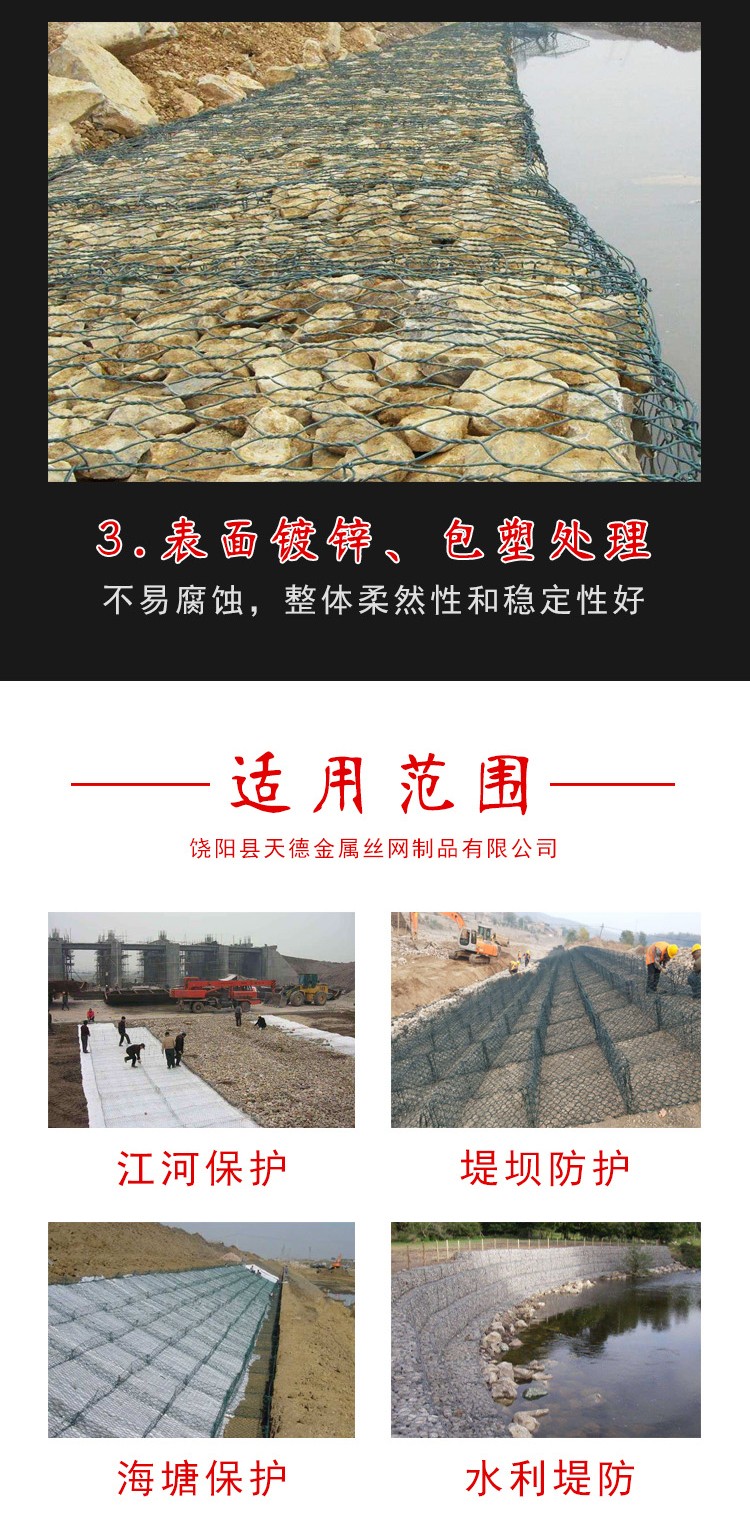


Renault cushion, also known as gabion cushion or gabion cushion, refers to a cushion shaped engineering component composed of a machine woven double twisted hexagonal metal mesh surface with a thickness much smaller than its length and width. The Renault cushion is filled with block stones and other filling materials and connected into a whole, becoming a mainly used anti erosion structure for water conservancy embankments, bank slopes, Haiman, etc. It has the advantages of flexibility and adaptability to the foundation.
Renault pads are net cage structures with a thickness of 0.17-0.3m, used on site for loading stones. Mainly used as a slope protection structure for river channels, bank slopes, and roadbed slopes. It can prevent the riverbank from being damaged by water flow and wind waves, and also achieve the natural convection exchange function between the water body and the soil below the slope, achieving ecological balance. Planting green on the slope can enhance the landscape and greening effect.
The difference between Renault pads and gabion cages and stone cages is that the height of the pads is lower and the structural form is flat and large; The diameter of coated steel wire is thinner than that of Gebin, and there are generally two types: double partition (wire diameter 2.0mm) and single partition (2.2mm). The commonly used double partition Renault pad has the advantages of convenient construction, effective prevention of stone collapse by slope protection, and increased structural resistance to erosion.
Renault pad features
1. Improve the stability of riverbed slopes
2. Protect the riverbed from erosion. 3 Provide a predetermined value for the roughness coefficient (m) of the riverbank
4. Greening and ecological protection of slope and bank protection
5. Convenient construction