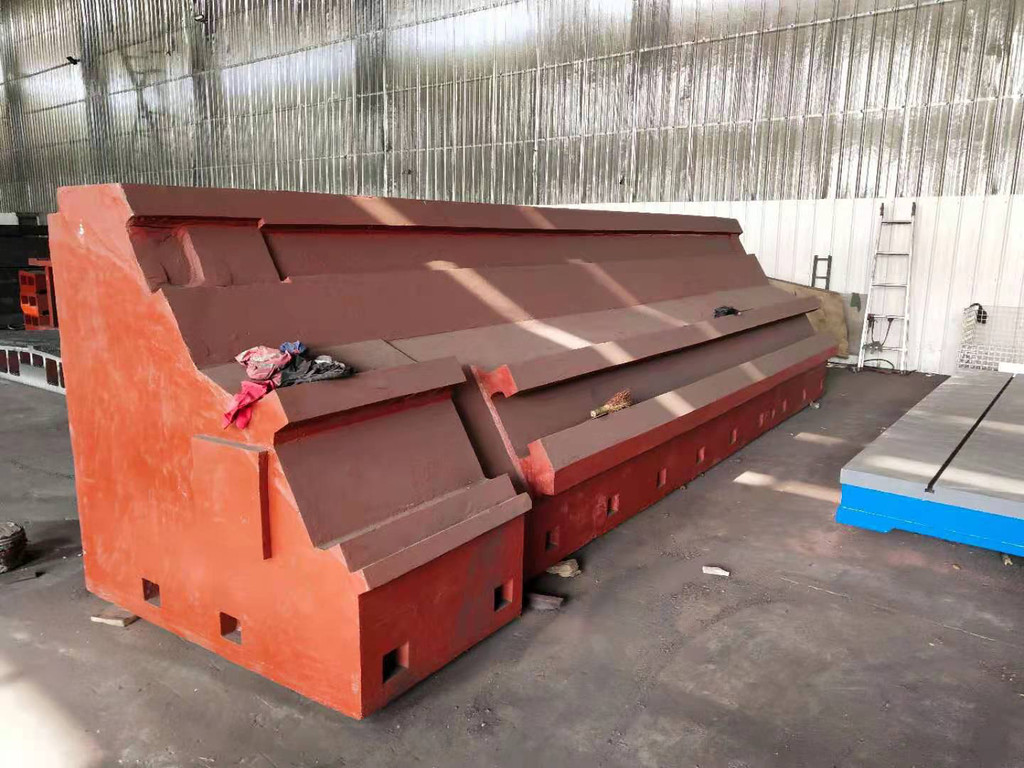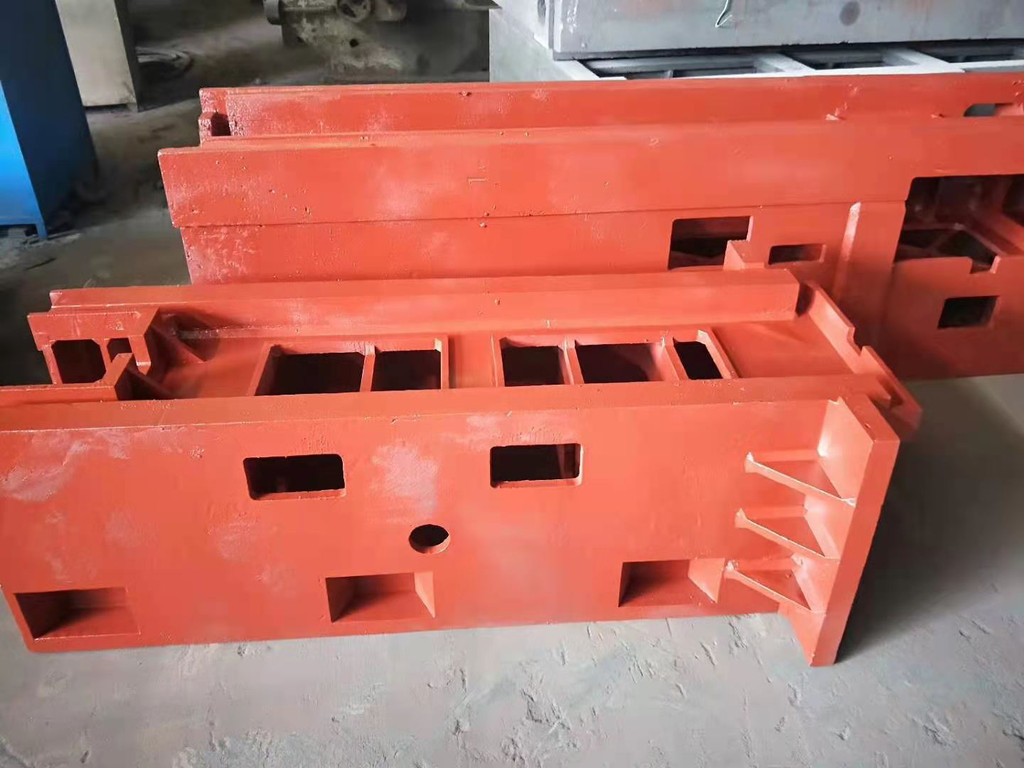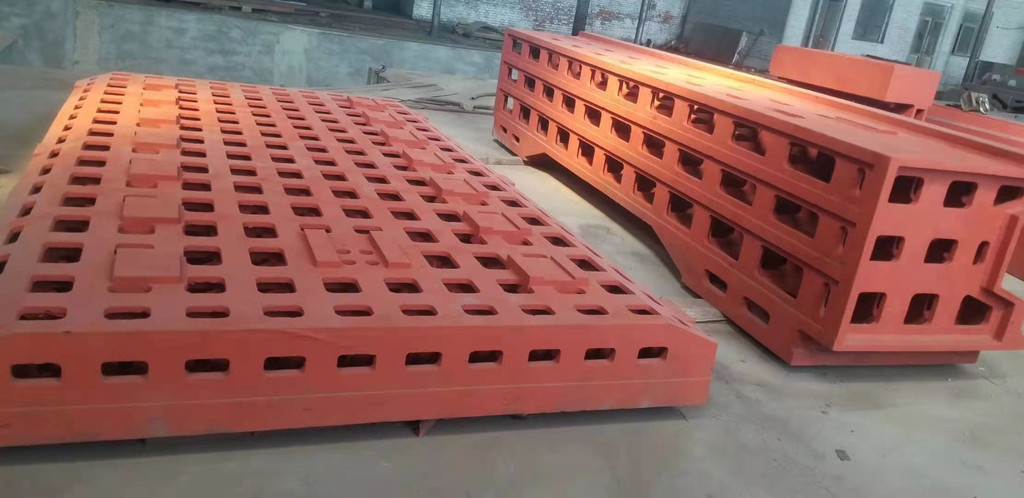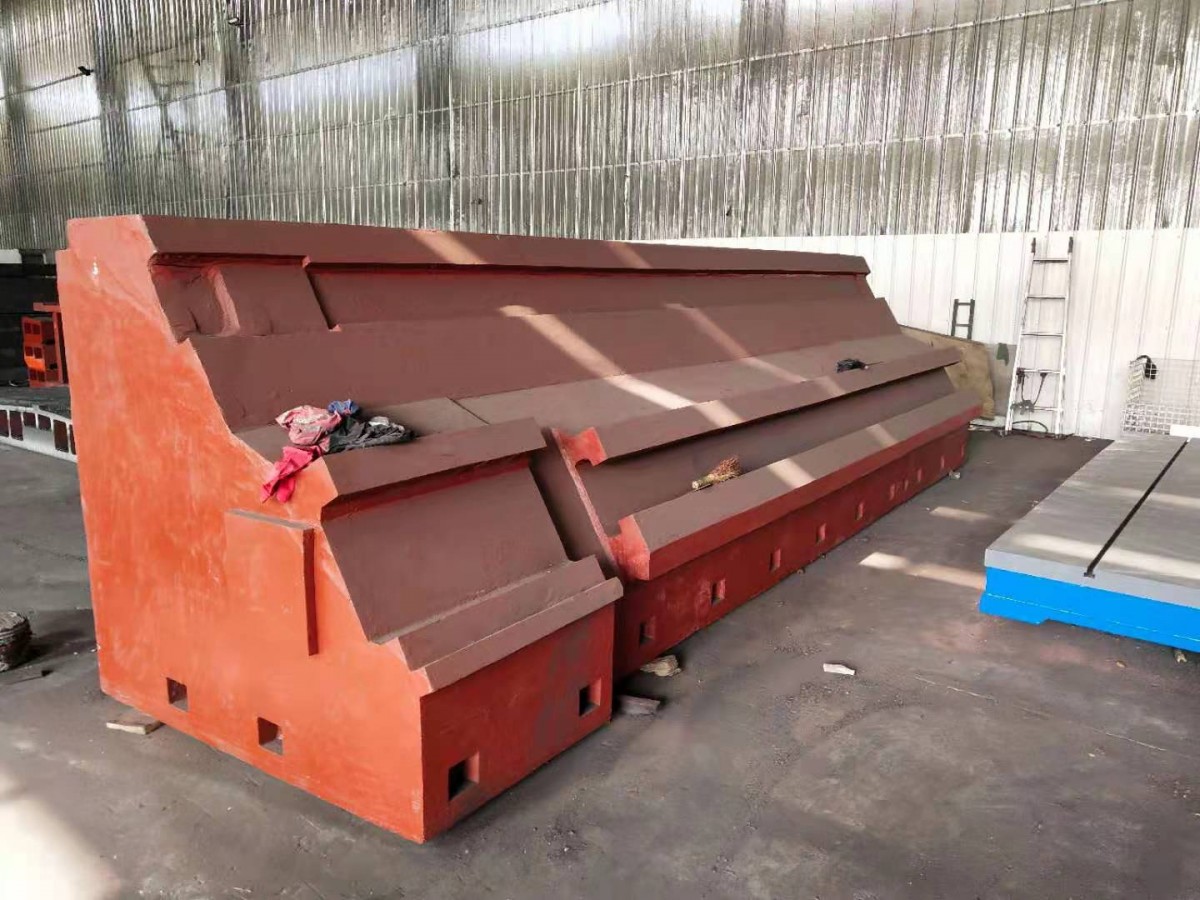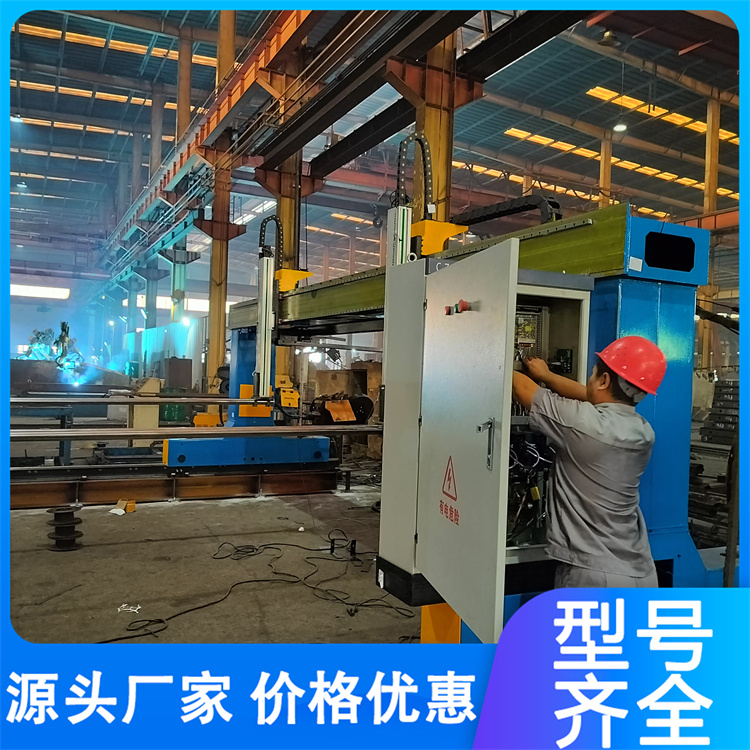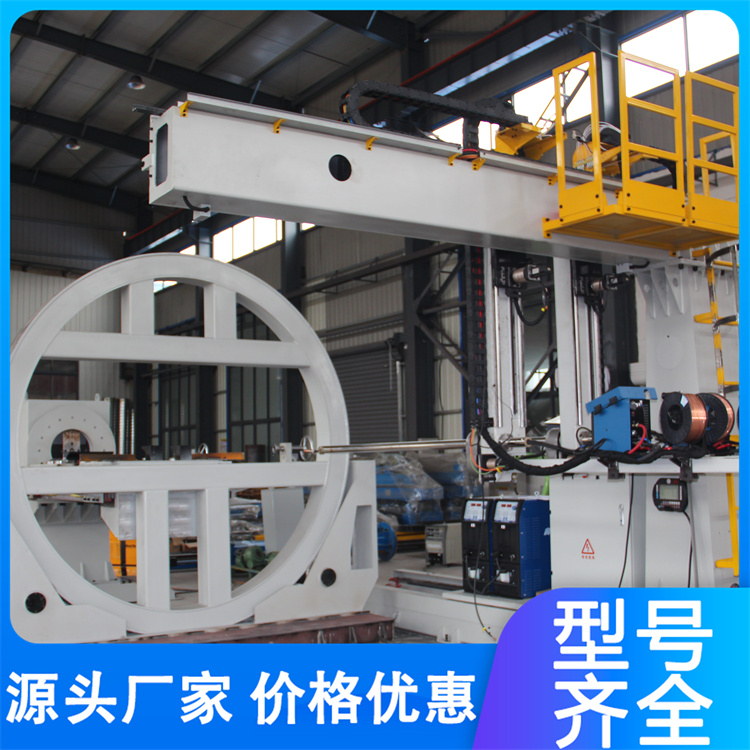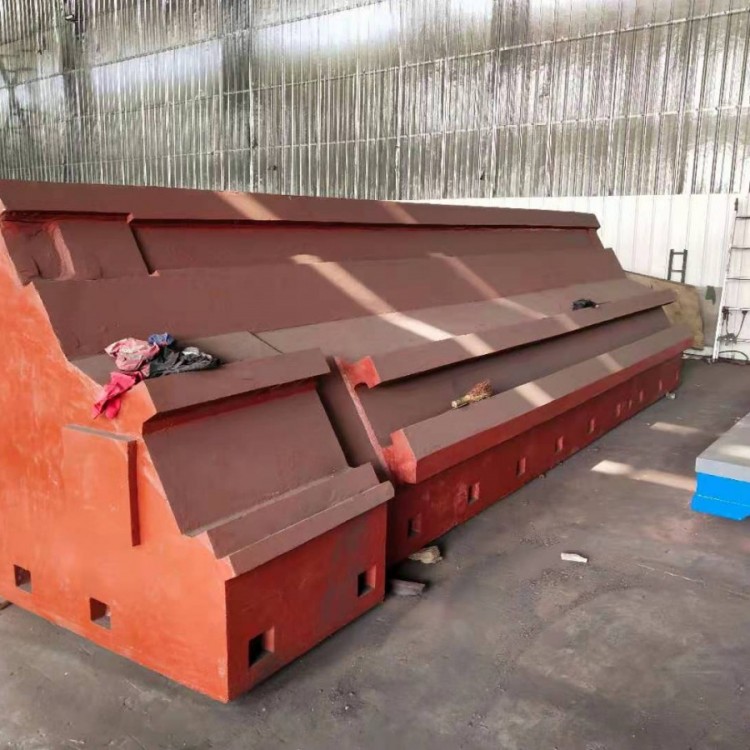

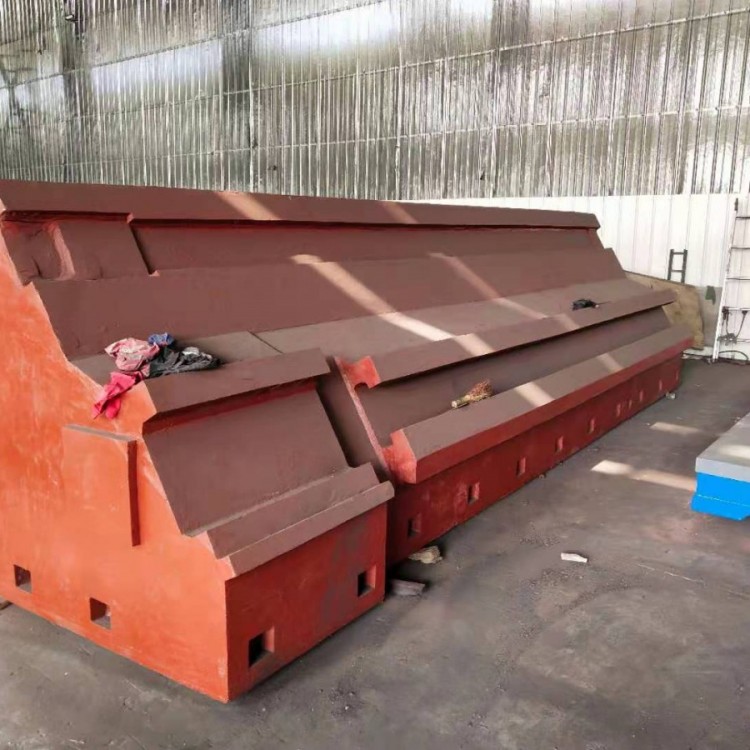
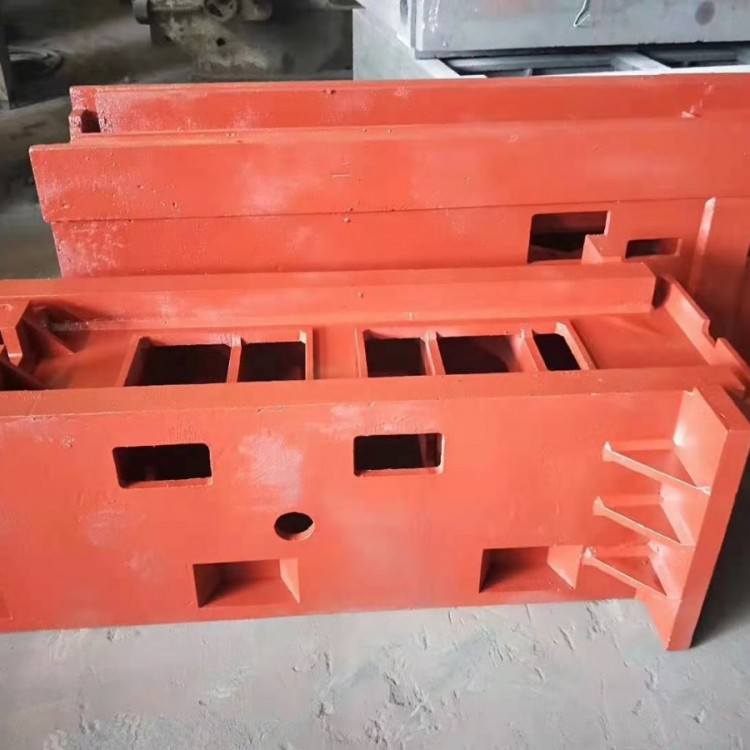
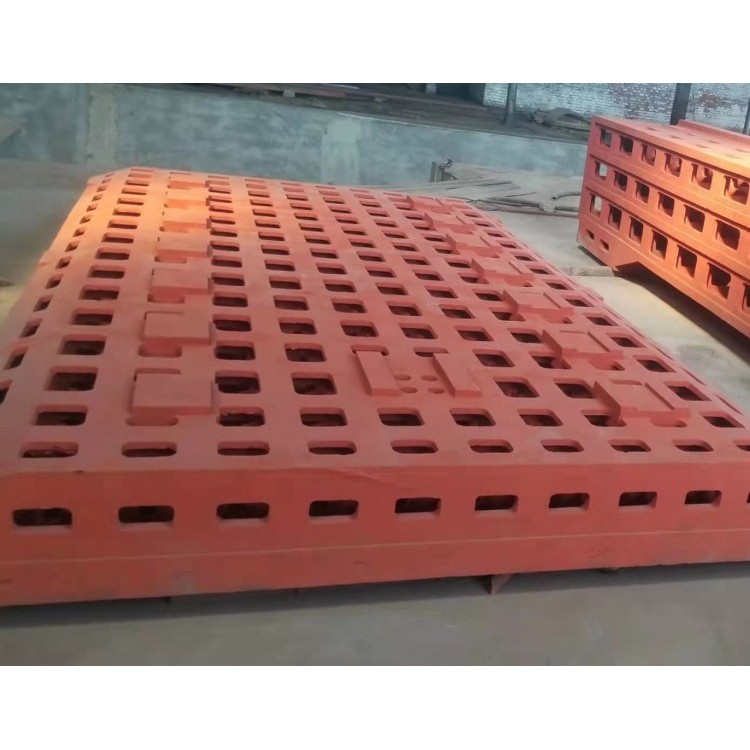











Machine tool castings, as a large type of casting, require heat treatment to improve their performance, and the inherent quality of cast iron castings. Metal heat treatment is one of the important processes in mechanical manufacturing. Compared with other processing techniques, heat treatment generally does not change the shape and overall chemical composition of the workpiece. Instead, it imparts performance to the workpiece by altering its internal microstructure or surface chemical composition. Its characteristic is the inherent quality of the workpiece.
Process production of machine tool castings:
In order to provide metal workpieces with the required mechanical, physical, and chemical properties, in addition to selecting materials and various forming processes reasonably, heat treatment processes are often used. Steel is a widely used material in the mechanical industry, with a complex microstructure that can be controlled through heat treatment. Therefore, heat treatment of steel is the main content of metal heat treatment. In addition, aluminum, copper, magnesium, titanium and their alloys can also change their mechanical, physical and chemical properties through heat treatment to obtain different performance characteristics.
The overall heat treatment of machine tool castings is a metal heat treatment process that heats the entire workpiece and then cools it at an appropriate speed to change its overall mechanical properties. The overall heat treatment of steel generally includes four basic processes: annealing, normalizing, quenching, and tempering.
Annealing treatment of machine tool castings:
Types of annealing for heat treatment of machine tool castings: Common annealing processes include recrystallization annealing, stress relief annealing, spheroidization annealing, annealing, etc. The purpose of annealing is mainly to reduce the hardness of metal materials, improve plasticity, facilitate cutting or pressure processing, reduce residual stress, improve the uniformity of structure and composition, or prepare the structure for subsequent heat treatment.
Annealing and isothermal annealing:
Annealing, also known as crystallization annealing, is commonly referred to as annealing. This type of annealing is mainly used for casting, forging, and hot-rolled profiles of various carbon and alloy steels with hypoeutectoid compositions, and sometimes also for welding structures. It is usually used as the final heat treatment for some non heavy parts, or as a pre heat treatment for certain workpieces.
Spheroidization annealing:
Spheroidal annealing is mainly used for hypereutectoid carbon steel and alloy tool steel (such as steel grades used in the manufacture of cutting tools, measuring tools, and molds). Its main purpose is to reduce hardness, machinability, and prepare for quenching in the future.
Stress relief annealing:
Stress relief annealing, also known as low-temperature annealing (or high-temperature tempering), is mainly used to eliminate residual stresses in castings, forgings, welded parts, hot-rolled parts, cold drawn parts, etc. If these stresses are not eliminated, it will cause deformation or cracks in the steel parts after time or during subsequent cutting processes.
Characteristics of machine tool castings:
The rigidity of machine tools is an important characteristic of machine tools, which directly affects productivity and machining accuracy. The chemical composition, design structure, casting process, processing technology, and rigidity of machine tool castings are directly and closely related.
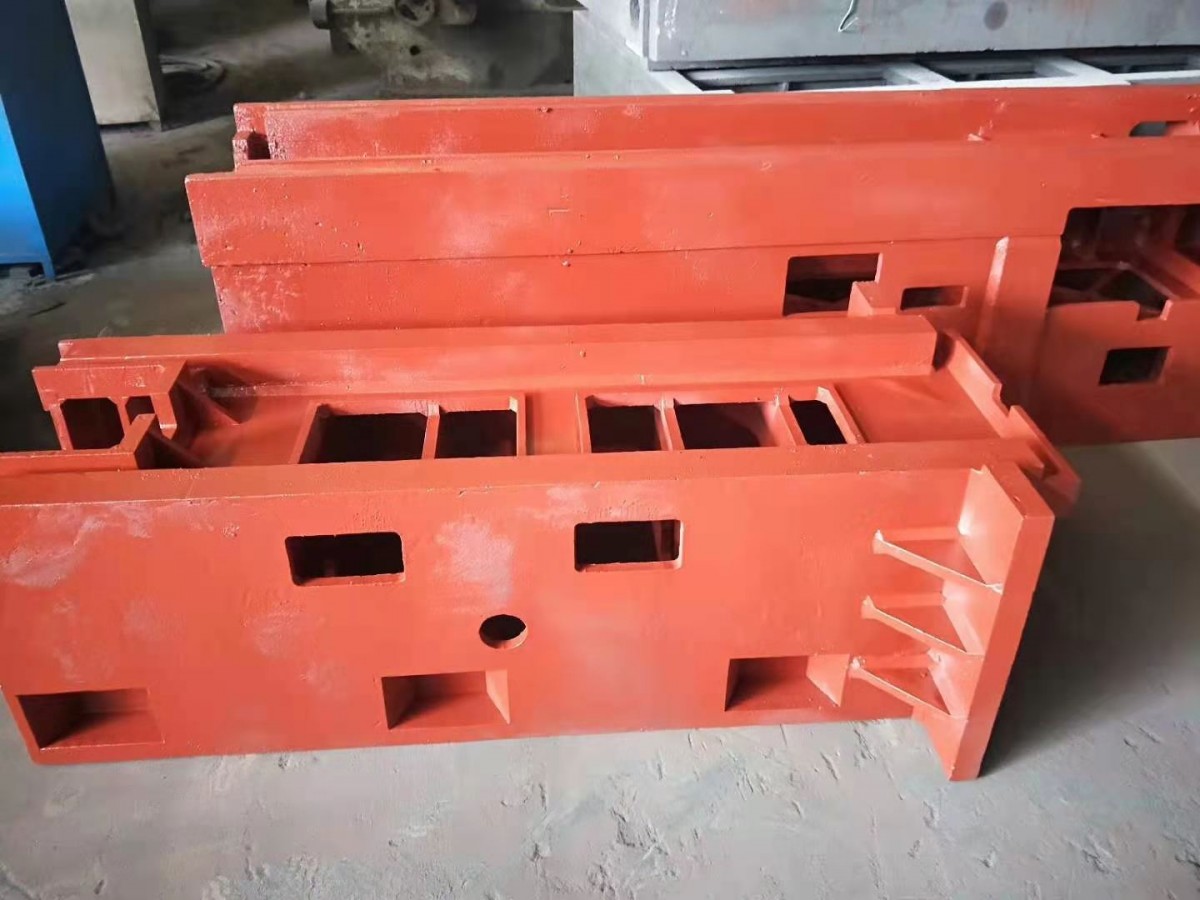
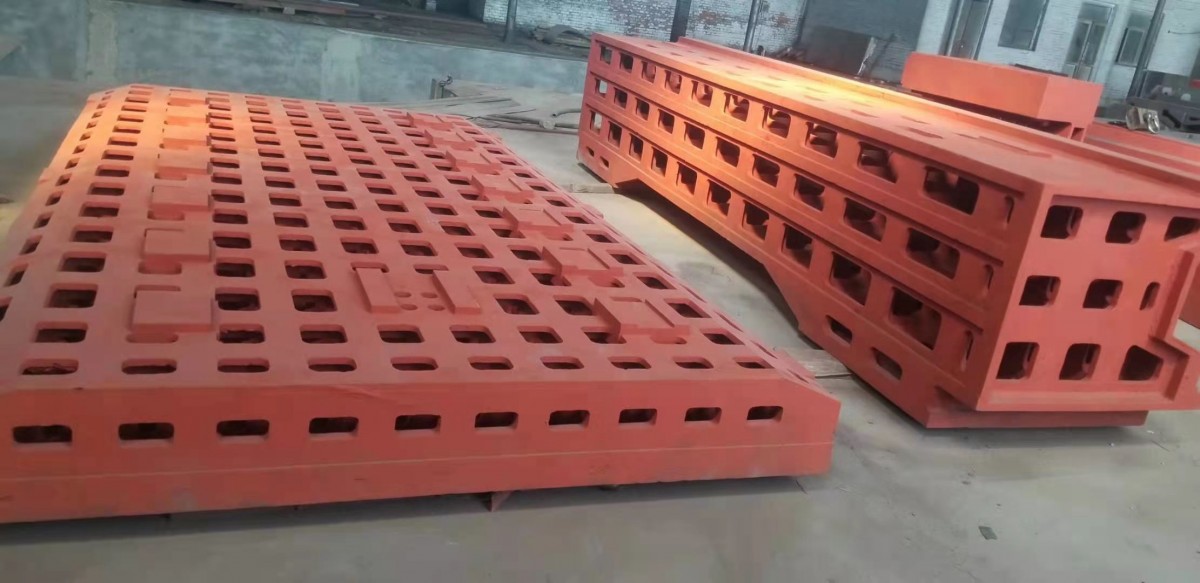
When casting machine tool castings, alloy elements such as silicon, manganese, magnesium, aluminum, copper, etc. are added to cast iron to improve the strength of machine tool castings. Our factory adopts casting technology to form various components of the machine tool, achieving high seismic resistance and rigidity, greatly improving the shock absorption capacity of the machine tool castings and ensuring the stability of the machine tool. The machine tool castings adopt optimized design, with various reinforcing ribs distributed inside the machine tool, as well as the dimensions of major machine tool castings such as bed, column, and worktable, to minimize weight and bear large loads as much as possible. The casting of the machine tool bed is designed with a triangular load-bearing structure, and the casting of the machine tool column is designed with an A-shaped structure, which eliminates the offset and swinging of the column during the machining process of the machine tool, thereby improving the load-bearing capacity of the machine tool worktable.
Advantages of using resin sand casting machine for casting:
1. Resin sand molds have good rigidity and high strength during the initial pouring stage, which allows for the use of graphite expansion during the solidification process of cast iron to eliminate shrinkage and porosity defects in machine tool castings, achieving less riser and no riser casting of machine tool castings.
2. In the production of solid casting, polystyrene foam molding is used, and self hardening sand molding with epoxy resin is applied. When the metal liquid is poured into the casting mold of machine tool casting, the foam plastic pattern quickly vaporizes under the action of high temperature metal liquid, burns and disappears. The metal liquid replaces the position occupied by the original foam plastic, and cools and solidifies into a solid machine tool casting with the same shape as the pattern.
3. Relatively speaking, lost foam casting has great advantages over traditional sand molds for producing large castings such as single machine tool castings. It not only saves expensive wood mold costs, but also facilitates operation, shortens production cycles, and improves production efficiency. The machine tool castings produced by resin sand casting have advantages such as high dimensional accuracy, small machining allowance, and good surface quality.
The non machined surface and appearance quality of machine tool castings have a significant impact on their marketability, including:
1. Surface roughness of machine tool castings (expansion, shrinkage, and sand inclusion);
2. The cleanliness of the surface or inner cavity of machine tool castings (such as sand adhesion and coating layer adhesion);
3. Flatness deviation of machine tool castings (unevenness of non machined surfaces);
4. Surface roughness of machine tool castings;
5. The contour clarity of machine tool castings (the contour clarity of structural units such as protrusions and umbilices, evaluated with the naked eye)