Comprehensive Solution Provider for Smart Agricultural In...

I. Project Background
The driving force behind Nonghe Lian originated from a vision 17 years ago: In January 2006, at a provincial rural work conference, the idea was proposed to "actively explore the establishment of a new rural cooperative system integrating professional, supply and marketing, and credit cooperatives, and strive to serve the construction of a new socialist countryside."
In January 2006, following the proposal to actively explore the establishment of a new rural cooperative system, Rui'an, long troubled by the challenges of past rural development, swiftly embarked on pioneering the practice.
After more than two months, the Ruian Rural Cooperative Association was officially established, comprising 8 core member units including the Rural Cooperative Bank and Supply and Marketing Cooperative, as well as over 100 basic member units such as farmers' professional cooperatives and agricultural machinery cooperatives. This marks the first comprehensive rural cooperative organization in the country that integrates rural finance, agricultural product production, and distribution. The "Ruian Experiment" of new rural construction and the "Three-in-One" new rural cooperative system has officially commenced.

II. Project Overview
The project is located in Ruian City, Wenzhou, Zhejiang Province, where Shijiazhuang Shengqi Technology Co., Ltd. has upgraded the irrigation methods. Transitioning from the labor-intensive, water-intensive traditional agricultural practices to an intelligent, integrated water and fertilizer modern agricultural approach, it has painted a vivid stroke in the three-in-one deepening of reforms, achieving integration, modernization, digitalization, and sharing in its 3.0 version.
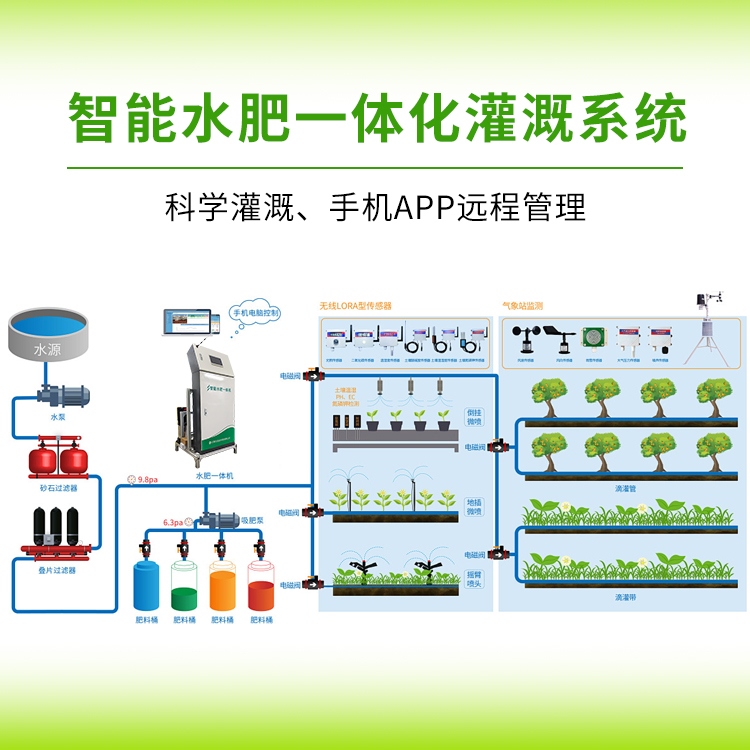
The intelligent integrated irrigation system for water and fertilizer can automatically detect, allocate, and supply water and fertilizer based on the water and nutrient requirements of different crops, soil environment, and nutrient content. It enhances irrigation water efficiency while achieving timed and quantitative control of irrigation and fertilization. Not only does it save water, fertilizer, and electricity, but it also reduces labor input and labor costs.
The first hub system primarily includes pumps, filters, pressure and flow monitoring equipment, pressure protection devices, fertilization equipment (integrated water and fertilizer machine), and automated control devices. The first hub is responsible for the driving, monitoring, and regulation of the entire system, serving as the control and dispatch center for the whole system.

Filtering equipment is essential for integrated water and fertilizer application. Some users mistakenly believe that well water or other water sources are clean enough and do not require filtration; however, well water often contains coarse sand, fine sand, and some chemicals that can clog emitters.
Therefore, it is essential to carefully select filtration equipment based on factors such as water source, water quality, and the dimensions of irrigation nozzles. Common filters include centrifugal filters, screen filters, plate filters, and sandstone filters, among others.

After our meticulously designed filtration system, pollutants in the water were effectively filtered out, allowing for an immediate visual assessment of the water quality and the clarity of the filtered water.


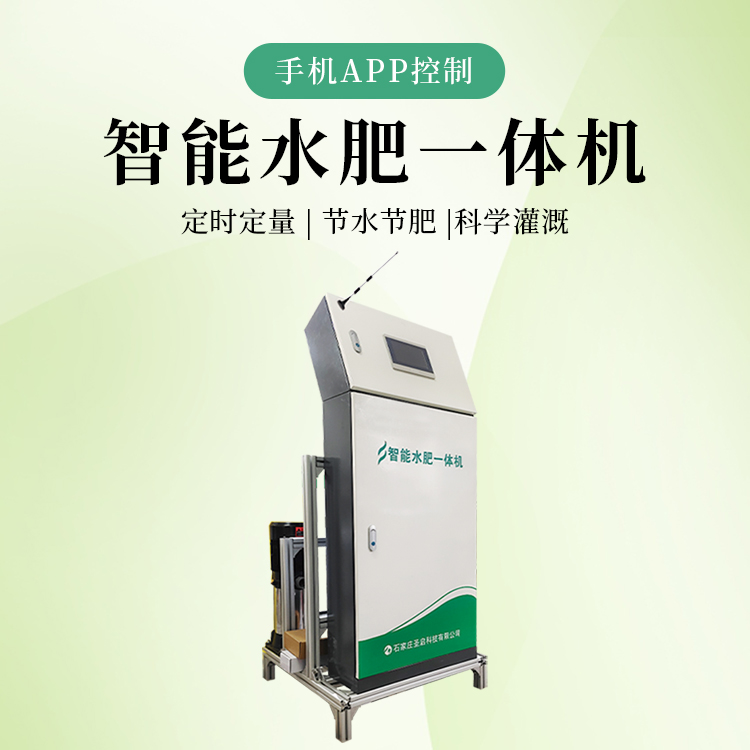
The integrated water and fertilizer machine is the core of the entire intelligent water and fertilizer irrigation system. Focusing on an automated unit, it utilizes sensor detection technology, microprocessor technology, computer technology, and other information technologies to achieve automatic management and distribution of water and fertilizer supply. The system, based on the user's predefined ratios, application times, cycle modes, and EC/pH balance conditions, employs a controller to inject various fertilizers into the irrigation pipeline at the appropriate time and in the correct proportions through a set of injection valves and an EC/pH monitoring system. This process automatically completes the fertilization task and rationally controls the supply of water and fertilizer.


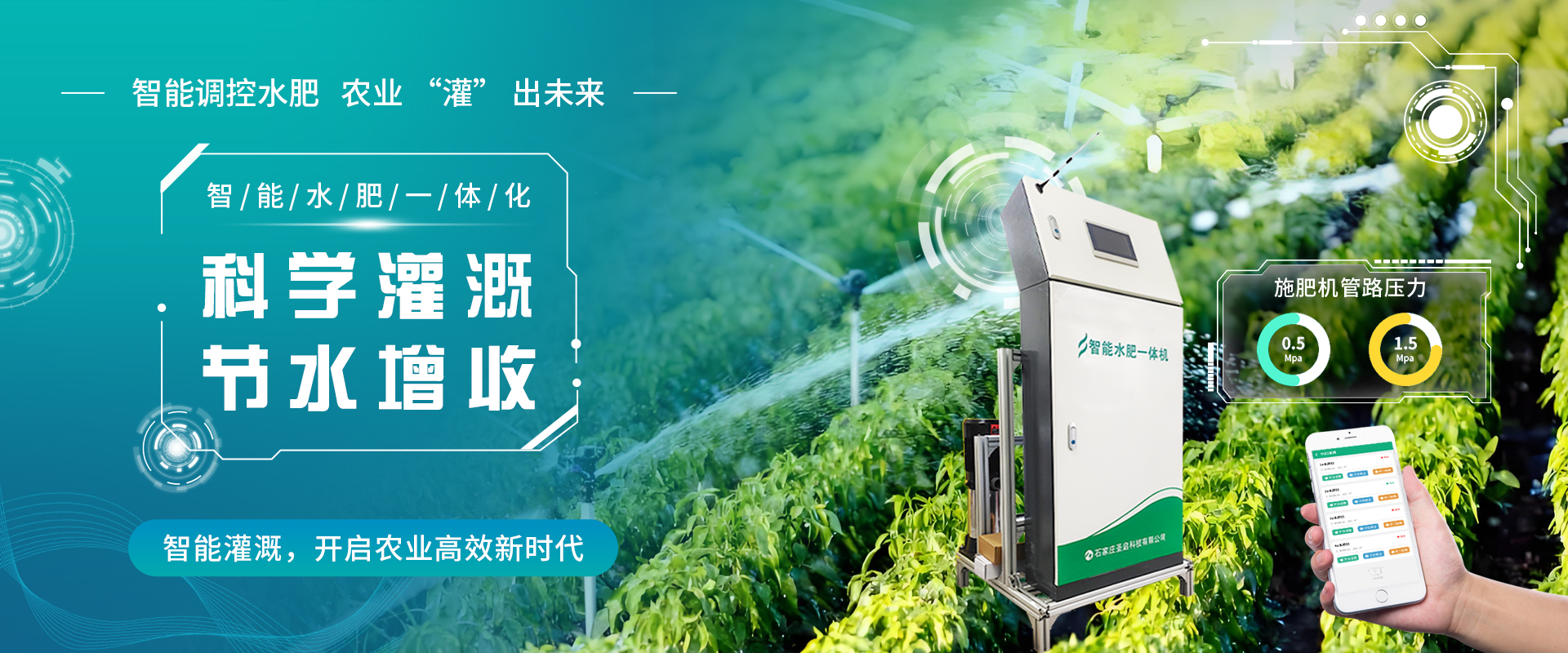
The Smart Water and Fertilizer Integrator is a device that combines advanced technologies such as integrated water and fertilizer automatic control, computer vision, and the Internet of Things. It can automatically adjust the amount of irrigation and fertilization based on the growth conditions of crops, making agricultural production more intelligent and automated. The intelligent control technology of the water and fertilizer integrator can also achieve fully automatic irrigation and fertilization, significantly improving production efficiency, reducing human error and complexity, and ensuring a more stable and reliable production process.
Users control the system through a touch screen, which automatically adjusts irrigation volume, nutrient absorption, solution concentration, and pH levels based on the user-defined formula and irrigation process parameters. This ensures timed and precise control of irrigation and fertilization, achieving water and fertilizer savings, labor and time efficiency, and increased yields. It is specifically designed for greenhouse, solar greenhouse, large greenhouse, and field irrigation operations.

Its intelligent system can be controlled via a smartphone to initiate and adjust the ratios of water and fertilizer, and can connect to the internet for remote control using a 5G data card.

The water distribution network system is composed of main pipelines, branch pipelines, and lateral pipelines. Main pipelines are generally made of PVC pipes, while branch pipelines are typically made of PE or PVC pipes. The pipe diameter is selected based on the flow rate; currently, lateral pipelines mostly use embedded dripper irrigation belts or edge-slot labyrinth dripper irrigation belts. Valves of medium and large diameters are often made of iron. The inlet ends of main pipelines or sub-mains are equipped with gate valves, and ball valves are installed at the inlets of branch and auxiliary pipelines.
The water distribution network's role is to deliver partially treated water to irrigation units and nozzles as required. The lateral pipeline is the last section of the micro-irrigation system, serving as the drip line in a drip irrigation system and fitted with micro-sprinklers in a micro-spray system.

In the process of agricultural planting, irrigation and fertilization are the most crucial elements in agricultural production. Therefore, the effective use of water and reasonable fertilization are at the core of agricultural development. In general agricultural planting, farmers often need to consider weather, soil, water, and crop growth conditions, then implement effective irrigation and fertilization from a complex array of data to enhance grain production. Currently, food security remains a key core issue制约ing China's development. Returning farmland to agriculture, soil conservation, developing sustainable natural resources, and protecting environmental diversity are the foundation of modern agriculture. However, with the advancement of electronic and information technology, precision agriculture is becoming an inevitable trend in the future of agricultural development. Among these, irrigation and fertilization are key technologies in precision agriculture, including the effective assessment of soil moisture and trace elements for planting crops, and maintaining reasonable growth demands for crops. United Nations statistics show that worldwide agricultural water usage accounts for 70% of total water usage, with all sectors of agriculture consuming 20% of that water.
Integrated water and fertilizer technology, unlike traditional fertilization and irrigation methods, serves not only as a practical technique to complete basic agricultural tasks but also helps in water and fertilizer control, saving production costs for practitioners, and increasing work efficiency. As a result, this technology has been widely promoted and applied in current agricultural production. Facility agriculture is a significant boost to enhancing agricultural productivity for practitioners, and its presence can accelerate the development process of modern agriculture. The application of integrated water and fertilizer technology not only tightly integrates agricultural production with facility agriculture and modern information technology, achieving intelligent management and more in-depth research, but also helps China's facility agriculture develop rapidly towards intelligence and informatization.


b2b.china9.net © Zhongshang 114 Hebei Network Technology Co., Ltd.Address: Room 6009, Oriental New World Center, No.118 East Zhongshan Road, Qiaoxi District, Shijiazhuang City, Hebei ProvincePlatform Service Hotline: 4006299930