Committed to providing quick, convenient, and professiona...


Product Recommendation
Over the past three decades, we've watched 3D printing evolve from a technology that could only勉强 produce basic geometric shapes to one that is revolutionizing various industries and challenging traditional manufacturing processes. Building on our three decades of 3D printing experience, we look ahead to 2020 to define the themes and trends shaping the industry.
2020 Trends in 3D Printing:
Enhancing the Sustainability of 3D Printing
The 3D printing industry also needs to consider the impact of technology on society and the environment. This means that sustainability must be a top priority when developing new products and technologies to help customers create meaningful applications.
From a social and environmental perspective, 3D printing has already provided businesses with a more sustainable production method. It has benefited people in more regions through decentralized production, improved health and well-being through personalized care, and made better working conditions possible. Additionally, 3D printing can reduce waste in the production process through mass customization and optimized logistics. Therefore, many view 3D printing as a positive force in helping businesses operate sustainably. But this is far from enough.
2. Opportunities Amidst Uncertainty
During the late 2000s economic crisis, the 3D printing industry was severely impacted as it was predominantly a prototyping technology at the time. With companies cutting back on R&D spending, the demand for prototyping decreased.
3D printing has evolved from prototyping to a complementary technology for manufacturing end products. Moreover, the technology has matured and gained increasing trust. Today, more businesses are gaining an edge in design and manufacturing through 3D printing. Therefore, in uncertain economic times, 3D printing is no longer a cost and risk, but an opportunity.
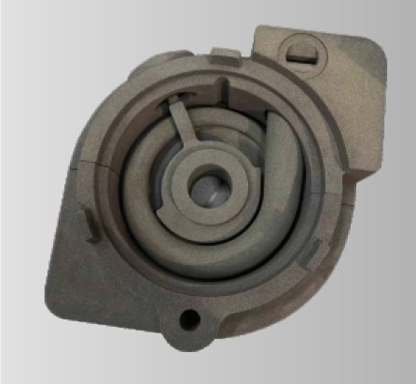
3D printing is now being used for mass production, such as the casing for the Hoya Visual Simulator.
Compared to traditional manufacturing techniques, 3D printing doesn't rely on scale effects and requires minimal startup capital. On-demand production reduces the need for inventory, and localized manufacturing lessens the impact of tariff fluctuations.
Amidst the uncertain economic climate, we believe more manufacturing companies will regard 3D printing as a tool to reduce costs and mitigate risks.
3. Laying the groundwork for the application of artificial intelligence in additive manufacturing
Data is power. As 3D printing becomes more widely adopted, more sensors are being used to better monitor the 3D printing process, and we are collecting more data than ever before.
But, merely collecting data is far from enough—we need data to help inform decisions.
Artificial intelligence is an extremely powerful tool that can process vast amounts of data and yield profound insights to aid decision-making. However, to do so, it requires more than just a large volume of data; it also necessitates a deep understanding of the 3D printing process.
Only by truly understanding the 3D printing process and finding ways to make it faster, more stable, and more predictable through data analysis can we fully unleash the potential of artificial intelligence in additive manufacturing.
4. A brand-new innovative atmosphere
In recent years, advancements in 3D printing have been made across many fronts: faster printers, more materials, and a wider array of post-processing options. Now, we see all these advancements converge, creating an exciting atmosphere of innovation.
Advancements in 3D printers, software, and materials are creating opportunities. In previous years, consumers may not have understood or cared about the manufacturing process behind the products they chose. Now, they have increasingly higher demands for performance and aesthetics, and are more actively involved in the customization process. 3D printing is the ideal way to achieve all this. In the near future, people will be able to enjoy products they never imagined before.
5. Investment in Post-Automation Processing
As the company scales up 3D printing, they will increasingly rely on automation. However, the potential for expansion is limited by post-processing, especially since it currently heavily depends on manual operations. Simply adding personnel to expand scale leads to increased costs and uncertainties, and reliability cannot be guaranteed. The solution to expand production is to automate the post-processing.
Especially so in the context of mass customization. For personalized shoes, different customers may require different colors, which adds complexity to the process. Moreover, what we refer to as "mass customization" still has a relatively low total output.


b2b.china9.net © Zhongshang 114 Hebei Network Technology Co., Ltd.Address: Room 6009, Oriental New World Center, No.118 East Zhongshan Road, Qiaoxi District, Shijiazhuang City, Hebei ProvincePlatform Service Hotline: 4006299930