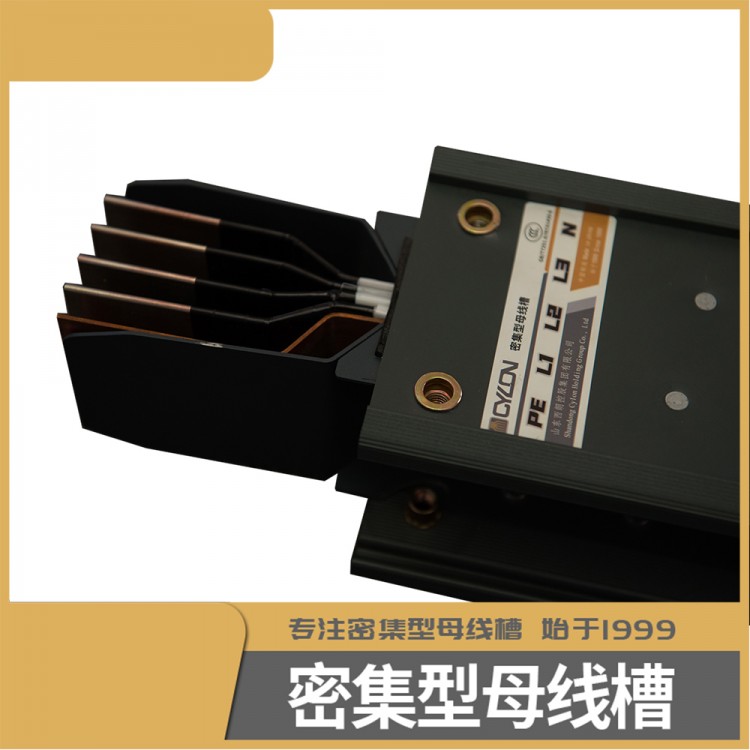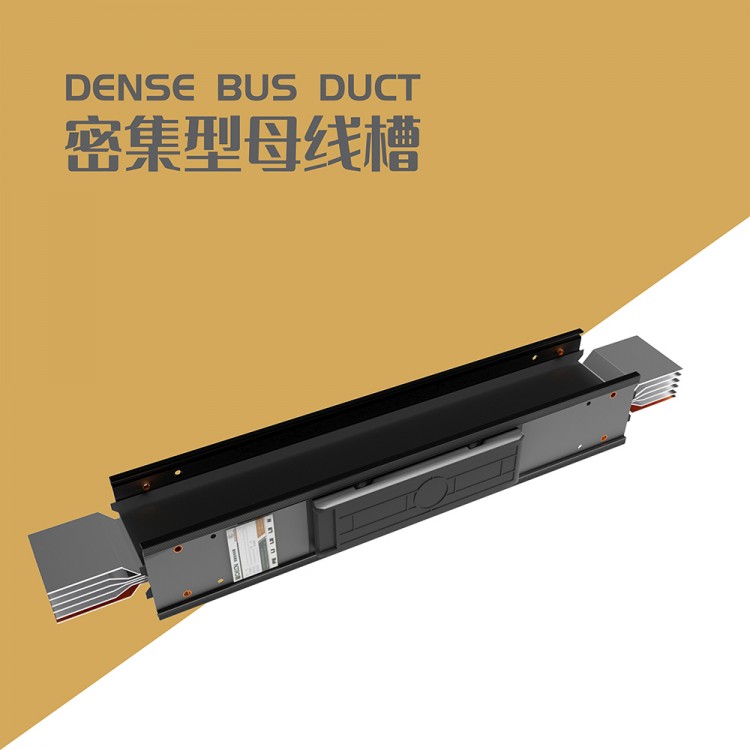
Busway, Busway manufacturer, Compact busway, Dense busway
0532-88888852



The dense insulated busway features a compact size, compact structure, high current transmission, and easy maintenance. It is widely used in low-voltage distribution systems in enterprises. However, during the construction management process, it has been found that due to the monotonous product specifications of manufacturers, overly simple installation and usage manuals, and insufficient design considerations, installation on-site often poses difficulties. The following are several issues to be aware of during the installation of dense insulated busways from transformers to low-voltage distribution cabinets, for reference during construction.
1. Busbar槽 connections - The connection of plug-in busbar slots utilizes high-strength insulation boards with high insulation, arc-resistant, and flame-retardant properties as the connecting accessories, secured with bolts fitted with insulating sleeves. According to specifications, the bolt holes and gaps between bolts are small to meet the busbar overlap area. Due to the added insulating sleeves on the busbar slot bolts, the gap becomes narrow. Therefore, when connecting two main busbars of the busbar slots, the two busbar axes must be kept strictly aligned on a central line. Ensure that the bolt holes of the busbars and insulation boards in both busbar slots are perfectly aligned, and apply an even force to each bolt sequentially when tightening. This is to prevent the insulating sleeves on the bolts from being damaged by shearing forces during installation. During the construction and management process, I have encountered several cases where the insulation of busbar slots was reduced due to damaged insulating sleeves on the bolts. For grounding connections, the busbar housing should meet grounding requirements. However, when the busbar housing is entirely coated, two busbar slots must be connected with grounding bolts using a wire. Insulation checks should be conducted before and after installation of the busbar slots, and a comparative check should be performed to determine if the reduction in insulation is due to installation quality issues.
2.) Fixed Method of Bus Duct in Transformer Room - The bus ducts provided in the manufacturer's samples are generally suspended using round steel, which is not suitable for fixing bus ducts in transformer rooms. This type of suspension is "flexible," allowing only for the bus duct to be suspended without vertical movement. However, when the bus duct is improperly installed and subjected to torsional stress or electrical forces from a bus short circuit, it may sway horizontally or vertically, leading to potential damage to the transformer's low-voltage bushing or oil leakage at the rubber sealing ring at the base of the bushing.
3.) Bus Duct Waterproofing Bus ducts are typically designed for indoor use, and humidity in the air does not affect their operation. However, if water enters the bus duct during use, it will inevitably lead to a decrease in insulation, which could cause short circuits and damage to the bus duct over time. Therefore, necessary protective measures should be taken for installation methods that may cause water entry into the bus duct. For instance, when the bus duct crosses floors, water may leak down through the crossing due to reasons such as production or roof leaks, causing water entry into the bus duct and reducing its insulation. After the polymerization workshop bus duct of our factory was put into operation, a short-circuit fault occurred due to water entry during the crossing of floors, resulting in a shutdown of the entire production facility. The solution was to add a waterproof cofferdam at the crossing of floors. Even if the bus duct is connected to the transformer with expansion joints, the large current (up to 2500A) carried by the bus duct as the main low-voltage line current means that the corresponding expansion joints have a larger cross-sectional area and less elasticity, which could still subject the transformer's low-voltage bushing to stress. Therefore, it is recommended to use the fixed method shown in Figure 3 for the bus duct in the transformer room. The bus duct is supported by channel steel brackets below, and round steel ties are used to secure the bus duct to the channel steel brackets. The ends of the channel steel brackets are connected to the pre-buried components on the walls of the transformer room with bolts. This ensures that the "rigidity" of the channel steel bracket's fixed installation complements the "flexibility" of the expansion joints, thus ensuring that the transformer's low-voltage bushing is not subjected to damage from stress.
Contact us

Service Hotline
13061252393
Company Telephone
0532-88888852

Address
Qingdao City, Chengyang District; 7th Floor, Shandong Huatong Building, at the intersection of Guangsheng Road and Juxian Bridge Road
b2b.china9.net © Zhongshang 114 Hebei Network Technology Co., Ltd.Address: Room 6009, Oriental New World Center, No.118 East Zhongshan Road, Qiaoxi District, Shijiazhuang City, Hebei ProvincePlatform Service Hotline: 4006299930