Feed Equipment
13472958482
How to Choose Feed Crushing Machinery
Choose according to production capacity
The instruction manual and label of a general crushing machine typically include the machine's specified production capacity (kg/h), but several points should be noted:
The rated production capacity refers to the output under a specific condition, such as for a grain feed grinder, it indicates the grinding of corn as the raw material, with a moisture content of the storage safe moisture (about 13%), and a sieve mesh diameter of 1.2 millimeters. Since corn is a commonly used grain feed, a sieve mesh with a 1.2 millimeter diameter is the standard smallest sieve hole. At this point, the production capacity is lower, which takes into account the more challenging state that is more common during production.
2. The production capacity of the selected crushing machine should be slightly higher than the actual required capacity; otherwise, it will increase the wear of the hammer blades, air leakage in the air ducts, and other factors that lead to a decrease in production capacity, affecting the continuous supply of feed.
Based on the choice of raw materials
For grain feed crushing, choose a top-loading hammer mill; for chaff and grain feed crushing, opt for a claw-type mill; for a versatile option focusing on grain crushing with consideration for cake grain and straw, select a tangential feeding hammer mill; for crushing minerals like shells, use a shell-type screenless mill; if used for pre-mixed feed preparation, requiring very fine particle size and adjustable as needed, special screenless mills should be chosen.
Select according to material layout
Crushed products can be discharged through the feed device in three ways: gravity feeding, vacuum conveying, and mechanical conveying. Small single machines mostly use gravity feeding to simplify the structure. Medium-sized crushers are usually equipped with vacuum conveying systems, which have the advantage of removing moisture from the finished product, reducing humidity for better storage, increasing crushing efficiency by 10~15%, and lowering the dust level in the crushing chamber.
Select according to the matching power
The machine manual and label both carry the kilowatt rating of the motor for the粉碎机. It typically indicates not a fixed number but a range. For example, the 9FQ-20 model粉碎机 is equipped with a motor ranging from 7.5 to 11.0 kilowatts; the 9FQ-60 model粉碎机 is fitted with a motor ranging from 30 to 40 kilowatts. This is due to two reasons: first, the power required varies significantly with different types of materials being crushed, such as, under the same working conditions, the power needed to crush sorghum is twice that of corn; second, the load on the crusher is greatly affected when different sieve holes are used. Therefore, when the 9FQ-60 model粉碎机 is using a sieve with a 1.2mm diameter hole, the motor capacity should be 40 kilowatts. For a sieve with a 2mm diameter hole, a 30-kilowatt motor can be used, and for a 3mm diameter hole, a 22-kilowatt motor is suitable. Otherwise, some degree of waste will occur.
Select Based on Energy Efficiency
The energy consumption of crushers is substantial; therefore, energy conservation should be considered during purchase. According to relevant departmental standards, when a hammer mill crushes corn using a sieve with a diameter of 1.2 millimeters, the output per kilowatt-hour must not be less than 48 kilograms. Domestic hammer mill crushers have significantly exceeded this standard, with our quality reaching 70-75 kilograms per kilowatt-hour. The technical specifications and labels of the crushers indicate the power rating of the matching electric motors in kilowatts. The specified kilowatt rating is often not a fixed number but a range, for example, the 9FQ-20 model crusher is matched with...
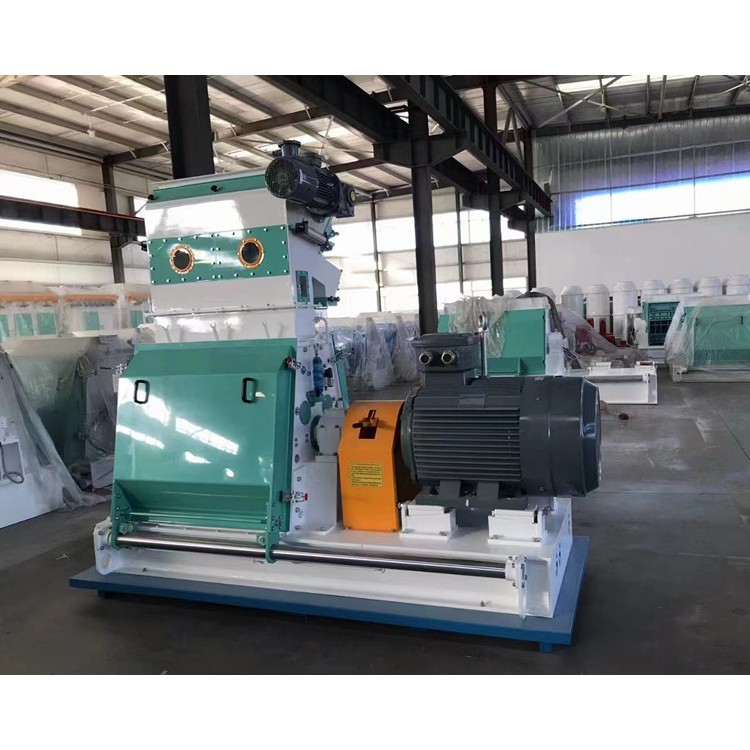
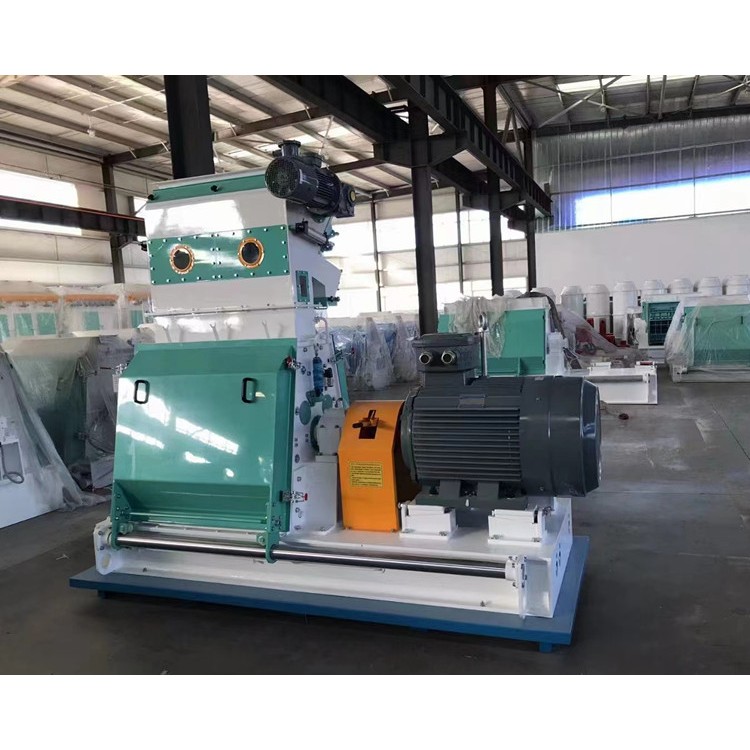
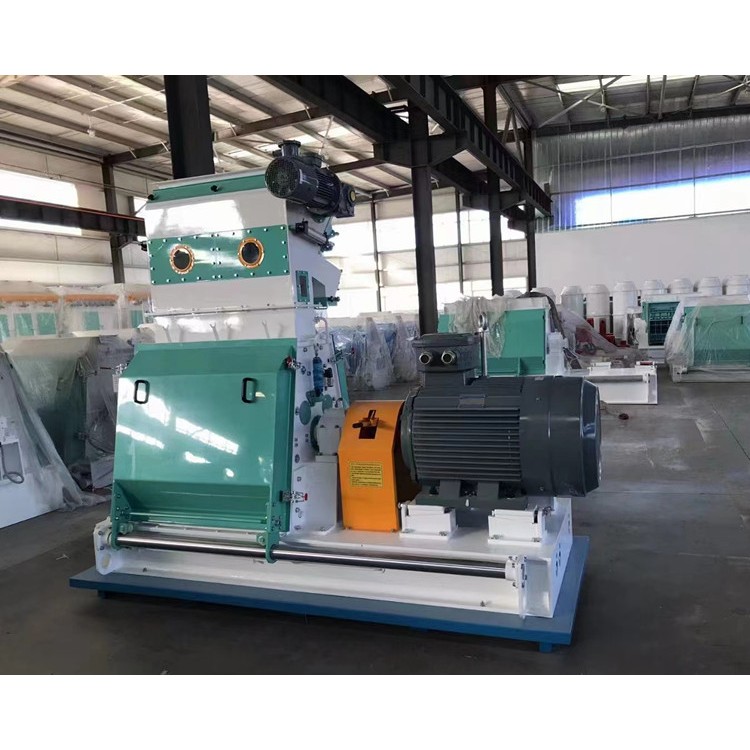
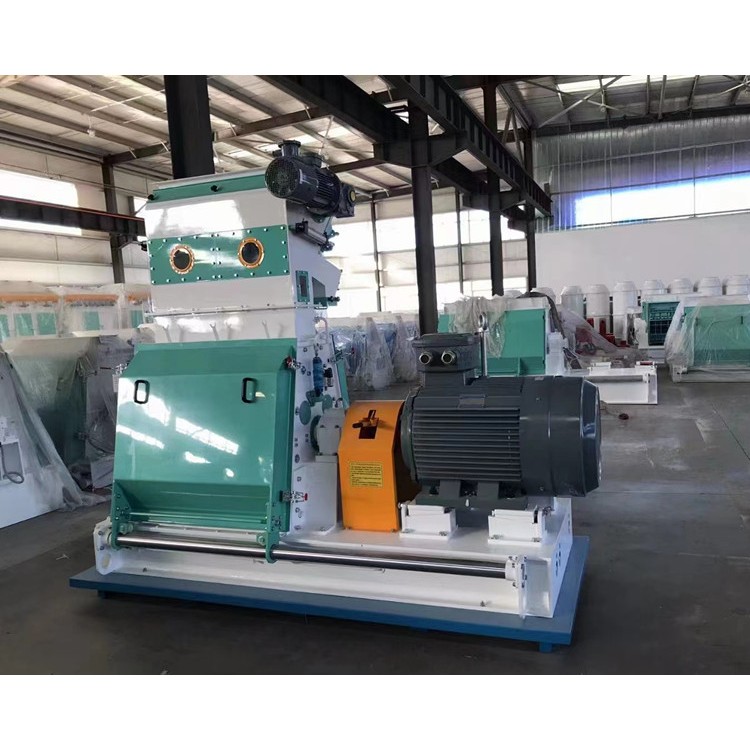
9FZ-42 Feed Grinder
The motor power ranges from 7.5 to 11 kilowatts; the 9FQ-60 crusher is paired with a motor power of 30 to 40 kilowatts.
There are two reasons for this. First, the required power varies significantly with different types of crushed raw materials, for instance, under the same working conditions, the power needed to crush sorghum is twice that of corn. Second, switching to different sieve hole sizes greatly impacts the粉碎 machine's load. When the 9FQ-60粉碎 machine is equipped with a sieve plate with a 1.2mm diameter hole, the motor capacity should be 40 kilowatts; with a 2mm diameter hole, 30 kilowatts; and with a 3mm diameter hole, 22 kilowatts. Otherwise, it would lead to certain waste.
According to the standards set by relevant authorities, the yield of a hammer mill per kilowatt-hour when grinding corn through a sieve with a diameter of 1.2 millimeters must not be less than 48 kilograms. Our quality has reached 70 to 75 kilograms per kilowatt-hour.
Based on dust and noise selection
Dust and noise in feed processing mainly come from the crushing machine. These two indicators should be fully considered during selection. If it is unavoidable to choose a crushing machine with high noise and dust levels, noise reduction and dust prevention measures should be taken to improve the working environment.
Contact us

Service Hotline
13472958482
Company Telephone
13472958482

Address
Hebei Province, Tangshan City, Cangqianzhen Five Farm, Tangshan City
b2b.china9.net © Zhongshang 114 Hebei Network Technology Co., Ltd.Address: Room 6009, Oriental New World Center, No.118 East Zhongshan Road, Qiaoxi District, Shijiazhuang City, Hebei ProvincePlatform Service Hotline: 4006299930