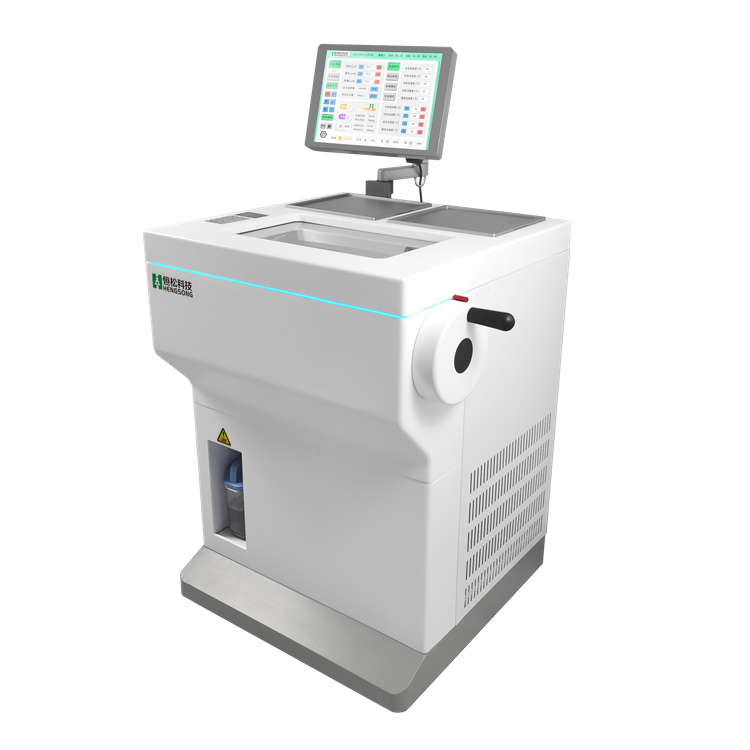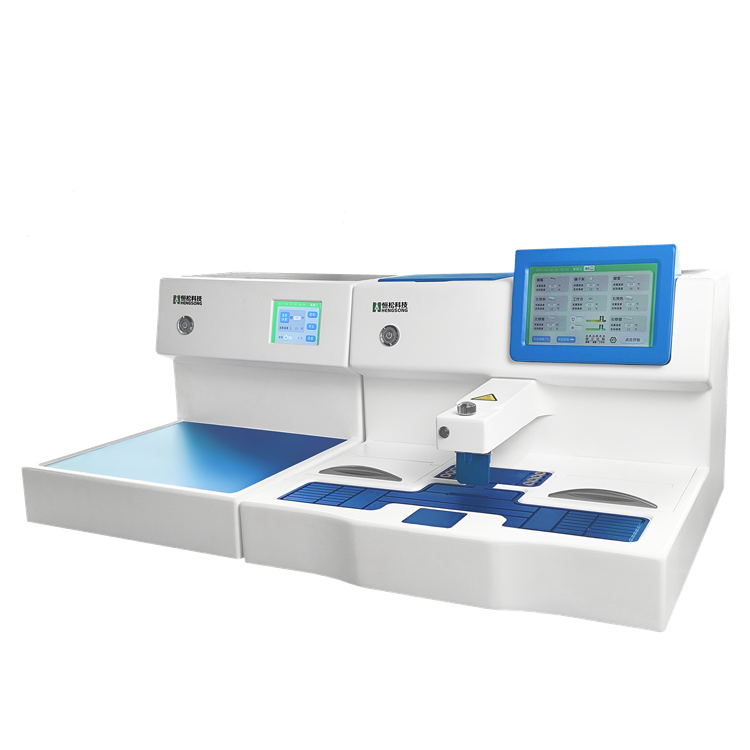
Focused on the research, development, and production of e...

(Preparation before paraffin sectioning)
1. Prior to use, it is crucial to inspect the blade's damage under a microscope and then sharpen it. Now, disposable blades are also available, which can eliminate the need for sharpening.
2. Trim Paraffin Blocks: Remove excess paraffin surrounding the tissue, leaving approximately 1-2mm of paraffin edge around the tissue, ensuring both sides are parallel.
3. Wax Block Securing: After trimming, the wax blocks are first secured to pre-prepared small wooden blocks or metal blocks. The method involves heating the wax spatula over a spirit lamp, then melting the bottom of the wax block and quickly attaching it to the base of the small wooden or metal block.
4. After cleaning the slides, apply an adhesive (protein glycerol, APES, or polylysine) to the surface, selecting the appropriate adhesive based on the staining method.
5. Prepare the brush, tweezers, and dyeing stand.
Adjust the water temperature inside the slide projector to 45°C, and sometimes add a little alcohol to the water.
Paraffin Sections
1. Mount the slicing blade on the blade holder of the slicer and secure it tightly. Fasten the wax block base or wax block, adjust the wax block to the appropriate position relative to the blade, ensuring the blade edge forms a 5-degree angle with the wax block surface.
2. The slicing is predominantly done using a rotary slicer. During slicing, the left hand holds a brush, while the right hand turns the slicer's wheel, first preparing the tissue blocks.
Adjust the slicing thickness on the slicer to 4-7 µm, then proceed with slicing.
4. Sections can be individual or form a continuous strip into a paraffin tape.
5. Film and Reel Handling
Direct Sliding Method: Add a few drops of distilled water onto the slide, then place the sliced specimen on top of the water droplets. Heat the slide from below using an alcohol lamp until the specimen is completely flat. Incline the slide, discard the excess water, and simultaneously align the specimen.
(2) Water Floating Method: This method involves using a spreading machine or a constant temperature water bath to maintain the water temperature at 45~50°C. Use the left hand to gently support the sliced sections with a brush, while the right hand uses a surgical forceps to pick up a corner of the section. Place the section face-up on the surface of the spreading device with a light, quick motion. After the paraffin sections are cut, they will naturally flatten out in the warm water due to heat and surface tension. If necessary, gently separate them with the surgical forceps, then retrieve the sections and immediately label them.
6. After slicing and allowing the pieces to slightly dry at room temperature, place them in a 40℃ constant-temperature oven. Small pieces require 30 minutes, while larger pieces need 12-24 hours for drying and storage.
(3) Cautionary Notes
1. Excessive or insufficient tilt of the slicing blade prevents normal slicing operation.
Be careful when trimming the wax blocks, ensure you clearly identify the location of the tissue within the block to avoid trimming away the necessary tissue.
Ensure the slicing machine's wheel rotates continuously at a consistent speed, avoiding fluctuations between fast and slow to prevent unevenly thick slices.
When using a rotary slicing machine, the slicing is done from bottom to top. To ensure even slices and prevent tissue from developing knife marks and cracks, the harder and more brittle parts should be placed on top. For example, with skin, the epidermal layer should face upwards, and for organs like intestines, the serosal surface should be upwards.
When using a sheet spreader, the water temperature should be adjusted according to the melting point of the paraffin used, usually 10-15℃ below the melting point of the paraffin; when picking up the sheets, the movement should be gentle and slightly quick. Excessive movement can lead to the formation of bubbles.
6. Place individual slices at the intersection of the 1/3 and 2/3 of the slide; for consecutive slices, the sticking order is typically from left to right. When the tissue slices are smaller, you can align and stick 2 to 3 wax strips side by side.
7. Avoid excessively high temperatures when slicing; ensure the slicing time is appropriate. The brain tissue should be slightly dried before slicing to prevent air bubbles, which may affect staining and observation.


b2b.china9.net © Zhongshang 114 Hebei Network Technology Co., Ltd.Address: Room 6009, Oriental New World Center, No.118 East Zhongshan Road, Qiaoxi District, Shijiazhuang City, Hebei ProvincePlatform Service Hotline: 4006299930