


- AllProduct Category
-
化工储罐、填料塔系列
浓缩罐、提取罐系列
换热器、冷凝器系列
发酵罐、提取罐系列
反应釜、反应锅系列
干燥机、刮片机系列
短程蒸馏
离心式刮板薄膜蒸发器
刮板蒸发器、多效蒸发器
蒸馏塔
乙醇精馏塔
精馏塔
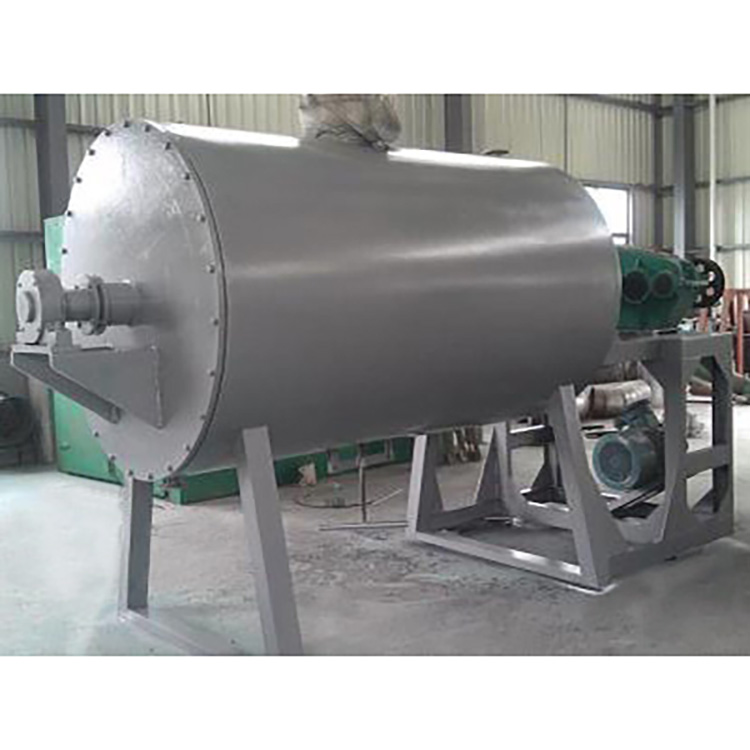
真空耙式干燥机


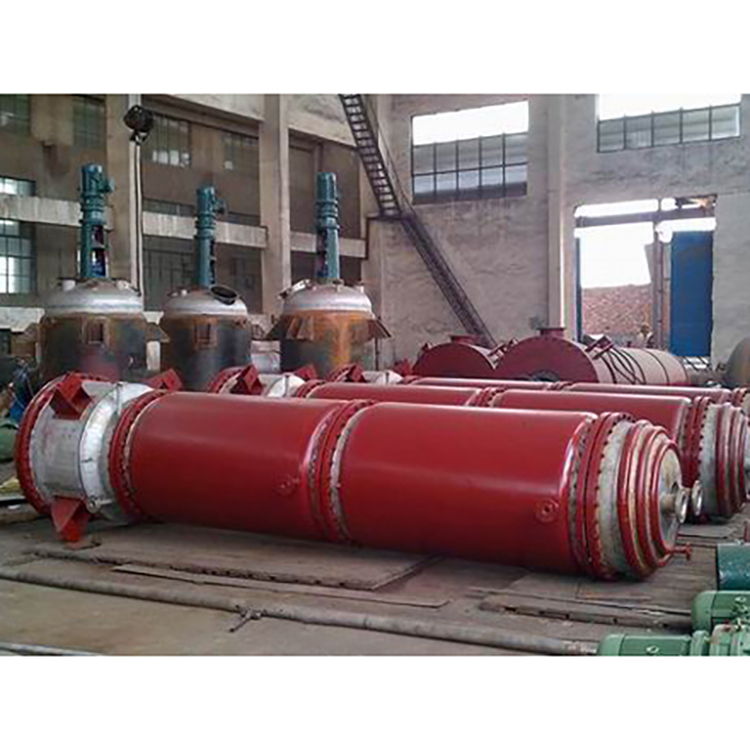


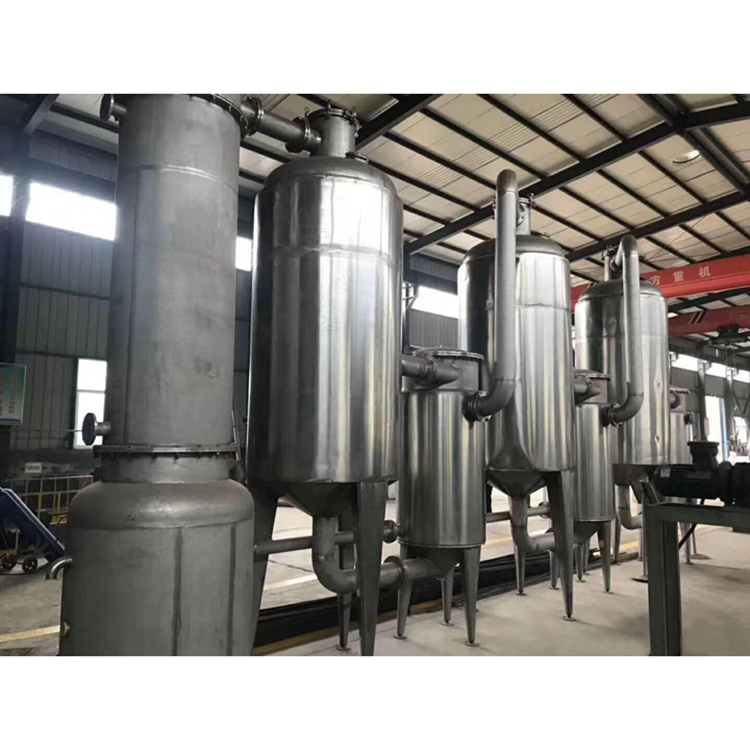

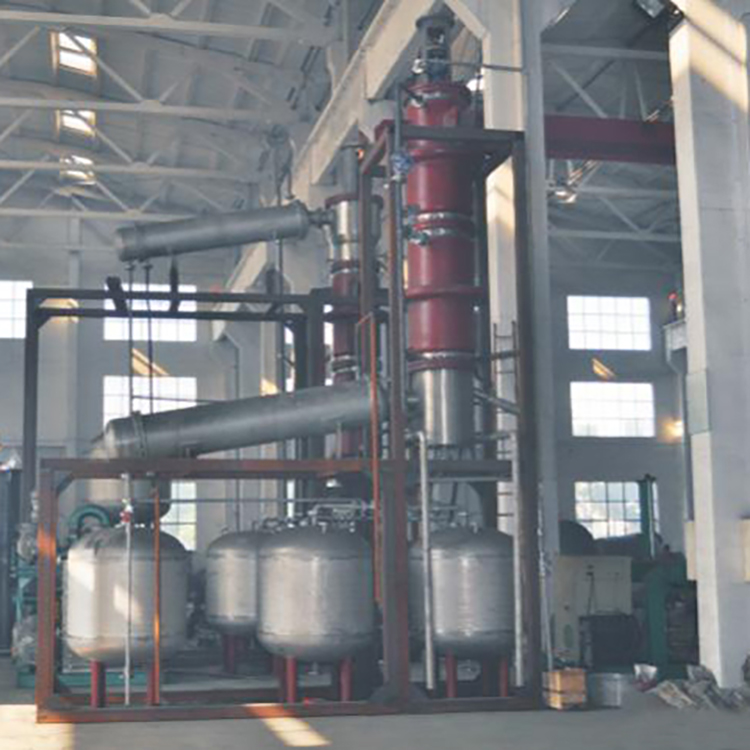
详情描述
Short-path distillation
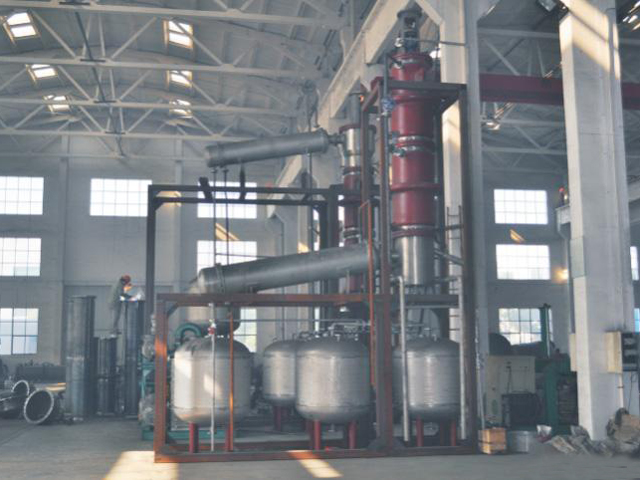
Basic Principle of Short Path Distillation/Molecular Distillation
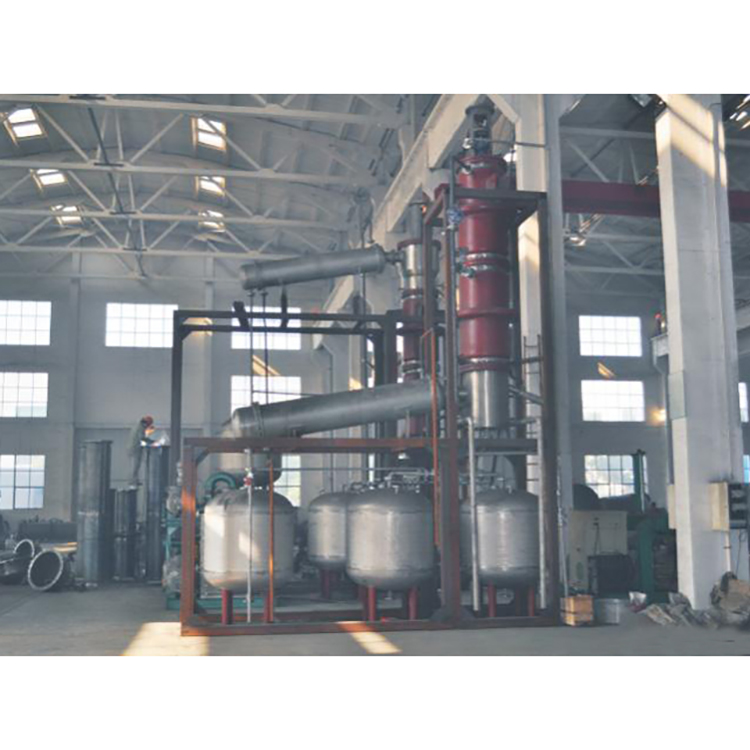
Short-path distillation is a distillation process that achieves liquid-liquid separation by having molecules evaporated on a heating surface reach a condensing surface through the shortest possible distance under high vacuum conditions (<10 Pa). When the distance between the heating surface and the condensing surface is less than or equal to the average free path of the evaporated molecules at the operating vacuum and temperature, this distillation process is also referred to as molecular distillation. It features low distillation temperature, high distillation vacuum, short heating time, and high degree of separation.
Material enters the short-path distiller through the top flanged cover, and is continuously and uniformly distributed over the vertical cylinder heating surface by the distribution disk on the rotor. As the material descends by gravity, it is forced to form a thin, turbulent liquid film on the heating surface by the rotating scraper device.
The distillation process is divided into the following steps:
One: As the material forms a liquid film on the heating surface and reaches the internal condenser, it condenses and is discharged through the outlet at the bottom of the evaporator. The reconstituted components enter the residue collection tank of the short-path distiller and are discharged through the outlet on the side.
The evaporated molecules condense on the condensation surface.
Section 3: Collection and Discharge of Distillates and Residues.

Performance Features
High vacuum level, low distillation temperature; operating vacuum: 0.1Pa to 10Pa.
High thermal conductivity and high evaporation efficiency: The rotating scraper device uniformly spreads the material into a thin film on the inner surface of the evaporation cylinder, reducing thermal resistance. Under high vacuum, it makes it easy for volatile substances to be distilled and separated from the material. Due to the intense turbulent state of the liquid film between the inner surface of the cylinder and the scraper, the transfer of different components in the material and the heat transfer with the heating medium inside the jacket are both high. Additionally, the high smoothness of the inner surface of the cylinder and the continuous movement of the scraper make it difficult for the heating surface to clog or scale, which also contributes to increasing the overall thermal conductivity and improving the evaporation efficiency.
Short heating time: Materials entering the short-path distiller are evenly distributed over the vertical heating surface by the distribution disk. Under the combined action of gravity and the scraper, they spiral down along the limited heating surface, with a very short residence time inside the evaporator, typically a few to several seconds (average residence time is related to the length of the heating surface, the type of scraper, material properties, and film thickness, among other parameters). Additionally, the "dead angle-free" design of the DZ series short-path distiller avoids material accumulation in the distribution disk, heating surface, and scraper system, reducing thermal polymerization and decomposition of heat-sensitive substances.
Structural Features
Transmission and mechanical seal design ensure long-term stable operation of the equipment.
The drive unit and mechanical seal of the DZ series short-path distiller are designed and manufactured to ensure long-term stable operation of the equipment. The transmission ratio of the drive unit, the lubrication method of the mechanical seal (forced circulation lubrication, static lubrication), and the cooling method of the mechanical seal are determined based on the operating conditions and material characteristics of the short-path distiller.
The entire evaporator body is machined and formed as a single unit, without intermediate flange connections.
The evaporating cylinder of the short-path distiller consists of an inner cylinder and a heating jacket. The cylinders of the DZ series short-path distillers are all integrally machined, with no intermediate flange connections. The integrally machined cylinders eliminate leakage and material accumulation caused by flange connections, and prevent the formation of low-temperature zones on both sides of the flange, ensuring effective utilization of the evaporation surface. Additionally, the integrally machined cylinders contribute to the equipment's precision and excellent film formation.
Three. The inner surface of the cylinder has a high degree of smoothness and is not prone to sticking materials.
The inner surface of the cylinder serves as the heating and evaporation surface for the short-path distiller, and it has strict requirements for surface smoothness. After the rough machining of the cylinder inner surface of the DZ series short-path distiller meets the dimensional requirements, it is precision ground to achieve a surface smoothness of Ra0.8μm. This allows the inner surface to be less prone to material adhesion and scaling, reducing material retention, and enhancing heat and mass transfer efficiency. In accordance with the requirements of the food and other industries, polishing techniques can also be employed to achieve a surface smoothness of Ra0.2μm.
Four: Design of liquid distributors and splash-proof devices, effectively ensuring product quality
To enhance evaporation efficiency, the material in the short-path distiller is distributed continuously and evenly over the vertical cylinder heating surface. The liquid distributor of the DZ series short-path distiller not only evenly distributes the material over the heating surface but also prevents a small amount of material from lingering on the distributor for an extended period, even for highly viscous materials.
The DZ series short-path distillers are designed and manufactured to ensure long-term stable operation of the scraping device. Their excellent film-forming performance makes the evaporation process of materials gentle, without splashing or carryover. In most cases, even without splash-proof devices, they can meet product requirements. When handling certain materials and when product quality is a concern, the splash-proof devices of the DZ series short-path distillers can guarantee product quality.
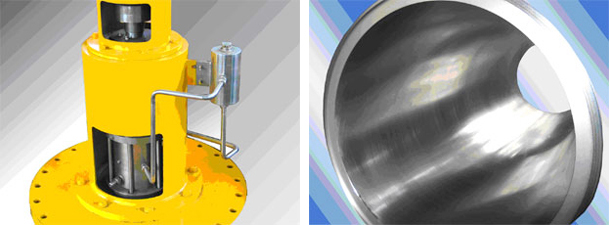
Film Peeling Method
A variety of film removers available, with wide application range.
Rabbet or cylinder-style;
Utilizes special PTFE material with a working temperature up to 280℃.
Metal hinge-type fixed scraper.
Application Scope
Suitable as a replacement for conventional film evaporators, used for distillation, purification, concentration, and decolorization of petrochemical and chemical products.
Distillation purification for thermally sensitive and easily oxidizable chemical industrial products.
Also suitable for distillation separation of high-boiling point products.
Typical Applications
Distillation and purification of polyunsaturated fatty acids (oleic acid, linolenic acid, fish oil fatty acids (ethyl esters)) and their derivatives.
Refining of monoglycerides
Purification of adipic acid;
VE Refining; Phytosterol Refining
Distillation of Liquid Crystal
De单体from high polymer;
Refinement of other thermosensitive products.
Product Selection
Based on theoretical calculations and years of experience in the application and promotion of short-path distillation, the processing capacity of short-path distillation is directly related to the molecular weight of the feedstock (product), material viscosity, operating conditions, and the effective heat exchange area of the evaporator.
Standard Feed Rate: 100 kg / (m² h), (80 - 150 kg / (m² h))
Small Size: DZ-5 Effective Evaporation Area: 0.05 square meters
Large Size: DZ-3600 with an effective evaporation area of 36 square.
Material: SUS304, SUS316L, SAF2205, and Hastelloy.
Operating Temperature: 350°C.
Membrane Evaporator
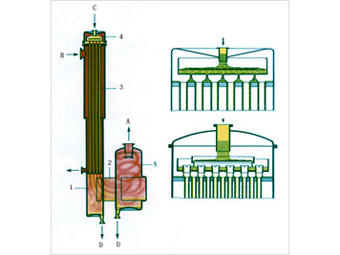
The ascending film evaporator, also known as the climbing film evaporator, operates based on the siphon pump principle. It utilizes the lifting force of steam bubbles generated during the boiling process to allow the liquid and steam to flow upwards simultaneously. Consequently, the amount of steam produced increases, leading to the formation of a flowing film on the tube walls, where the liquid "climbs" upwards. The upward concurrent motion aids in generating a high degree of turbulence in the liquid.
This evaporator is characterized by its long heating tube (about 5~7M), but there must also be a significant temperature difference between the heating chamber and the boiling chamber; otherwise, the energy of the steam flow is insufficient to transport the liquid and generate an ascending film.
Material Import
Condensate Water Outlet
Steam Import
D: Concentrate Export
Secondary Steam Outlet
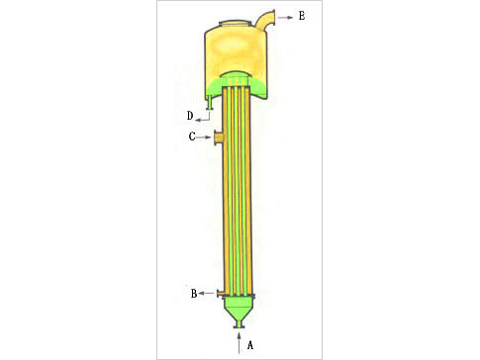
Film Evaporator
In a film evaporator, the liquid and steam flow downward together. The liquid to be concentrated is preheated to boiling temperature, and a uniform liquid film enters the heating tubes through the liquid distribution device at the top of the evaporator. It flows downward at the boiling temperature, partially evaporates, and the downward movement is continuously enhanced by the gravitational force of the co-flowing steam stream.
In a film evaporator, the trouble-free operation of the device for fully wetting the heating surface is crucial. If the heating surface is not adequately wetted, localized dry walls and scaling may occur, with the worst-case scenario being complete blockage of the heating tubes. In critical conditions, the wetting rate increases with the number of stages or divisions of the evaporator, thus, it is advisable to maintain the advantages of single-pass operation. Under this mode of operation, the contact time between the liquid and the heating surface is almost constant.
In addition to pipe dimensions, selecting the appropriate liquid distribution device is crucial for achieving good wetting. There are two types of liquid distribution devices. Due to the low liquid volume and fast flow rate in the heating tube, the product's dwell time is quite brief, allowing for gentle evaporation of heat-sensitive materials.