





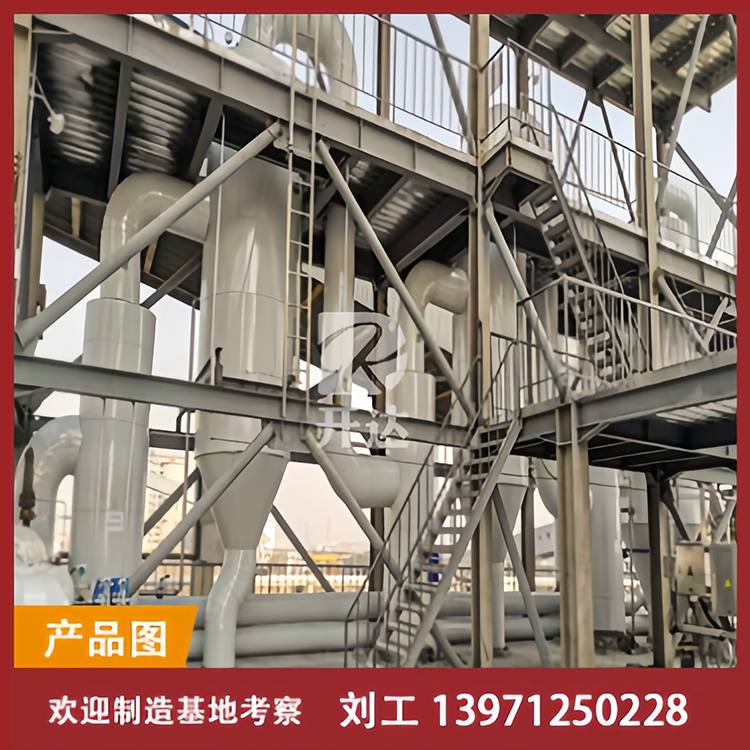
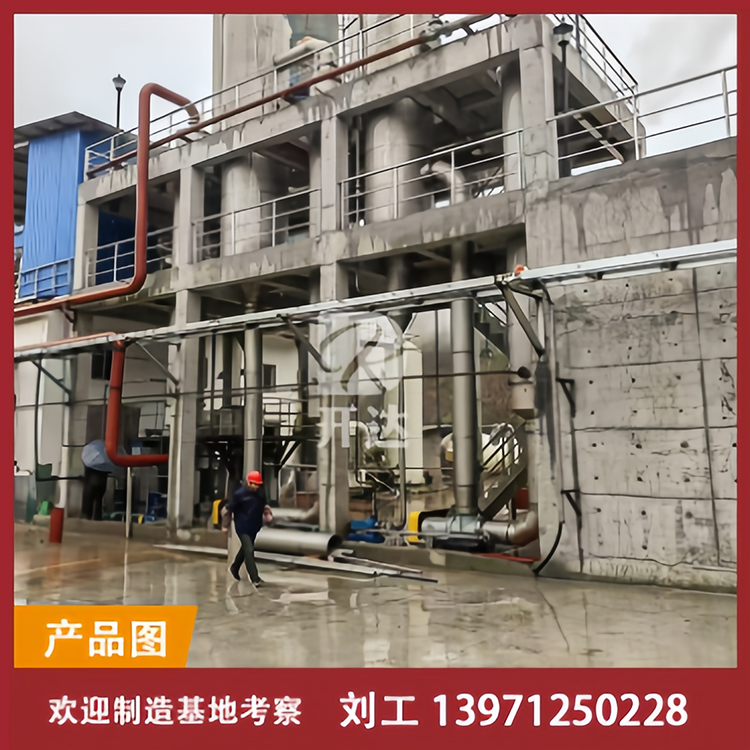
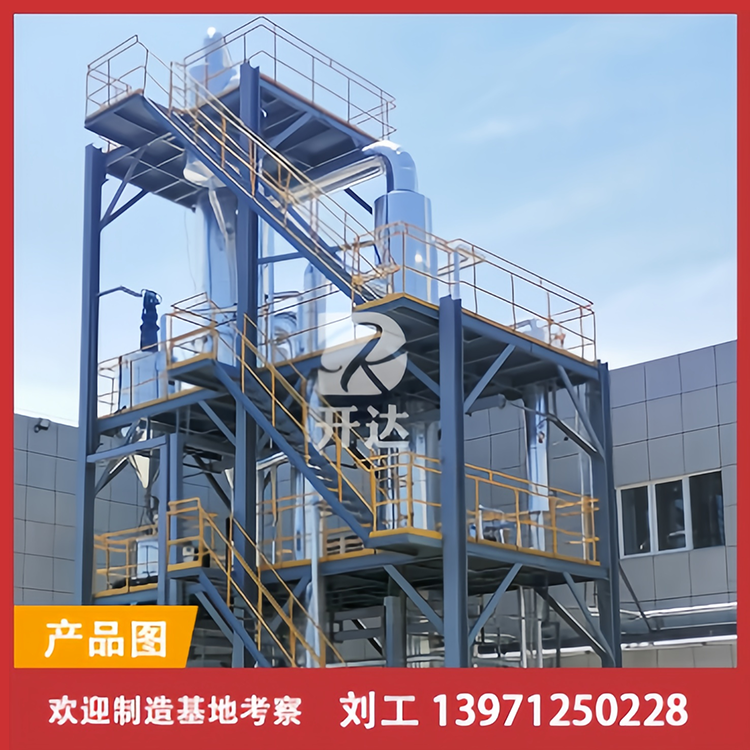
详情描述
Working Principle:
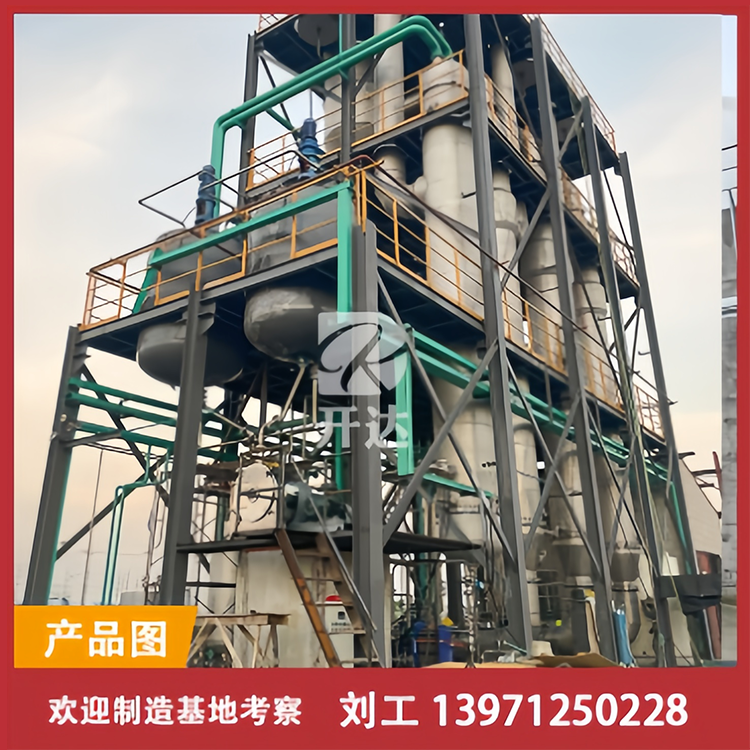
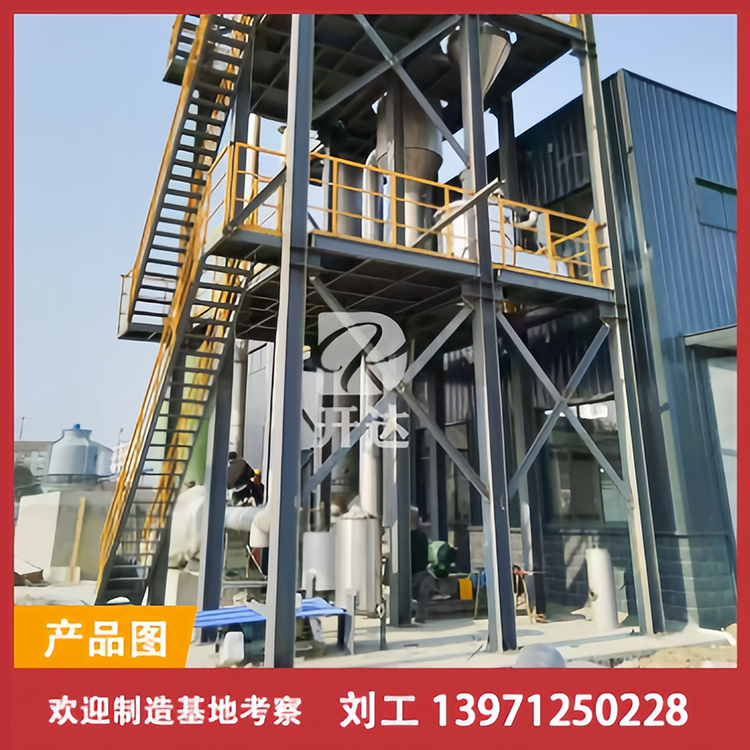
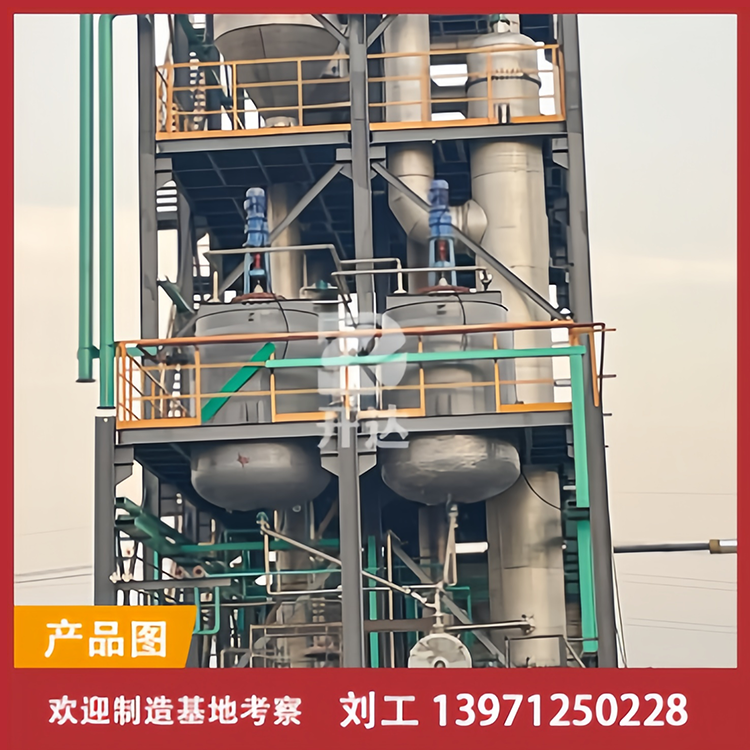
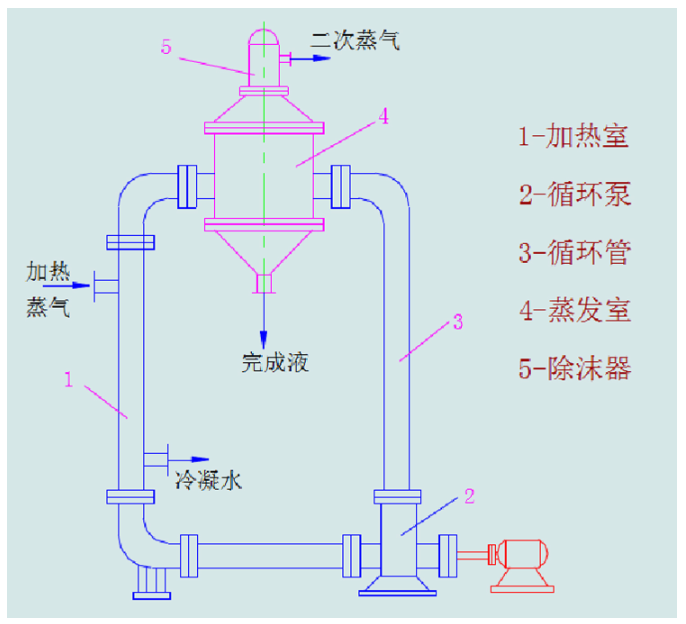
Material overflow is primarily gravity-driven in conventional evaporators or MVR evaporators, whereas in forced circulation evaporators, the material is forced to flow due to the added power of the forced circulation pump under the action of the pump, typically achieving flow rates of 1.5-2 m/s.EvaporatorBased on the different positions of the inlet and outlet of the separated material in the circulation chamber, it can be categorized into a positive circulation forced evaporator and a reverse circulation forced evaporator. The positive circulation is when the inlet is above the outlet, and vice versa for the reverse circulation. The reverse circulation forced evaporator has more advantages. It relies on an external force – the circulation pump – to circulate the liquid. Its heating chamber comes in horizontal and vertical structures, with the liquid circulation speed regulated by the pump. This evaporator is suitable for concentrating solutions that are prone to crystallization and scaling, but its drawback is higher energy consumption.
Forced circulation evaporators are used to prevent scaling or crystallization of products boiling on the heating surface, for this reason, the flow velocity in the tubes must be fast.
As the circulating liquid flows through the heat exchanger, it is heated, then a portion of the material evaporates in the separator as the pressure decreases, thereby cooling the liquid to the boiling point temperature corresponding to that pressure. Due to the circulation pump, the evaporator's operation is essentially independent of the temperature difference, allowing the recirculation rate of the material to be precisely adjusted. The evaporation rate is set within a specific range. In crystallization applications, crystals can be separated from the circulating slurry by adjusting the circulation flow rate and employing a special separator design.
Key Features:
1The equipment is adaptable to a wide range of material characteristics for relative processing. It mainly targets materials that are prone to scaling during the evaporation process, materials with crystal precipitation during evaporation, materials where viscosity increases with the rise in concentration, and materials containing insoluble solids.
2During the evaporation process, the material is heated through forced circulation, resulting in fast flow inside the tubes, even heating, high heat transfer coefficient, and prevention of wall dry-out.
3The liquid is rapidly heated through a forced circulation pump and then directly enters the evaporator separator in a tangential manner at the top, achieving excellent vapor-liquid separation.
4Material is processed through vacuum low-temperature evaporation concentration, with continuous feeding and discharge, resulting in short heating evaporation time. It is suitable for heat-sensitive evaporation concentration of food sauces (such as ketchup, peach syrup, apricot syrup, carrot sauce, apple sauce, kiwi sauce, etc.).
5The equipment is compact in structure, occupies minimal space, features a smooth layout, is easy to operate, and offers stable performance.
6The equipment is configurable with an automated system, enabling automatic control of feed quantity, heating temperature, and discharge concentration. It also includes protection measures for sensitive materials during power outages or malfunctions, as well as other automated operations and controls for safety and alarms.
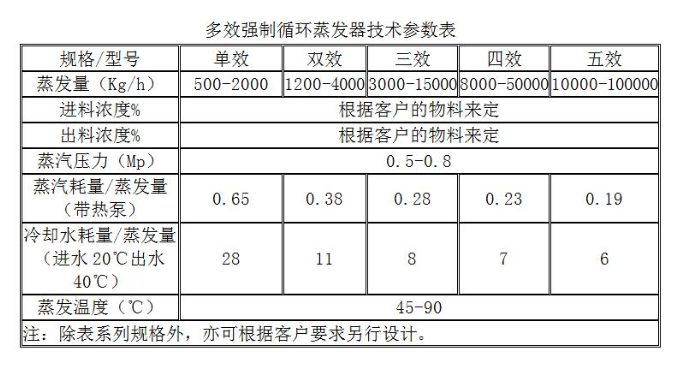
Main Types:
Forced Positive Circulation Multi-effect Evaporator, Forced Reverse Circulation Multi-effect Evaporator
Forced-Forward Loop MVR Evaporator, Forced-Reverse Loop MVR Evaporator
Application Scope:
The forced circulation evaporator is an efficient and energy-saving concentration equipment developed and manufactured by Keda Shenglian. Operating under vacuum and low-temperature conditions, it features fast fluid flow, rapid evaporation, and is resistant to scaling. It is suitable for concentrating materials with high viscosity, high concentration, and prone to scaling, and is widely used in the processing and concentration of chemical crystallization, tomato paste, jam, fruit puree, and high-concentration glucose. It is widely used domestically and has yielded good results.
询价单


