




详情描述
Working Principle:
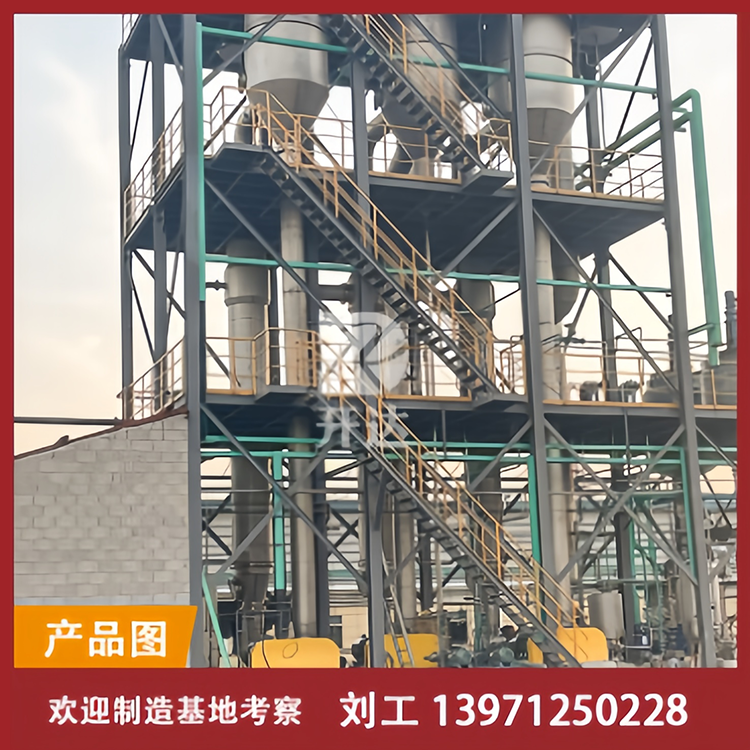
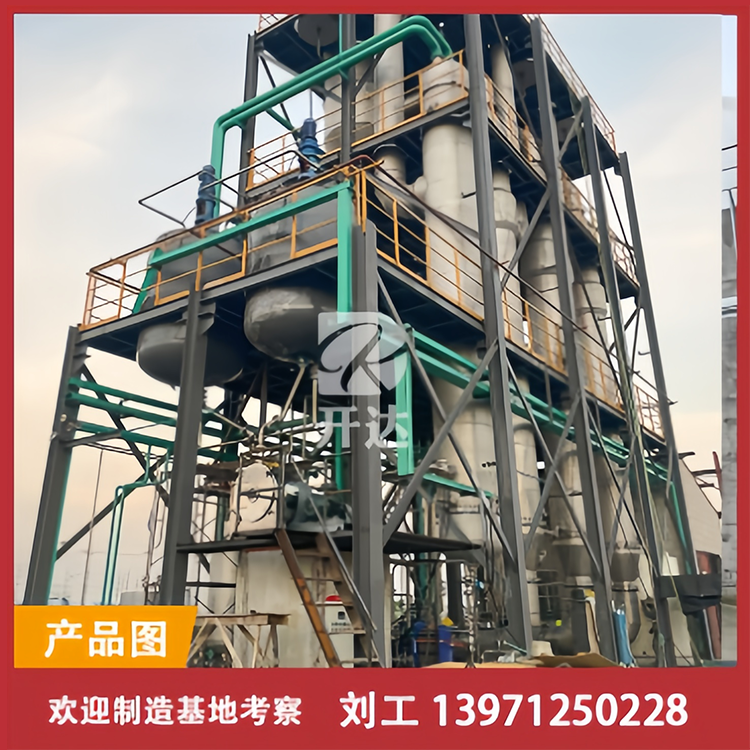
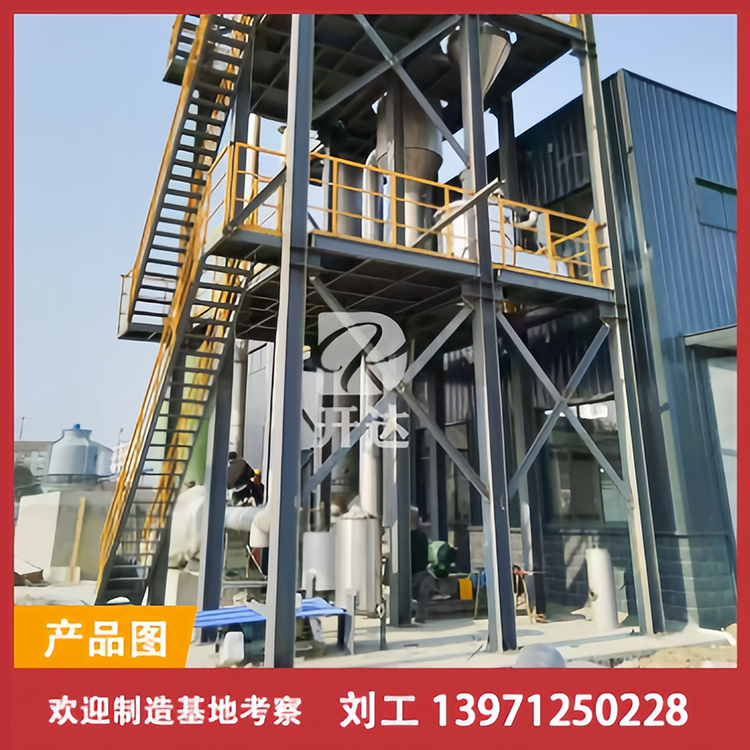
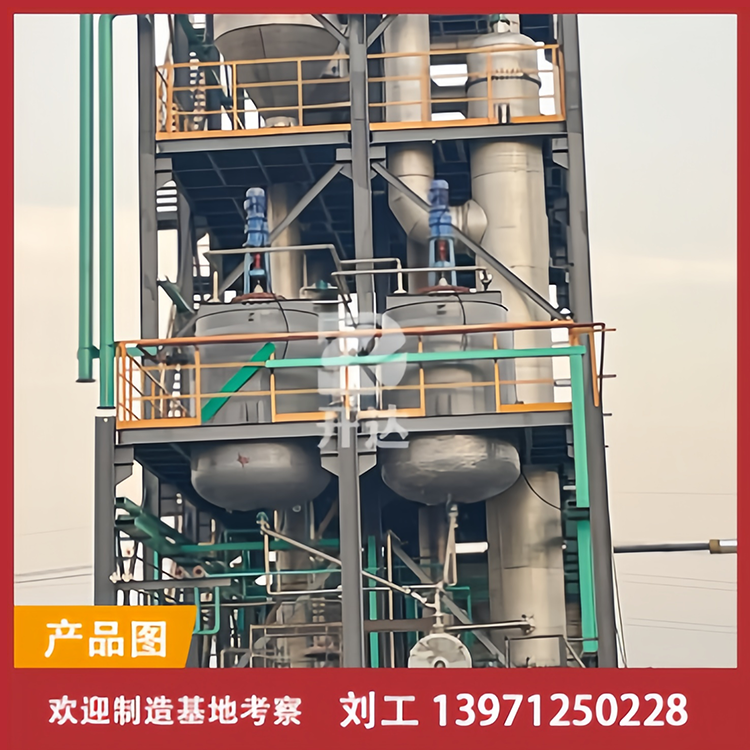
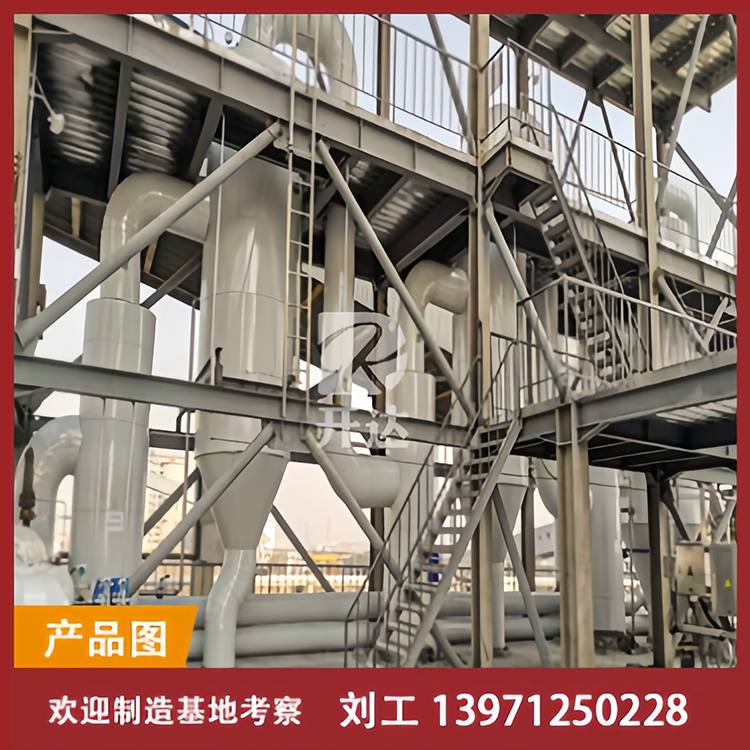
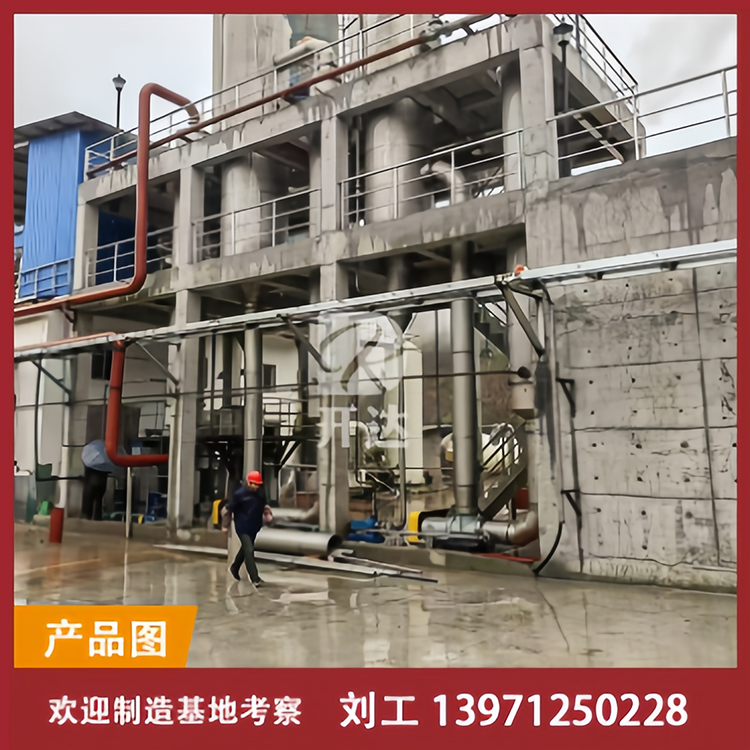
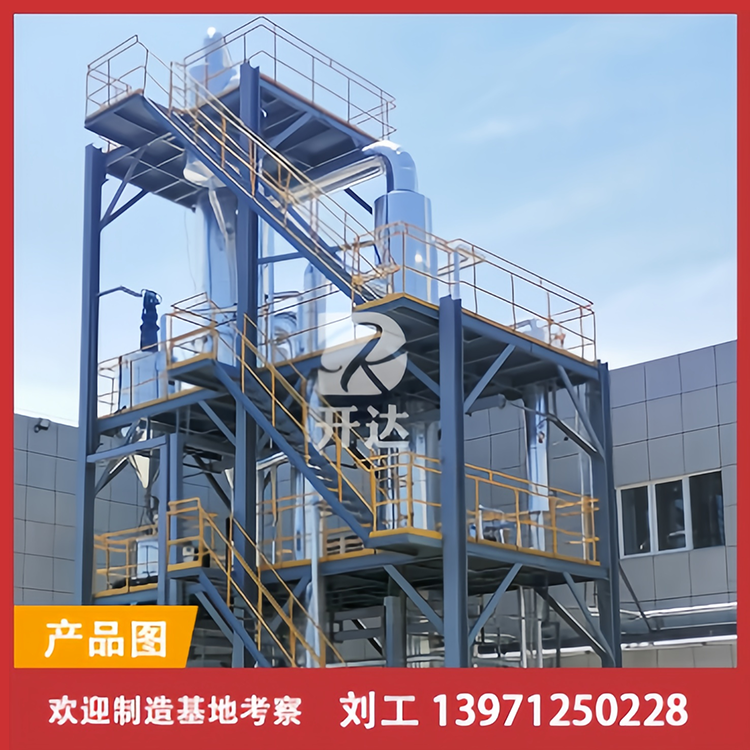
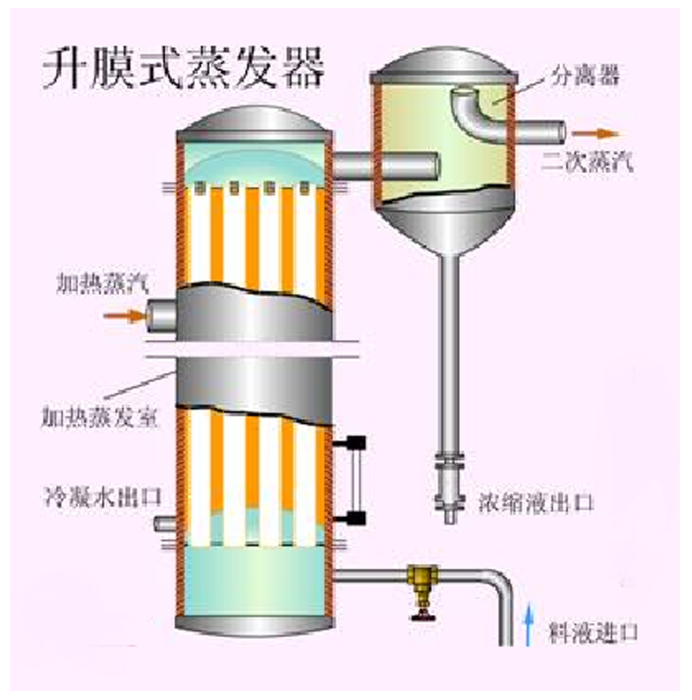
The Film Evaporator, also known as the ascending film evaporator, operates based on the siphon pump principle. It utilizes the lifting force of steam bubbles generated during the boiling process to cause both liquid and steam to flow upwards simultaneously. Consequently, the amount of steam produced increases, creating a flowing film on the tube walls, where the liquid "climbs" upwards. The upward concurrent motion aids in generating a high degree of turbulence within the liquid.
This evaporator features long heating tubes (usually about 5~7M), but the temperature difference between the heating chamber and the boiling chamber must also be significant. Otherwise, the energy of the steam flow is insufficient to transport the liquid and generate the ascending film.
The heat exchange section consists of heat exchange tubes. The raw liquid, after preheating to or near boiling point, is introduced from the bottom of the heating chamber, carried up by the high-speed ascending secondary steam. It flows and evaporates along the inner wall of the heat exchange tubes. At the top of the heating chamber, it reaches the desired concentration. The completed liquid is discharged from the bottom of the separation chamber. The secondary steam, after removing bubbles, water droplets, and debris from the upper separation plate assembly, becomes the heat source for the next stage. Shenglian Evaporator Co. has summarized several key technical points based on actual operating conditions. For detailed information, please call our company's consultation hotline.
Key Features:
1. Ideal for treating solutions with high evaporation rates, thermal sensitivity, low viscosity, and prone to foaming, as it allows for upward movement to overcome gravitational effects.
2Stable and efficient operations - based on product cycles under broad conditions.
Primary Types: Single Effect Membrane Evaporator, Multi-Effect Membrane Evaporator, etc.
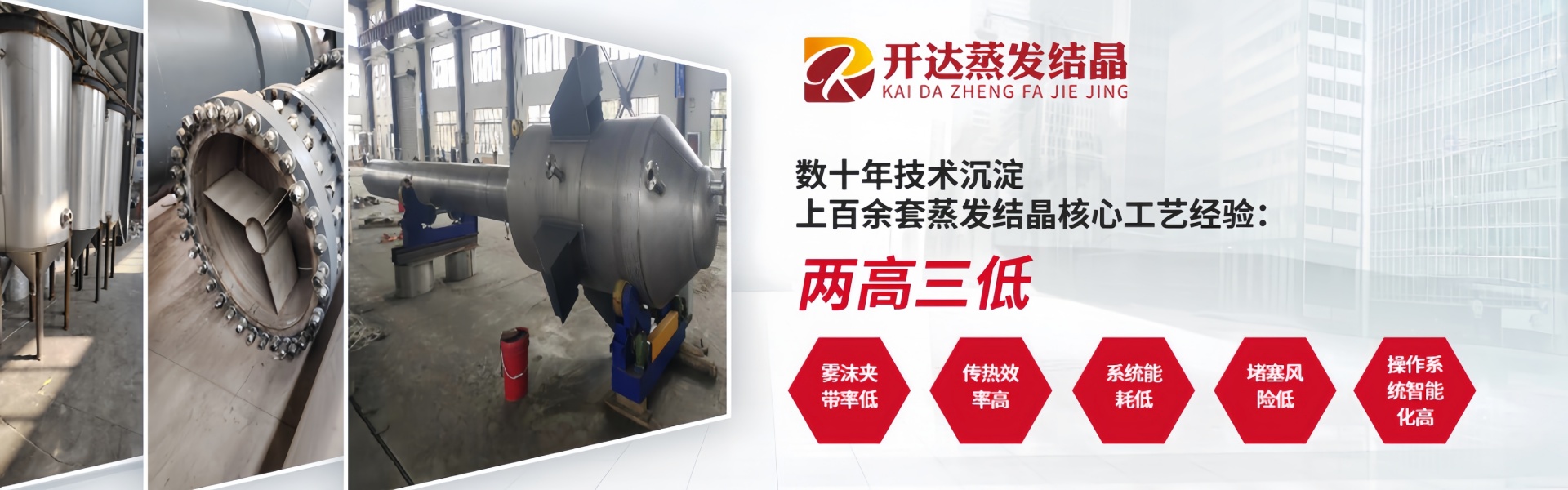
"The 'Three Reductions and One Stability' is a key technical feature of Kaida Shenglian evaporators."
1. Reduce Foam Carryover: By installing a demister with a layer of packing at the separator's top, effectively addresses the issue of foam-carryover in the liquid. Additionally, the adsorption effect of the packing significantly reduces the amount of low-boiling point organic compounds (COD) and ammonia nitrogen in the condensed water, thereby extending the equipment's lifespan and ensuring smooth operation. For detailed technical information, please call the company's technical phone number below.
2. Reduce Scaling Risk: The principle is demonstrated after the gas-liquid-solid三相 enter the separator crystallizer. In the separator, the secondary steam is discharged through the secondary steam pipe, and the supersaturated solution undergoes thermal crystallization. Under the action of gravity, the solid-liquid phases are rapidly separated, preventing the turbid liquid and crystals from entering the heater for heat exchange. This effectively avoids scaling in the heater and friction or blockage between the crystals and the heater tube wall. For detailed technical information, please call the company's technical phone number below.
3. Energy Reduction: Based on the varying concentrations of materials in different separators, we set different ascending flow rates. This not only prevents scaling issues in the heat exchanger tubes within the heater but also reduces the power of the circulating pump, saving energy. For detailed technical information, please call the company's technical phone number below.
4. Equipment Stable Continuous Operation: The steam flow and pressure are controlled by a steam control device, and a high and low liquid level self-control device is also configured to prevent operator errors, which could lead to excessive equipment pressure or dry burning. This ensures the equipment's stability, safety, and ease of operation. For detailed technical information, please call the company's technical phone number below.
Application Scope:
Film Evaporators are widely used in the concentration and evaporation of water or solutions in industries such as pharmaceuticals, environmental protection, chemicals, and light industry, and can also be extensively applied in wastewater treatment for these industries.
询价单


