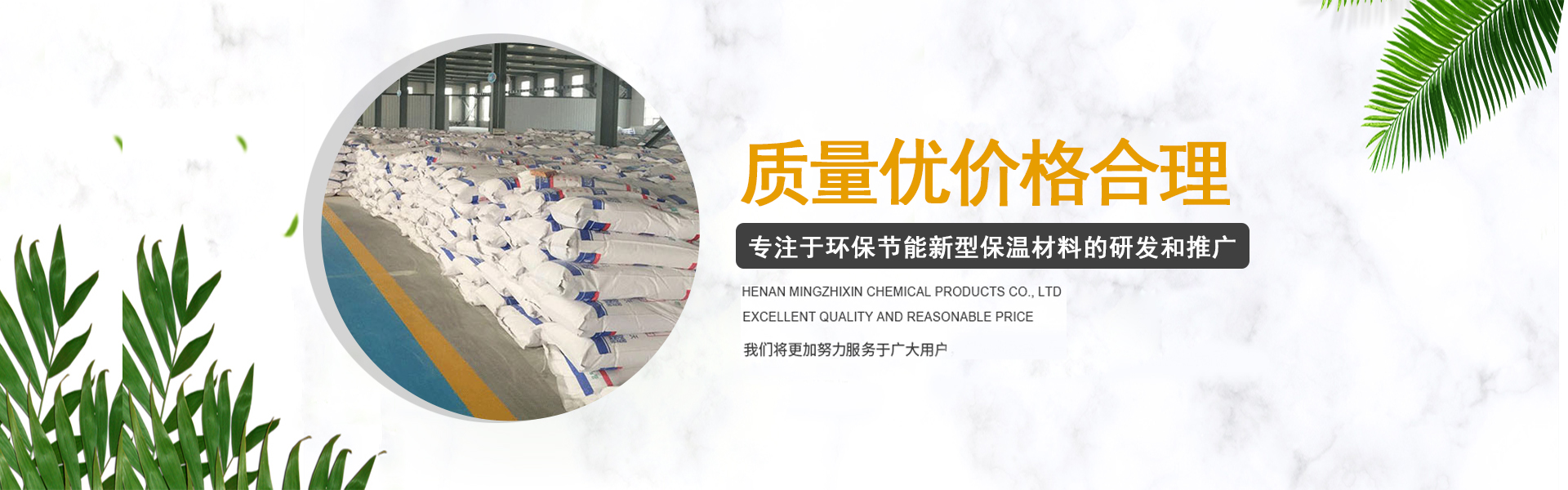
YT Insulation Materials, YT Inorganic Active Insulation M...


Product Recommendation
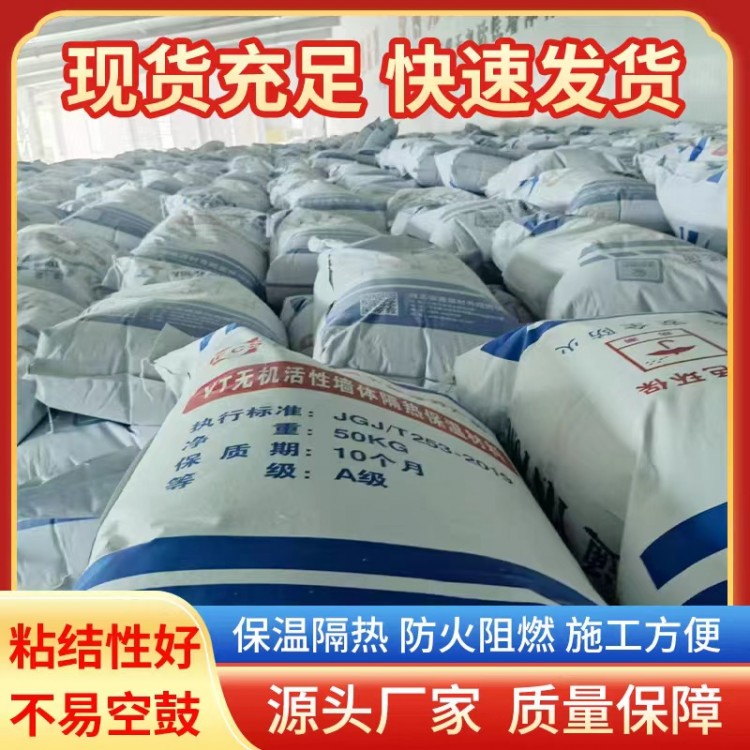
YT Insulating Mortar Material

YT Insulation Material, YT Inorganic Active Insulation Material

YT Insulation Material, YT Inorganic Active Insulation Material, YT Inorganic Insulating Mortar
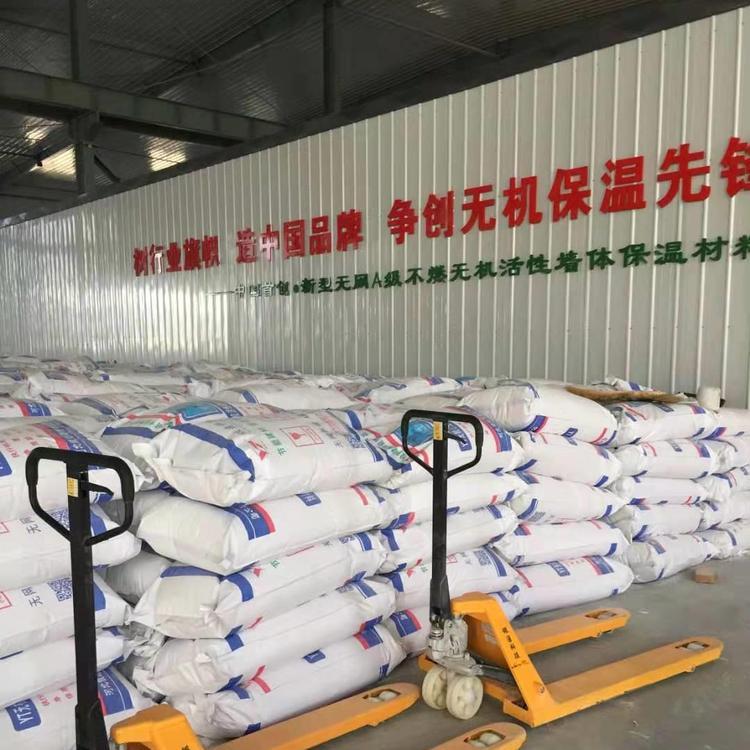
YT Insulation Materials, YT Inorganic Active Insulation Materials, YT External & Internal Wall Insulation Materials

YT Insulation Material, YT Inorganic Active Insulation Material, Inorganic Lightweight Aggregate Insulation Mortar

YT Insulation Material, YT Inorganic Active Insulation Material, YT Inorganic Insulation Mortar
YT's Analysis of Inorganic Active Wall Insulation Material Characteristics
YT Inorganic Active Insulating Material is a new type of insulating mortar, characterized by its crack resistance, water resistance, and anti-dustification properties.
Excellent properties such as anti-fungus and ease of construction have been recognized and widely promoted by property developers.
Glass beads thermal insulation mortar often has defects such as blisters, cracking, peeling off, powdering, and mildew, while sand
The material is soft and spongy, has strong water absorption, poor adhesion, low strength, and weak impact resistance, requiring a mesh fabric and crack-resistant mortar on the surface.
Flexible waterproof putty and riveting processes are used to compensate for the treatment.
YT Insulation Materials specifically improves and resolves the aforementioned issues.
Crack Resistance Effect:
The cracking of glass bead thermal insulation mortar is a consistent issue; according to national standards, anti-cracking mortar and mesh fabric are required.
Please handle it.
YT Insulation Material Breaks National Standards, Achieves Domestic Non-Grid Construction Capability
The national collection of YT thermal insulation materials has been published and distributed by the China Academy of Building Research, following national expert certification.
Principle Analysis: The combination of various cementitious materials enhances the overall bonding strength of YT thermal insulation materials.
A variety of fiber materials form a YT thermal insulation mesh interlaced structure, providing more complete and balanced stress release.
The addition of various additives contributes to the workability and flexibility characteristics of YT thermal insulation materials.
Water and Mold Resistance Effects:
YT thermal insulation materials avoid the defect of high water absorption rate in glass bead thermal mortar materials, featuring obvious hydrophobic properties.
The acid-resistant and alkali-resistant additives enhance the weather resistance of the insulation layer, preventing variations and surface powdering or mold growth.
Insulation Solutions for Basements, Roofs, Bathrooms, Bay Windows, Elevator Shafts, Stairwells, and More
Warm sections for insulation.
Material Analysis: Uses closed, water-repellent lightweight aggregates and additives with hydrophobic properties.
The internal structure of the insulation is a multi-layer plastic construction, creating a multi-level moisture and water barrier.
The insulation layer offers excellent breathability after drying, reducing wall condensation occurrences.
The raw materials feature acid and alkali-resistant additives, enhancing the heat-insulating material's resistance to acid and alkali and corrosion.
Flexible Effect:
YT Insulation Materials highlights the flexibility of the material, emphasizing its ease of use and pronounced flexibility during construction.
Ease of construction; after drying, the thermal insulation layer has strong impact resistance, fully meeting the owner's requirements for wall strength and flexibility in decoration.
"Also suitable for the surface leveling layer of exterior wall thermal insulation boards, achieving one-time whitening, leveling, crack resistance, and water resistance."
The effectiveness.
Principle Analysis: After the thermal insulation layer dries, it forms a network-like skeletal structure, preventing looseness and maintaining its shock-resistant and non-deforming properties.
Properties: Impact resistance exceeds 10J.
Multiple fiber additives such as protein fibers, lignin, and fiber ethers in the raw materials contribute to the thermal insulation aggregates.
The strands remain fully adhered and intertwined, resulting in good flexibility and plasticity, which facilitates
Construction completed. Efficiency enhanced.
Four: Adhesive Tile Effect
YT Insulation Material can be directly bonded to bricks. YT Insulation Material boasts the compatibility of strength and flexibility, while maintaining its lightweight nature.
Under the condition of body insulation, conventional tile adhesive processes can be completed. Tiles of special weight, after treatment, can also be applied.
Meets requirements for exterior wall tile adhesive, bathroom tile adhesive, ground-level mushroom stone tile adhesive, floor tile adhesive, etc.
Principle Analysis: The mesh structure and flexibility of the insulation layer can achieve a tensile bonding strength for the insulation layer of
Above 0.4 MPa; compressive strength is also above 1.0 MPa, meeting the adhesive brick requirements. V. Self-maintenance effect:
YT Insulation Materials require no water curing during summer construction.
Principle Analysis: The moisture-retaining components of the auxiliary materials ensure the water requirements at different stages of initial and delayed setting strength.
Material moisture retention and frost-heave-resistant additive ratios can be adjusted to meet construction requirements in both high and low temperatures.
Six: Energy Efficiency Effect
YT thermal insulation materials excel in their thermal insulation properties, with a thermal conductivity coefficient ranging from 0.050 to 0.070, effectively reducing heat preservation costs.
Warmth, reduce costs, while the thermal conductivity of microspheres, FTC polystyrene particles, etc., is between 0.085-0.10.
Loosely woven, poorly bonded, and prone to shedding.
Material Analysis: All composed of white, multi-faceted crystalline bodies with refractive properties, capable of significantly reducing light transmission through reflection.
Energy Absorption
The material utilizes lightweight, closed-cell lightweight aggregates as aggregates, effectively blocking heat conduction.
The material process utilizes microbubble technology, forming a multi-layered microbubble structure after the thermal insulation layer stabilizes, which balances
The effects of lightweight and heat-conduction inhibition.
Seven: Weather Resistance Effects
YT uses inorganic lightweight aggregates with weather resistance for thermal insulation materials, where the properties of the material and the wall materials are the same, experiencing thermal expansion.
The shrinkage differences are minimal, allowing for the fulfillment of the same lifespan requirements without the occurrence of secondary maintenance.
Principle Analysis: The raw materials for the thermal insulation material and the wall material are of the same nature, thus avoiding thermal expansion between different materials.
The shearing phenomenon caused by the difference in shrinkage coefficient will not result in bulging, cracking, or peeling.
YT thermal insulation materials are all high-temperature material products, with the gelation and bonding derived from the raw materials themselves.
There is a phenomenon of volatile additives reducing the insulation effect, which can achieve long-lasting thermal insulation.
In the laboratory, 80 cycles of high temperature (70 degrees) and low temperature (-20 degrees) weather resistance tests yielded no hollow sounds, cracks, or other defects.
Insulation and coating delamination phenomena
Eight: Fire Retardancy
Meets all Class A fire-resistant requirements.
Principle Analysis: YT thermal insulation materials are composed entirely of A-grade fire-resistant materials.
YT Insulation Materials Market Entry and Construction Case Studies
"Standard Design Collection 13CJ37: Building Construction of YT Inorganic Active Insulating Material System"
b. The Ministry of Housing and Urban-Rural Development establishes a large-scale BIM database for product modeling and storage.
c. The Ministry of Housing and Urban-Rural Development promotes the use of products, and the Science and Technology Research Institute recognizes the products
d. Large-scale design institutions such as China Academy of Building Research and other major design institutes have their design databases stored as backup products.
e. Large real estate developers such as Xiong'an New Area,碧桂园, Evergrande, Longji Taihe, and China Fortune, have designed and stored their products in the database.
f. Projects across all provinces: Panyu, Vanke, Evergrande, Poly, Longji Taihe, Rongsheng卡尔
Diya,华夏孔雀城, Tsinghua University, Beijing University of Finance and Economics, Beijing Technology and Business University, China水电研究院
Cost Analysis Reference Factors for YT Insulation Materials
YT thermal insulation material combines the functions of thermal preservation, crack resistance, water resistance, powder prevention, and mold prevention, and can counteract
Cost of other processes.
2. YT's lower thermal conductivity of insulation can reduce the thickness of insulation.
3. YT Insulation Materials boasts excellent weather resistance, preventing additional costs associated with secondary maintenance.
4. The convenience of YT thermal insulation construction can save construction costs.
5. Fire-rated A级; no auxiliary fireproofing process required.
6. Cost Estimation Basis: Wall-mounted actual volume of 2.3 cubic meters per ton.
(1 cm = 230 sq. meters/ton; 2 cm = 115 sq. meters/ton; 3 cm = 75 sq. meters/ton)


b2b.china9.net © Zhongshang 114 Hebei Network Technology Co., Ltd.Address: Room 6009, Oriental New World Center, No.118 East Zhongshan Road, Qiaoxi District, Shijiazhuang City, Hebei ProvincePlatform Service Hotline: 4006299930