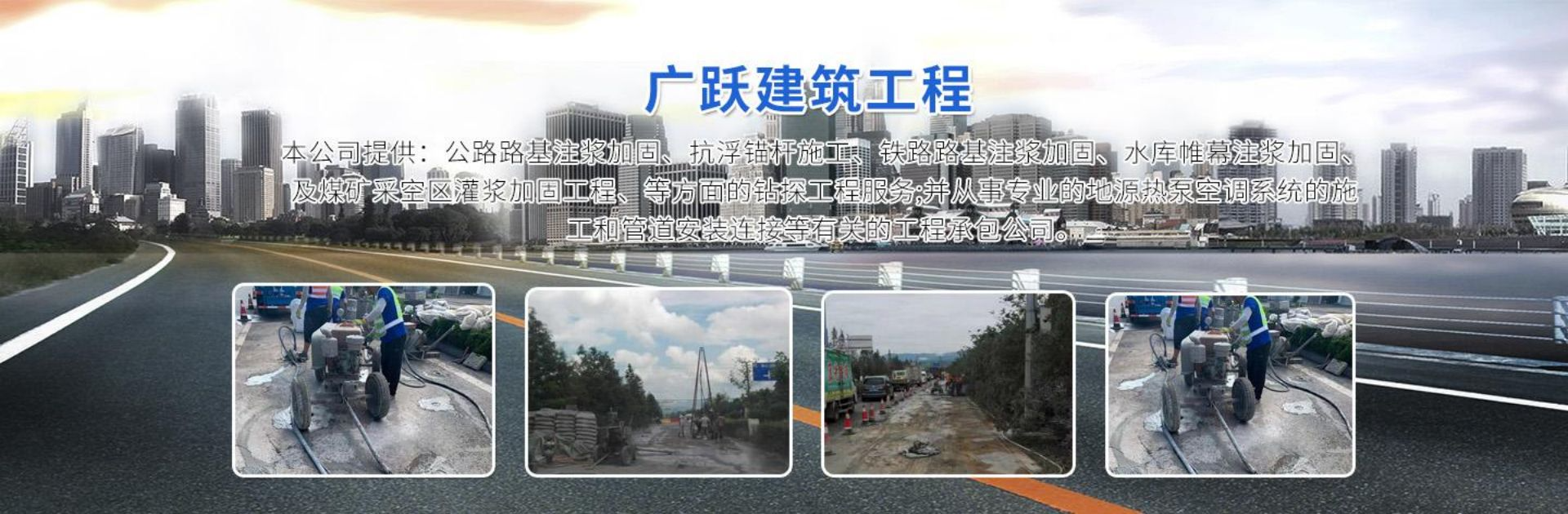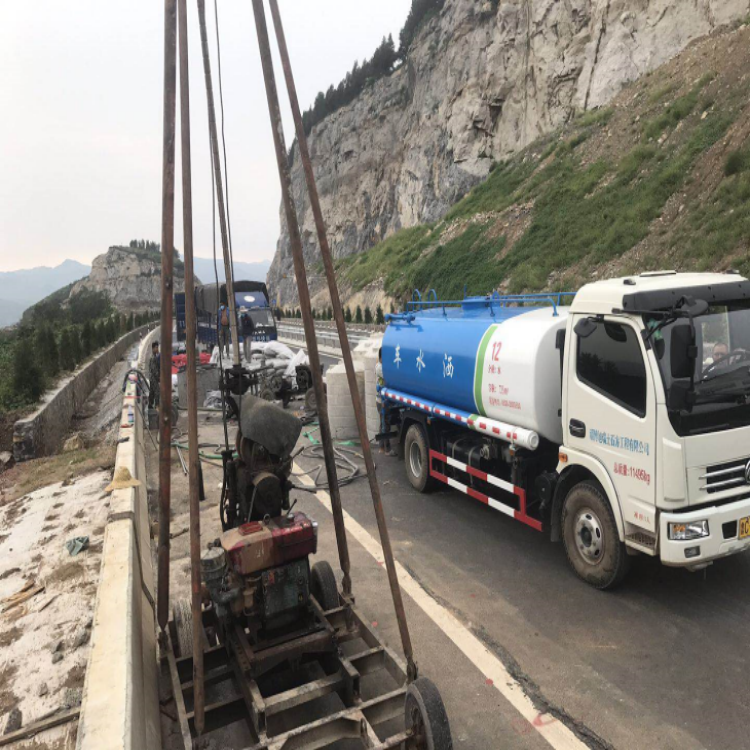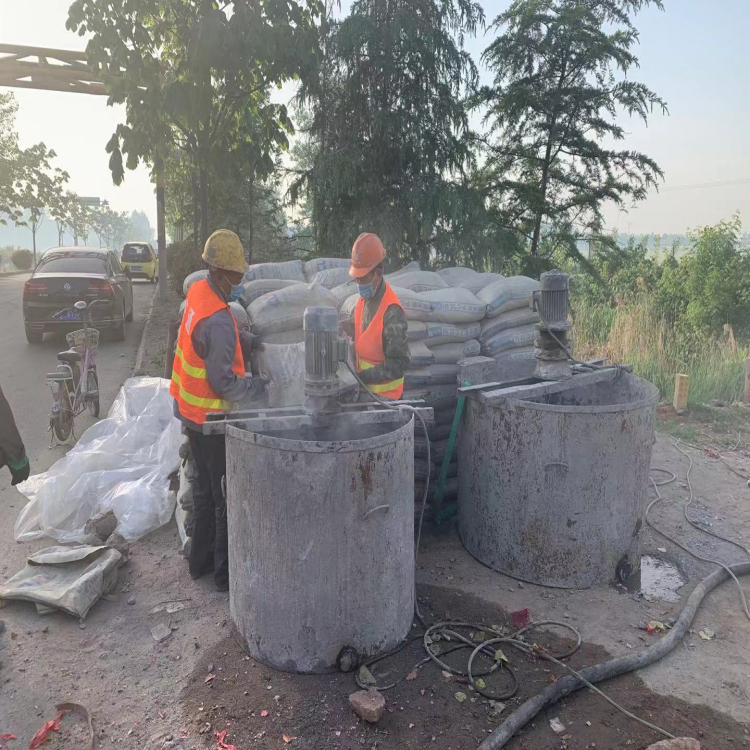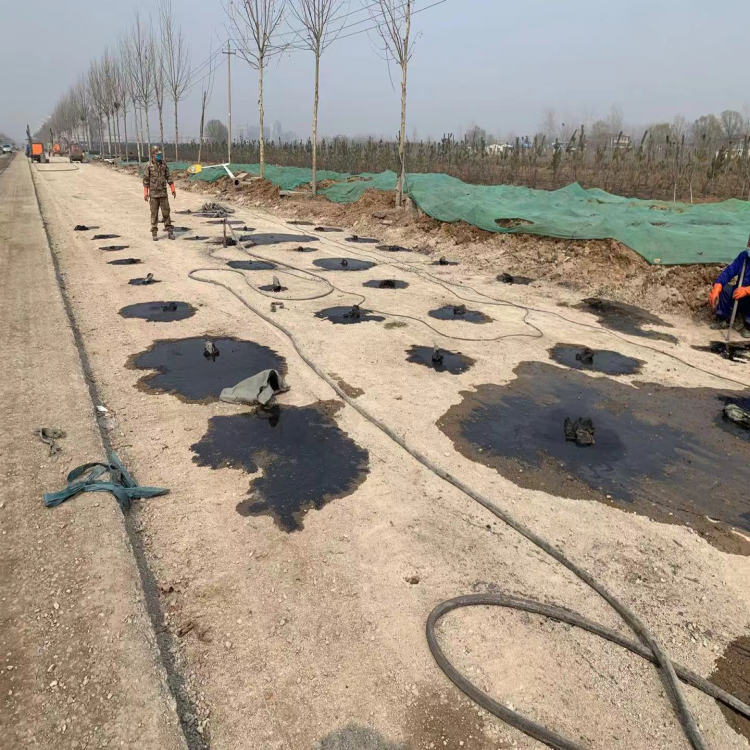
Drilling Grouting Reinforcement, Ground Source Heat Pump ...


Product Recommendation
The traditional grouting method involves injecting high-concentration cement slurry or chemical paste under high pressure. Initially, the slurry fills a large void, then penetrates through soil pores under high pressure, gradually rising to the ground until cracks appear. The slurry then fills these cracks to form a mud vein, filling a certain space on the ground, and the soil pores are saturated with the slurry. Subsequently, compression forms a new composite foundation, enhancing soil strength and release, altering the soil's physical and mechanical properties, and improving the durability of soft soil.
When the diameter of the grouting bubbles is small, the vehicle pressure shifts towards the borehole diameter, causing the sludge bubble sizes to increase, thereby generating higher lifting force. Soil degradation is very common in medium sand deposits and clayey foundations. This soil can be used for unsaturated soils to accommodate uneven coating techniques, and to support adjacent soil or tunnels in large-scale excavations. Enhancing soil strength and impermeability, altering the soil's physical and mechanical properties, and improving its load-bearing capacity.
Compacted Grouting
If grouting is the "initial grouting" of in-situ chemical bonding, then compression is the "final grouting" of in-situ chemical soil filling gaps or joints. Due to its own weight, public columns or nodes belong to a "full space" public or separate another "expanded space" along the node (cap), with the connection being an extension based on both "full open space" and "expanded open space."
The primary components of dense grouting include the following four points:
(1) The central joint, or all joints, are surrounded from the middle to reinforce stone, soil, and concrete.
(2) The issue of the reachability of grouting, that is, the integration of all transportation being through vehicle and internal and external migration of evaporators, as well as the comprehensive displacement to the final extent.
Throughout the injection process, gases, liquids, and solids are concentrated in the filling gap, typically involving gas readings, liquid penetration, and solidification.
(4) The central issue of grouting operation construction. In other words, the compressed components represent the foundations, components, and functional components covered by stones, soil, and concrete.


b2b.china9.net © Zhongshang 114 Hebei Network Technology Co., Ltd.Address: Room 6009, Oriental New World Center, No.118 East Zhongshan Road, Qiaoxi District, Shijiazhuang City, Hebei ProvincePlatform Service Hotline: 4006299930