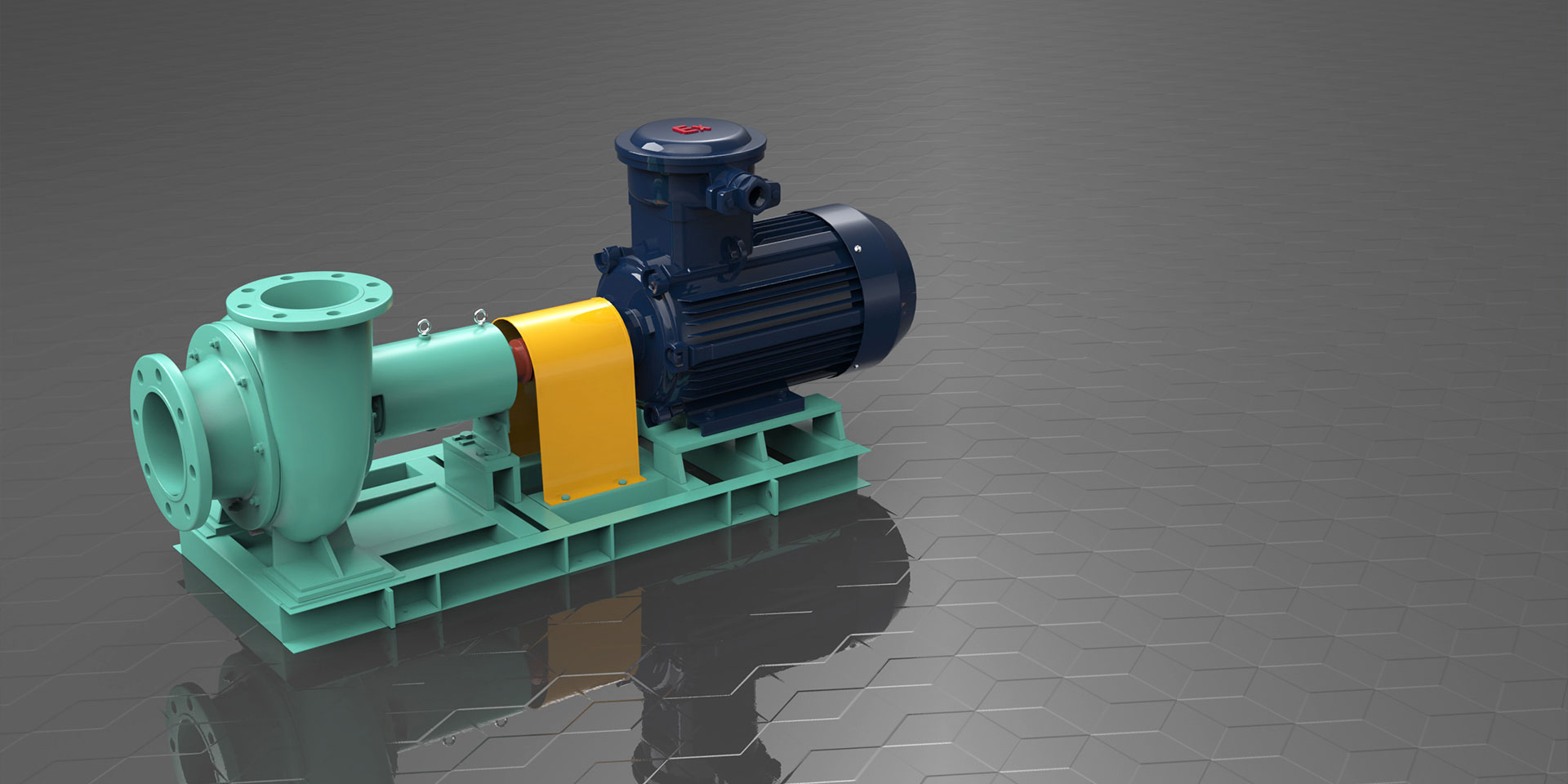
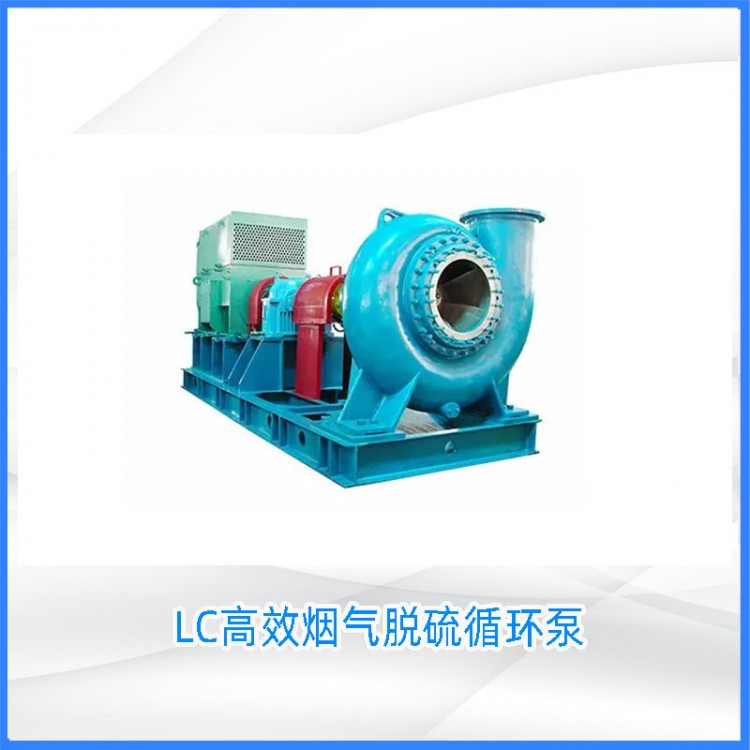
The company's leading products include 26 series and 460 ...

Corrosion-resistant chemical pumps are typically used for transferring corrosive liquids. Due to the specific nature of the medium, the selection of materials for these pumps is also very strict. The flow parts of corrosion-resistant pumps come into contact with the liquid, so they must have excellent corrosion resistance. What does this include in the flow parts of the pump, and what specific components are referred to?
What does "overflow part of the pump" refer to?
Many individuals unfamiliar with chemical corrosion-resistant pump products are curious about the main components of a pump's flow passage. In fact, taking the commonly used centrifugal pump as an example, centrifugal pumps are a type of impeller pump. The main flow passage components of an impeller pump include the impeller, pump casing, suction chamber, pump cover, seal, discharge chamber, and pump shaft.
Structure of Pump Impeller and Blades
Semi-open and open impeller blades typically have fewer than 2 to 5, commonly used for pumping slurry or wastewater, such as the impeller in a sewage pump. In the field of waste discharge, to prevent clogging when transporting media containing solid particles, fibers, and other entangled materials, a channel-type impeller is often used. The material of the pump impeller must have sufficient mechanical strength and certain wear and corrosion resistance. Depending on the requirements of the transported medium, cast iron, cast steel, stainless steel, or bronze materials are commonly used for impellers, especially for oil pump products that transport flammable and explosive oils.
Section 3: The Role of Pump Impellers and Types of Impellers
The impeller of a pump is a critical working component, as its shape, size, and manufacturing process have a decisive impact on the pump's performance. The function of the pump impeller is to transfer the energy input from the prime mover to the fluid. The shape and size of the pump impeller are closely related to the pump's performance. Pump impellers are generally categorized into single-suction and double-suction types. Single-suction impellers are designed for one-sided water intake, commonly used in low-flow pump impellers. Double-suction impellers are designed for two-sided water intake, and they are the standard for high-flow pump impellers.
The impeller of a pump mainly comes in three structural forms: those with both front and rear covers are called closed impellers. Those with only a rear cover are known as semi-open impellers. Impellers without any covers are referred to as open impellers. Additionally, the blade structure can be categorized into cylindrical blades and twisted blades. The blades of centrifugal pump impellers are typically backward curved. Blades come in cylindrical and twisted shapes. Using twisted blades can reduce blade load and improve the centrifugal pump's suction performance, enhancing its anti-cavitation ability, although it is more difficult to manufacture and more expensive. Centrifugal pumps used in oil refining and petrochemical industries require impellers that are either cast or fully welded as a single unit. Welded impellers have emerged in recent years and are often used for metals with poor casting properties, such as iron and its alloys, for the production of special centrifugal pumps used in the chemical industry. Welded impellers offer better geometric accuracy and surface finish than cast impellers, which is beneficial for improving the efficiency of centrifugal pumps. Generally, closed impellers have 2-12 backward curved blades, providing high operating efficiency, as mentioned, single-suction and double-suction centrifugal pumps use this type of impeller. Single-stage single-suction centrifugal pump impellers, due to their axial force, may have balancing holes at the root of the blades.

Four: Pump suction chamber, pump cavity, pump discharge chamber
The pump chamber and the pump suction chamber are positioned in front of the impeller. Their function is to direct the fluid towards the impeller, and the pump chamber is also a crucial location for the circulation and discharge of fluid within the pump.
2. The pressure chamber, located at the outer periphery of the impeller, is sometimes also referred to as the pump housing. Its function is to collect the liquid flowing out of the impeller, converting most of the kinetic energy into pressure energy, and then delivering it to the discharge pipe.
3. The materials for the suction and pressure chambers should have sufficient mechanical strength, wear resistance, and corrosion resistance, commonly using cast iron, cast steel, and stainless steel for casting. Corrosion-resistant pumps feature an outer cast steel casing and an inner lining of fluoroplastic.
Five: Pump cover. Sealing
The pump cover is the main component that secures the impeller and seals it. As the impeller rotates, it prevents liquid leakage through the seal. When the liquid flows through, the pump cover is the part that comes into direct contact with the liquid.


b2b.china9.net © Zhongshang 114 Hebei Network Technology Co., Ltd.Address: Room 6009, Oriental New World Center, No.118 East Zhongshan Road, Qiaoxi District, Shijiazhuang City, Hebei ProvincePlatform Service Hotline: 4006299930