



- AllProduct Category
-
Submersible Pump
Self-Priming Pump
Axial Flow Pump
Chemical Pumps
Mixed Flow Pump
Magnetic Pump
Desulfurization Pump
Screw Pump
Press Filter Pump
Slurry Pump
Multi-Stage Pump
Vortex Pump



详情描述
I. Overview of Liquefied Carbon Dioxide Desulfurization Pump
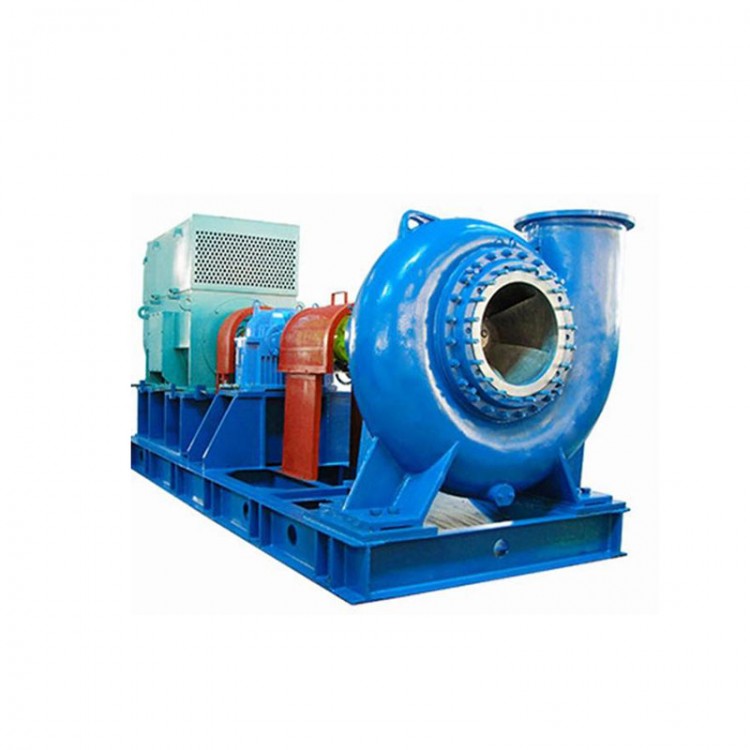
The LC series high-efficiency flue gas desulfurization circulating pump is a new generation series of desulfurization pumps meticulously developed by our company to cater to the characteristics of desulfurization pumps used for industrial flue gas desulfurization in China. It meets the requirements of pumps for limestone (limestone)/gypsum wet flue gas desulfurization processes in coal-fired power plants. The pump incorporates advanced technology from similar products worldwide and is specifically designed for circulating pumps in absorption towers, with a pH range of 2.5~13, chloride ion concentration ≤60000ppm, weight concentration ≤60%, and medium temperature ≤100℃.
II. Advantages of the LC Series Desulfurization Pumps
1) The pump features a full-metal structure. The pump body is made of ultra-low carbon nitrogen-containing duplex stainless steel CD4MCuN, while the impeller and wear-resistant plate are made of high-chromium wear-resistant alloy Cr30A. It boasts excellent corrosion and wear resistance, ensuring a long service life.
2) The pump is a single volute, single stage, single suction centrifugal pump with a "pull-out" structure. No need to dismantle the pump inlet and outlet piping when removing the impeller, mechanical seal, shaft, and other components, making maintenance convenient.
3) Generally, single-face integrated mechanical seals are used for ease of disassembly. The impeller design includes balancing holes to prevent large particles from contacting the mechanical seal.
4) Axial adjustable structure design for easy impeller adjustment, maintaining the gap between the impeller and the front pump cover and the wear-resistant plate, thereby ensuring the pump's high efficiency.
5) The pump shaft features a large diameter and a short shaft end, which reduces shaft deflection during operation, thereby extending the lifespan of the seal.
6) The impeller and shaft are connected with double key joints and a dual locking device, which resolves the issue of impeller reversal and detachment during shutdown and backwashing.
7) Equipped with稀油lubricated bearings, featuring an oil level mirror and a constant-position oil cup, it ensures adequate lubrication; utilizes a safe and reliable labyrinth dust shield to effectively prevent dirt and impurities from entering and to prevent oil leakage.
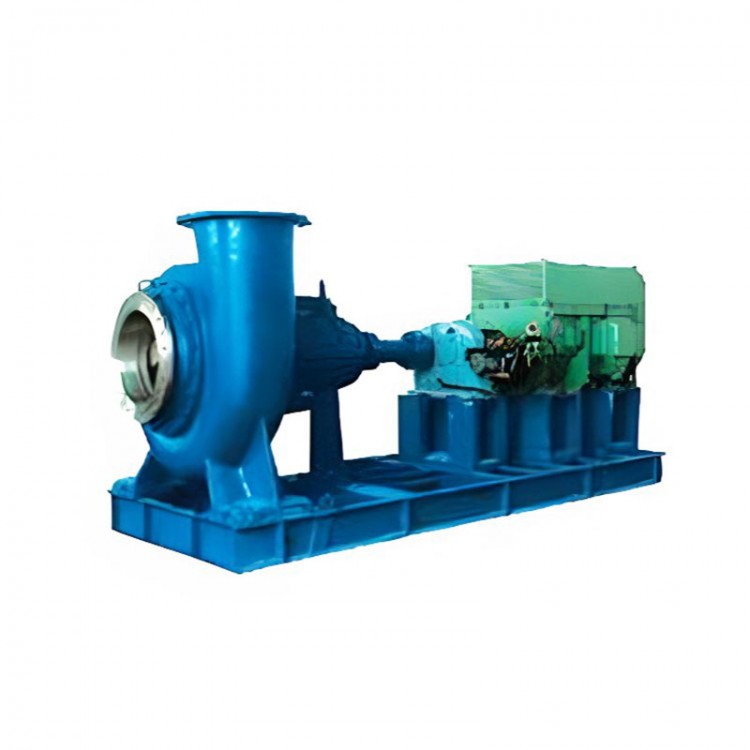
Section 3: Schematic Diagram of High-Efficiency Flue Gas Desulfurization Recirculation Pump Structure
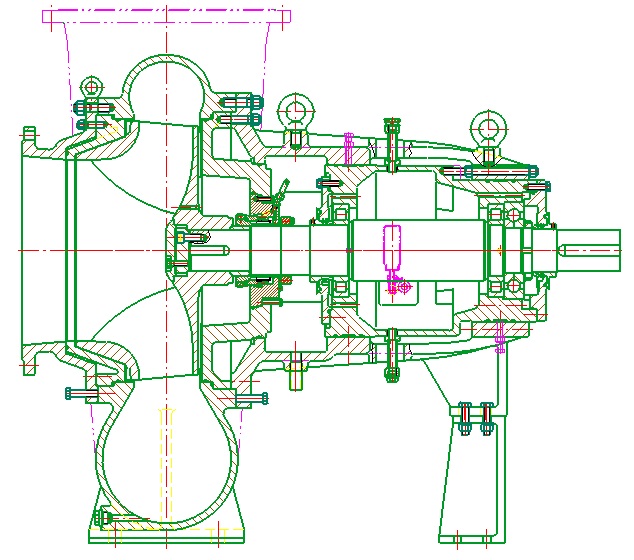
IV. LC Desulfurization Cycle Pump Structural Features
1.1 Structural Features
(1) The pump is a single-stage, single-suction centrifugal pump, which has been proven in practice to be particularly suitable for the absorption tower circulation pump of FGD units for transporting erosive and corrosive slurries.
(2) Impellers and wear-resistant plates do not use gasketed sealing; the gaskets will be rapidly worn away by the slurry, leading to a quick decline in pump efficiency.
(3) Equipped with an axial adjustment structure, the impeller can easily be adjusted axially to maintain the gap between the impeller and the front cover plate as well as the wear-resistant plate, thereby ensuring the pump's high efficiency. This is the simplest and most effective way to maintain the pump's high-efficiency operation consistently.
(4) The pump is designed with a "rear pull" structure. This allows for the pump to be disassembled without removing the inlet and outlet piping.
(5) The bearings are lubricated with light oil. They are mounted in removable bearing boxes with rubber sealing rings for auxiliary sealing, preventing dirt and water from entering.
(6) The pump shaft features a large diameter and short shaft head, which reduces shaft deflection during operation, thereby extending the service life of the seal.
1.2 Design Advantages of the Absorber Tower Circulation Pump:
Overall Description: Pull-out design allows the entire rotor assembly to be removed from the motor end for easy maintenance. The pump body can remain on the pipeline, eliminating the need to disassemble the motor.
Pull-out front design; Wear-resistant plate, impeller, and mechanical seal can be disassembled from the进口 end.
Adjustable bearing bracket, enhanced wear resistance
Bearings are lubricated with oil immersion
Pump Housing: The pump housing is designed with sufficient size for pressure resistance and wear resistance, made of material 2605N, which is weldable. The volute tongue section has been treated for special wear resistance, with a tangential outlet in the flow channel, and the housing features a base foot support design.
Wear-Resistant Plate: This part is installed between the pump housing and the inlet, made of Cr30A material. This material boasts excellent wear and erosion resistance, thereby extending the service life of both the pump housing and impeller.
Impeller: Made of Cr30A, non-weldable; more economical for long-term operation due to adjustable bearing housing. When the impeller experiences erosion, it can be re-machined to extend its service life. The leading blade structure prevents large particles from entering the gap between the impeller and the wear-resistant plate. The larger gap between the leading blade and the wear-resistant plate reduces the flow velocity of the medium (between the impeller and the wear-resistant plate), minimizing wear. The blades are designed with special wear-resistant treatment, and the trailing blade design reduces axial force while also blocking large particles. The bearing design withstands high pressure (similar to the hydraulic model under no trailing blade conditions), and the impeller exhaust hole design allows for the expulsion of gas within the medium, preventing dry operation of the mechanical seal.
Back Pump Cover: Made of 2605N material, weldable; wear typically occurs in the area of the back vanes. The back pump cover is mounted on the bearing bracket, releasing stress, allowing for greater wear, extending service life. The back pump cover is secured to the bearing bracket with bolts, facilitating easy assembly and disassembly without damaging the pump body or the mechanical seal during removal.
Bearing Housing: The bearing housing consists of two parts, the bracket and the bearing housing. The bearing housing can be adjusted and moved horizontally within the bracket using bolts and adjusting screws. The advantage of this design is that the bearing housing moves within the bracket (based on the reprocessed size of the impeller), but the inner and outer rings of the bearing do not have relative displacement. Due to the absence of relative displacement, the oil seal operates completely normally. During disassembly, the lower part remains on the base, making it easier to disassemble, with precise positioning and preventing the parts from jamming during installation.
Mechanical Seals: Designed as a single-end face integrated structure for easy assembly and disassembly. The flushing design offers two options: one, install a flushing water pipeline for fixed flushing; two, no fixed flushing water pipeline, with intermittent flushing. In the working area of the mechanical seal, if the medium contains gas, the seal will operate dry, so the impeller is designed with exhaust holes to prevent large, dirty particles from contacting the seal. The pump is easy to empty during drainage, the sealing chamber has a large volume, and it is well-lubricated and cooled.


