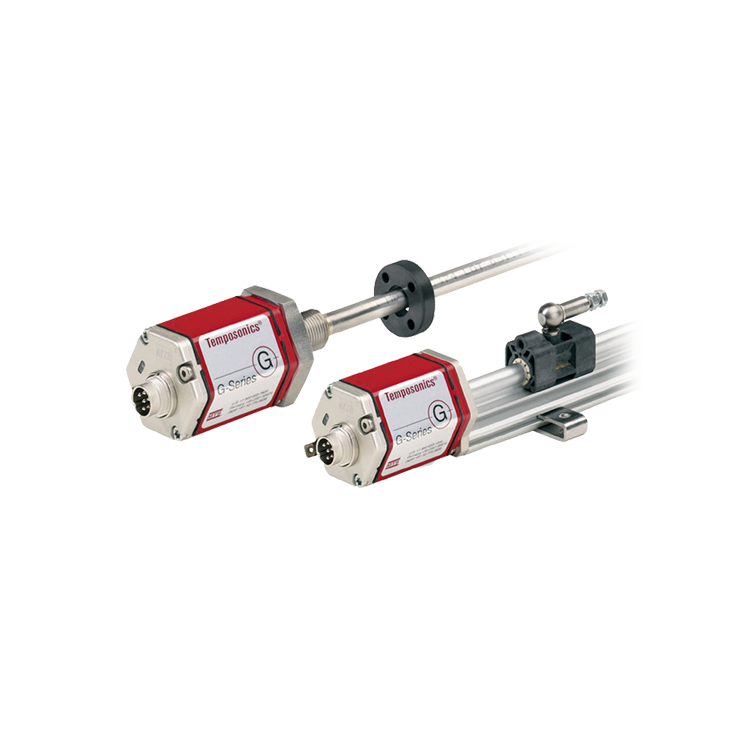
Position Sensors, Magnetostrictive Position Sensors, Rope...

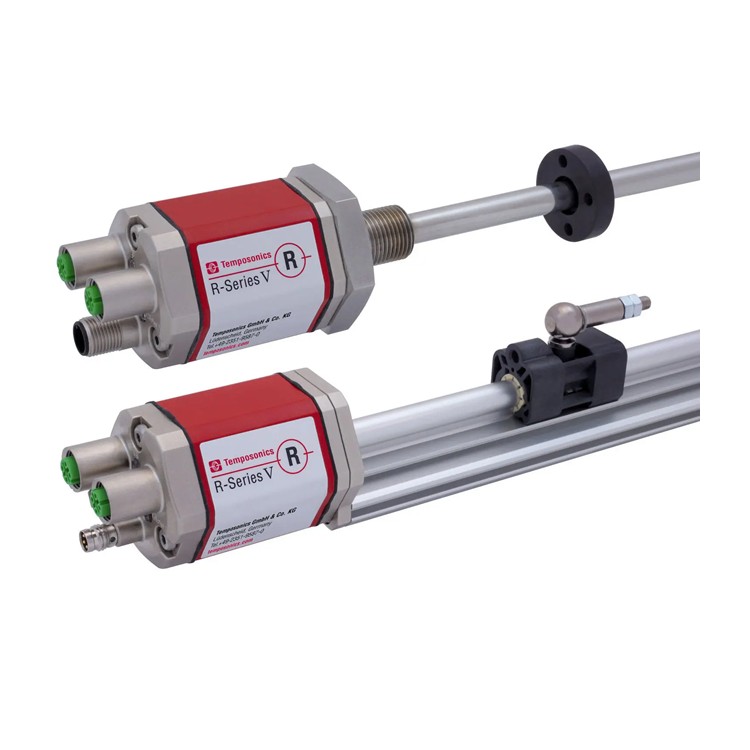
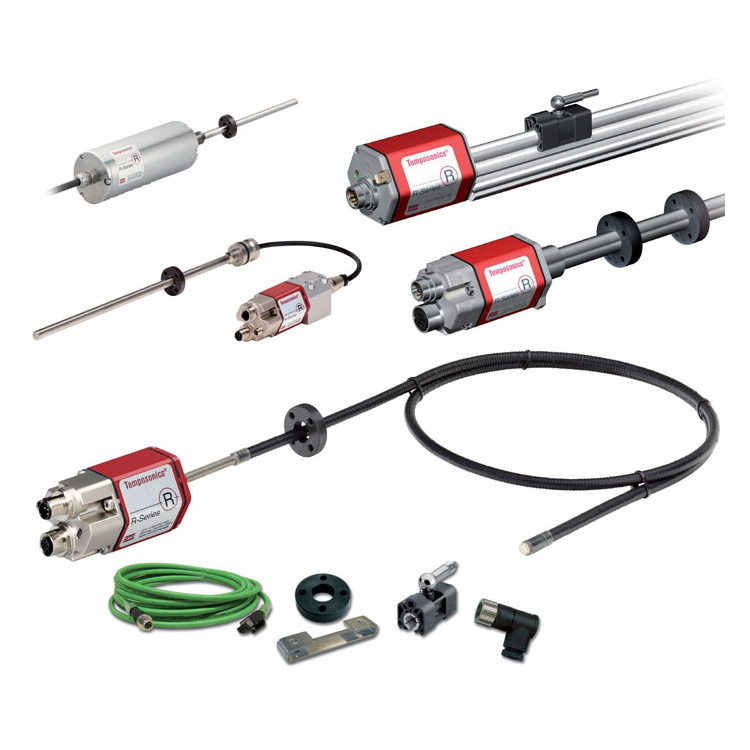
Servo hydraulic cylinders are widely used in various industrial automation fields, such as machine tools, metallurgical equipment, and construction machinery, demanding precise position control. As a key component of servo hydraulic cylinders, magnetostrictive displacement sensors play a crucial role in monitoring the extension and retraction of the cylinder's piston rod in real-time, providing feedback signals for the entire system's operation, ensuring accurate and precise movements.
There are various types of displacement sensors, such as magnetostrictive displacement sensors, which utilize the magnetostrictive effect. When an electrical pulse passes through the waveguide wire, it generates a circular magnetic field that interacts with a movable magnetic ring encircling the waveguide wire, causing the wire to produce strain pulses. By measuring the pulse propagation time, the position of the magnetic ring, or the piston rod displacement, can be determined. Additionally, there's the linear variable differential transformer (LVDT), which operates on the principle of mutual induction. The primary coil is supplied with an AC excitation voltage, and the secondary coil induces a voltage difference related to the piston rod's position, which is processed and converted into a displacement signal.
PrecisionHigh precision is a core requirement, generally reaching the micrometer or even nanometer level. The accuracy of sensors for precision machine tools is often superior to ±0.01mm, ensuring the precision of the machining process.
ResolutionReflecting the detectable small displacement changes, high resolution is required for equipment used in delicate operations, such as sensors associated with semiconductor chip manufacturing equipment, which can reach a resolution of 0.1μm.
LinearityThe degree of linear deviation between the sensor output and actual displacement, a good linearity ensures accurate and reliable displacement measurement across the full range. The product's linearity can reach ±0.05% FS (full scale).
RepetitionConsistency in multiple measurements of the same displacement ensures stable system operation. Repetition errors are typically controlled within a small range, such as ±0.005mm.

To ensure coaxial alignment between the magnetostrictive displacement sensor and the hydraulic cylinder piston rod, excessive installation deviation can lead to increased measurement errors. Generally, the coaxial alignment deviation should be controlled within 0.1mm, and professional fixture tools can assist in installation and calibration.
Sensor mounting must be secure and reliable to prevent loosening or displacement during the frequent operation of the oil cylinder. The use of high-tensile bolts and a well-designed mounting bracket structure effectively ensures its stability.
For environments with protective requirements, such as damp, dusty, or strong electromagnetic interference areas, ensure the protective encapsulation of sensors by selecting appropriate sealing materials and shielding shells to guarantee their normal service life.
Piston Stroke: Select an appropriate sensor range based on the servo oil's large and small stroke ranges to ensure precise measurement throughout the entire stroke. It is generally recommended to choose a sensor range slightly larger than the piston stroke, leaving a 10% - 20% margin.
Work Environment: In high-temperature environments, select high-temperature sensors with materials and electronic components capable of withstanding high temperatures; in corrosive environments, such as in chemical equipment, the sensor housing and contact parts must possess anti-corrosion characteristics.
Compatibility with Control Systems: Sensor output signal types (such as analog signals like 4-20mA, 0-10V, and digital signals like SSI, CANopen, etc.) must be compatible with the backend control system for seamless integration and rapid data processing.
Regularly clean the surface of the magnetostrictive displacement sensor to remove dust, oil, and other contaminants to prevent them from affecting measurement accuracy. Use a mild cleaner for wiping, and be cautious not to damage sensitive components.
Inspect the tightness of the installation areas, tighten any loose connections promptly; also check for any damage or aging of the cables, ensuring stable signal transmission and replace any faulty cables in a timely manner.
According to the product manual, calibrate the sensors regularly, especially when the equipment has been operating for an extended period or there are signs of accuracy deviation. Use a standard displacement calibration device to re-adjust parameters such as the zero point and range to ensure measurement accuracy.


b2b.china9.net © Zhongshang 114 Hebei Network Technology Co., Ltd.Address: Room 6009, Oriental New World Center, No.118 East Zhongshan Road, Qiaoxi District, Shijiazhuang City, Hebei ProvincePlatform Service Hotline: 4006299930