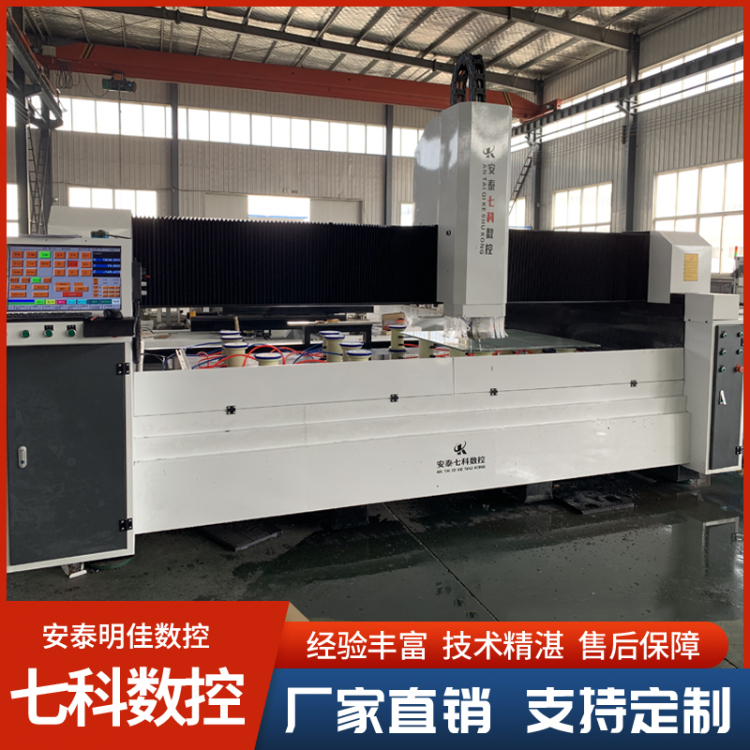
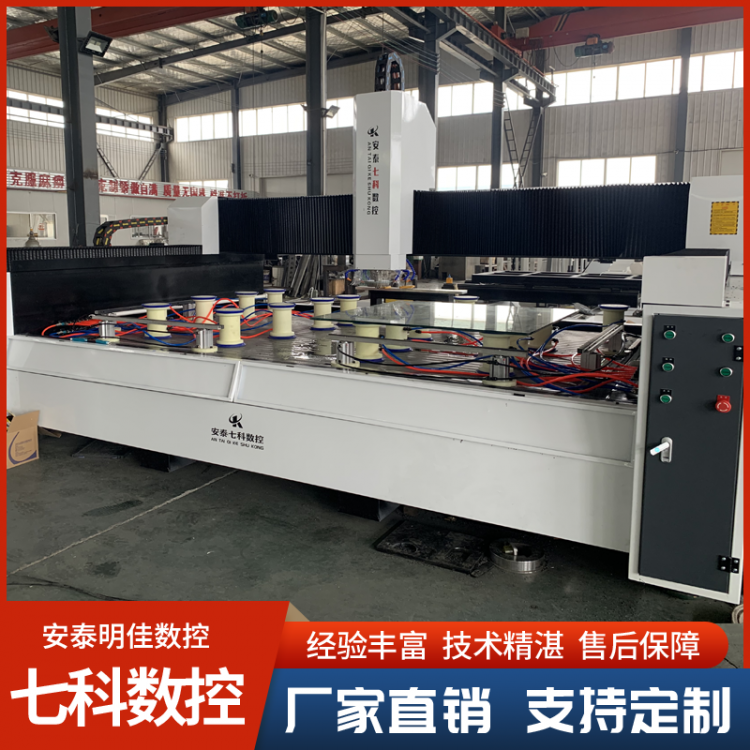
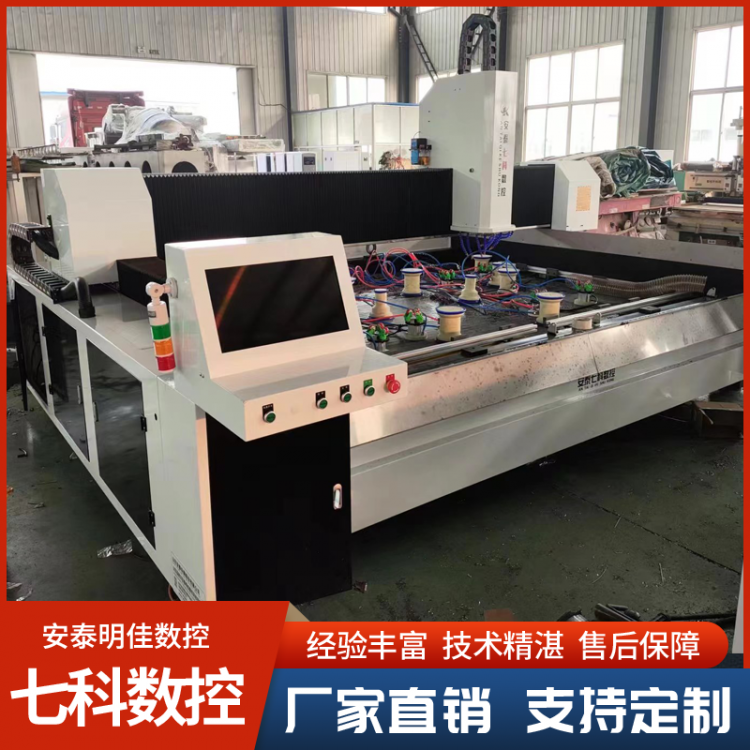
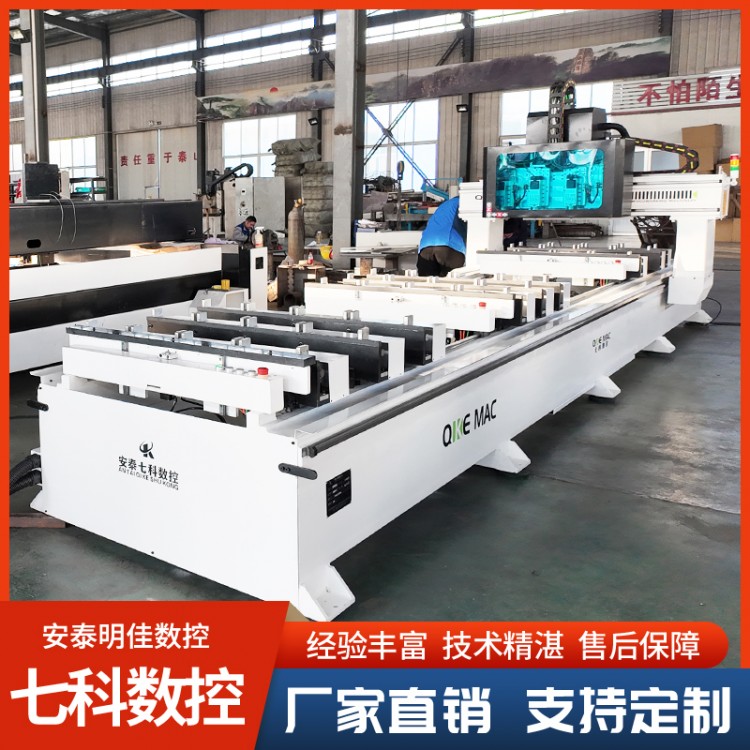
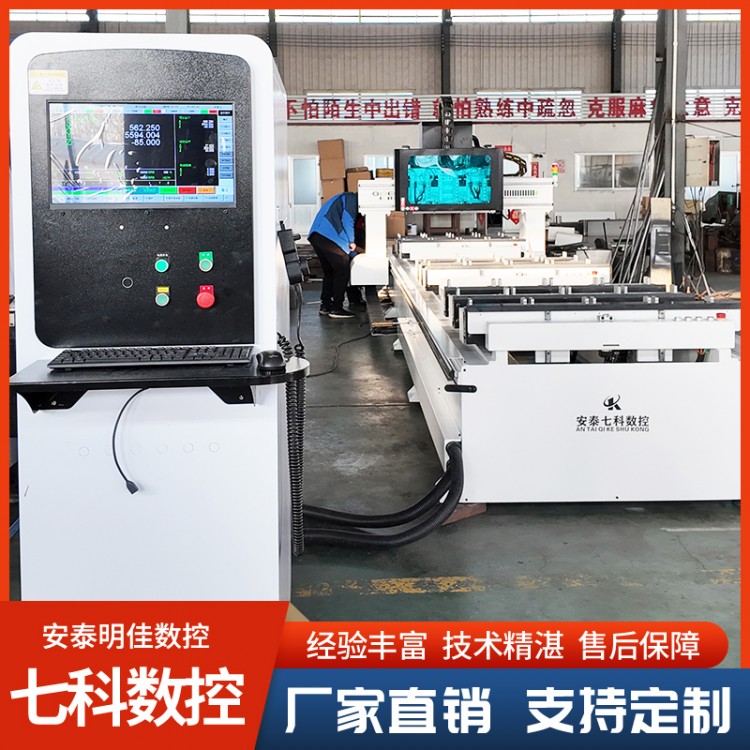
Numerical Control Cross-Cut Saws, Numerical Control Moldi...


Product Recommendation
Mechanical component malfunction
1. Workbench Malfunction
Accuracy Decline: After prolonged use or significant impact, the workbench's accuracy may decrease. For instance, due to guide rail wear, the workbench may exhibit shaking or inaccurate positioning during movement. This can lead to deviations in tenon and groove positioning accuracy, affecting the quality of the machining.
Sluggish Movement: Insufficient lubrication on the guide rails, foreign objects stuck in the rail surfaces, or damage to the transmission mechanisms (such as lead screws) can all cause the worktable to move unevenly. Symptoms include the worktable experiencing sticking during movement, sometimes even rendering it immobile, which in turn affects the continuity of the machining process.
2. Knife system malfunction
Tool Damage: During the machining process, tools may be damaged due to excessive cutting force, poor tool material, or improper setting of machining parameters (such as too fast cutting speed or too large feed rate). Common forms of tool damage include chipping and excessive wear. Once damaged, the surface roughness of the tenon and groove will deteriorate, and the dimensional accuracy cannot be guaranteed.
Improper Tool Installation: If tools are not securely fastened or inaccurately positioned, they may loosen or even fall off during processing, damaging the workpiece and equipment, and posing serious safety hazards. For instance, if a milling cutter is not aligned with the spindle during installation, it can cause vibration during rotation, affecting processing accuracy and tool longevity.
3. Main shaft failure
Spindle Vibration: Issues such as bearing wear, unbalanced spindle, or tool installation problems can cause spindle vibration. This vibration is transmitted to the tool, resulting in wavy surfaces on the machined parts and reducing the precision and surface quality of the grooves and tenons.
Spindle Precision Decline: Extended high-speed operation or improper usage may lead to increased radial and axial movement of the spindle, affecting the relative positioning accuracy between the tool and workpiece, subsequently causing issues with the shape and size precision of tenons and grooves.
Section II: Electrical Partial Failure
1. CNC System Malfunction
Programming Error: Mistakes during the programming process, such as incorrect code writing or parameter settings, can lead to equipment not functioning as intended. For instance, incorrect settings for parameters like the depth and width of tenons and grooves can result in the processed tenons and grooves not meeting the required specifications.
System Crashes or Reboots: Numerical Control (NC) systems may experience crashes or unintended reboots due to internal hardware failures (such as damaged components on circuit boards), software conflicts, or external interference (like electromagnetic interference). This can disrupt the machining process, lead to scrap parts, and potentially damage the data and programs of the NC system.
2. Motor Failure
Spindle Motor Failure: Faults such as short-circuits, open circuits, or overloading in the motor windings can lead to spindle motor malfunctions. When a spindle motor malfunctions, it may exhibit abnormal rotation speeds (either too high or too low) or fail to start, thereby affecting the normal progression of the machining process.
Feed Motor Failure: Similarly, a feed motor failure can also affect the movement of the worktable. For instance, if the motor loses steps, it can lead to inaccurate movement distances of the worktable, affecting the precision of tenon and mortise positions; if the motor fails to operate normally, the worktable will be unable to move, forcing the machining process to be interrupted.
3. Sensor Failure
Position Sensor Failure: A malfunction in the sensors used to detect the workbench and tool positions can prevent the equipment from accurately obtaining location information. For instance, a damaged photoelectric encoder may cause the CNC system to inaccurately control the distance of the workbench's movement, leading to inaccuracies in tenon and mortise positioning.
Temperature Sensor Malfunction: Temperature sensors are used to monitor the temperature of critical equipment areas (such as the main shaft motor) to prevent overheating. A malfunctioning temperature sensor could lead to the system not detecting equipment overheating in a timely manner, thereby increasing the risk of equipment damage.
4. Cooling and Lubrication System Malfunction
Insufficient or Leaking Coolant: Inadequate coolant can lead to poor heat dissipation during the machining process, which may cause the tool to overheat and malfunction, as well as affect the quality of the machined surface. Coolant leaks can damage the electrical components and mechanical parts of the equipment, and also cause contamination of the work area.
Poor lubrication: If the lubrication system fails, such as a damaged oil pump, clogged oil lines, or blocked oil nozzles, it can lead to insufficient lubrication of the machine tool's moving parts like guideways and screws, increasing friction and wear, which in turn affects the precision of the worktable's movement and the lifespan of the equipment.


b2b.china9.net © Zhongshang 114 Hebei Network Technology Co., Ltd.Address: Room 6009, Oriental New World Center, No.118 East Zhongshan Road, Qiaoxi District, Shijiazhuang City, Hebei ProvincePlatform Service Hotline: 4006299930