

Product Details

Building Engineering Quality Inspection and Appraisal
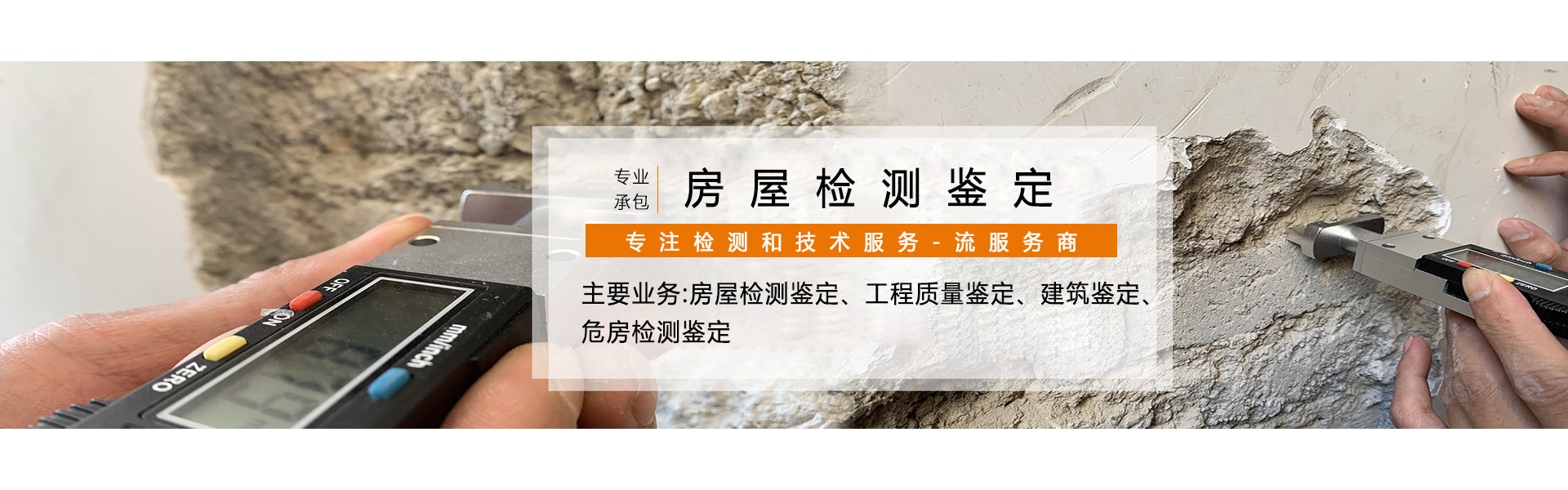



价 格Negotiable
最小起订0 piece库存0 piece
 Business Card
Negotiable

Negotiable

Negotiable

Negotiable
Structural Steel Inspection
Negotiable
 Prospecting Survey
Negotiable
Prospecting Survey
Negotiable
 House safety inspection and certi
Negotiable
House safety inspection and certi
Negotiable
 Building Facade Four Properties T
Negotiable
Building Facade Four Properties T
Negotiable
 Rack Safety Inspection
Negotiable
Rack Safety Inspection
Negotiable
 Billboard Inspection
Negotiable
Billboard Inspection
Negotiable
 Fire detection
Negotiable
Fire detection
Negotiable
 Portable toilet wind and seismic
Negotiable
Portable toilet wind and seismic
Negotiable
 Stress Test
Negotiable
Stress Test
Negotiable
 Gamma Ray Inspection
Negotiable
Gamma Ray Inspection
Negotiable
Ultrasonic flaw detection is a method of inspecting part defects by utilizing the characteristic that ultrasonic waves can penetrate deeply into the metal material and reflect at the interface edges when transitioning from one cross-section to another. When the ultrasonic beam travels from the surface of the part through the probe to the interior of the metal, it generates reflected waves upon encountering defects or the base of the part, which form pulse waveforms on the fluorescent screen. The location and size of the defects are determined by analyzing these pulse waveforms.
Inspection Purpose: Detect impurities, cracks, shrinkage, white spots, delamination, and other defects in metals and welds. Also, measure metal thickness.
Application Range
1. Weld Seam Surface Defect Inspection. Check for cracks, incomplete welding, and weld leakage on the weld seam surface to assess welding quality. 2. Internal Cavity Inspection. Inspect for surface cracks, scaling, pulling lines, scratches, dents, bumps, spots, and corrosion to identify defects.
3. Status Inspection. After certain products (such as worm gear pumps, engines, etc.) have been in operation, perform endoscopic inspections on the items as specified by the technical requirements.
4. Assembly Inspection. Utilize Yatai Photoelectric Industrial Video Borescope for quality checks as required and necessary; inspect whether the assembly positions of various components meet the requirements of the drawings or technical specifications after assembly or completion of a specific process; and identify any assembly defects.
5. Excess Material Inspection. Check for any residual debris, foreign objects, and other excess materials inside the product cavity.
Service Content
(1) Pressure Pipelines: Industrial pressure pipelines, oil and gas transmission pipelines, industrial metal thermal pipelines, industrial metal gas pipelines, etc.
(2) Pressure Vessels (including Gas Bottles): Power industry boilers, fixed pressure vessels, mobile pressure vessels, etc.
(3) Marine Equipment & Products: Non-destructive testing and thickness gauging for power systems, cabin equipment, deck machinery, and other marine and ship products.
(4) Non-destructive Testing for Billboards: Rooftop billboards, wall billboards, freestanding billboards, highway billboards, etc.
(5) Non-destructive Testing of Steel Structures: Steel structures for construction projects, road and bridge structures, hydraulic engineering structures, power engineering structures, convention centers, stadiums, etc.
(6) Non-destructive Testing for Boilers: Steam boilers, hot water boilers, organic heat carrier boilers, etc.
(7) Crane Non-Destructive Testing: Bridge cranes, gantry cranes, tower cranes, mobile cranes, railway cranes, portal cranes, jib cranes, cable cranes, light-duty cranes, and more.
(8) Power Engineering: Non-destructive testing related to thermal power, wind power, nuclear power, and hydraulic power engineering.
(9) Standard Parts: Non-destructive testing of standard parts such as bolts, screws, studs and nuts, threaded rods, bearings, shafts, cylinders, sleeves, etc.
(10) Raw Materials: Non-destructive testing for materials such as sheets, bars, pipes, castings, forgings, and steel forgings, etc.
(11) Non-destructive testing for special equipment such as passenger cableways of other types, large amusement facilities, indoor mobile vehicles, etc.

Phone Consultation