

Product Details

Manufacturing metal wire ropes and their products. Production and sales: steel grating, steel grid, guardrails, foundation pit guardrails; sales: zinc steel guardrails, municipal guardrails, mesh panels, barbed wire, geotextile, Dutch mesh, welded wire mesh, woven wire products, and import/export business.


价 格Negotiable
最小起订0 Piece库存0 Piece
 Business Card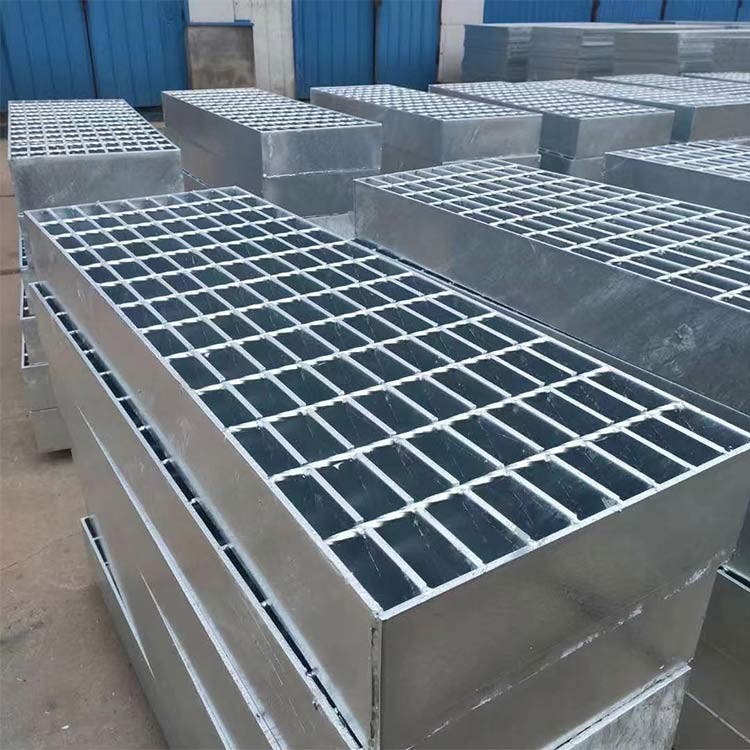
Negotiable
Negotiable
Negotiable
Negotiable
 Galvanized Steel Grating Manufact
Negotiable
Galvanized Steel Grating Manufact
Negotiable
 Galvanized Manhole Cover Manufact
Negotiable
Galvanized Manhole Cover Manufact
Negotiable
 Galvanized Grating Manufacturer
Negotiable
Galvanized Grating Manufacturer
Negotiable
 Platform steel grating manufactur
Negotiable
Platform steel grating manufactur
Negotiable
 Steel Grating Manufacturer
Negotiable
Hot-Dip Galvanized Steel Grating
Negotiable
Steel Grating Manufacturer
Negotiable
Hot-Dip Galvanized Steel Grating
Negotiable
 Steel Grating Manufacturer
Negotiable
Galvanized Grating Manufacturer
Negotiable
Steel Grating Manufacturer
Negotiable
Galvanized Grating Manufacturer
Negotiable
 Galvanized Drainage Grate Manufac
Negotiable
Galvanized Drainage Grate Manufac
Negotiable
 Galvanized Grating Cover Manufact
Negotiable
Galvanized Grating Cover Manufact
Negotiable

Introduction to Steel Grating
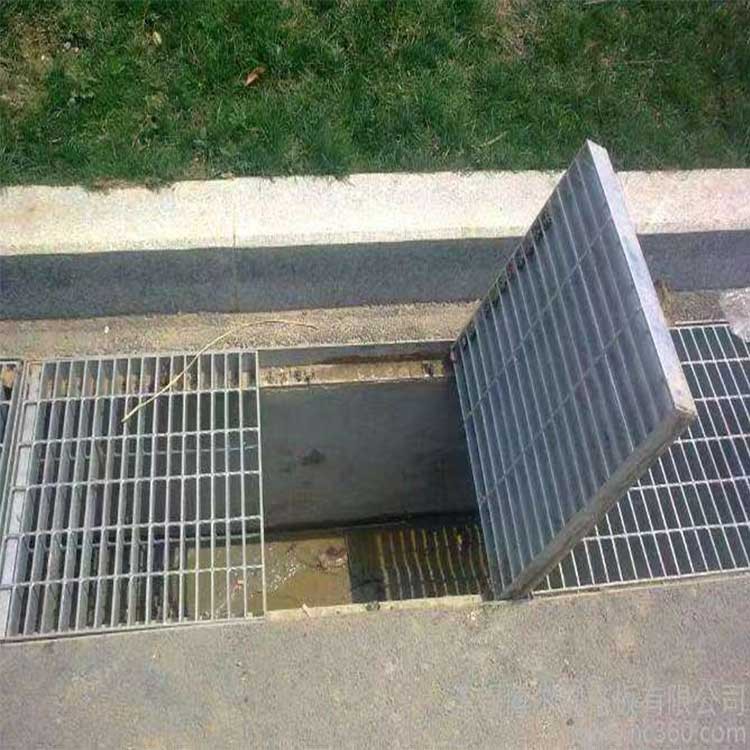
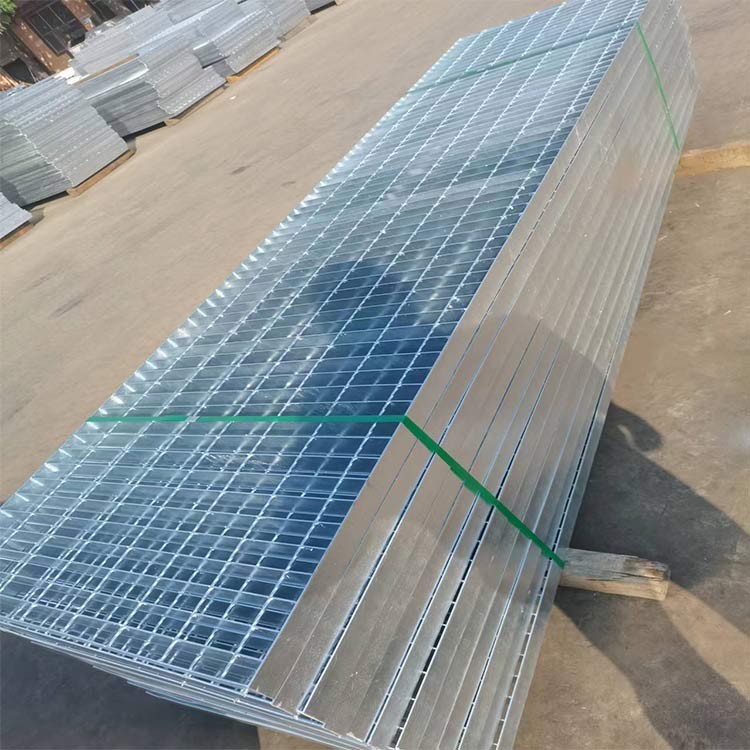
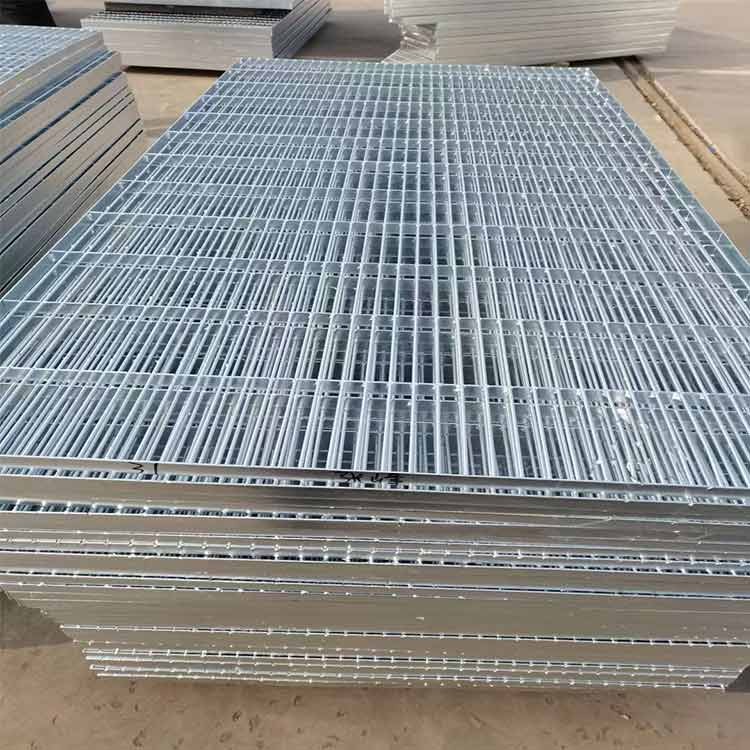
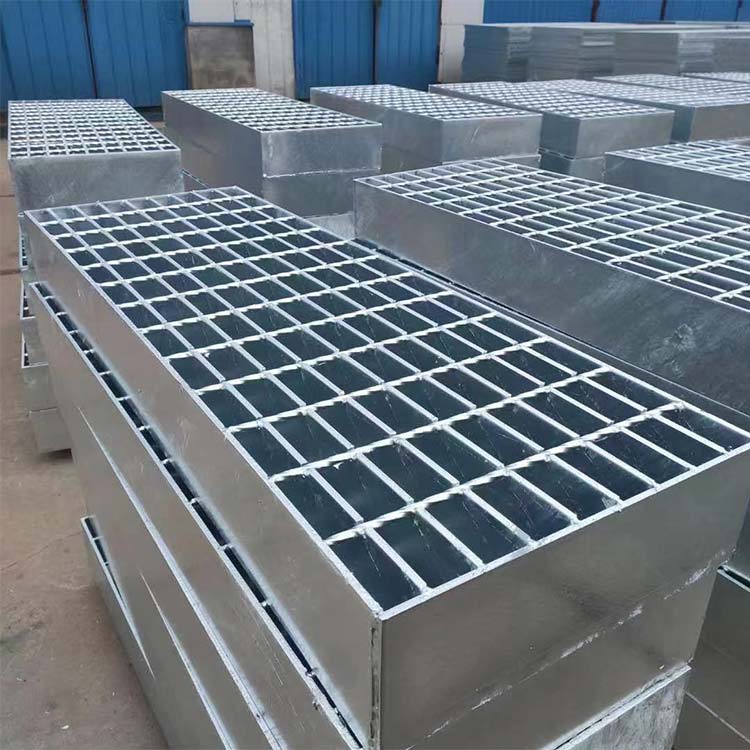
Steel grating, also known as steel grid or grating panel, is made by welding flat steel and twisted steel. Durable and cost-effective compared to other products, steel grating is primarily used in power plant platforms, parking lots, maintenance platforms, drain covers, and step plates. It is also employed in environmental protection equipment and wastewater treatment. Steel grating is widely used in various fields such as petrochemicals, electricity, water supply, wastewater treatment, ports, construction decoration, shipbuilding, self-propelled parking lots, municipal engineering, and environmental sanitation projects, for platforms, walkways, gangways, drain covers, manholes, ladders, fences, and more.
Steel Grating Plates
Also known as steel grating or grating plate, it is a type of steel product made by crossing flat steel bars at certain intervals with transverse bars, then welded together to form a square grid pattern in the middle. Primarily used for drain covers, steel structure platform panels, and step plates for steel ladders, etc. The transverse bars are typically made of twisted square steel.
Manufacturing Process of Steel Grating Panels: Steel grating panels are made by arranging load-bearing flat bars and cross bars at a certain spacing, then焊接 using a 200-ton hydraulic resistance welding automated machine to form the original plate. The panels are then processed through cutting, punching, and edging, etc., to meet customer requirements. Spacing of Load-bearing Flat Bars: The spacing between adjacent load-bearing flat bars is commonly 30, 40, and 50, among others. Spacing of Cross Bars: The distance between adjacent cross bars is typically 50, 76, 80, 100, and more, and can be produced according to customer specifications, with customized steel grating panels of various types based on customer needs.
Product Features of Steel Grating Plates:
1: High strength, lightweight structure.
2: Excellent corrosion resistance, durable for long-term use.
3: Aesthetically pleasing with a glossy surface.
4: No dirt accumulation, no snow or rain buildup, no water pooling, self-cleaning, easy to maintain.
Ventilation, lighting, heat dissipation, anti-slip, and explosion-proof properties are excellent.
6: Easy to install and dismantle.
Product Applications: Widely used in the petrochemical, tobacco, power, water supply, wastewater treatment, port, wharf, construction decoration, shipbuilding, self-propelled parking lots, municipal engineering, environmental protection engineering, and other platforms, including walkways, gangways, manholes, covers, ladders, fences, large sports venues, exhibitions, large-scale commercial buildings, stations, docks, airports, and other industrial and civil buildings for ceiling installations.
Hot-Dip Galvanized Steel Grating
The product is a finished item, which is deep-processed from an original plate made by welding load flat steel and cross bars at certain intervals into a grid on a high-voltage resistance welding machine, followed by cutting, beveling, drilling holes, and edge wrapping as per customer requirements.
Galvanized steel grating is available in the following types:
1. Hot-Dip Galvanized Steel Grating, categorized by manufacturing process into Pressure-Welded Hot-Dip Galvanized Steel Grating and Pressure-Locked Hot-Dip Galvanized Steel Grating
2. Hot-dip galvanized steel grating surfaces are divided into toothed hot-dip galvanized steel grating and flat hot-dip galvanized steel grating.
3. Type I hot-dipped galvanized steel grating and composite hot-dipped galvanized steel grating.
Marking Method:
(1) Hot-dip galvanized steel grating bar spacing: differentiated by series: Series 1 is 30mm; Series 2 is 40mm; Series 3 is 60mm.
(2) Hot-dip galvanized steel grating crossbar spacing: Series 1 is 100mm, Series 2 is 50mm. Other specifications are available for customization.
(3) Hot-Dip Galvanized Steel Grating: Made of Q23 steel or stainless steel, available in flat, anti-slip toothed, and I-section designs. Common sizes include 20*5, 25*5, 25*3, 32*5, 32*5, 40*5, 40*3, 50*5, 65*5, 75*6, 100*8, and 100*10.
(4) Hot-Dip Galvanized Steel Grating Crossbars: Made of round steel, twisted square steel, square steel, or hexagonal steel with material grade Q23 or 304 stainless steel. Twisted square steel is produced by drawing through square dies from round wire and twisting, with common sizes including 5*5, 6*6, 8*8mm, etc.
Features include: High strength, lightweight structure: The sturdy grid pressure-welded structure offers high load-bearing capacity, light weight, and easy hoisting; aesthetically pleasing and durable.
Hot-dip galvanized steel grating applications: Widely used in platforms, walkways, bridges, manhole covers, grates, ladders, fences, and guardrails in the fields of petrochemical, power plants, waterworks, sewage treatment plants, municipal engineering, and environmental protection engineering.
Hot-Dip Galvanized Steel Grating
(Hot-dip galvanized steel grating) is a widely used product in steel grating applications, renowned for its aesthetic appeal and excellent corrosion and rust resistance, which extends its service life. It is highly favored by a large number of customers.
Hot-dip galvanized steel grating plates feature high strength and light structure; their sturdy grid pressure-welded construction offers high load-bearing capacity, light structure, and ease of hoisting; they also boast an attractive appearance and durability.
Corrosion Resistance: A stable protective film forms on the zinc layer surface within the pH range of 6 to 12.5, offering excellent corrosion resistance.
Hot-Dip Galvanized Steel Grating Applications: Widely used in platforms, walkways, gangways, manhole covers, grates, ladders, fences, guardrails, and other facilities in the fields of petrochemicals, power plants, waterworks, sewage treatment plants, municipal engineering, and environmental protection projects.
Heavy-duty steel grating
1. Heavy-duty steel grating introduction:
Heavy-duty steel grating refers to the type with load-bearing flat steel widths of 65mm or more and thicknesses of 6mm or more, typically featuring cross bars made of flat steel or steel bars with diameters of 10mm or 12mm.
2. Heavy-duty steel grating applications:
Heavy-duty steel grating is designed and manufactured for heavy load applications, suitable for airports, highways, industrial platforms, harbor wharfs, and other special requirements.
3. Heavy-duty steel grating categories:
4. Heavy-duty steel grating can be divided into two types according to the production process: heavy-duty welded steel grating and heavy-duty riveted steel grating.
A. Heavy-duty pressure-welded steel grating refers to grating with steel bars as cross bars, suitable for unidirectional loading applications.
B. Heavy-duty press-locked steel grating refers to the type with flat steel bars, suitable for bidirectional loading. However, it is significantly more expensive than welded steel grating, and generally not recommended for use.
C. Surface shapes can be divided into flat heavy-duty steel grating and toothed heavy-duty steel grating.
Due to cost considerations, we recommend using flat steel grating in most cases, and heavy-duty toothed steel grating for anti-slip applications such as offshore drilling platforms.
Composite steel grating
This product is composed of steel grating with certain transverse bearing capacity and embossed plate with a sealed surface. After hot-dip galvanizing, the composite steel grating may experience warping and deformation due to heat, especially for larger sizes, which can be challenging to flatten. Please pay attention to the selection of size. The composite steel grating commonly uses Series 3 grating as the base, but Series 1 or Series 2 can also be used. Embossed steel grating usually uses 3mm thick plates, but 4mm, 5mm, and 6mm plates can also be utilized. The front or back of the composite steel grating can be connected with steel mesh to form a double-layered panel, which prevents small items from falling out. Using this double-layered panel in grain silos, restaurants, and warehouses can prevent rodents and other small animals from entering.
Composite steel grating installation method: Directly weld the steel grating or tread plate to the supporting steel structure, and apply two coats of zinc-rich paint at the welding joints. Use steel grating installation clamps for assembly, which do not damage the galvanized layer and are easy to disassemble. Each set of installation clamps includes one upper clamp, one lower clamp, one M8 round head bolt, and one nut. Stainless steel installation clamps or bolt connection methods can be provided upon request. The installation gap for steel gratings is generally 100mm. Ensure the installation is secure and reliable during assembly, and check regularly to prevent clamps from loosening or falling off. It is recommended to weld or add rubber pads to the steel grating near vibrations.
Platform steel grating
Platform steel grating is a widely applicable steel grating panel product, mainly used for various platforms in factories, workshops, mines, and ports. It boasts an elegant appearance, easy installation, and is a new type of building product that replaces older ones.
Platform specialty products include: steel grating plates.
1. Kick plates (edge plates), patterned plate guards, and installation accessories such as connecting parts can be additional welded around the steel grating.
2. Use flat steel strips with different specifications than those used for the steel grating edges, or encase with angle steel, channel steel, square tubes, etc.
3. Handles and hinges can be installed on the platform steel grating panels for frequent movement or opening.
4. Generally speaking: The welding standard for the edge of the platform steel grating is as follows: Series 1 - weld every five panels; Series 2 - weld every four panels; Series 3 - weld every three panels. The welds are single-sided angle welds not less than 3mm in thickness, with a length of 20mm.
Stainless Steel Grating
Also known as stainless steel grating panels. There are usually two methods of production: one involves welding together stainless steel flat bars and round bars; the other involves interlocking stainless steel flat bars. They offer excellent corrosion resistance, a clean appearance, and a very ideal decorative effect, although they are generally more expensive.
Stainless Steel Grating Categories:
It can be categorized into flat, toothed, and I-shaped types, with over 200 specifications and varieties (the surface can be protected differently depending on the usage environment).
Material: Generally, stainless steel grades 304, 316, 316L are used.
Manufacturing Method:
There are two types: machine welding and handcrafted. Machine welding uses a high-pressure resistance welding machine, where a robotic arm automatically places the crossbar horizontally on evenly arranged flat steel bars, then welds it into the flat steel using strong welding power and hydraulic pressure, resulting in a high-quality steel grating with strong weld points, high stability, and strength. Handcrafted steel gratings are first pierced with holes on the flat steel, then the crossbars are inserted into the holes and spot-welded. There will be gaps between the crossbars and the flat steel, but each contact point is焊接, achieving an equivalent melting connection between the flat steel and the twisted steel, making the welding more solid and the strength slightly improved, although the appearance is not as aesthetically pleasing as that of the machine-welded version.
Surface Treatment:
After pickling and passivation, the surface appears as a matte grayish white.
b. Electrochemical polishing results in a brighter surface with higher luster.
c. The finished products are heat treated and polished, followed by electrochemical polishing, then chrome plated to achieve a mirror-like finish.
Advantages:
Lightweight, high strength, large load-bearing capacity, cost-effective, ventilated and translucent, modern style, aesthetically pleasing, anti-slip, easy to clean, and simple to install.
Usage:
Stainless steel grating is widely used in power plants, chemical factories, oil refineries, steel mills, machinery manufacturing plants, shipyards, paper mills, cement factories, food processing plants, and bridge projects, municipal engineering projects, and wastewater treatment facilities where high corrosion resistance is required. The selection of stainless steel grating is similar to that of carbon steel grating. Due to its special properties, stainless steel grating is extensively utilized in various factories both domestically and internationally.
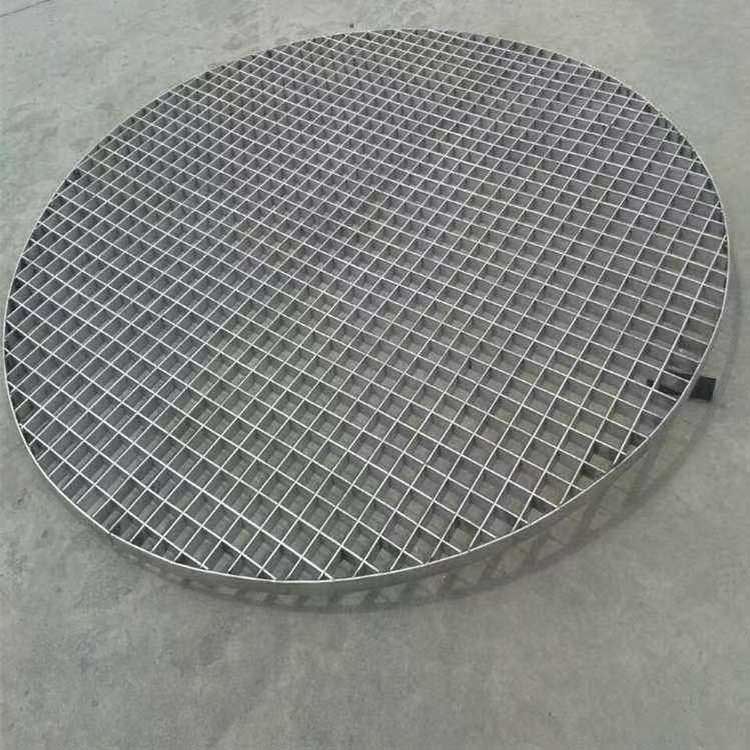
Stainless Steel Grating Covers
Stainless steel grating covers, also known as stair tread plates, steel stair tread plates, or tread plates, are a type of stairboard used on platforms. They can be installed using either welded or bolted connections, with the welded tread plates being directly welded onto the stair beams.
Overview
Welded fixed tread plates, directly welded to the ladder beam, without the need for additional side panels for the tread plates, offering a more economical option. However, they are not easily removable. Tread plates secured with bolts require thicker side panels, with holes pre-drilled for easy installation and can be reused. Customers can customize according to their specific needs, using suitable steel grating to fabricate various sizes to match the corresponding staircase.
Features & Applications
(1) The installation of the step boards is very simple, no complex assembly required.
(2) Good ventilation, lighting, heat dissipation, explosion-proof, and anti-slip properties.
(3) High strength, lightweight structure, and durable tread plates.
(4) Easy maintenance and anti-soiling.
Step plates are widely used in various applications, including platforms and walkways in power plants, water treatment facilities, and factories, as well as in municipal engineering and environmental protection projects. They are also commonly found on large ground platforms in theaters, visitor platforms, and parking lots.
Grating panel
The grating is made by crossing flat steel bars at a certain spacing with crossbars, then welded into a steel product with square openings in the middle. It is primarily used for drain covers, steel structure platform panels, and stair tread panels. The crossbars are usually made of twisted square steel.
Grate panels are typically made of low-carbon steel Q235 and are hot-dipped galvanized for corrosion resistance. They can also be made from stainless steel. Steel grates offer ventilation, lighting, heat dissipation, anti-slip, and explosion-proof properties.
Manufacturing Methods of Grating Plates: There are two methods, machine press welding and handcrafted. Machine press welding utilizes a high-pressure resistance welding machine, where a robotic arm automatically places the crossbars across evenly arranged flat steel bars. The strong welding power and hydraulic pressure then weld the crossbars into the flat steel, resulting in high-quality grating plates with strong weld points, excellent stability, and enhanced strength. Handcrafted grating plates are first punched with holes in the flat steel, followed by inserting the crossbars and spot welding them into the holes. There will be gaps between the crossbars and the flat steel, and it is impossible to weld every contact point, thus the welding is not as secure and the strength is somewhat reduced.
Grille plate features:
1. High strength, light structure: The sturdy grid pressure-welded structure provides high load-bearing capacity and lightness in structure.
2. Features such as easy hoisting;
3. Aesthetically pleasing and durable: Hot-dip galvanized surface treatment provides excellent corrosion resistance.
4. Surface luster is aesthetically pleasing.
5. Excellent ventilation, lighting, heat dissipation, explosion-proof, and anti-slip properties; resistant to accumulation of dirt.
Grille panel applications: Widely used in various industries such as petrochemical, municipal engineering, port engineering, machinery industry, power plants and waterworks, steel industry, manufacturing, food processing, and more.
Insert Steel Grating
Connector Steel Grating: Also known as interlocking steel grating, it is manufactured by processes such as slotting (punching), interlocking, welding, and finishing, using certain sizes of carbon steel flats, stainless steel, brass plates, and aluminum plates. This product combines the high strength, corrosion resistance, and maintenance-free features of common steel grating, with a uniform structure that is lightweight, exquisite, natural, harmonious, and elegant. It is widely used for channel covers, stair tread plates, and pond covers.
Category:
Four types of interlocking steel grating can be categorized: Classification of interlocking steel grating: Differing by insertion methods and angles, they include pressed steel grating, heavy-duty steel grating, solid steel grating, and sunshade curtain steel grating, etc.
1. Pressed Steel Grating: After cutting grooves in the carrying flat steel, the crossbar flat steel is pressed and locked into shape. Generally, the large processing height for standard steel grating production is 100mm. The length of the steel grating is usually less than 2000mm.
2. Heavy-duty interlocking steel grating is a type of steel grating product formed by high-width steel bars and cross-bar steel bars interlocking and tightly pressed into shape under 1200 tons of pressure. It is suitable for high-span high-load applications.
3. Integrated Steel Grating Panels - The bearing flat steel and cross bar flat steel in the integrated steel grating panels have the same height and groove depth, which is half that of the bearing flat steel. The height of the steel grating should not exceed 100mm. The length of the steel grating is typically less than 2000mm.
4. Sunshade Type Interlocking Steel Grating: The load-bearing flat steel of the sunshade type interlocking steel grating features 30° or 45° bevels, and the slotting flat steel is formed by pressing and locking. We can deliver grating panels with different spacing and specifications as per requirement, available in materials such as ordinary carbon steel, stainless steel, aluminum, etc. The height of the grating panels is less than 100mm.
Features: The steel grating panels feature sturdy weld points, uniform hole spacing, flat surface, aesthetic and practical design, lightweight, high strength corrosion resistance, and maintenance-free.
Application: Widely used in civil and commercial buildings, theaters, subways, urban rail projects, and other municipal engineering fields. Suitable for ceiling, indoor and outdoor decoration, platform walkways, ventilation windows (wells), billboard signs, various covers, etc. The interlocking grating panels have firm welding points, uniform hole spacing, and a flat surface, featuring both aesthetic and practical design. They are not only functional items but also works of art. Over the years, we have developed more than a hundred varieties, with sixteen export products particularly favored by customers.

Phone Consultation