Environmental equipment, instruments and meters, robots, ...

Surge Protection Device Tester Performance Features
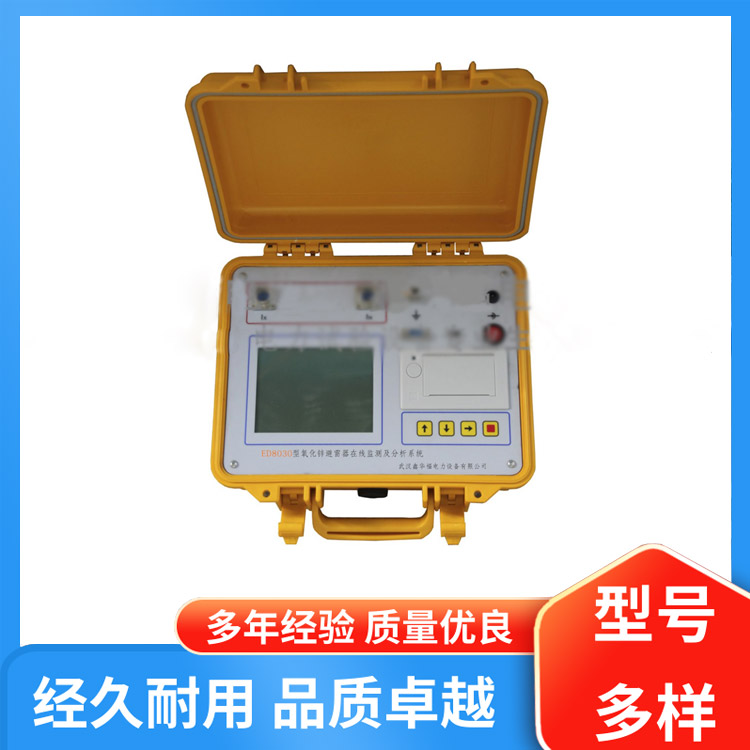
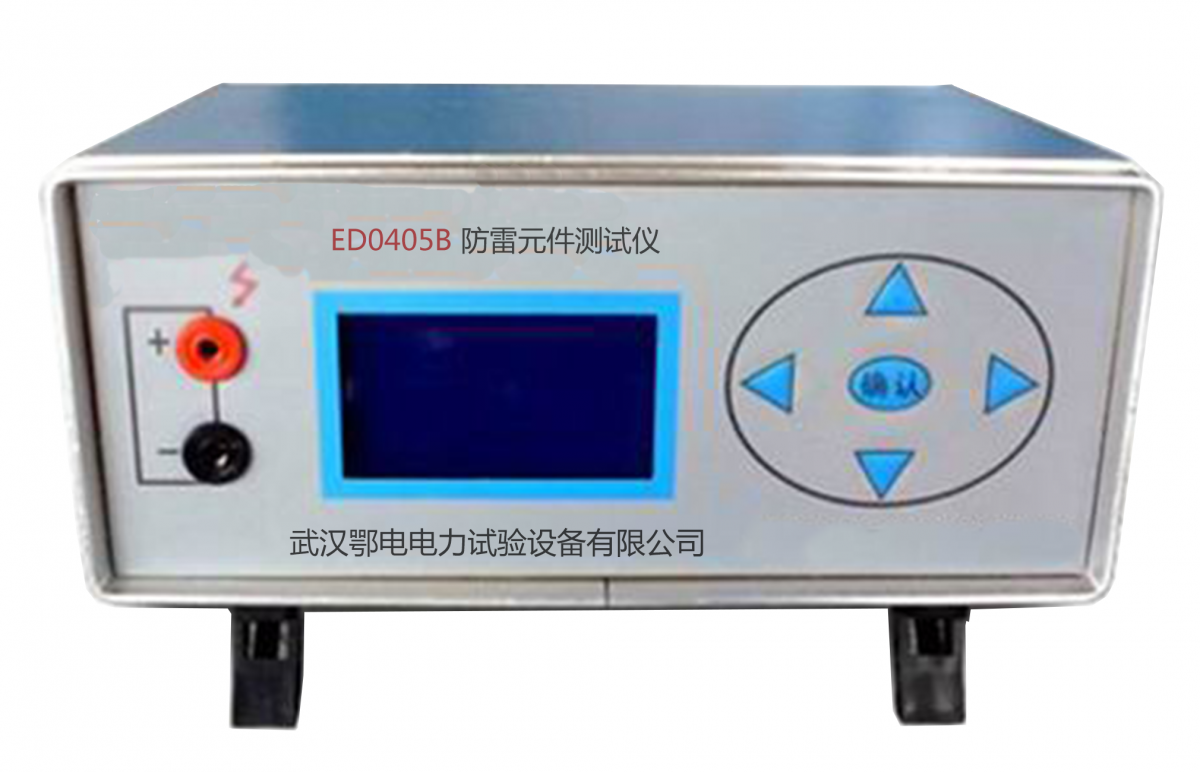
The Lightning Protection Component Tester is suitable for measuring the DC parameters of overvoltage protection elements such as zinc oxide surge arresters (voltage-sensitive resistors), metal ceramic two/three electrode discharge tubes, and vacuum surge arresters. It can also serve as a voltage regulator and constant current power supply, applicable to other uses.
The lightning protection component tester features high-voltage short-circuit protection, overcurrent protection, high-voltage presetting, and range adjustment functions, with a high-voltage self-discharge time less than 0.5 seconds.
Self-checking feature available.
The measurement data is displayed on a 3 1/2 LCD digital screen, offering high accuracy and reliability.
During measurements, the range can be pre-set, and an audio alert will be triggered if the measurement exceeds the range, suitable for device grouping and discrimination.
Choose continuous measurement for uninterrupted testing of batch samples.
The panel features simple and user-friendly operation.
Lightweight and easy to carry.
Power Supply
The back panel of this unit is equipped with an external AC power three-prong socket. It can be connected to a 220V, 50Hz AC power grid. An AC power cord is included in the accessories.
The device is equipped with an external DC power input socket of 12V/0.5A, with the core wire being the “+” pole. Users should pay attention to the polarity and wire diameter when providing their own power cord.
2. Preparing
1. Set all the self-locking push-button switches on the instrument panel to the high position, and turn the adjustment knob counterclockwise to the end (small). Insert the test cables provided with the machine into the "+" and "-" test holes on the panel. Connect the external power supply to the corresponding power socket (hole) on the back panel.
Turn on the power switch, and the instrument display should show "000."
3 Test
1. Sensitive Resistance Testing
Range Setting
The "Sensitive Resistor/Discharge Tube" switch is set to the high position (Sensitive Resistor), the "Single/Continuous" switch is set to the high position (Single), and the "Voltage Pre-set" knob is turned clockwise to the end (high). Press the High Voltage button to activate high voltage; the high voltage indicator light illuminates, and the display shows the upper limit of the test voltage range. Adjust the "High Voltage Limit" knob to the desired value (upper limit of the test range).
Adjust the "Voltage Preset" knob to select the value you need (used to determine the lower limit of the test range).
At this time, the actual testing range is 0V to the set upper limit of the range.
2 Measurement
a) The pressure-sensitive resistor to be tested is connected to the measurement line, then click the "High Voltage Start/Stop" button. The high voltage indicator light illuminates, and the display immediately shows the starting action voltage U1mA test value, followed by the unit "V". Press the "Test" button, and after approximately 2 seconds, it automatically switches to the leakage current I0.75U1mA test value, followed by the unit "μA". The green indicator light lights up in sync with the leakage current display and then turns off automatically after about 2 seconds. b) When the U1mA value of the pressure-sensitive resistor to be tested is below the voltage preset value, the display shows the voltage preset value dropping to the vicinity of the U1mA value after connection. You can click the "Test" button to proceed with the next test step. When it is above the upper limit of the range, the U1mA period of the test process displays the preset range upper limit value. At this point, the test current is less than 1mA, and the displayed test data is invalid. To measure a different sample or to retake the measurement, simply click the "Test" button again.
c) For continuous measurement, simply set the "Single/Continuous" switch to the low position (continuous). (To select continuous measurement before turning on high voltage, click the "Test" button once.)
Self-Inspection and Others
a) Check of the 1mA value of the photoresistor test
Select "Resistive Sensing" test, turn on high voltage, preset the voltage to above 10V, short-circuit the test holes at "+" and "-", the display should show "000V". Hold down the "Display Conversion" button (do not release), and it should display "1000μA".
b) Check for the 0.75Ω, 1mA sensitivity resistor test value
The test terminal is open. When you click the "Test" button, the display should show the upper limit of the range, and holding the "Display Conversion" button during the red light period should display 0.75 times the upper limit of the range.
During the testing process, hold down the "Display Conversion" button (do not release): During the U1mA measurement period, the displayed value is for the test condition of 1mA (1000μA); during the I0.75U1mA measurement period, the displayed value is for the test condition of 0.75U1mA.
Additionally, with the voltage preset and range adjustment functions, the device can operate as a 1999V/1mA DC stabilized voltage source and a 1mA constant current source (the instrument outputs a constant 1mA when the load current reaches 1mA).
Using the "Display Conversion" button, load voltage and current (V/I characteristic) values can be measured in conjunction with the (current) usage.
Discharge Tube Test
Range Setting
"Set the 'Sensitive Resistor/Discharge Tube' switch to the low position (Discharge Tube), and adjust the range as per method 1."
2 Measurement
The discharge tube to be tested is connected to the test line.
If the green indicator light is on, it means the ignition voltage value (Vsdc) of the item being tested is less than the "Voltage Preset" value (below the over-range lower limit), and the buzzer will emit an audible alert. At this time, the item being tested should be removed promptly; otherwise, it will be repeatedly ignited.
If the green indicator light is not illuminated, it indicates that the tested item's ignition voltage Vsdc value exceeds the "Voltage Preset" value. Click the "Test Button" to proceed to the next step.
b) After clicking the "Test" button, the test voltage begins to rise from the voltage preset value at a rate of 100V/S until the green indicator light illuminates.
If the buzzer does not sound, the display will show the value within the measurement range.
If the buzzer sounds, the display will show the upper limit of the measurement range. At this point, it indicates that the ignition voltage (Vsdc) of the item being tested exceeds the upper limit of the measurement range (out of range upper limit) without ignition.
The green indicator light illuminates and the corresponding display value (with an alarm sound when out of range) automatically fades out after approximately 2 seconds, then returns to the preset state.
Remove the tested discharge tube during the green indicator light, then reconnect after the preset voltage is restored for the next test with the 待测 discharge tube.
c) Continuous measurement
Set the "Single/Continuous" switch to the low position (Continuous position) to enable continuous measurement.
The test is complete. Click the "High Voltage" button to turn off the test voltage, and then switch the back panel power switch to the "OFF" position to shut off the power. Remove the power cord when using an external DC 12V power supply.


b2b.china9.net © Zhongshang 114 Hebei Network Technology Co., Ltd.Address: Room 6009, Oriental New World Center, No.118 East Zhongshan Road, Qiaoxi District, Shijiazhuang City, Hebei ProvincePlatform Service Hotline: 4006299930