Environmental equipment, instruments and meters, robots, ...

1. Cable Testing Requirements and Preparations Prior to Testing
1)Prior to partial discharge testing, disconnect and ground the cable, leaving both ends suspended, and set up safety fencing.
2) Aim to minimize the cable joint areaPTRemoved lightning arresters and other equipment.
3) The cable ends are wiped clean, ensuring sufficient insulation distance between the cable ends and surrounding grounding areas.
4) Gather cable parameters such as length, model, type, and commissioning date.
5) Cable Length L: Measurement method on one side of the cable: 50m ≤ L ≤ 3km;
Measurement method at both ends of the cable:L>3km。
2. Insulation Resistance Testing
10kV Cable Main Insulation Resistance Test: Utilizing a 2500V Insulation Megger for testing, there should be no significant change in insulation resistance before and after the test; for the 10kV cable main insulation resistance test, the insulation resistance must be greater than 50MΩ to proceed to the next stage of testing.
3. Test the intermediate joint position of the cable and the cable length
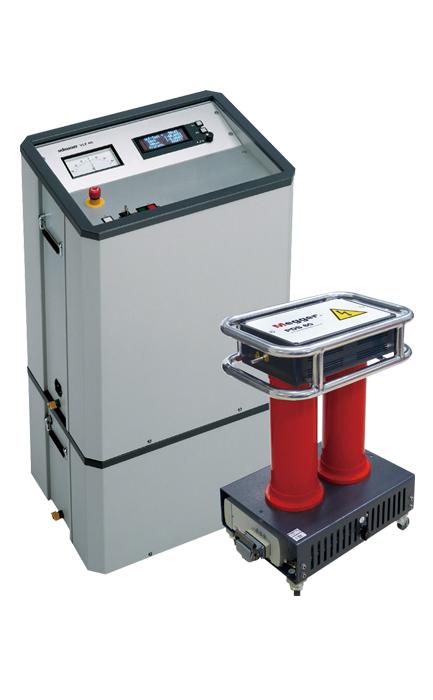
AdoptedSEBAKMT Easyflex ComMultifunctional Pulse Reflectometer (as shown in the figure)2) The entire cable length and intermediate joint locations were tested to measure cable length and joint positions, as well as to pre-locate cable short and open circuit faults.
Test Requirements:
The full length of the cable must be accurate for calibration purposes.
2) Ensure intermediate joint measurements are as accurate and detailed as possible, which is beneficial for ultimately determining the location of partial discharge.
3) Measurement Range:50m~15000mThe measuring range must be adjusted according to the cable length.


b2b.china9.net © Zhongshang 114 Hebei Network Technology Co., Ltd.Address: Room 6009, Oriental New World Center, No.118 East Zhongshan Road, Qiaoxi District, Shijiazhuang City, Hebei ProvincePlatform Service Hotline: 4006299930