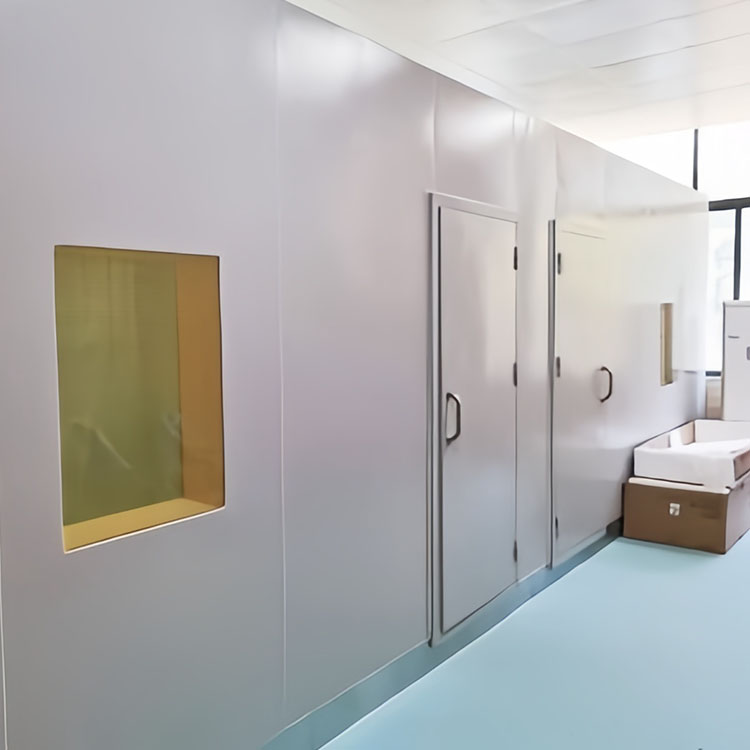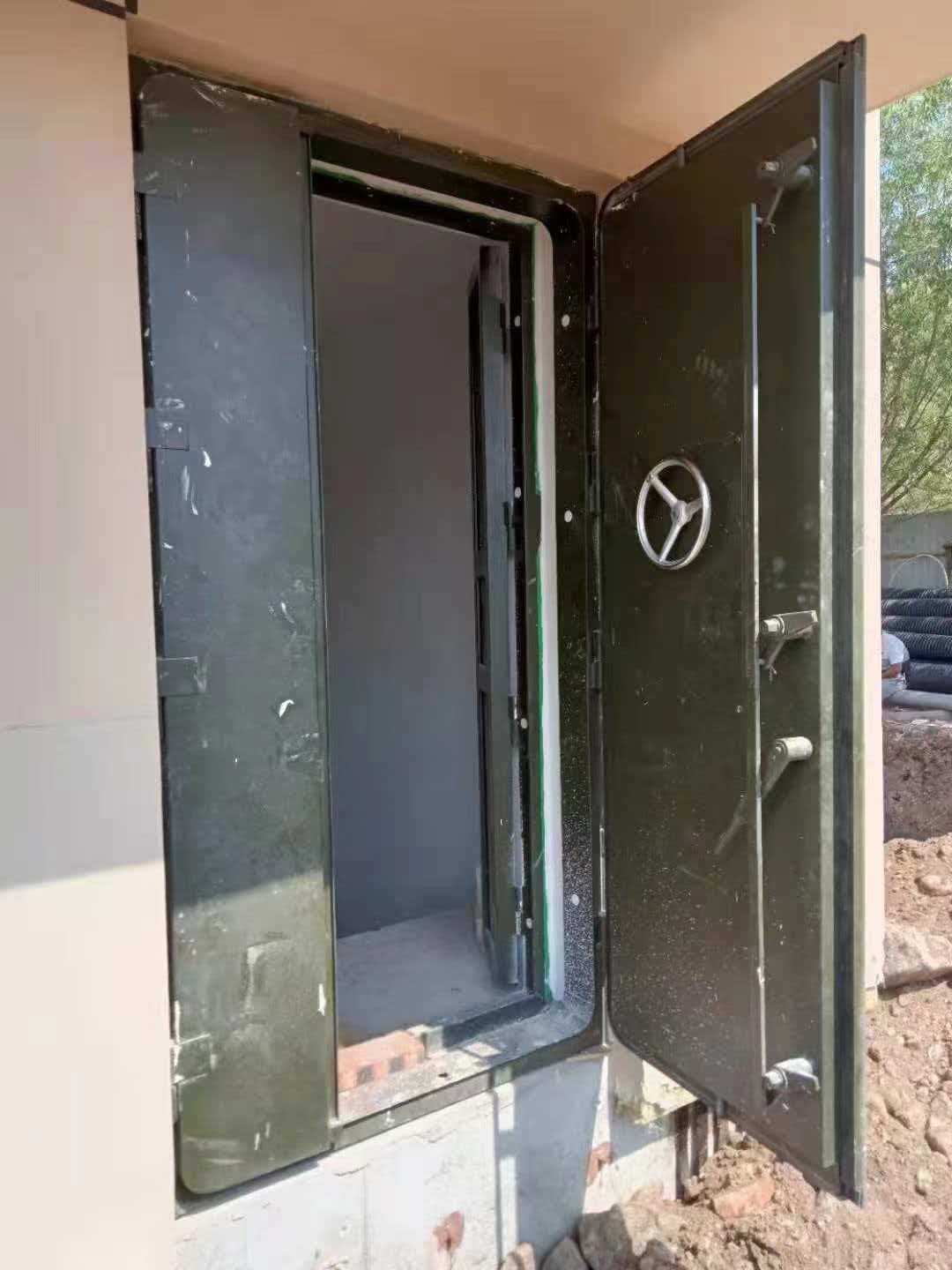

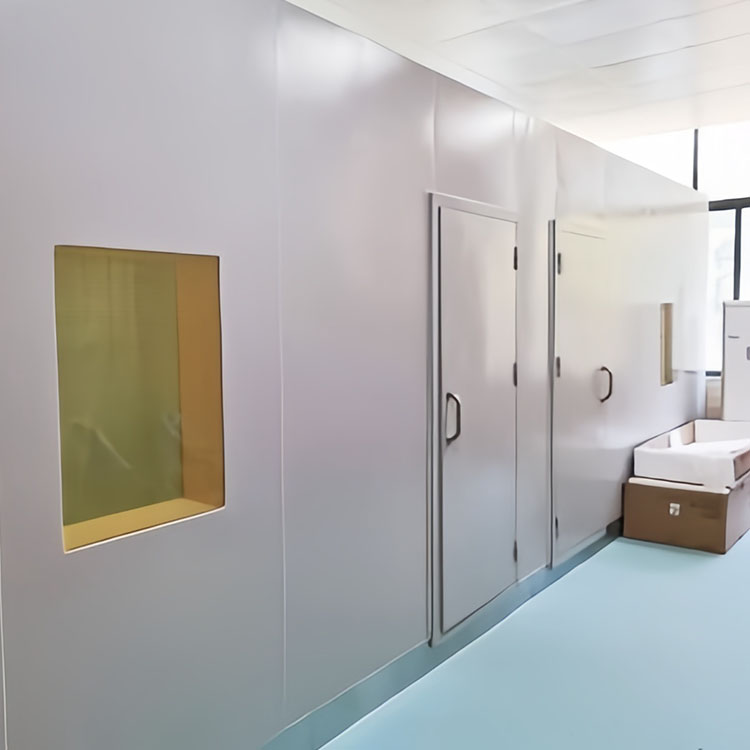

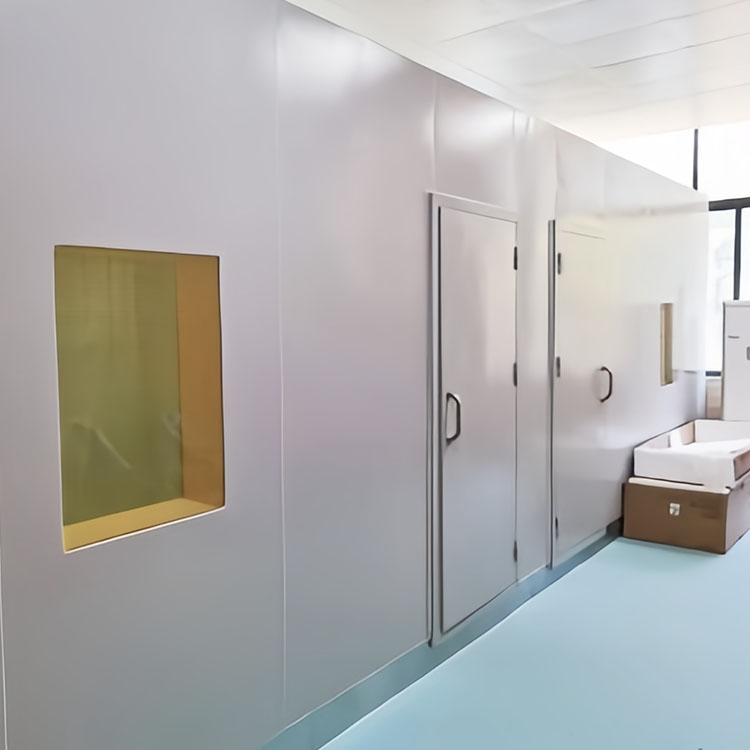









Basic structure form of an electromagnetic shielding room:
(1) Electromagnetic shielding rooms typically use cold-rolled steel plates or stainless steel plates as the main shielding material. This includes the six-sided shell, doors, windows, and other building elements, requiring a tight electromagnetic seal. All incoming and outgoing pipelines are also subjected to corresponding shielding treatment to block the entry and exit of electromagnetic radiation.
(2) Electromagnetic shielding rooms are categorized into three types: steel plate assembled, steel plate welded, and copper mesh. The assembled type is constructed from 1.2mm steel plates cut into 100mm thick wall modules, with simple production and installation processes, suitable for small areas and projects with lower shielding performance requirements. It can be disassembled and relocated, but the shielding effectiveness will significantly decrease after relocation. The welded steel plate type shielding room is made by welding 1.2mm cold-rolled steel plates to a skeleton frame, offering high shielding performance and fitting various sizes, which is the primary form of electromagnetic shielding rooms. The copper mesh type is used for simple projects with lower shielding performance requirements.
2. The primary function of an electromagnetic shielding room:
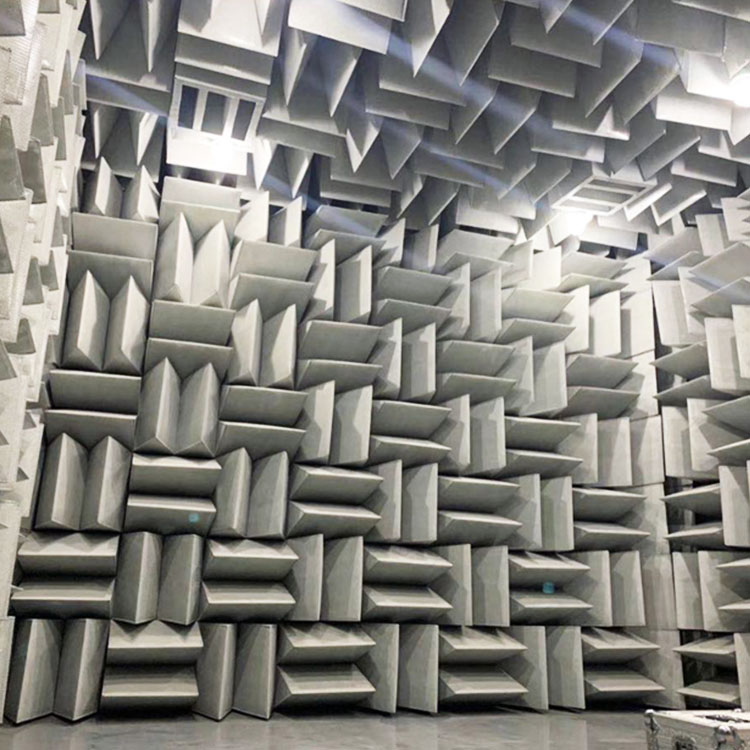
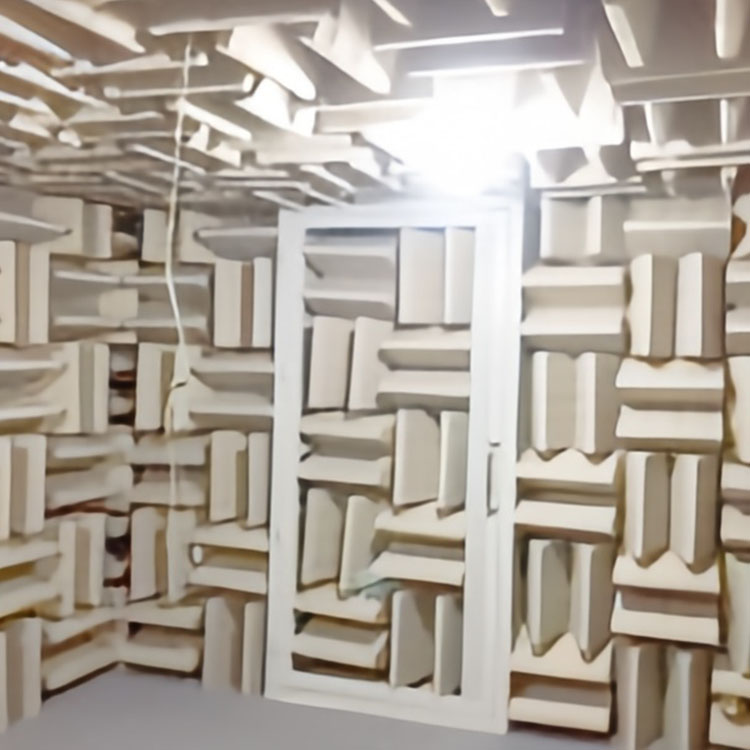
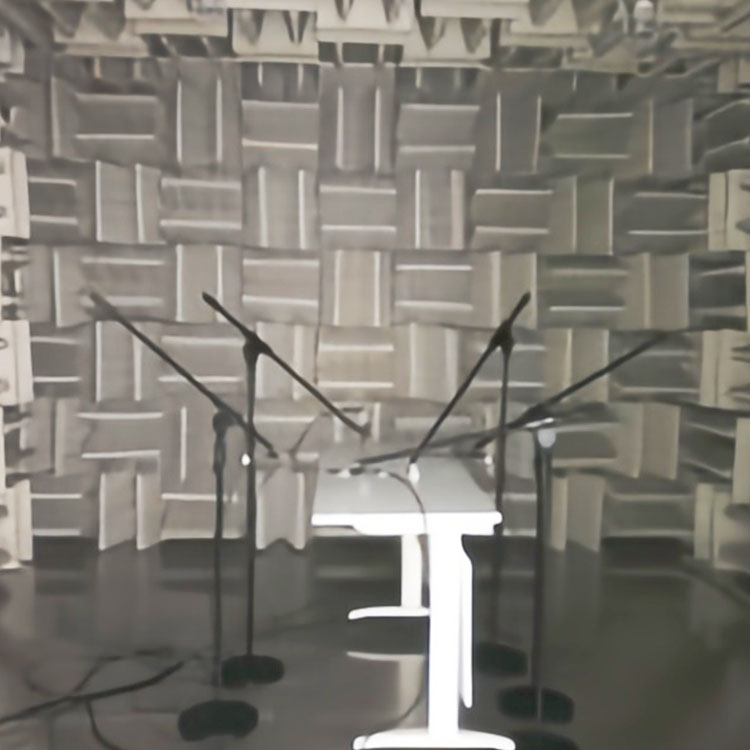
(1) Shield against external electromagnetic interference to ensure the normal operation of indoor electronic and electrical equipment. Particularly in the measurement and testing of electronic components and electrical equipment, use an electromagnetic shielding room (or dark room) to simulate an ideal electromagnetic environment, thereby enhancing the accuracy of testing results.
(2) Block the indoor electromagnetic radiation from spreading outward. Strong electromagnetic radiation sources should be shielded and isolated to prevent interference with the normal operation of other electronic and electrical equipment, and even to safeguard the health of staff members.
(3) Prevent information leakage from electronic communication devices and ensure information security. Electronic communication signals are transmitted to the outside world in the form of electromagnetic radiation (i.e., TEMPEST phenomenon). An electromagnetic shielding room is an effective measure to ensure information security.
3. Basic Components of an Electromagnetic Shielding Room:
(1) Enclosure: Taking the welded steel plate electromagnetic shielding room as an example. It includes a six-sided skeleton frame and cold-rolled steel plates. The skeleton frame is made of channel steel and square tubes焊接. The material specifications are determined according to the size of the shielding room. The ground beam (ground skeleton) should be insulated from the ground. The thickness of the cold-rolled steel plate for the walls is 1.5mm, which is pre-fabricated into modules in the workshop and then welded on the inside of the skeleton frame. All welding is done using CO2 protected welding, with continuous full welding, and a special equipment is used to detect leaks to prevent wave leakage. All steel enclosures must undergo proper anti-rust treatment.
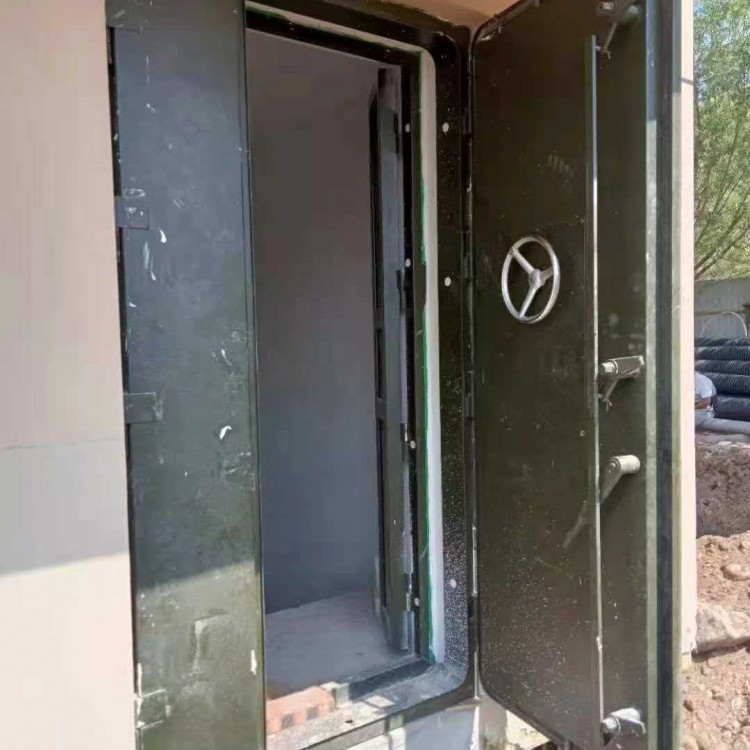
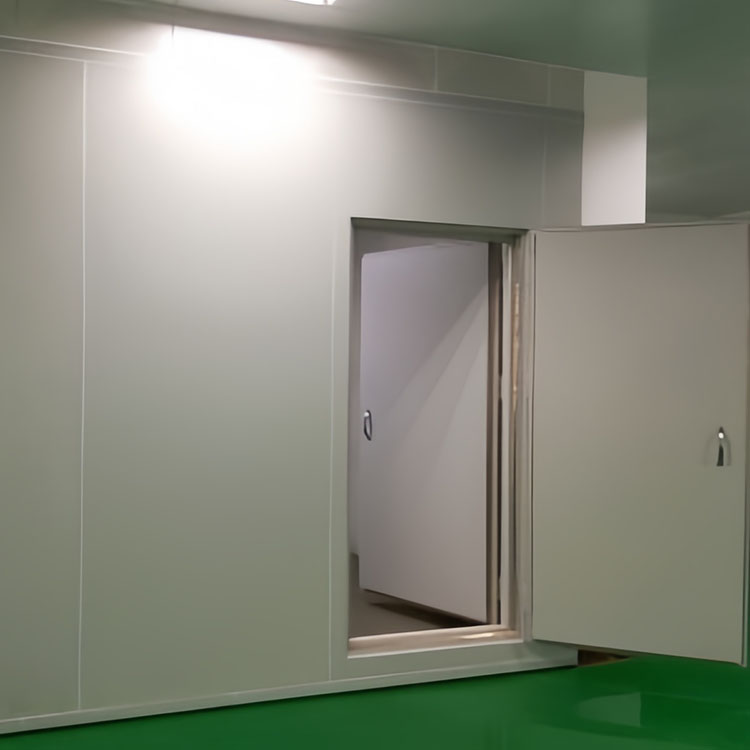
(2) Electromagnetic Shielding Door: The electromagnetic shielding door is the only moving component in the shielding room and a key factor in its comprehensive shielding effectiveness. It boasts a high level of technology, uses special materials, and has an extremely complex manufacturing process, consisting of 26 steps. There are two main types of electromagnetic shielding doors: hinged knife-type doors and sliding doors, each available in manual, electric, and fully automatic forms. Considering stability and cost-effectiveness, the manual knife-type hinged door (standard size 1900mm x 800mm) is the top choice. Elastic shielding strips should be installed at the connection points between the door and the door frame.
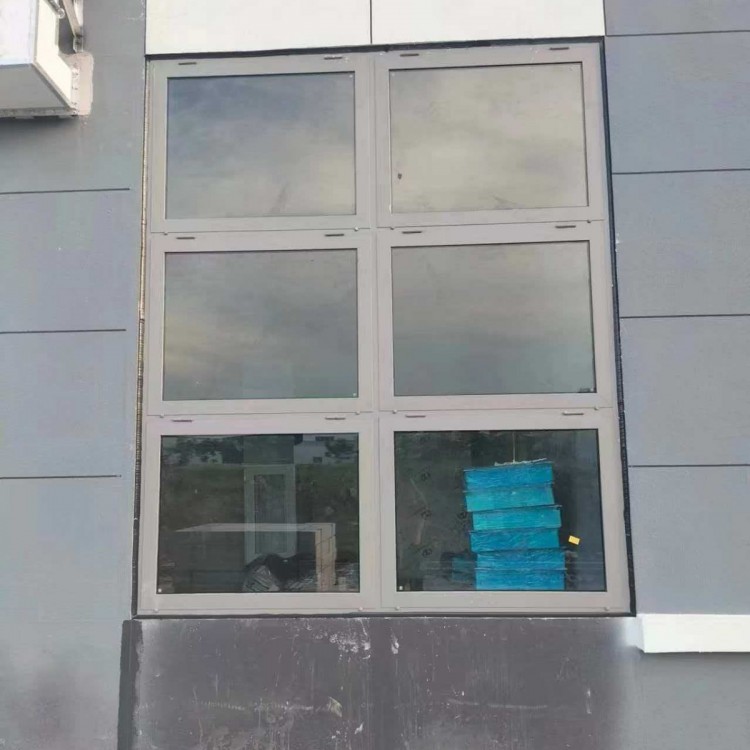
(3) Cellular Ventilation Waveguide Windows: Ventilation and air exchange, as well as air regulation, are essential facilities in shielding rooms. The cellular waveguide windows are composed of hexagonal steel waveguides with side gaps of 5mm. These waveguides do not hinder air flow but have a cutoff effect on electromagnetic radiation. Currently, full-welded cellular waveguide windows with the specifications of 300mm×300mm×50mm are primarily used, offering insertion loss of 150KHz~1GHz≥100dB, which fully meets the requirements of the "Regulation." Shielding rooms are equipped with the appropriate number of waveguide windows based on their size, used for intake, exhaust, and pressure relief.
(4) AC/DC Filters: Power lines and communication signal lines entering the shielding room will carry conductive electromagnetic interference. Appropriate filters are required to remove it. Filters are passive bidirectional networks composed of passive components (inductors, capacitors), with their main performance parameters being the cutoff frequency (low-pass, high-pass, band-pass, band-stop), insertion loss (band-stop attenuation), and filter performance depends on the filter order (number of filter elements), filter structure type (single capacitor type C, single inductor type L, π-type), etc.
(5) Waveguide: All non-conductive pipelines entering the shielded room, such as fire sprinkler pipes and optical fibers, should pass through waveguides. The cutoff principle of waveguides for electromagnetic radiation is the same as that of waveguide windows.
(6) Indoor electrical and decoration: Includes pipeline wiring, electrical distribution boxes, lighting, outlets, ceiling and wall decoration, and anti-static floorings. To ensure the stable operation of the shielding room, electrical and decoration materials must be selected that comply with national standards for fire resistance, moisture resistance, and environmental protection.
4. Issues related to electromagnetic shielding room projects:
(1) Air Conditioning System: The air conditioning system for shielding rooms can be configured according to actual conditions. If central air conditioning is available, it can be directly connected through waveguide windows, or an air conditioner can be installed separately. The power cables for the air conditioner, the control signal lines for the indoor and outdoor units, and the gas and water pipes must all undergo corresponding shielding treatment.
(2) Fire Alarm System: Electromagnetic Shielding Rooms should be equipped with a fire alarm system. Alarm signal lines and related control signals should also be separately filtered. Generally, a smoke alarm signal line is configured.
(3) Grounding System: Due to the shell leakage during operation (related to the filter's operating characteristics), the grounding requirement for the shielding room is extremely high. Single-point grounding is required, which is related to geological factors, with a grounding resistance ≤ 1Ω. A dedicated grounding wire of 10m² is mandatory.
(4) Power System: The power supply for the shielding room is typically configured with equipment power, air conditioning lighting auxiliary power as needed. Due to a certain amount of leakage from the casing during operation, the power supply for the protective room cannot pass through a leakage protector.
(5) Vibration Isolation: Communication rooms in civil defense and national defense command centers require vibration isolation engineering, which has a close relationship with the construction of electromagnetic pulse protection rooms. Vibration isolation is divided into standard and simple vibration isolation.
(6) Air Intake and Exhaust Ducts: The electromagnetic pulse protection room must be connected to the air intake and exhaust ducts, and installation can only take place after the ducts are properly laid.
5. Features:
Easy to assemble and disassemble, with strong structural integrity, aesthetically pleasing design, facilitating user relocation and expansion, and avoiding redundant investment.
(2) Utilizes modular design with high-quality conductive liners between modules, securely fastened with bolts and sealed for reliable integrity.
(3) Modules are electrostatically powder-coated for easy installation and a sleek, stylish appearance.
6. Performance Metrics (Efficiency)
Test Frequency Band, Magnetic Field, Electric Field, Plane Wave, Microwave
10KHz 150KHz 200KHz~50MHz 50MHz~1GHz 1GHz~20GHz
Shielding Effectiveness ≥70dB ≥80dB ≥90dB ≥95dB ≥90dB
7. Application Range of Products:
This product is a high-performance electromagnetic shielding room, suitable for instruments with stringent electromagnetic shielding requirements, as well as for product testing, testing, information security, computer networks, medical, and financial institutions.