
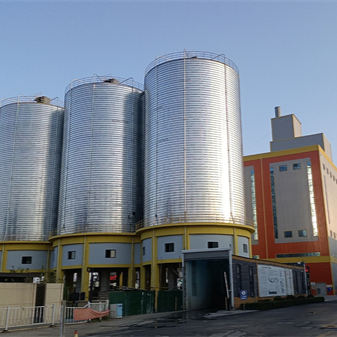

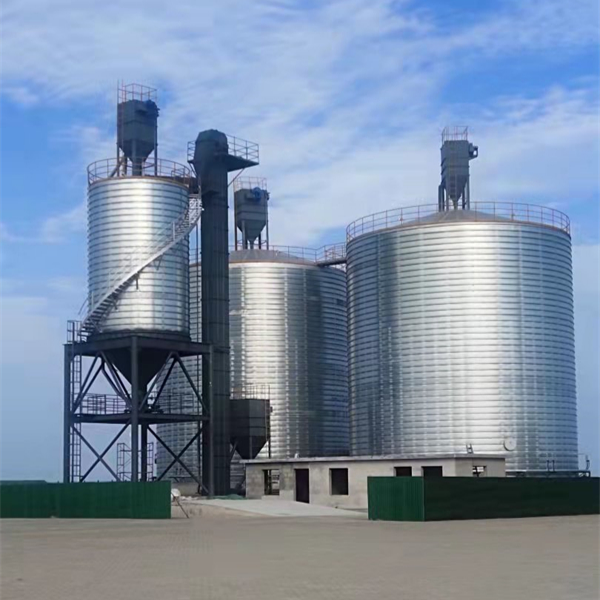
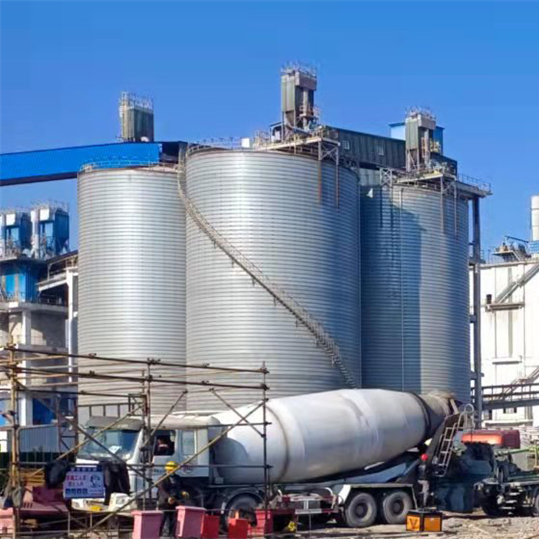







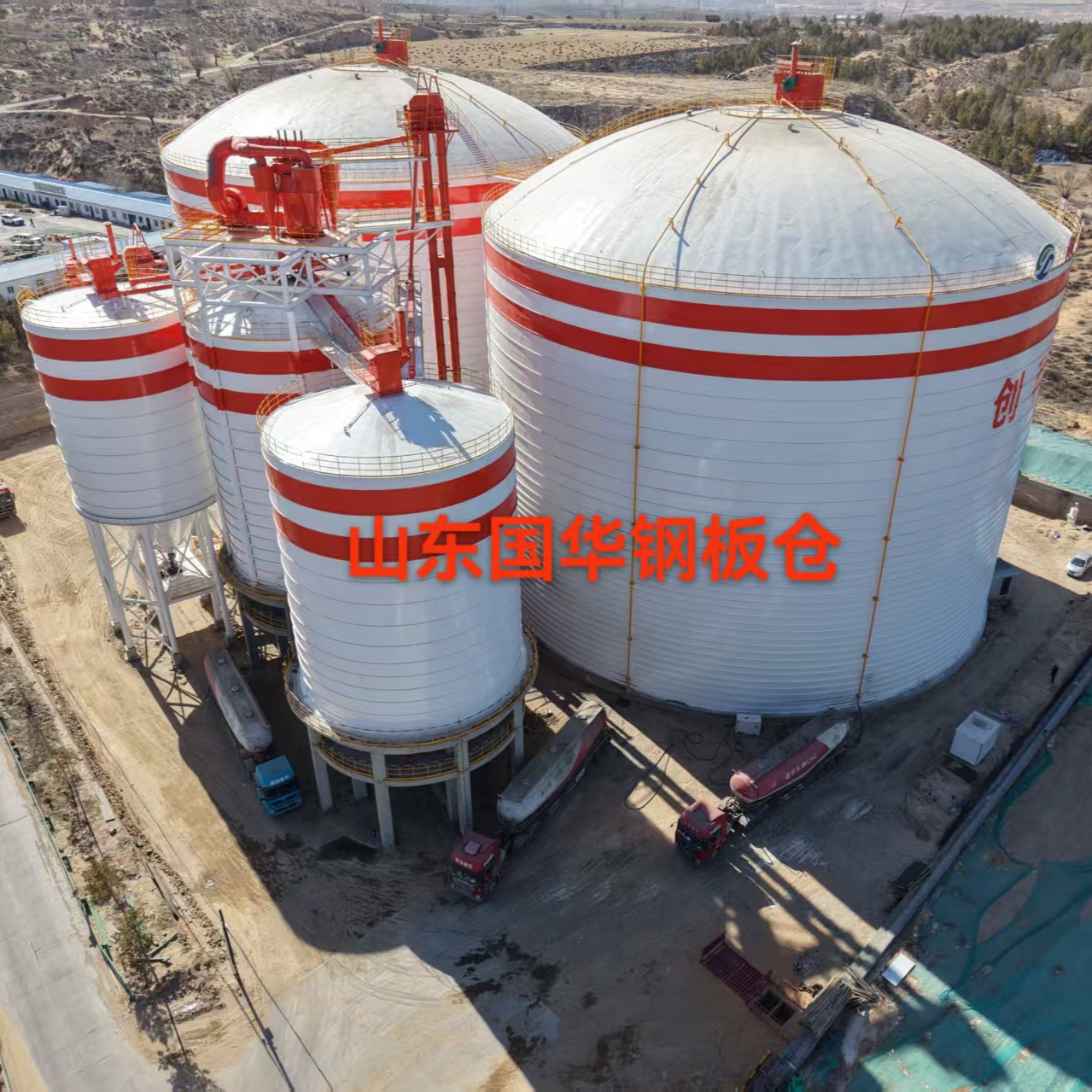
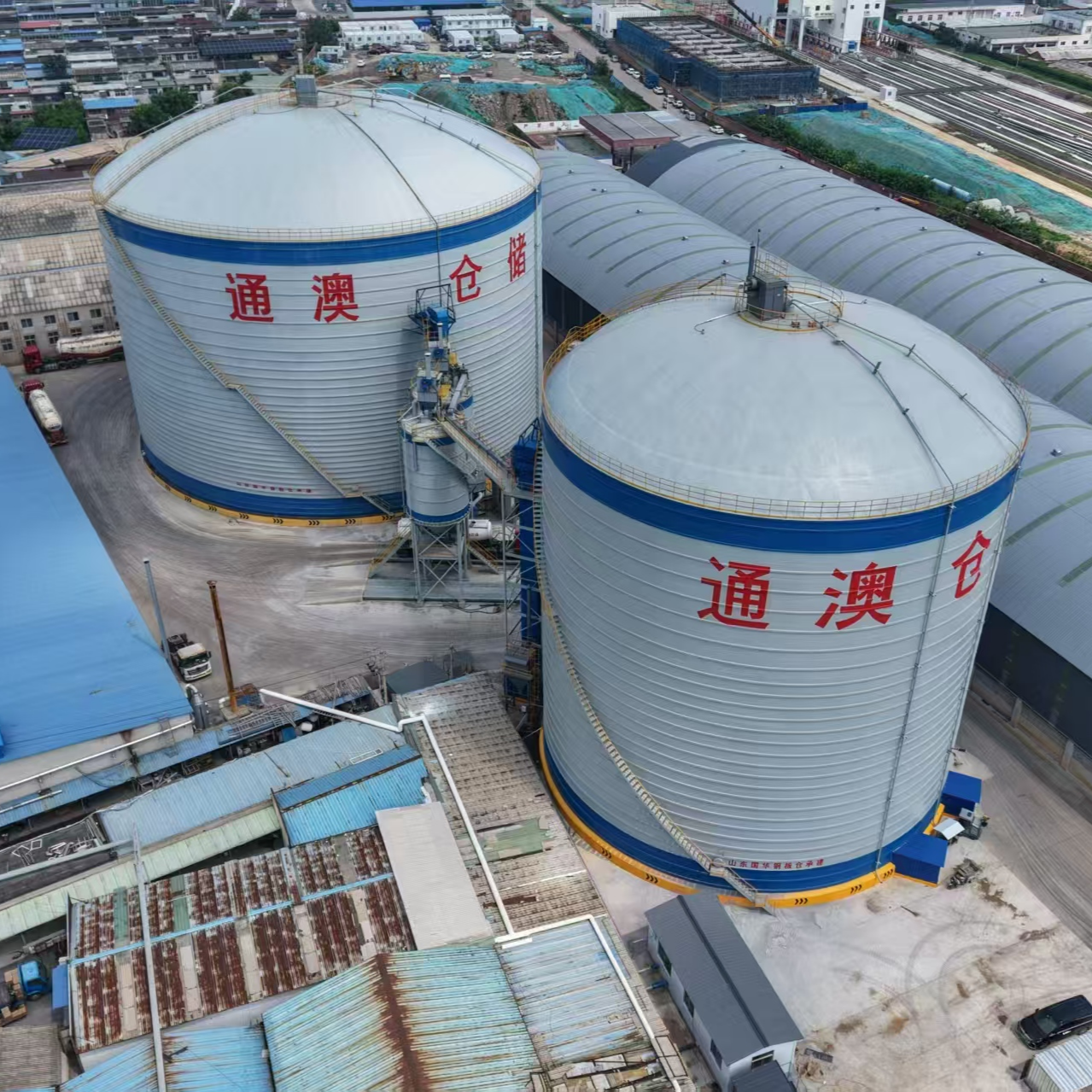
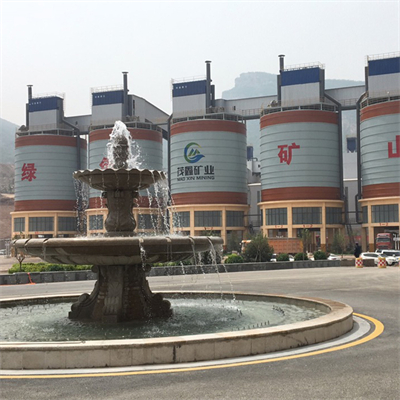
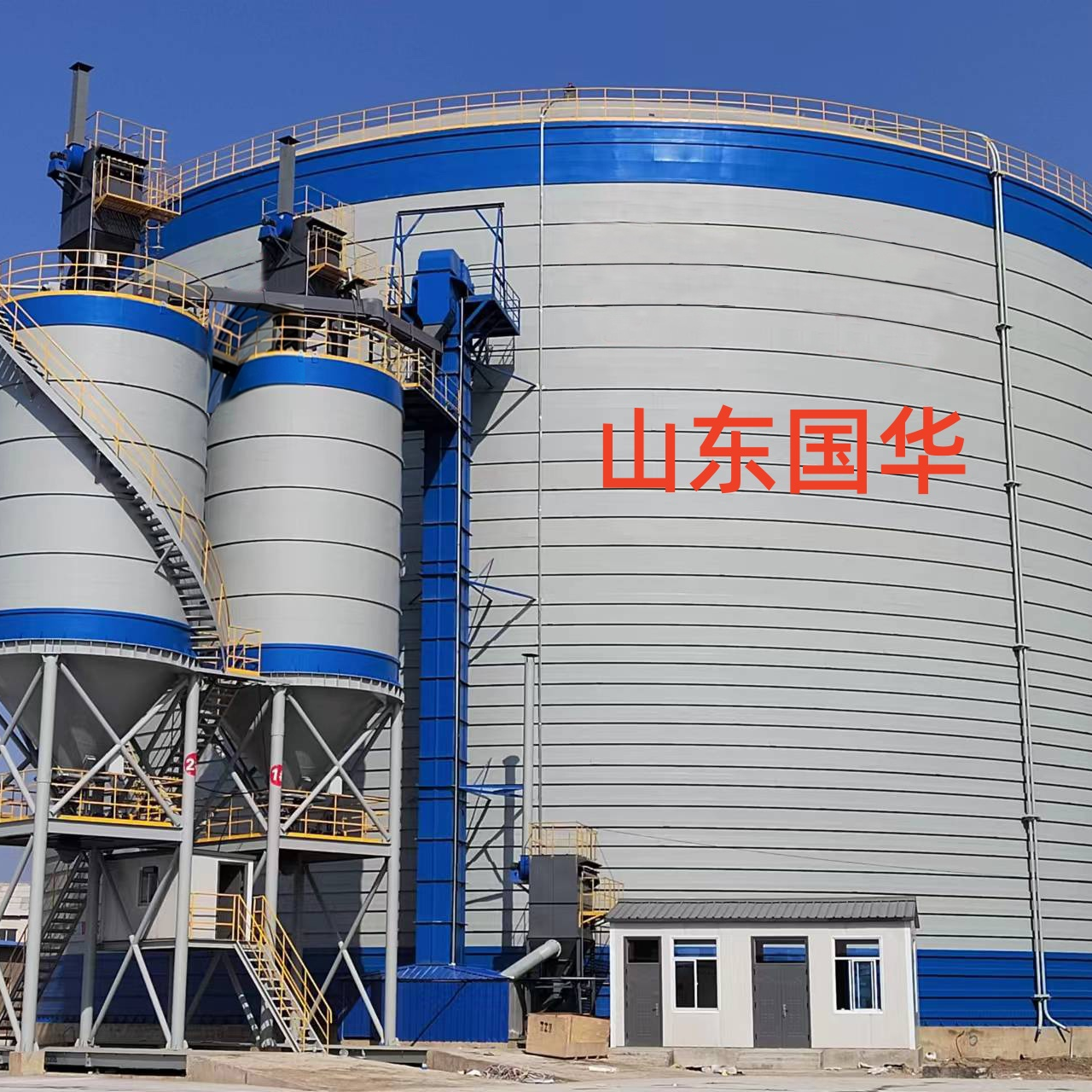
The construction process of spiral coil storage silos (spiral steel plate silos) utilizes the "reverse assembly method" and rotation lifting technology. It achieves an efficient, safe, and durable body construction through modular rolling, alternating installation of reinforcing bars, precise positioning, and anti-corrosion treatment. The detailed process is as follows:
I. Construction Preparation and Foundation Acceptance
Basic Processing
As per design drawings, complete the concrete foundation construction, ensuring the flatness error of the base is ≤ ±5mm and the bearing capacity meets design requirements (e.g., ≥150kPa).
Pre-installed foundation components (such as anchor bolts, embedded plates), recheck for position deviation ≤ ±3mm.
Equipment and materials arrival
Hoist uncoiling machines, forming machines, bending machines, and other equipment onto the work platform, and adjust parameters such as forming speed (e.g., 5m/min) and edge bite depth (15±1mm).
Inspect steel plate materials (such as Q355B weather-resistant steel), check thickness, width, and surface quality, and remove oxidation scales, oil stains, and other impurities.
Section II: Warehouse Body Rolling and Spiral Ascension
Initial Coiling
The steel plate is fed into a forming machine, where it is rolled into the desired geometric shape (such as curved) and then bent by a bending machine to create a helical rib with a thickness five times that of the steel plate (30-40mm wide).
Wind the first section of the cylinder to a height of approximately 1.1 meters (3 steel plates), inspect the edge bonding quality (once every hour), ensuring no cracks or misalignment.
Rotary Hoisting and Alternate Construction
The storage body is lifted using a hydraulic jacking system (single cylinder lifting force of 50t), lifting three layers of steel plates per lift, with a synchronous error ≤20mm.
Alternating the winding and reinforcement installation process:
Reinforcement Positioning: Divide the stiffener locations according to the design drawings, and verify the installation accuracy (matching the final positioning of the storage body).
Welding Fixation: The top of the stiffener is securely welded to the bottom edge of the storage top's expansion ring. At the joint sections (upper, lower, left, and right points), it is welded to the storage wall. The upper and lower sections of the stiffener use equal strength butt welds, and reinforcing steel plates are attached on both sides for additional support.
High-level control and closure
When the storage body is rolled to the design height (e.g., 15m), pause construction and check for vertical deviation ≤ H/1000 and ≤ 30mm (where H is the height of the storage body).
During the final rolling of the steel plate, leave a 500mm plate tail. Weld it to the end of the new coil, cut the overlapping section along the height direction, and complete the joint after alignment.
Section 3: Warehouse Roof and附属 Structures Installation
Warehouse Rooftop Installation
The warehouse roof features a conical structure with a central discharge receiving opening (e.g., diameter of 4 meters). It is constructed using 3mm thick hot-dipped galvanized steel plates, laid out in a fan shape corresponding to the conical surface width and rafter spacing.
After welding the canopy top plate, weld railing posts at the bottom of the joists and the lower expansion ring junction, then weld the horizontal rails and middle bars to the posts to form a framework structure.
Accessory installation
Install a spiral climbing ladder (step spacing of 300mm) and set up a fall protection cage (diameter of 700mm, bottom 3m from the ground, top 1.2m above the platform).
Install horizontal safety net with mesh density ≥ 2000 meshes/㎡ inside the warehouse. Set up rigid barriers (height 1.8m) and audio-visual alarm systems around the warehouse perimeter within 5m.
Four: Anti-corrosion and Sealing Treatment
Surface Treatment
The warehouse wall surface is blast cleaned and rust removed to Sa2.5 grade, with a surface roughness of 75-100μm. The base coat application must be completed within 4 hours after rust removal (e.g., epoxy zinc-rich primer, dry film thickness 60μm).
Remove oxidation from welding points, grind away defects such as spatter and burrs, with a radius of arc transition ≥ 2mm.
Coating Application
Intermediate Paint: Epoxy iron oxide intermediate paint (dry film thickness 80μm).
Surfaces Paint: Glass flake paint (dry film thickness 200μm), using the "three-coat method" (base coat → intermediate → top coat), total thickness ≥ 2mm.
Coating Adhesion Test: Scratch test grade meets the 1st level standard as specified in GB/T 9286-1998.
Sealed protection
The body connection parts are sealed with silicone gaskets and glass glue for double protection, ensuring airtightness meets the requirements of fumigation and pest control processes.
V. Inspection and Delivery
Geometric Dimension Verification
Tolerance for diameter deviation ±D/500 (where D is the design diameter), and horizontal level of the storage top ≤ 5mm/2m.
Weld Quality: 100% visual inspection, 20% non-destructive testing (UT/MT), pass rate ≥ 98%.
Functional Testing
Empty run test: Inspect the tank's rotation and lifting, synchronization of the hydraulic system, and reliability of the safety protection devices.
Load Test: Simulates material storage conditions to verify the storage capacity of the warehouse body (e.g., lateral pressure when the ash density is 0.6-1.0t/m³).
Documentation Archiving
Organize construction records, quality inspection reports, equipment certification documents, and submit completion acceptance files.