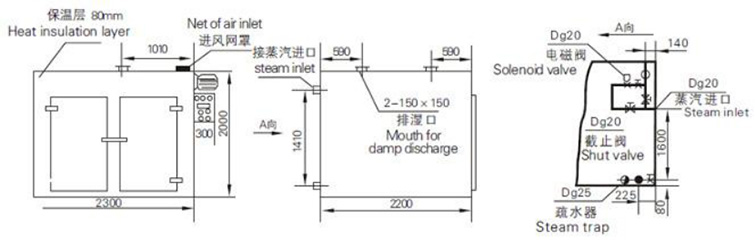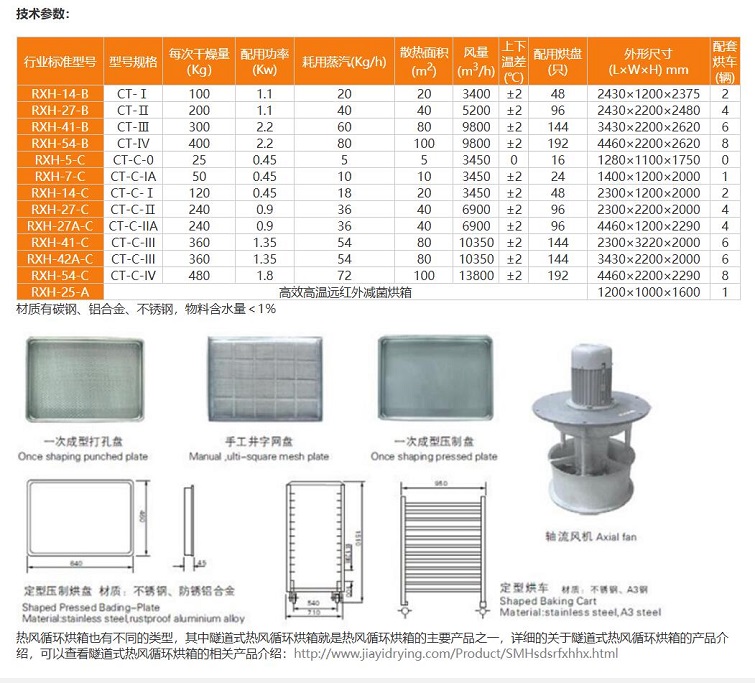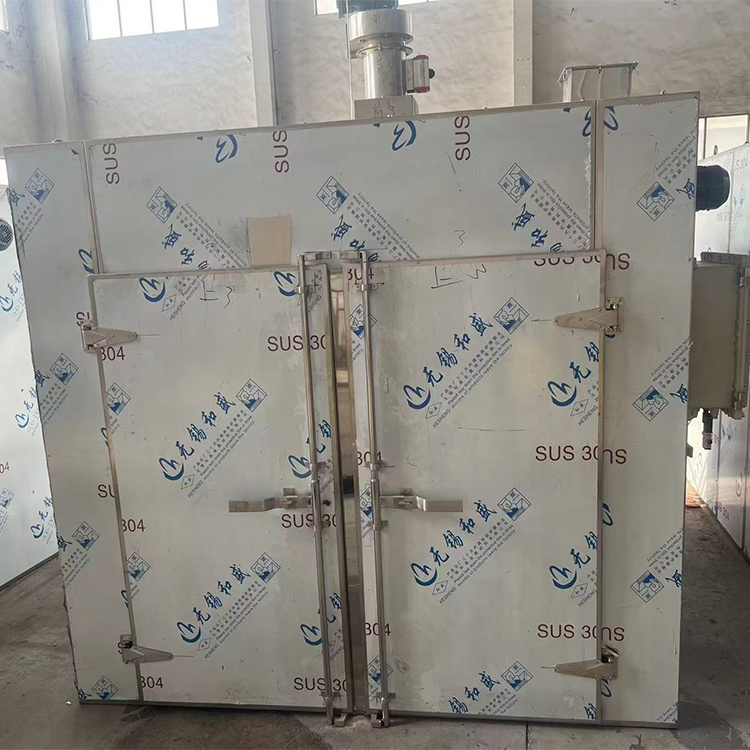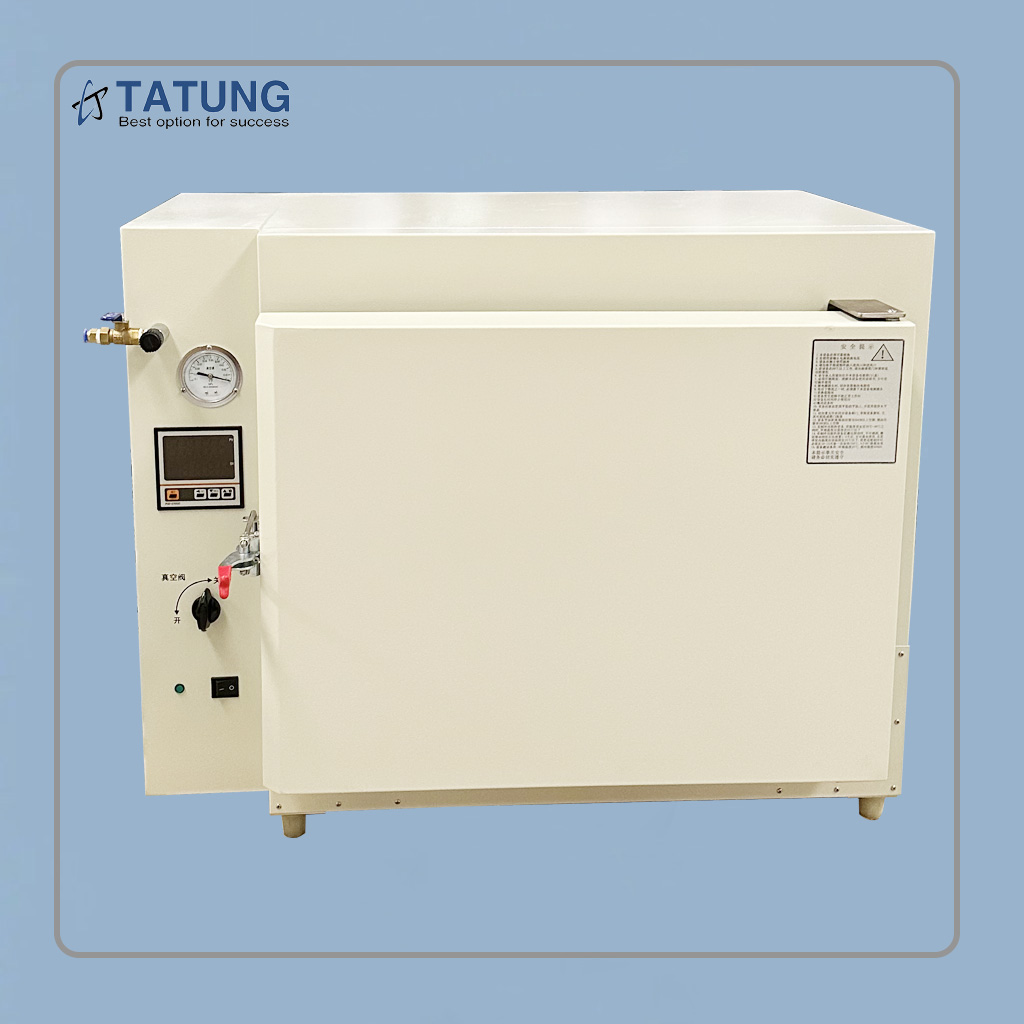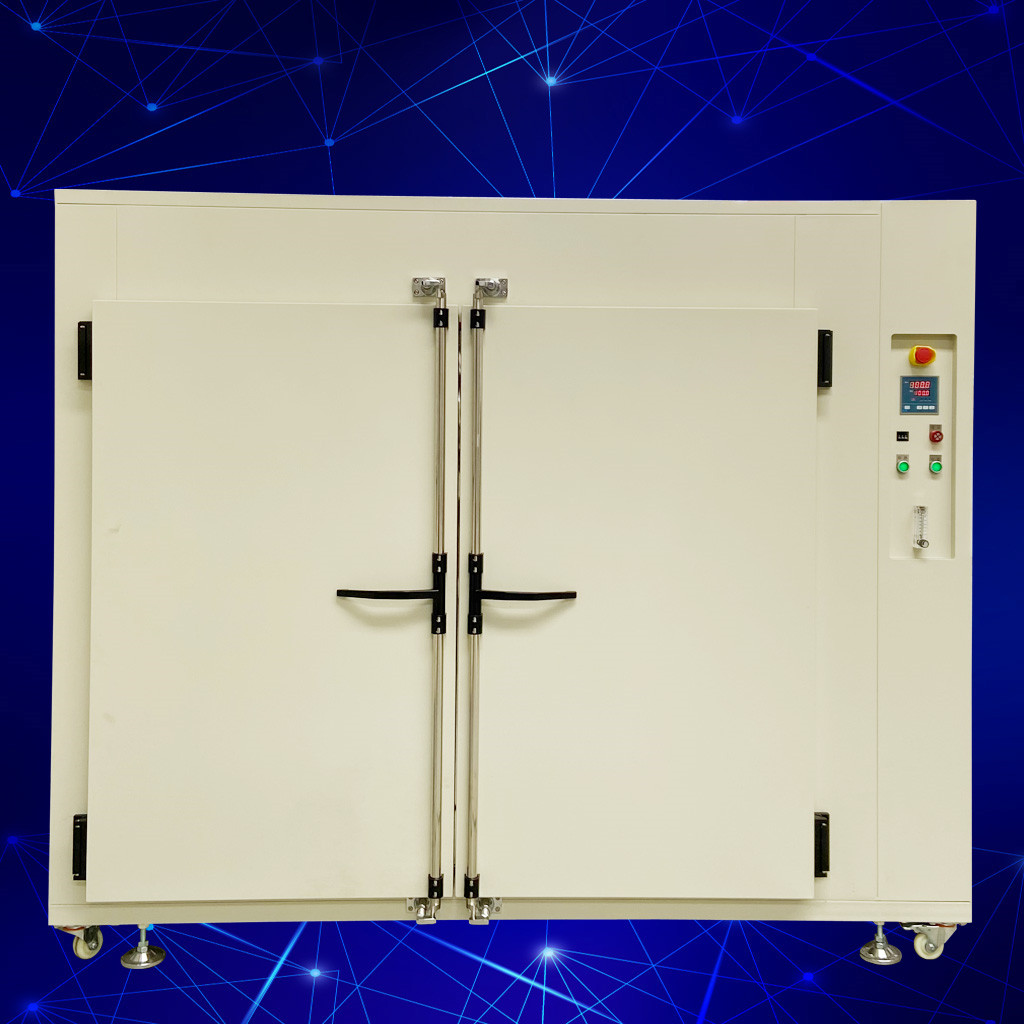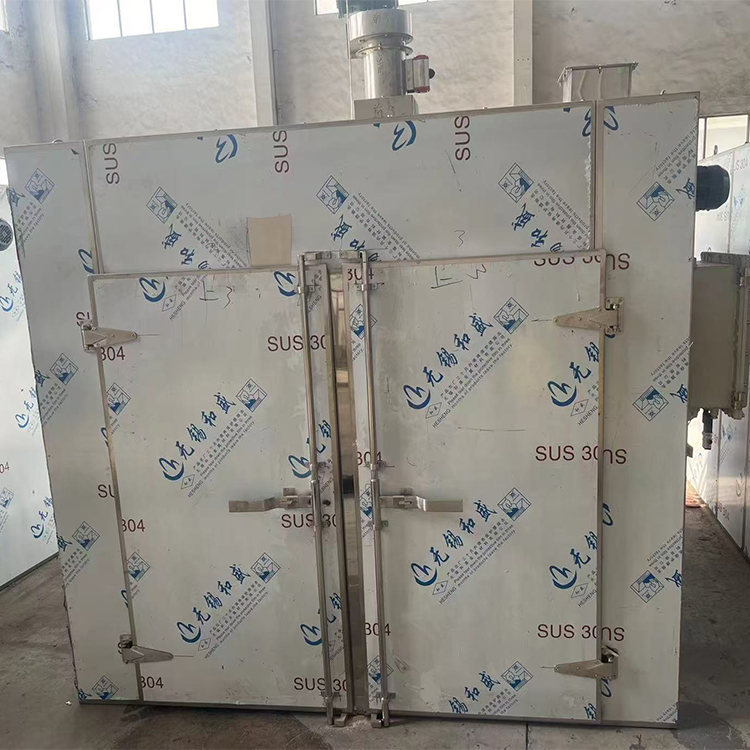

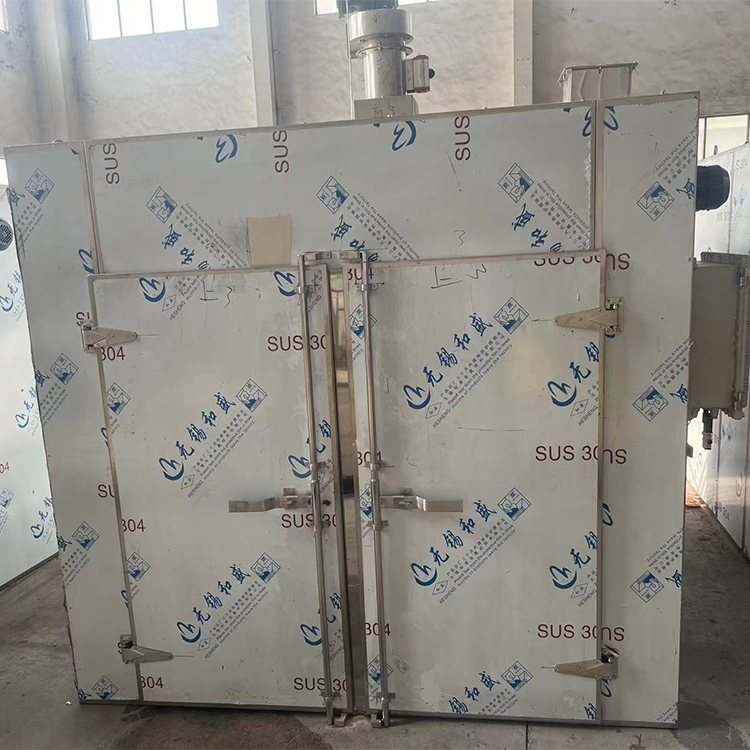


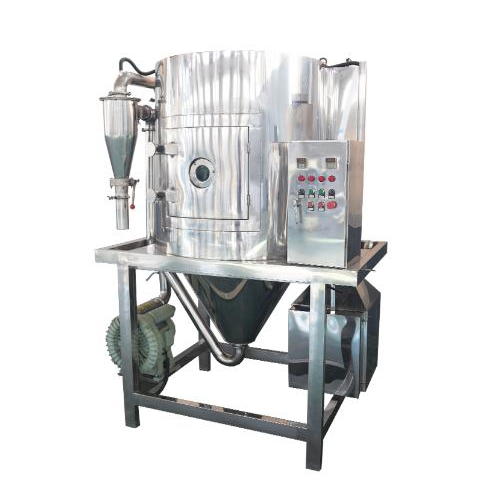
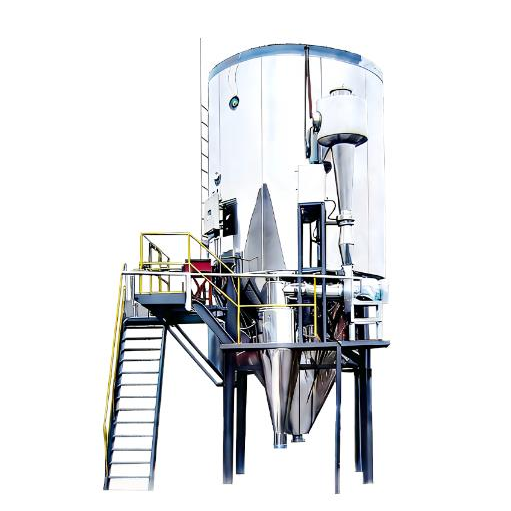
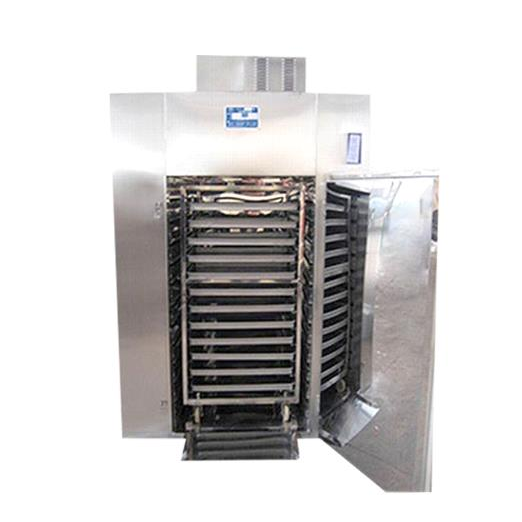
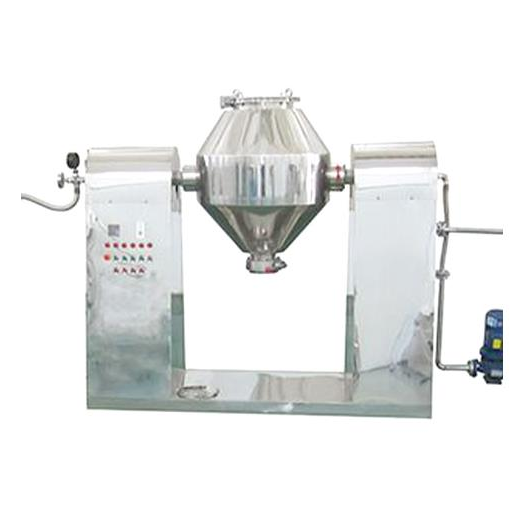
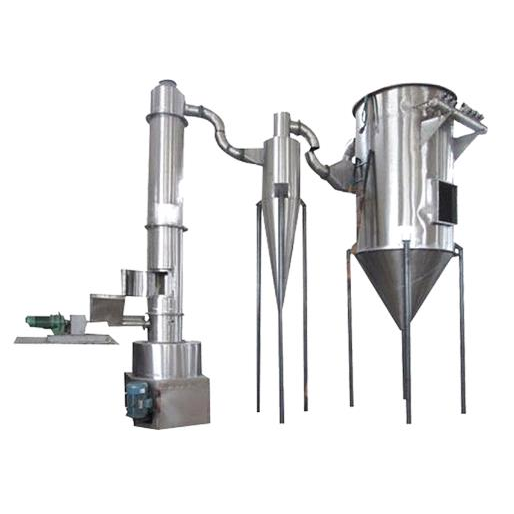





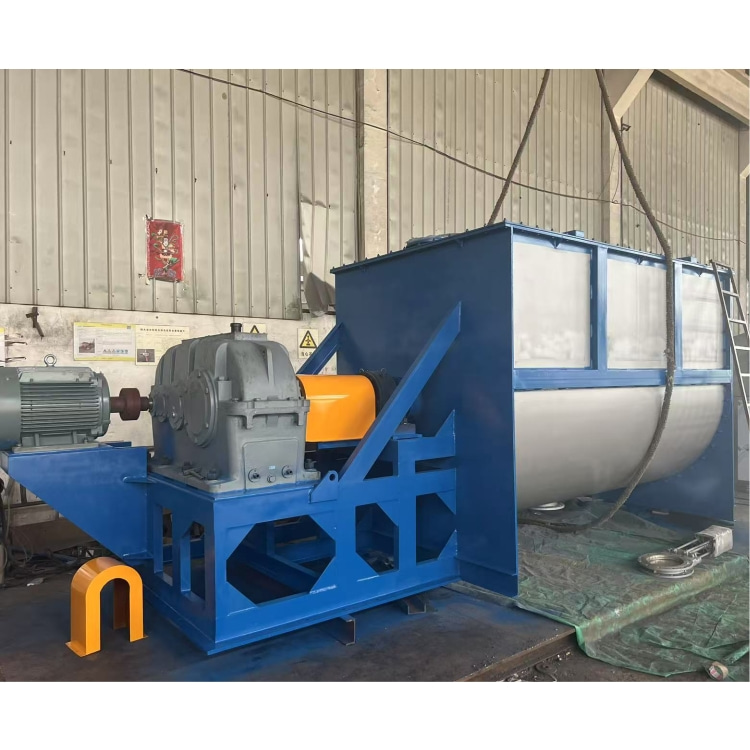
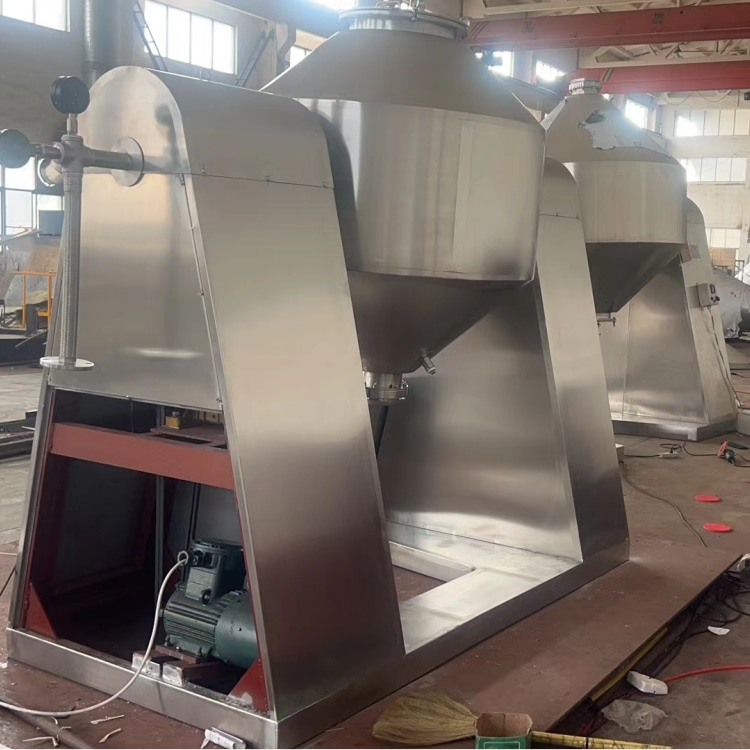
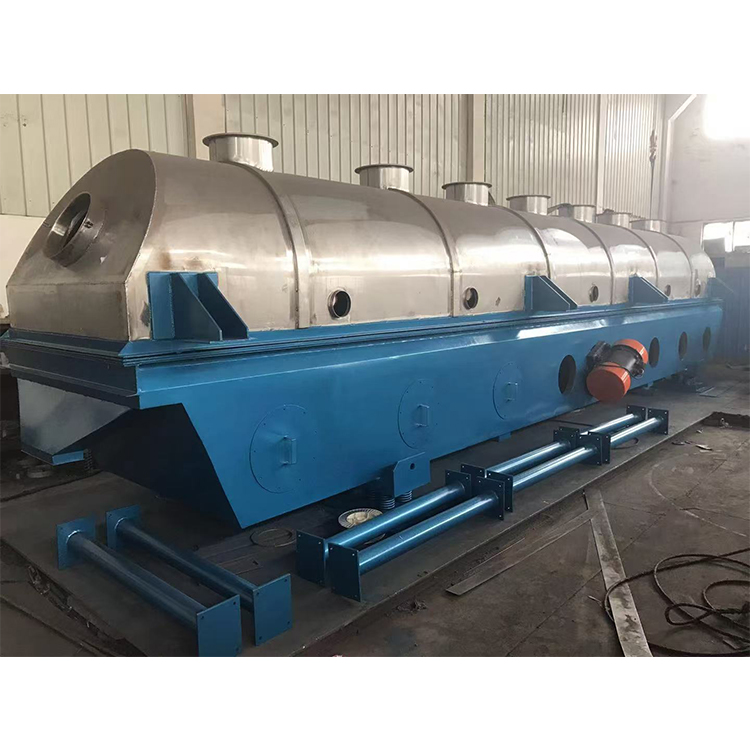
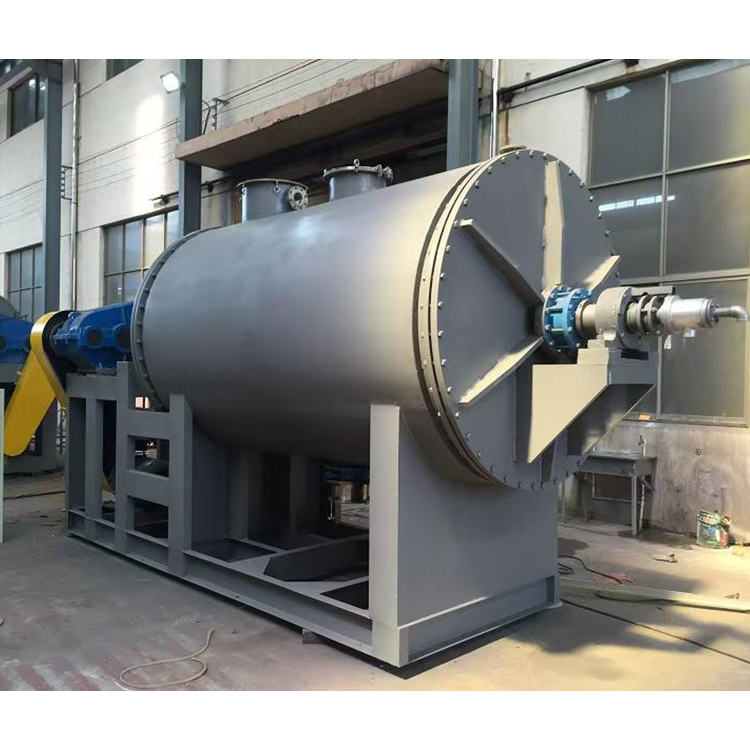
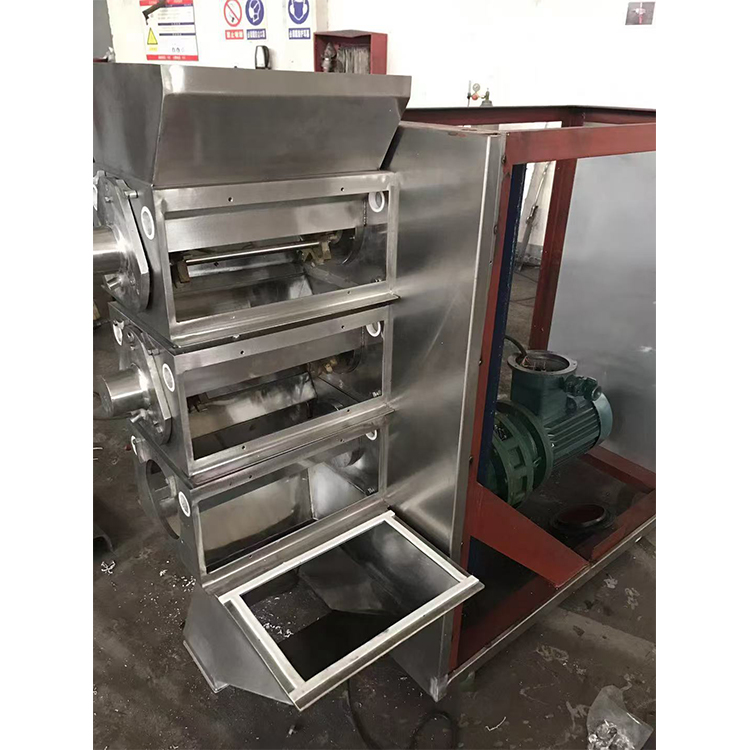
Hot air circulation oven, after multiple upgrades and generations, has reached the advanced level both domestically and internationally; the CT series is a first-generation product, with an average thermal efficiency of around 30%, utilizing centrifugal fans, external circulation, and manual temperature control. After several modifications, the CT-C series oven has been developed, featuring all-axial fans, an automatic constant temperature control system, and an optional computer control system. The thermal efficiency is around 70%, utilizing steam or electricity as the heat source. It heats the air by using an axial fan to exchange heat with the heat exchanger, with the hot air flowing in a laminar manner over the drying tray and transferring heat to the material. Fresh air is supplied through the inlet, while moist waste air is exhausted through the exhaust port, continuously replenishing fresh air and expelling moist air to maintain an appropriate relative humidity inside the oven. The characteristic of this series of ovens is that part of the hot air circulates within the oven, with the entire circulation process being closed-loop, thereby enhancing heat transfer and saving energy.
Universal drying equipment with broad adaptability, widely used for heating, curing, and drying dehydration of materials and products in industries such as pharmaceuticals, chemicals, food, light industry, and heavy industry. Examples include: raw drugs, herbal medicines, traditional Chinese medicine slices, powders, granules, effervescent preparations, large and small honey pills in packaging bottles, pigments, dyes, dehydrated vegetables, dried fruits and vegetables, sausages, plastic resins, electrical components, baked coatings, etc.
One, heating sources include steam, electric, far infrared, and dual electric-steam options, for customers to choose from.
Temperature of Use: Steam heated from 50-140°C, with a maximum of 150°C.
III. Power usage, far infrared temperature of 50-500°C.
Four, equipped with both manual control systems and computer control systems for customer selection.
Five: Common steam pressure 0.2-0.8 M d iva (2-8 kg/cm²)2)。
Section 6: Power supply with electric heating, rated at 15 kW, practical usage 5-8 kWh.
Section 7: Special requirements must be stated at the time of ordering.
Section 8: Non-standard oven prices are subject to negotiation.
Section 9: Please specify if the temperature exceeds 140℃ or falls below 60℃ when placing an order.
Ten, the oven trucks and trays produced by our factory are uniform in size and interchangeable.
Eleven, Pan size: 450×640×45 (mm)
Wide range of applications, suitable for drying various materials, a general-purpose drying equipment.
2. Most of the hot air circulates within the box, ensuring high thermal efficiency and energy savings.
3. With forced ventilation in place, the container is equipped with adjustable air distribution baffles for even material drying. Heat sources can be steam, thermal oil, electricity, hot water, far infrared, etc., offering a wide range of options.
4. Wide temperature range adaptation, up to 350°C as per customer requirements.
5. Low overall noise, smooth operation, automatic temperature control, easy installation and maintenance.
6. The entire enclosure is fully sealed with a hot air circulation system, ensuring energy-saving and high efficiency.
7. Equipped with an internal heat-resistant circulating fan, significantly reducing heat loss and enhancing heat transfer.
8. The box is equipped with adjustable air baffles, allowing for adjustable top and bottom openings, ensuring uniform temperature inside the box.
9. Insulation thickness: 80-120mm, ultra-fine glass wool material, compliant with GMP standards, with minimal heat loss.
10. Ovens comply with industry unified standards, suitable for various industries, and have strong interchangeability.
11. Auto-temperature control, timed work hours, mechanized production, stable batch product quality.
Operation Procedure for Hot Air Circulation Oven
1. Ovens should be operated within the temperature range specified on the label, and the oven must maintain good grounding.
2. No flammable materials such as oil basins, oil drums, cotton waste, and fabric shavings are allowed to be stored near the oven. Cleaning, sanding, and painting activities must not be performed adjacent to the oven.
3. Prevent other objects from falling into the bottom of the oven and contacting the resistance wire to cause a short circuit.
Before opening the oven, the power must be turned off first. The operator must not leave during the heating process.
5. No items, such as tools, equipment parts, or volatile substances, are to be stored inside the oven.
6. Items cleaned with gasoline, alcohol, flammable liquids, and painted with spray paint should be left at room temperature for 15 to 30 minutes. Most flammable liquids need to evaporate before they can be baked in an oven, and indoor ventilation should be ensured.
7. Do not clean or wipe the oven with gasoline while in use.
8. Non-metal items must be heated in the oven according to the process specifications.
9. To prevent explosion, the ventilation door must be opened before the oven is dried.
10. Inspect the automatic control device before use, ensuring that indicator signals are sensitive and effective, and that circuit insulation is intact and reliable.