







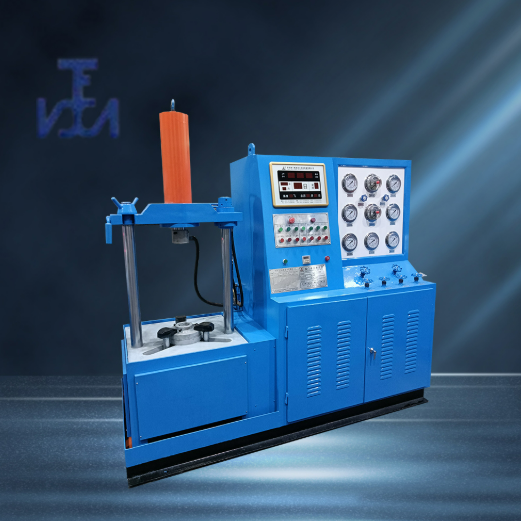
One,Product Overview:
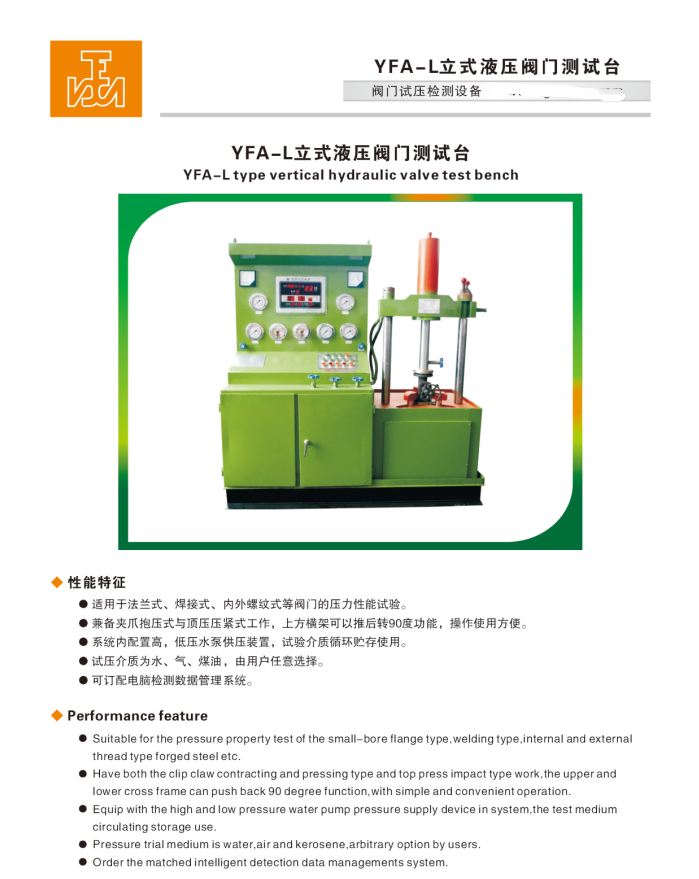
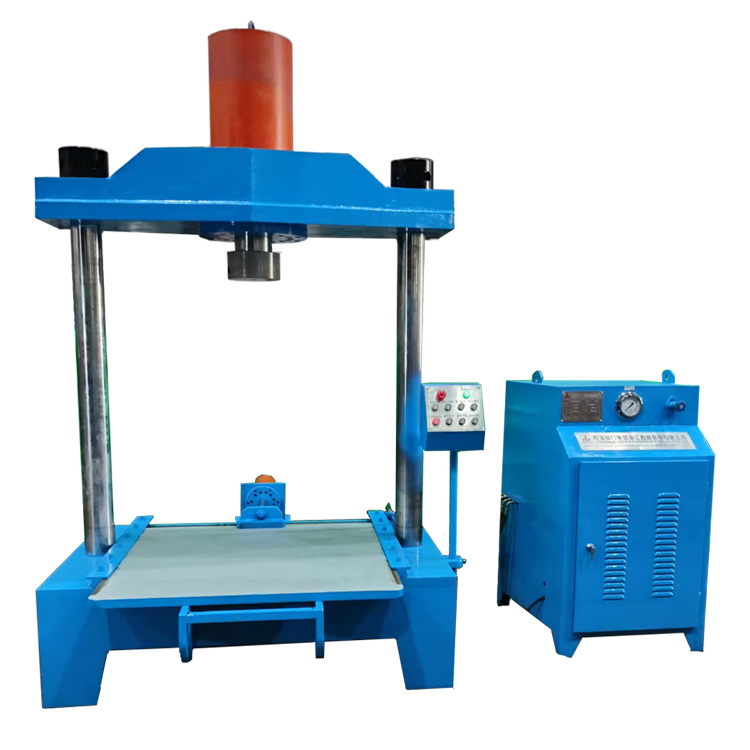
YFA-L Type Hydraulic Valve Test Bench, which is based on our company's many years of experience in manufacturing valve testing equipment, strictly conforms to GB/T13927-2008 "General Valve Pressure Test" and JB/T26480-2011 "Testing and Inspection of Valves."American Petroleum Institute StandardDesign and production are required to meet the test pressure requirements of specifications such as API 598.
This unit integrates hydraulic, mechanical, electrical systems, pressure-supply devices, and medium storage circulating water tanks into one. The entire testing process is automatically controlled and executed by hydraulic and electrical components, featuring reasonable structure, comprehensive functions, stable performance, easy operation, and high level of automation. It is widely used in high, medium, and low-pressure sealing performance and shell strength tests for direct connection flanged valves. Suitable valve types include gate valves, stop valves, check valves, ball valves, butterfly valves, etc. It is used by valve manufacturers, the petrochemical industry, and hydroelectric power stations.Natural GasIdeal valve testing and inspection equipment for industries such as pipeline fittings, wastewater treatment plants, and valve maintenance stations.
Section II: Specification Range:
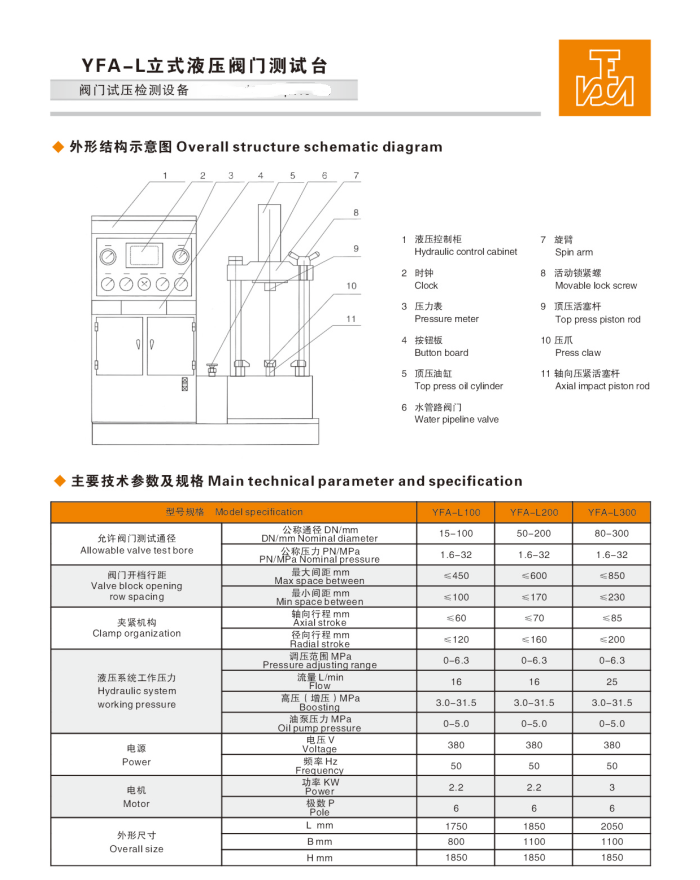
DN15-300mm
Three, Pressure Range: 1.6-42.0 (MPa) / 150-2500 (Class)
IV. Performance Features:
1. The equipment features a structure with a workbench installed below, equipped with a set of three-jaw hydraulic clamping mechanism evenly mounted on the workbench. A movable hydraulic thrust cylinder is also installed on the workbench. The thrust cylinder can rotate backward by 90 degrees when clamping valves, facilitating observation during valve installation and sealing tests. Suitable for various types of valves, including flanged, welded, socket-weld, gate valves, stop valves, check valves, ball valves, and butterfly valves. It exerts no external force on the valve being tested. Clamp.
2. The sealing method uses a valve face seal. During the valve sealing test, the hydraulic clamp grips the back of the flange. For strength tests, the bevel face or flange plane is used for sealing, and it is securely pressed by the top pressure cylinder. The clamping force is able to...Continuous pressure regulation or stepless boost to the desired pressure level via button control.
3. The test bench features a dual-system for air and water, with bidirectional pressure input and release, equipped with a leak test port. The system is pre-configured with high and low-pressure water pumps, allowing direct hydrostatic testing. The high and low-pressure water pumps are equipped with automatic control functions. The gas source is user-supplied. The liquid testing medium can be recycled and stored for use, offering energy-saving, environmental protection, low cost of investment, and high work efficiency.
4. The equipment features reliable safety protection measures, with an interlocked联动 function in the clamping mechanism. When pressure is present in the valve cavity, the clamping cylinder locks and releases its action until the pressure in the valve cavity is completely exhausted, at which point the button can be released. This prevents accidental operation hazards and ensures safe use.
V. Usage Instructions:
1. Inject 30#-46# hydraulic oil or 20# mechanical oil into the hydraulic system oil tank, ensuring the oil level does not fall below the oil gauge's lower limit.
2. Power on, press the oil pump start button, and check if the motor is rotating in the correct direction (clockwise).
3. Adjust the hydraulic system pressure to 5.0 MPa to proceed with normal operation.
4. Sealing Test Clamping Method: Move the clamping jaw in a point-to-point motion to a position larger than the outer diameter of the valve flange to be tested. Select a sealing disc suitable for valve testing and install it on the workbench. Place the valve on the sealing plate. Move the clamping jaw in a point-to-point motion to a position above the thickness of the valve flange, then advance the jaw to a position close to the valve flange. Secure and grip the backside of the valve flange with the jaw. Strength Test Clamping Method: The other end face is sealed by a pressing cylinder, and the method depends on the valve bore size and pressureAdjust the clamping pressure according to the (Hydraulic Cylinder Clamping Pressure Reference Table). For pressures exceeding the pump source by 5.0 MPa or more, press the (Clamping Pressure Increase) button to increase the pressure to the desired level.The boost button can be pressed multiple times, with each interval being approximately 3-5 seconds, and the maximum pressure reaching 30MPa.
Section 6: Gas Pressure Test:
1. Airtight Pressure Test: As per the sealing test fixture method, all fixtures are in place (1).Shut off: Total inlet valve → Upper inlet valve → Lower pressure relief valve → Test butterfly valve. (2) Open: Lower pressure gauge switch → Lower inlet valve → Inject gas into the total air inlet valve, close (total air inlet valve) when the air pressure reaches the required pressure value. (3) Enter the pressure holding timing phase, check for bubble leakage on the sealing surface and pressure drop on the gauge to determine if the valve's sealing performance meets standards.
2. Gas Strength Pressure Test: Based on the sealed test fixtureSealed by a top-tight cylinder pressing against the opposite end face, depending on the valve orifice diameter and pressureRefer to the (Pressure Comparison Table for Cylinder Clamping) to adjust the clamping pressure.(1)Shut off: Total inlet valve → Left and right pressure relief valves → Leak detection switch. (2) Open: Test valve → Upper and lower pressure gauge switches → Inject gas into the total inlet valve, close (the total inlet valve) when the pressure reaches the required value, and spray foam agent on the valve body surface. (3) Enter the pressure holding timing phase, check for bubble formation at the valve connection sealing surface and valve body surface, and whether the pressure gauge has dropped pressure to determine if the valve's strength performance is qualified. (4) After testing, open the pressure relief valve, exhaust the pressure, and remove the valve.
Section 7: Water Pressure Test
1. Water-tightness and pressure test:
Similarly, pressure-sealed test fixture, (1)Set the low-pressure pump electrical contact pressure to 1.8 (Mpa). Adjust the electrical contact pressure gauge (with sealed pressure at 2.5MPa as an example) by moving the red pointer to 2.5MPa. (2) Close: Total inlet valve → Upper water inlet valve → Lower pressure relief valve → Lower pressure gauge switch → Test valve. (4) Open: Total water inlet valve → Lower water inlet valve. (4) Start the low-pressure pump to fill with water. When the low-pressure pump pressure reaches the set value of 1.8 (MPa), it indicates that the right valve chamber is full of water, and the low-pressure pump will automatically stop. The high-pressure pump will then automatically start to supply pressure. When the high-pressure water reaches the set value of 4.0 (MPa), the high-pressure pump will automatically stop, and enter the pressure holding timing period (such as 2 minutes/client-defined). Check for any leaks on the valve sealing surface and housing surface, and if the pressure gauge is down, etc., to determine if the valve's strength pressure is qualified.
2、Water Strength Pressure Test:
Similarly, the pressure test valve mounting is complete, (1)Set the low-pressure water pump electrical contact pressure to 1.8 (Mpa). Adjust the electrical contact pressure gauge (with 4.0 Mpa as the reference) by moving the red pointer to 4.0 Mpa. (2) To shut off: main intake valve → upper and lower pressure relief valves → upper and lower pressure gauge switches. (3) To open: main water intake valve → test valve. (4) Start the low-pressure water pump to fill water. When the low-pressure water pressure reaches the set value of 1.8 (MPa), it indicates that the valve chamber is filled with water, and the low-pressure pump will automatically stop. The high-pressure pump will then automatically start to supply pressure. When the high-pressure water reaches the set value of 4.0 (MPa), the high-pressure pump will stop automatically, and enter the pressure holding time (such as 2 minutes/client's specification). Check for any leakage at the valve connection surfaces and the valve body surface, and ensure the pressure gauge is stable, to determine if the valve strength pressure test is passed. (5) After testing, exhaust the pressure, release the button, and remove the valve.
Section 8: Usage Precautions and Requirements:
1. The site should be arranged in a level indoor space, the horizontal position should be calibrated, and the base should be fixed with concrete. It is suitable for use in a workshop with an ambient temperature of (1-40)℃ at normal temperatures or with heating in winter. The surrounding area should not store high concentrations of dust and corrosive gases, and it should not be near areas with abrasive wheels or polishing machines with poor conditions. Good ventilation is required. At least a space of ≥1m should be reserved around the equipment installation for ease of operation and maintenance.
2. Operators must undergo professional training before starting work, adhere to standard procedures, and strictly prohibit exceeding specifications or pressure. Non-specialists are advised not to operate.
3. Operators are strictly prohibited from leaving their posts during the pressure testing process. They must continuously monitor the pressure to prevent it from exceeding safe levels.
4. After the test is completed, the pressure must be relieved to zero before the clamps can be released. The power should be disconnected when not in use.
5. Regularly apply lubricant to all moving parts of the testing bench to maintain clean and smooth operation.
6. Use 46-grade anti-wear hydraulic oil (select antifreeze 46-grade anti-wear hydraulic oil below 0℃), and ensure the oil level is not below the indicator. Regularly check the oil level and hydraulic oil; after one year of use, it should be cleaned.Wash OilBox, replace with new oil.
7. Water source must be clean with no impurities. Change the water quality promptly if it becomes turbid. Add new rust prevention powder to meet testing requirements. To ensure that testing valves are not corroded, it is typically necessary to add rust prevention powder regularly to the recirculating water tank to prevent rust from affecting the normal operation of pipes, pumps, and check valves due to medium water.
Note: Common rust prevention powders include:Sodium NitriteSodium sulfonate, sodium potassium sulfonate (non-toxic powder).
8. The equipment worktop should be kept clean, and there should be no debris between the test valve flange and the pressure test blanking plate.