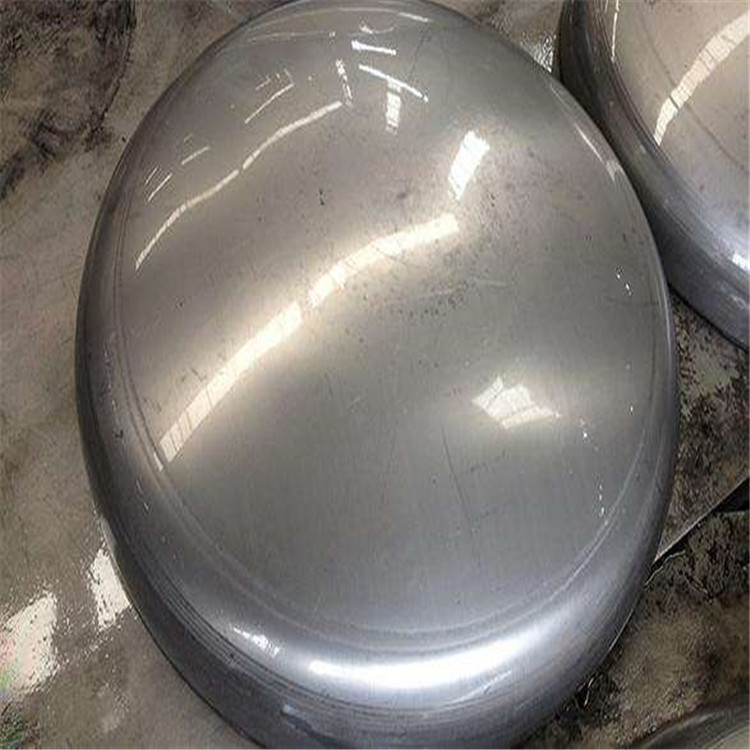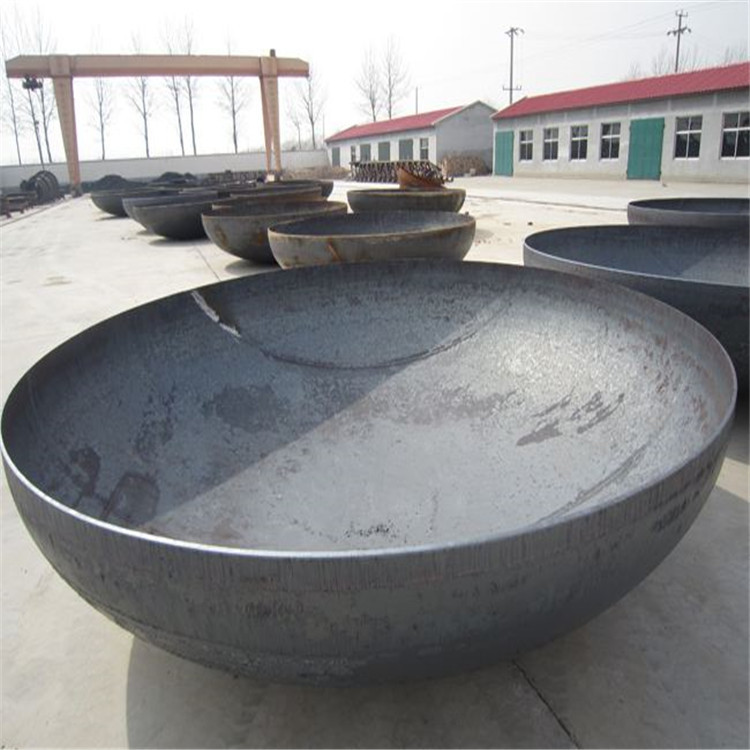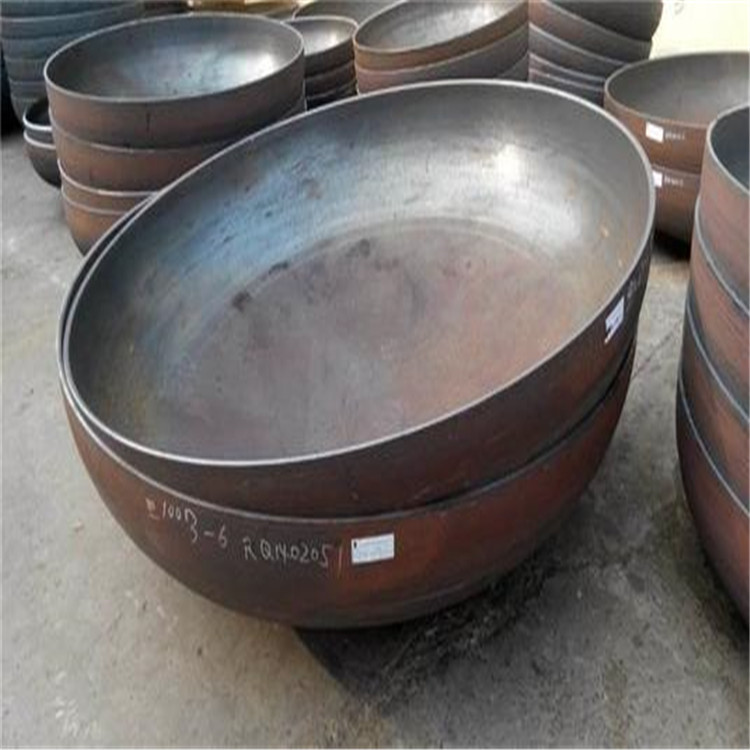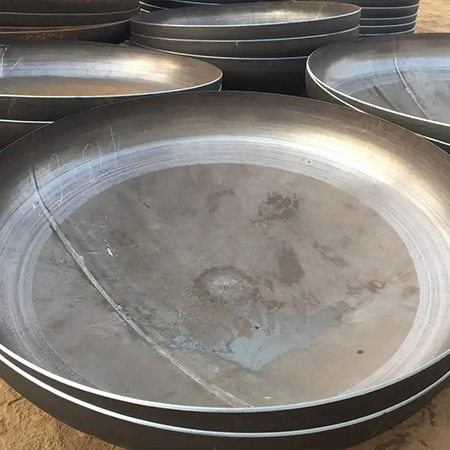
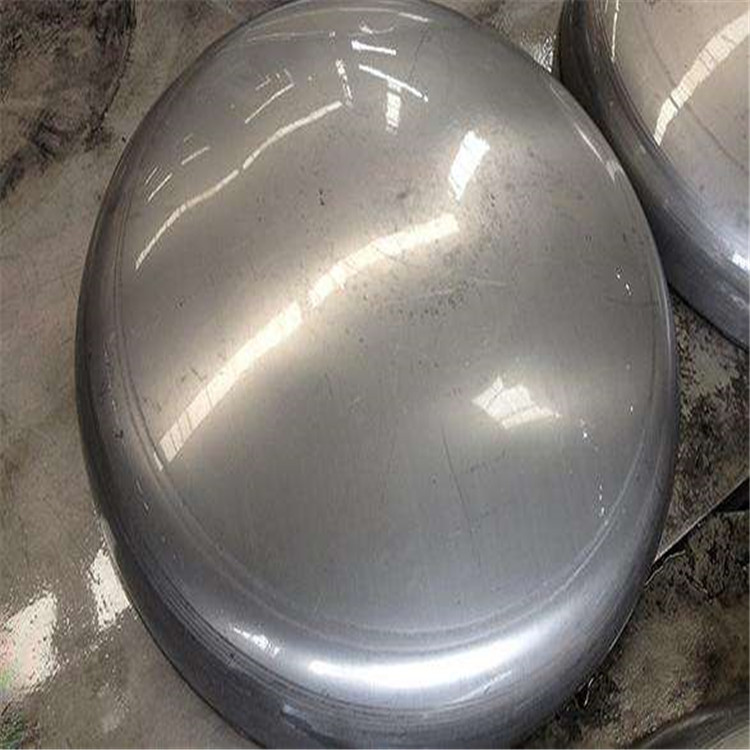

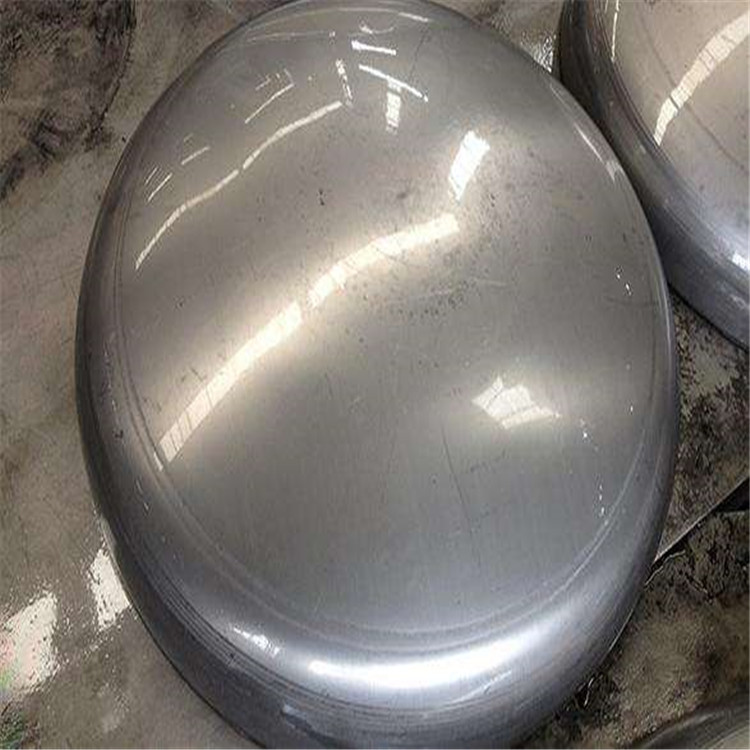
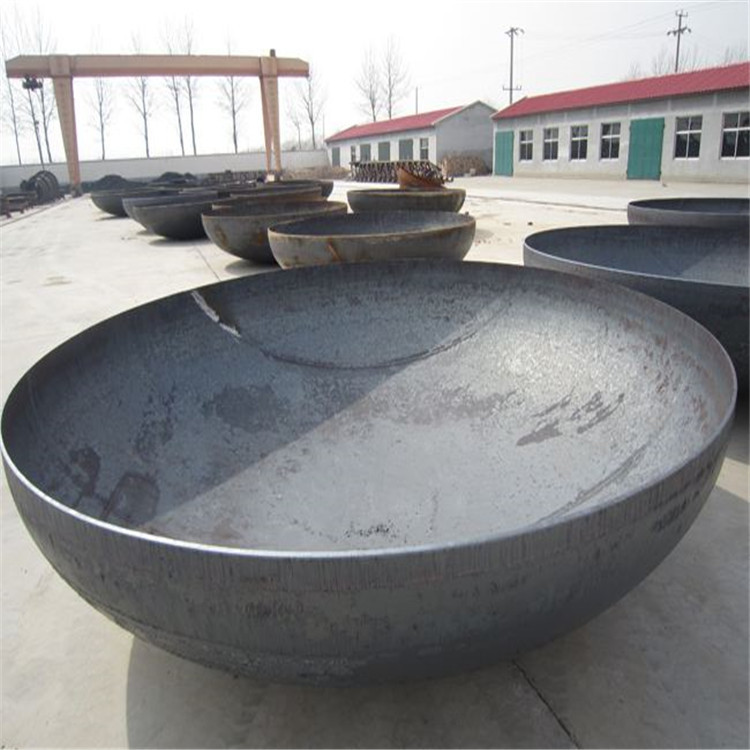
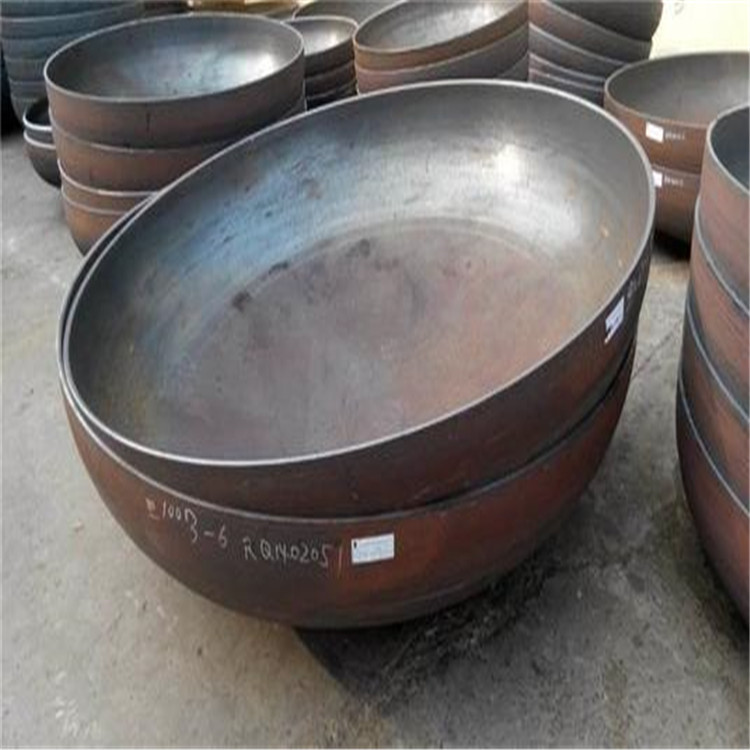









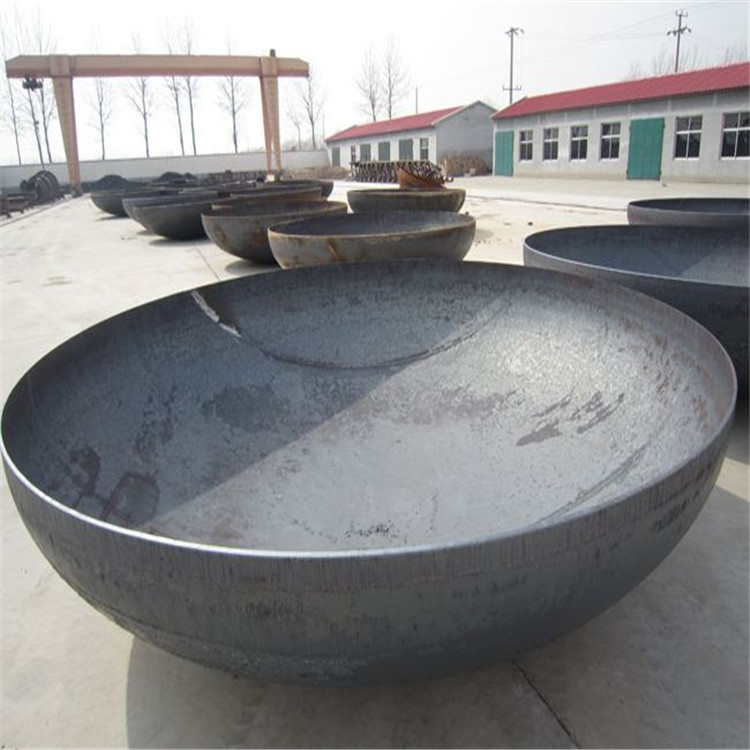
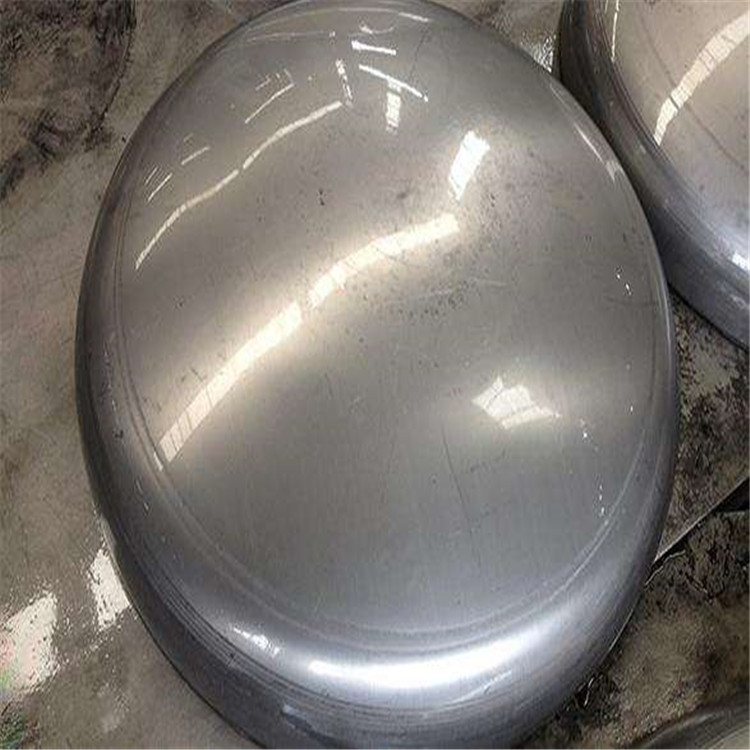
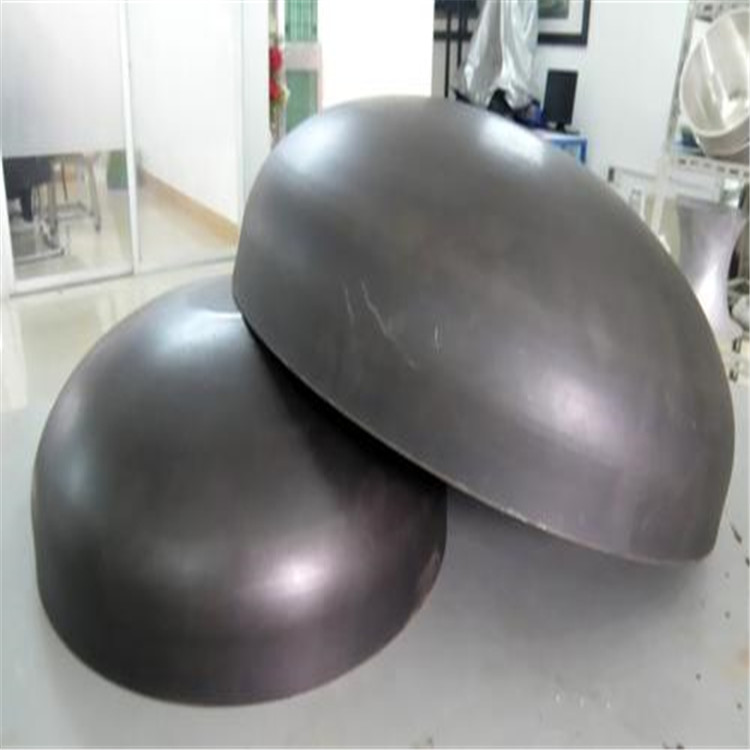
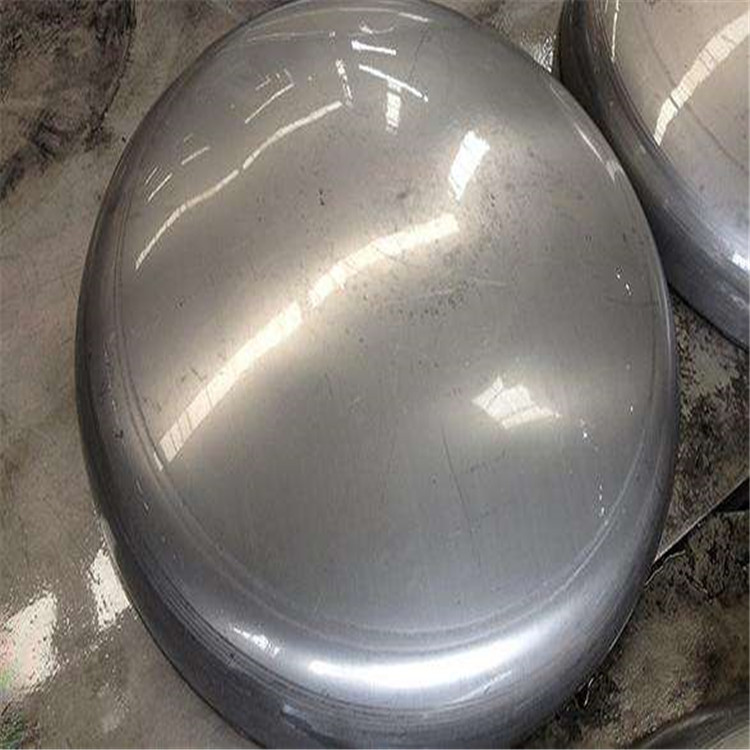
An elliptical head is a type of closure consisting of a half-elliptical shell and straight edges (cylinder sections). Due to the continuous change in the radius of curvature of the elliptical curve, the elliptical shell only generates thin film stress in its overall area when compressed. At the junction between the elliptical shell and the straight edge, where there is a common tangent, the discontinuous stress is relatively small. For standard elliptical heads with a ratio of major to minor axes of 2, the edge stress at the junction between the elliptical shell and the straight edge is very minimal and can be disregarded.
It consists of a semi-ellipsoidal spherical surface and a straight cylindrical section. It combines the advantages of a hemispherical end with good load-bearing capacity and a dish-shaped end with shallow depth. Due to the smooth and continuous curvature of the meridians in the elliptical part, the stress distribution in the end cap is relatively uniform. The depth of the elliptical end cap, bt, depends on the ratio of the major to the minor axis of the ellipse, i.e., the internal diameter I) of the end cap to twice the depth L of the end cap (I1, I2h), with a smaller ratio resulting in a deeper end cap, a more uniformly distributed load, and thinner walls, but more difficult to process; a larger ratio results in a shallower end cap, easier to process, but with a poorer load-bearing condition and thicker walls. Therefore, it is generally advisable for the value of I1 to not exceed 2h. When I1 is 2, it is a standard elliptical end cap, which is a commonly used type in pressure vessels.