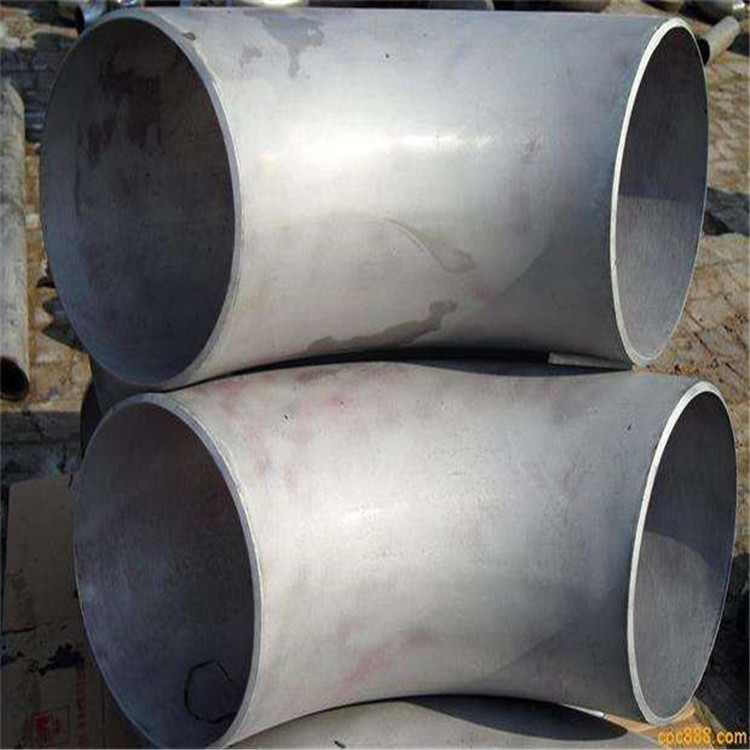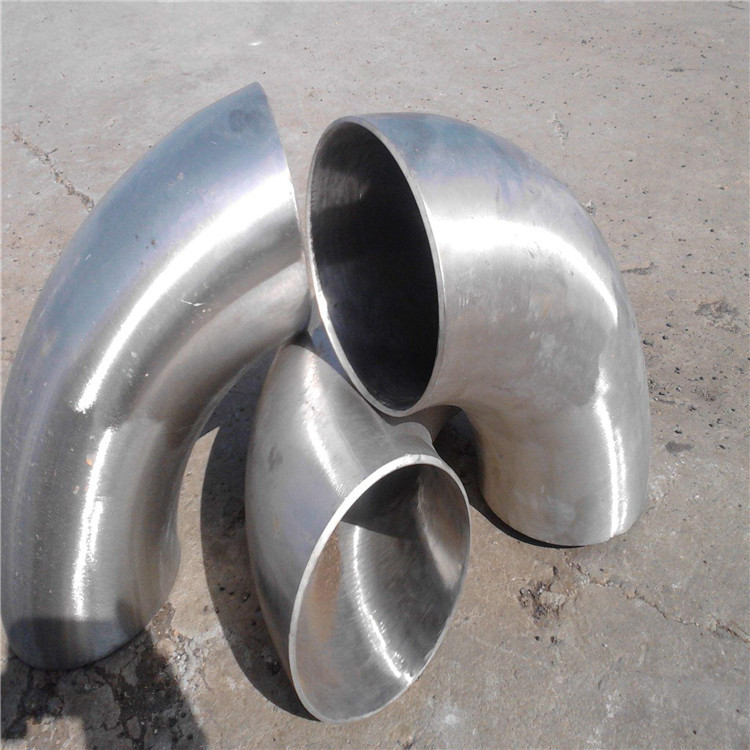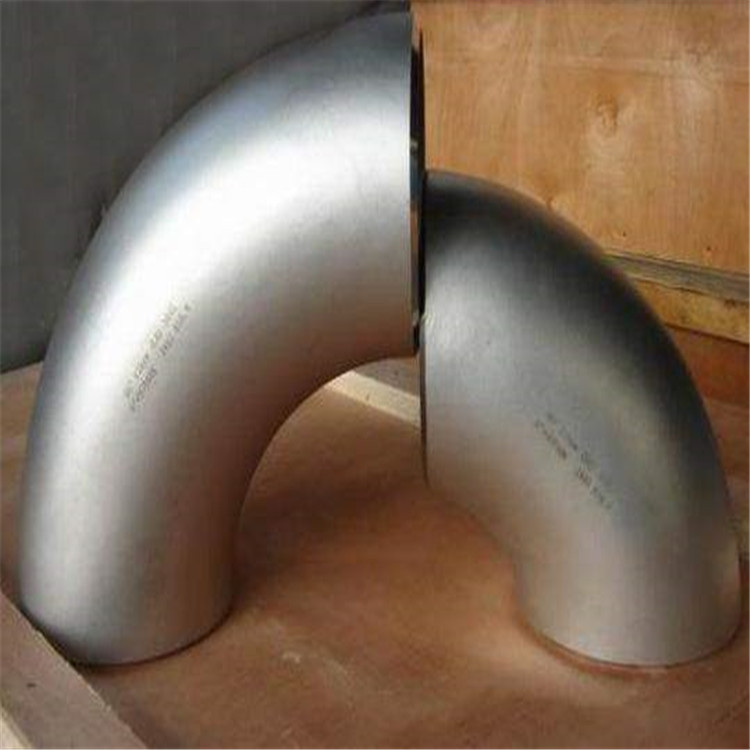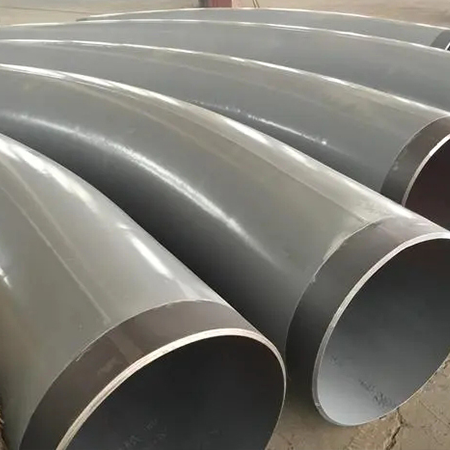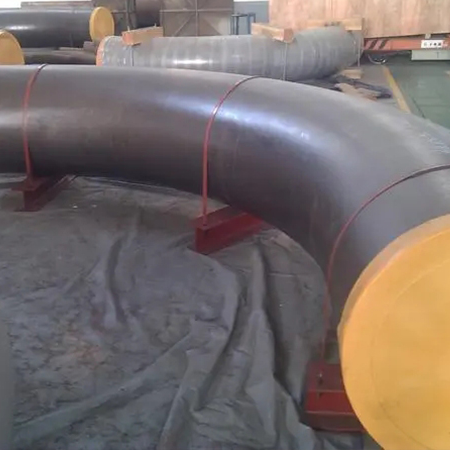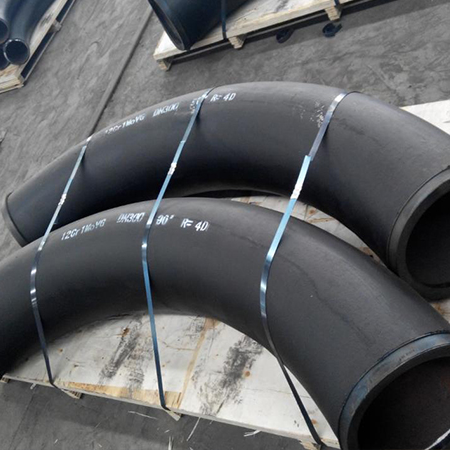
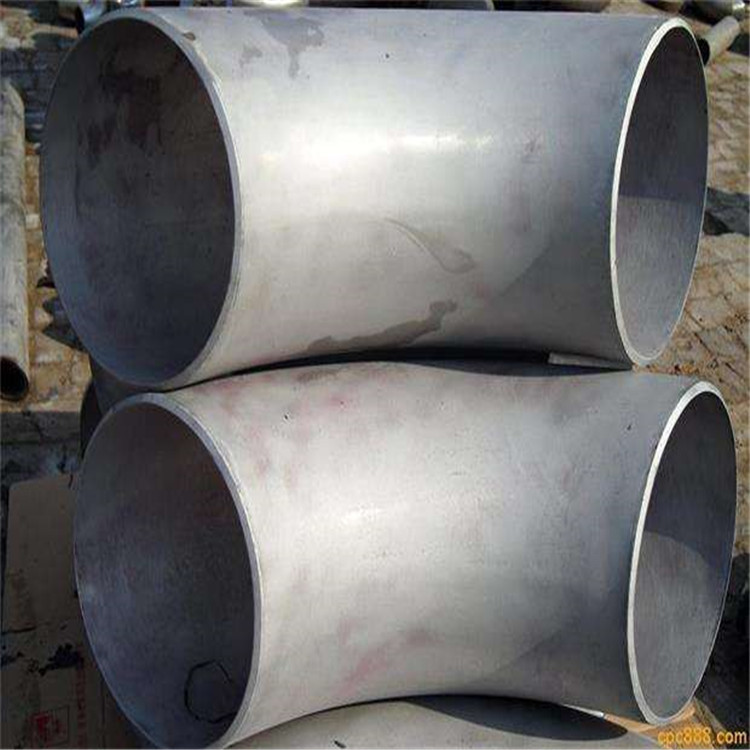


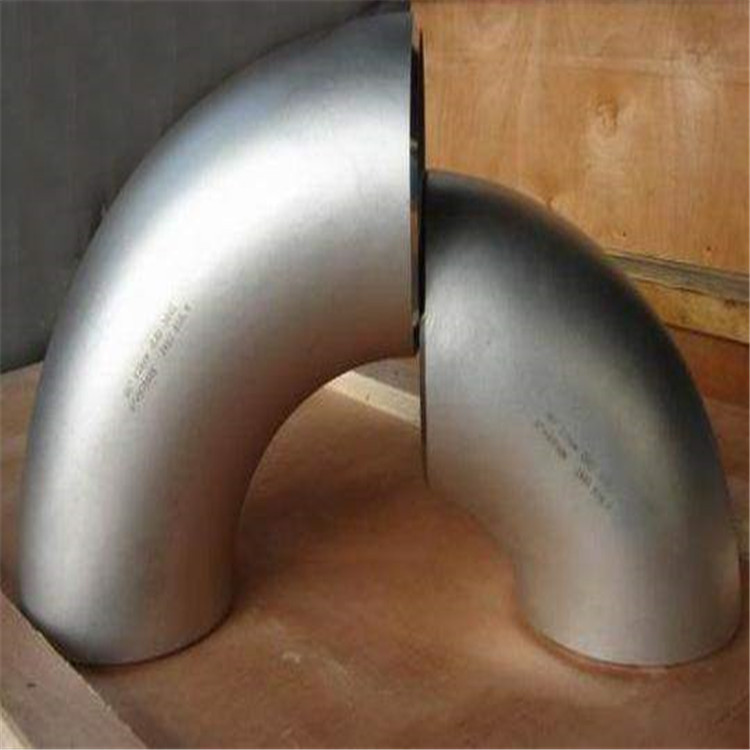


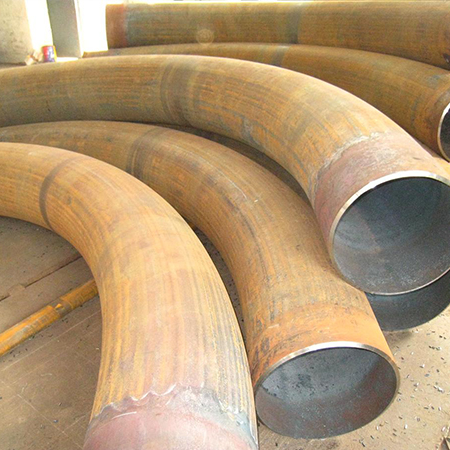







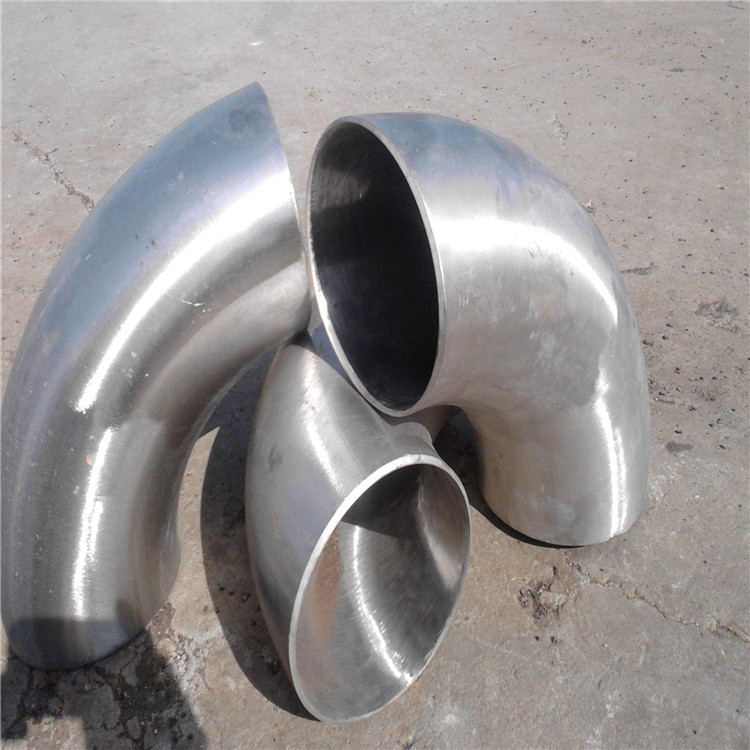
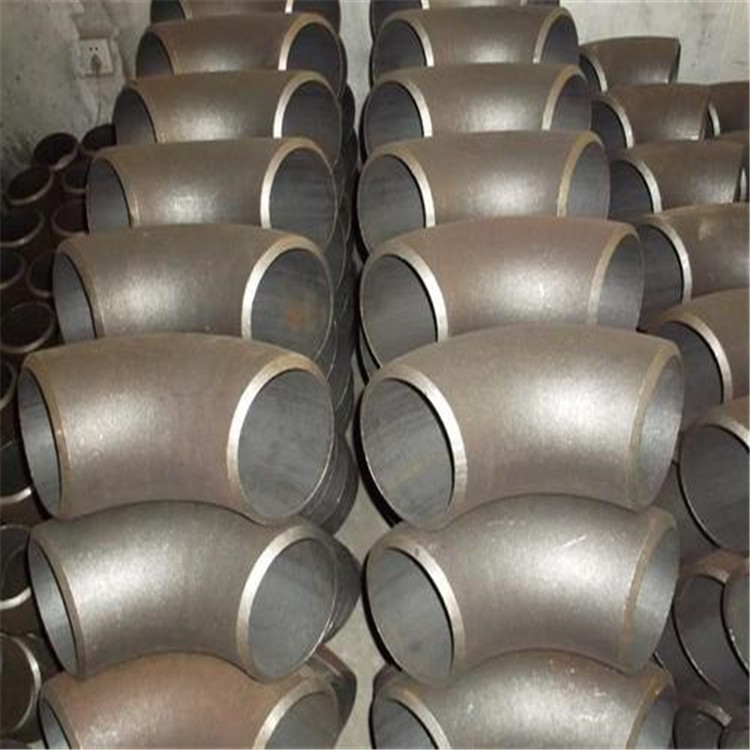
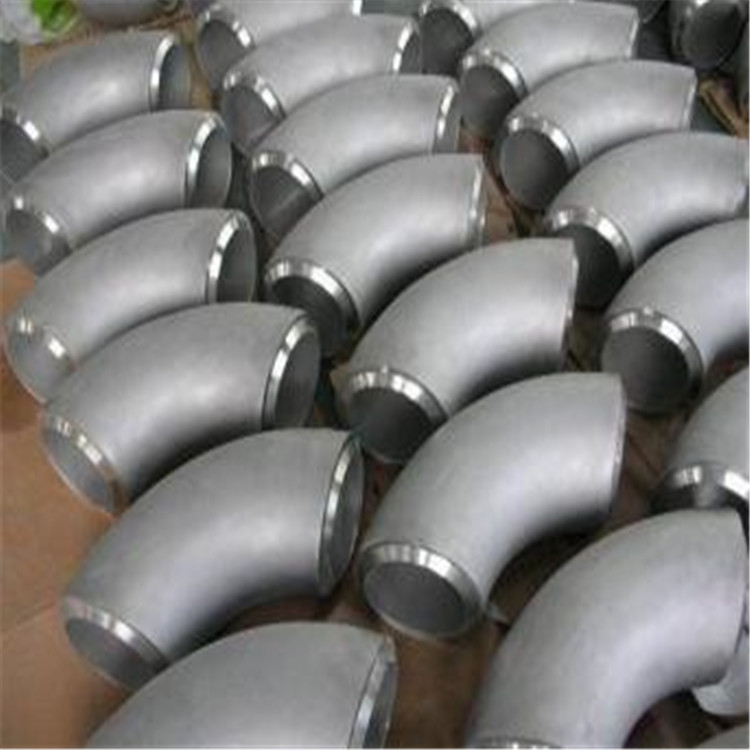
Large Diameter Welded Elbows are elbows made of steel, either hot-pressed or forged. Their connection method involves directly welding the elbow to the steel pipe. The main manufacturing standards for large diameter welded elbows are generally GB/T12459, GB/T13401, ASME B16.9, SH3408, SH3409, HG/T21635, HG/T21631, SY/T0510, and GB/T10752-1995.
Large-diameter weld elbow is primarily used for connecting two sections of pipes with different end radii, or for pipe diameter changes. This type of elbow is usually produced based on specific engineering requirements or drawings, and in addition to meeting the pipe diameter requirements, it must also consider various factors related to the pipe's specific conditions, such as the pressure of fluid transmission, fluid viscosity, abrasiveness, corrosiveness, and fluid transmission temperature, among others. Weld elbows are typically welded on-site during pipe construction due to varying welding standards for different types of pipes, necessitating on-site welding according to the pipe weld grade.
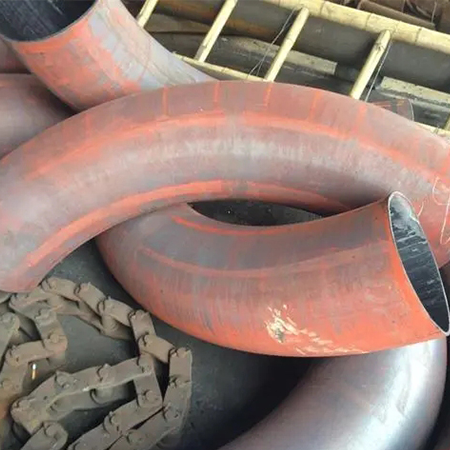
Carbon steel elbow is a metal pipe fitting that changes the direction of the pipeline on a carbon steel pipe. The connection methods include threaded and welded connections. In terms of angles, there are three commonly used types: 45°, 90°, and 180°, as well as other non-standard angles like 60° according to engineering requirements. The materials for elbows include cast iron, stainless steel, alloy steel, malleable cast iron, carbon steel, non-ferrous metals, and plastics. The methods of connecting to pipes include direct welding (common method), flange connection, hot melt connection, electric fusion connection, threaded connection, and socket-and-spigot connection. According to the production process, they can be divided into welded elbows, stamped elbows, forged elbows, and cast elbows. Other names: 90-degree elbow, right-angle bend, ell bend, etc.Carbon steel can be categorized according to material properties.
10#, 20#, A3, Q235A, 20g, Q345B, 20G, 16Mn, ASTM A234, ASTM A105, St37, ASTM A403, etc.
These elbows made from these materials can be referred to as carbon steel elbows, categorized by angles: 45°, 90°, and 180°, which are the three most commonly used types. For specific engineering requirements, custom sizes such as 60° or other angles can be ordered.
Connection methods for carbon steel pipes: welding, flange connection, threaded connection, socket connection, etc.