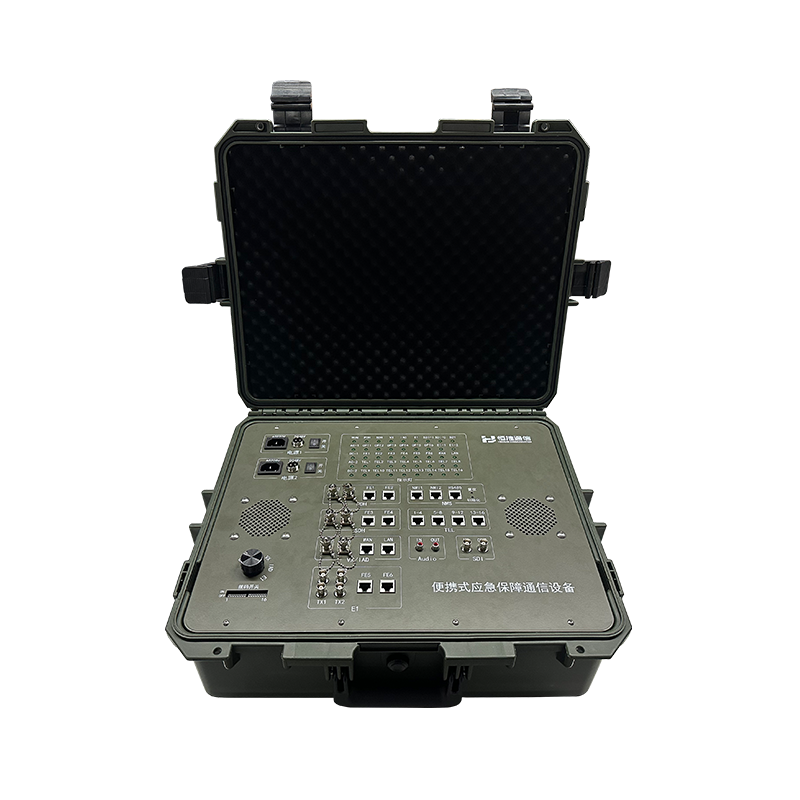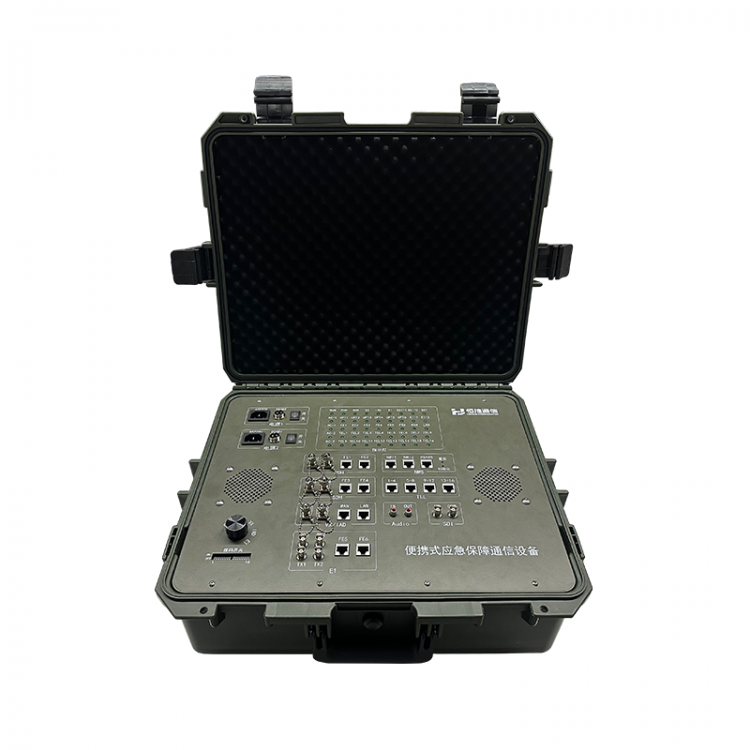











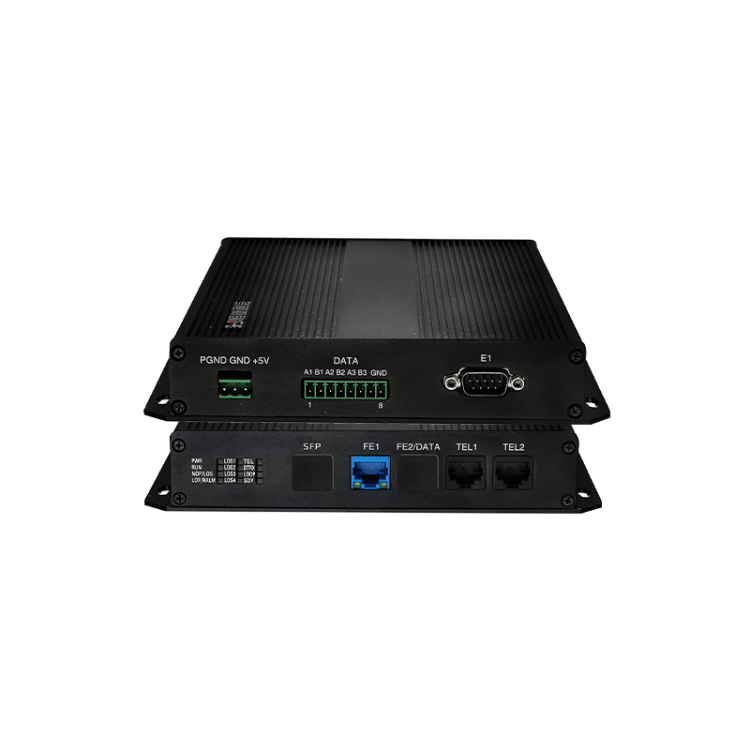
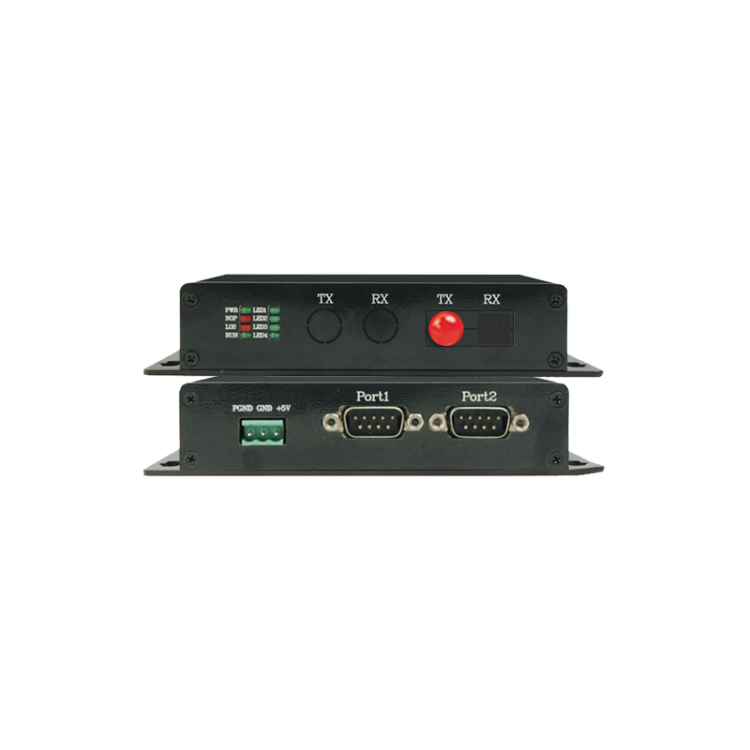
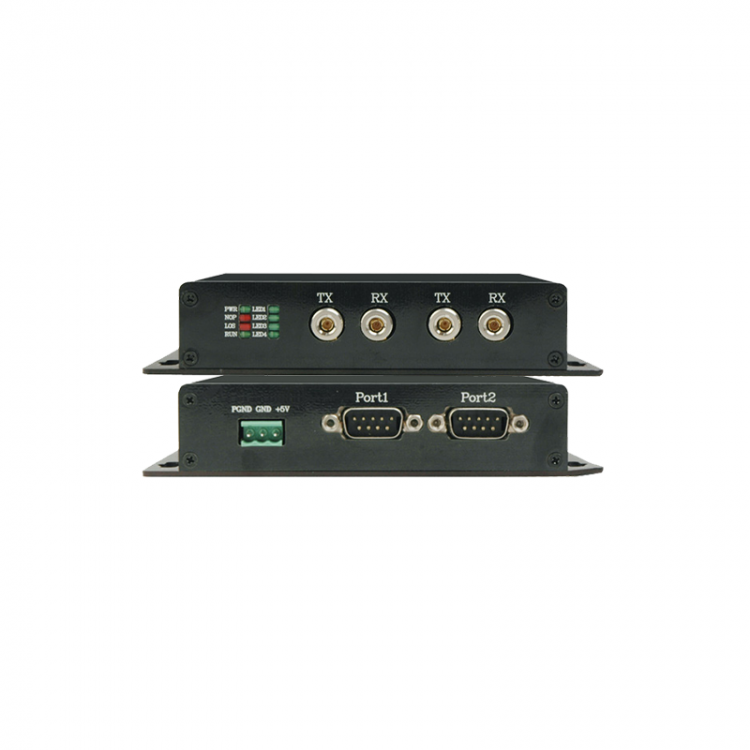
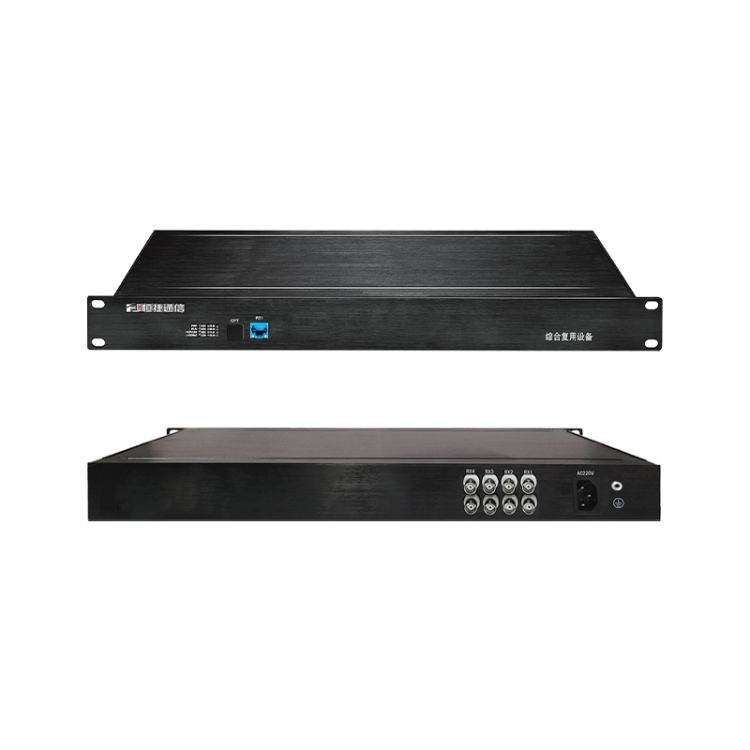
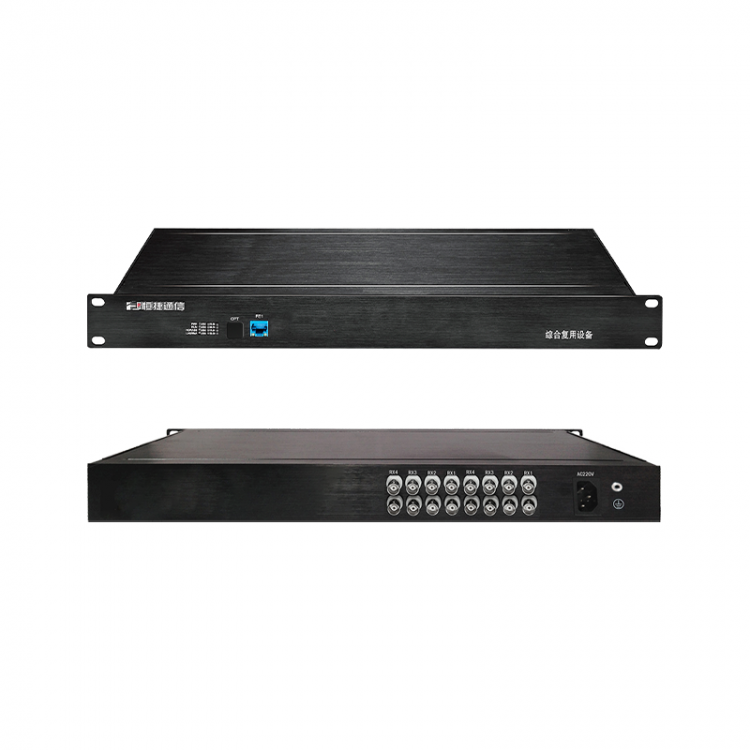
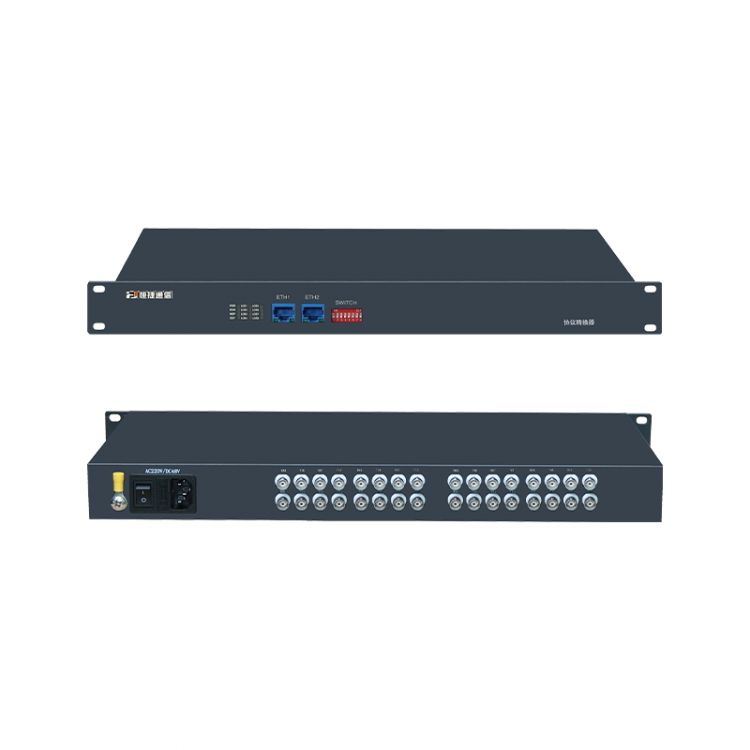
The portable emergency communication device is a multifunctional portable unit that integrates telephone services, data services, and high-definition audio-video services. The device supports various access methods, including PDH fiber optic, SDH fiber optic, E1, and Ethernet connections, allowing flexible switching based on different on-site environments. It is compatible with existing private network terminal equipment, supports point-to-point and other topologies, and offers 1+1 dual AC/DC power protection. The device is also compatible with existing private network management platforms. The portable enclosure is compact, lightweight, easy to carry, with good waterproof and shockproof performance, suitable for operation in various humidity, electromagnetic, and mobile conditions in the field. It is an ideal dedicated emergency communication support device.
Features
The equipment features a portable enclosure, compact in size and light in weight, making it easy to carry and move. It supports plug-and-play, allowing for quick network setup in a short amount of time, meeting urgent communication needs.
2. The enclosure features dust and moisture resistance, with excellent anti-interference capability and environmental adaptability. It can operate stably under harsh conditions, ensuring the reliability of the communication network.
3. The equipment is equipped with two cooling fans, the panel features an intake and an exhaust vent for efficient heat dissipation.
4. The equipment supports multiple interface connections including E1, Ethernet, PDH fiber, and STM-1, and implements 1+1 protection function. It can flexibly switch to the appropriate connection method according to different on-site environments.
5. The equipment supports multiple services including analog stereo, Ethernet data, phone, 3G/HD/HD-SDI video, catering to the needs of complex communication scenarios.
6. The equipment offers dual AC and DC power supply, achieving 1+1 hot backup for power.
7. The equipment circuit features surge-resistant and lightning protection design, supporting reverse polarity protection for power input.
8. The equipment provides complete alarm and status indicator lights, including optical port alarms, E1 alarms, power status, equipment operating status, network management connection status, Ethernet connection status, and telephone link status, etc.
9. The equipment provides an Ethernet management interface, enabling network management software to oversee both the equipment and the network. This software encompasses five main functional modules: configuration management, resource management, alert management, performance management, and security management.
10. Supports user customization and OEM services.