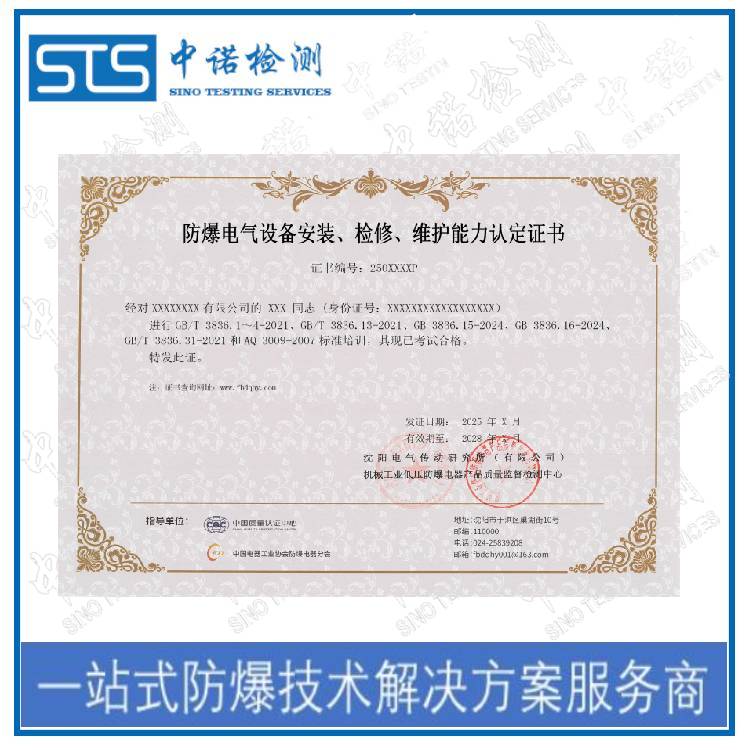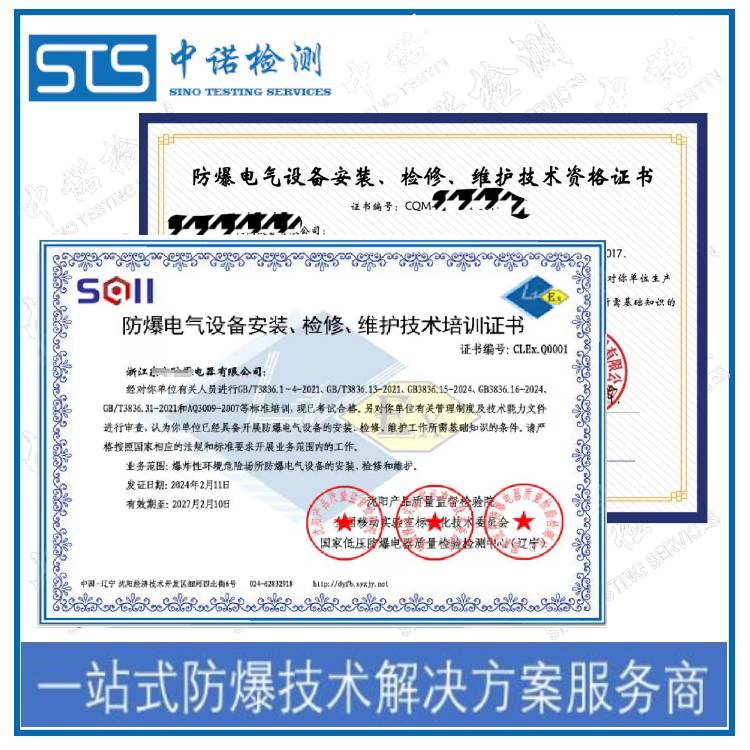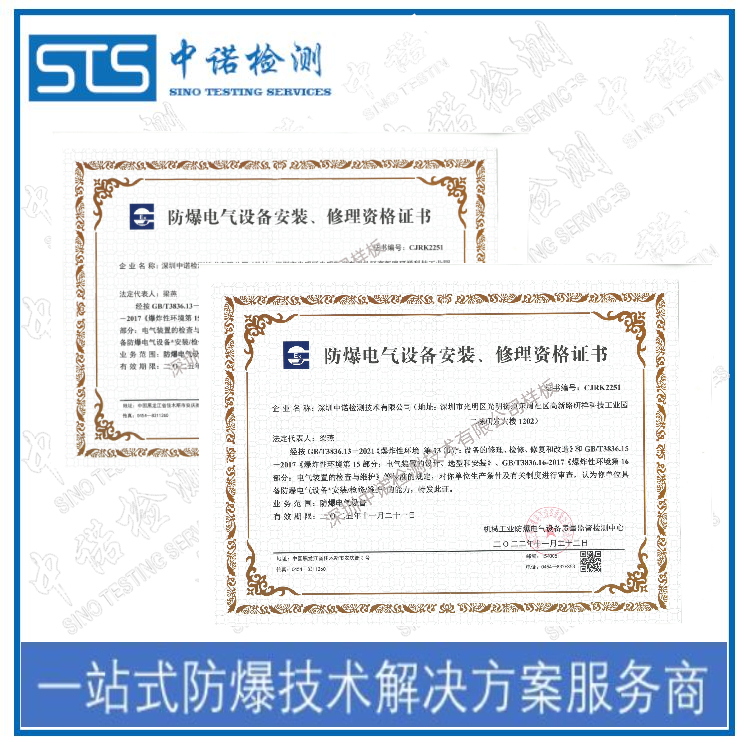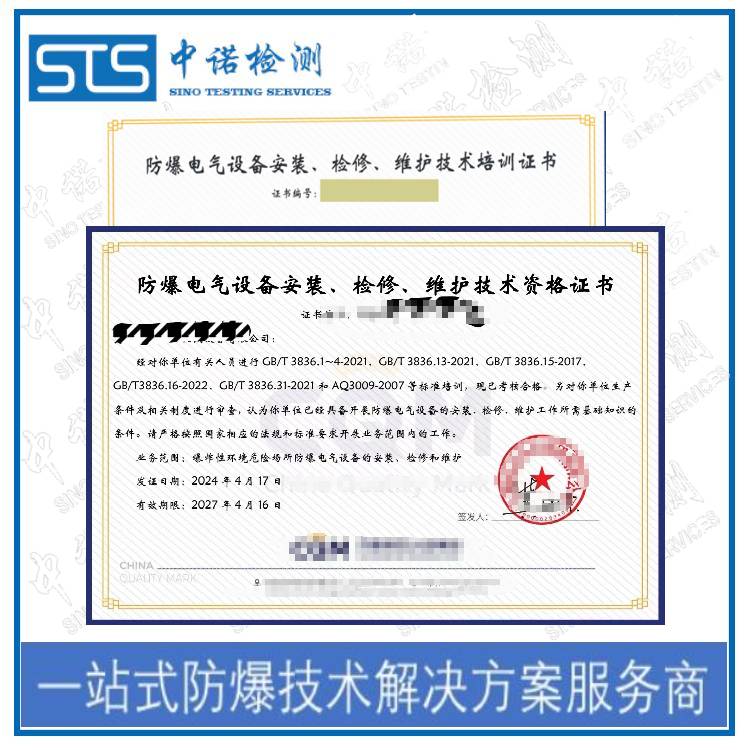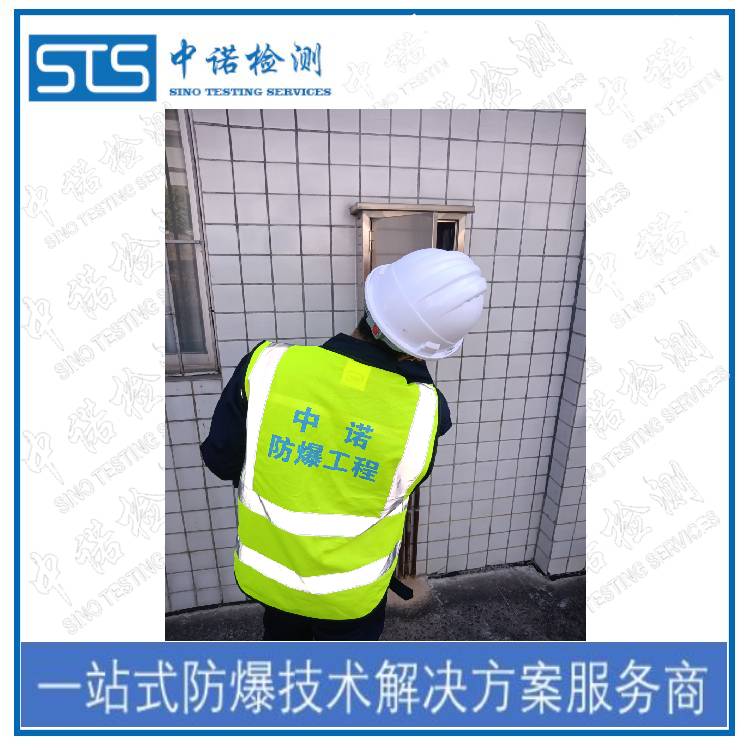





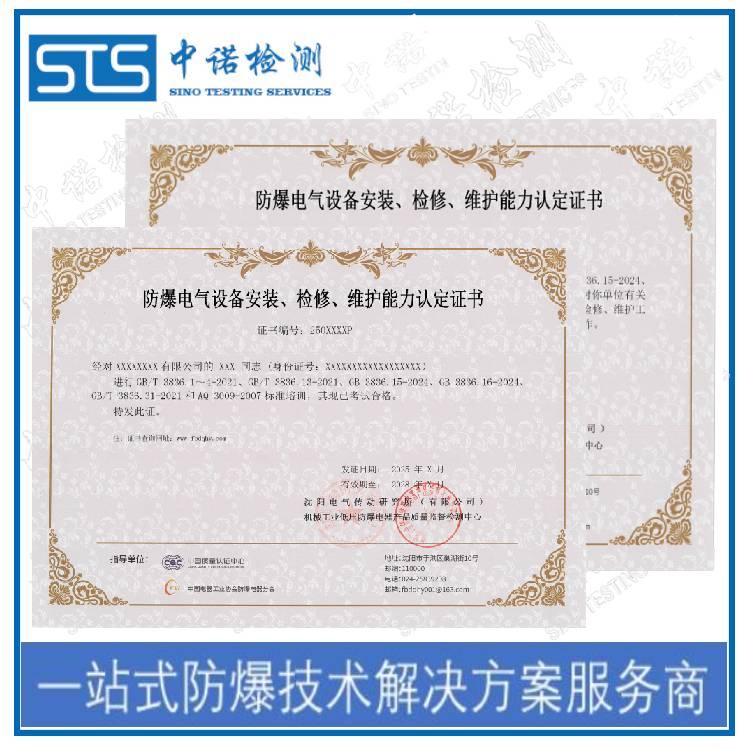
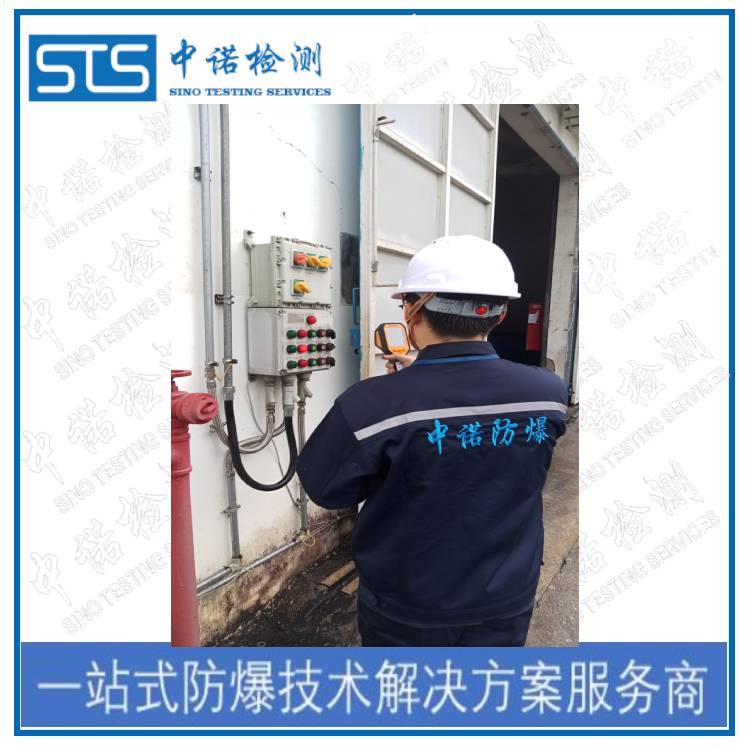
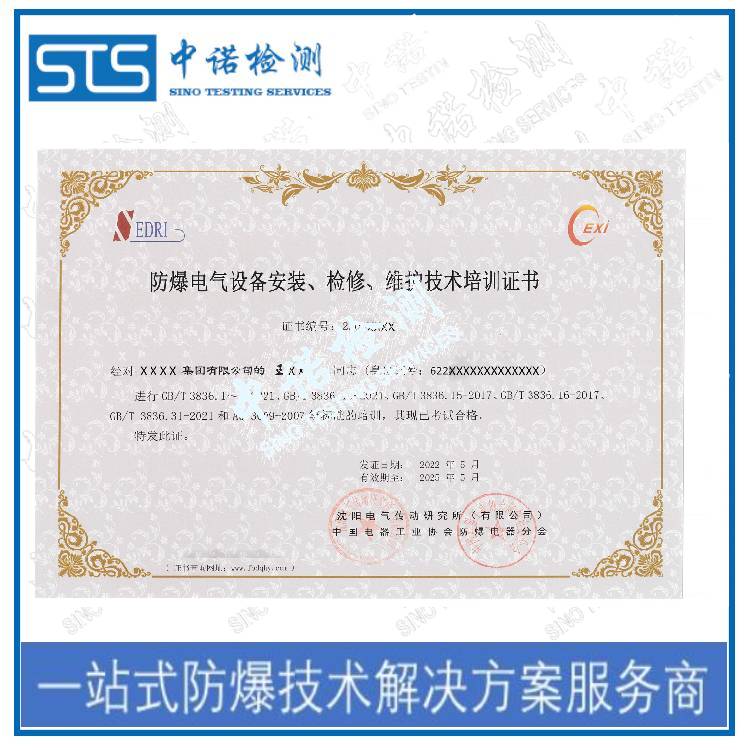
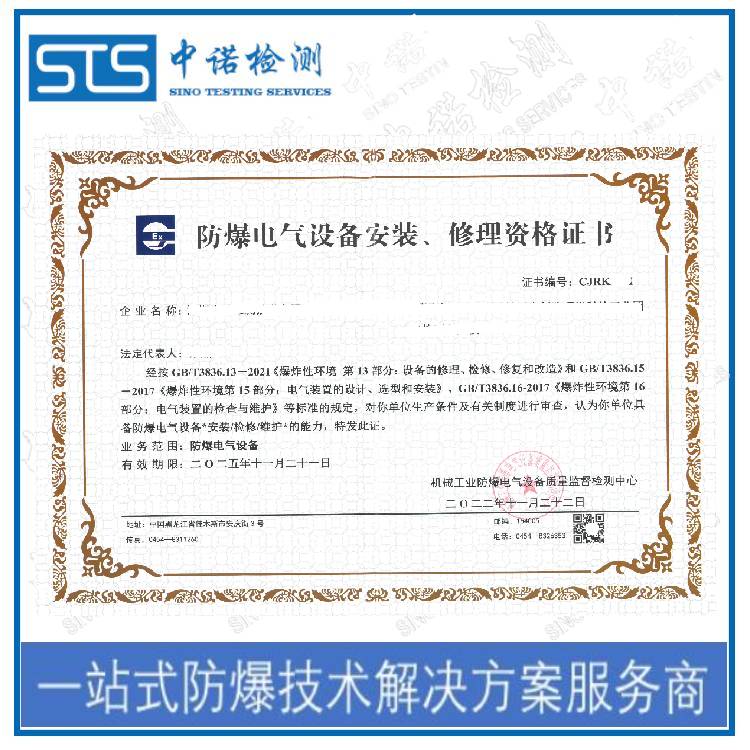






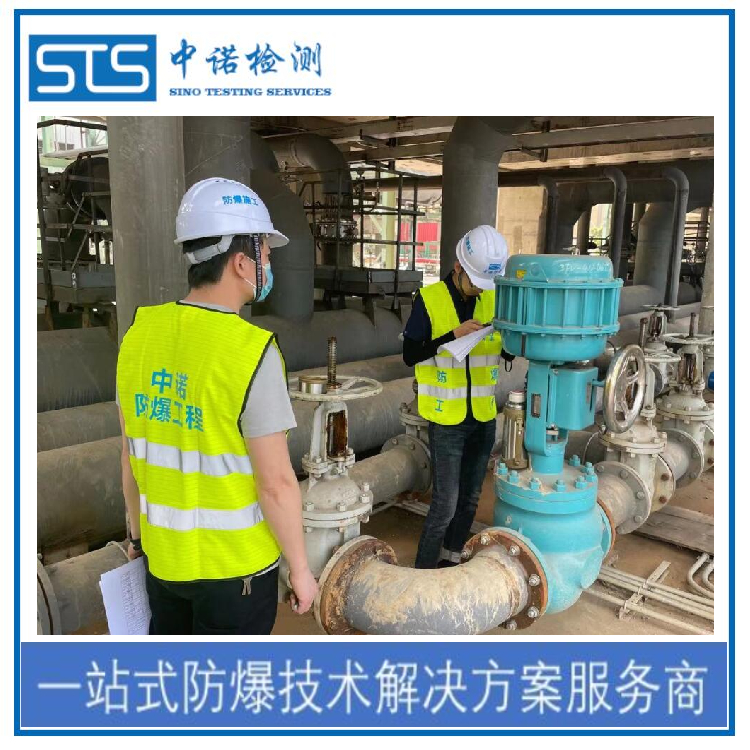
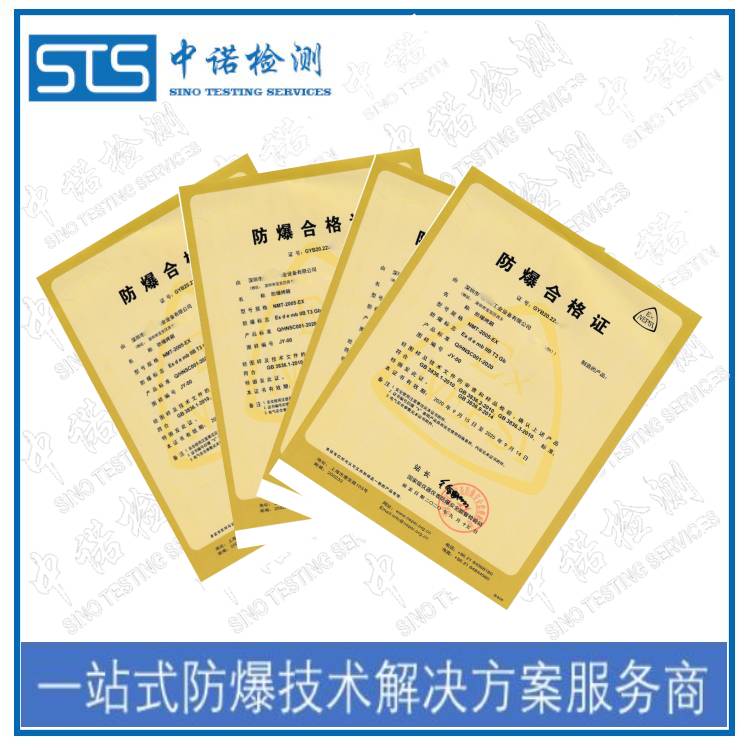
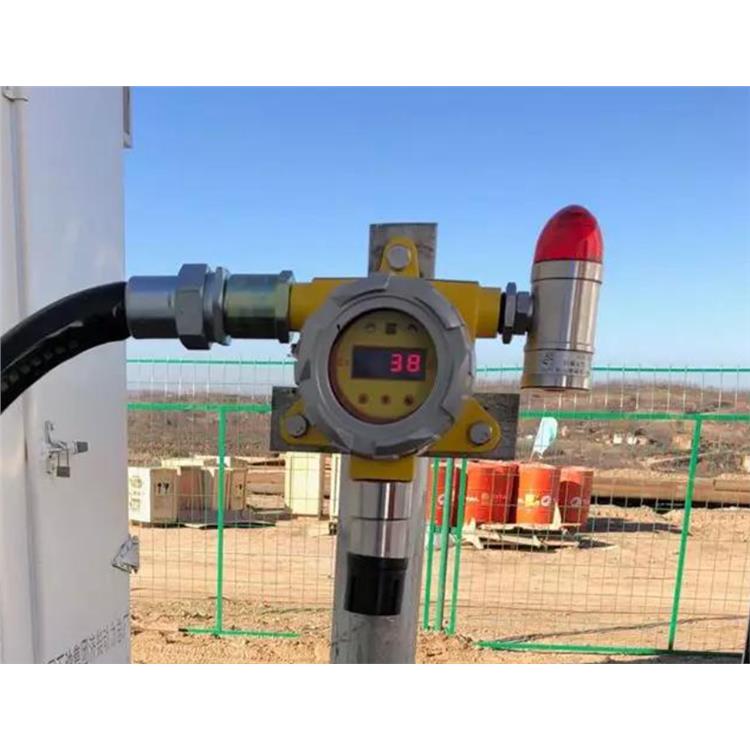
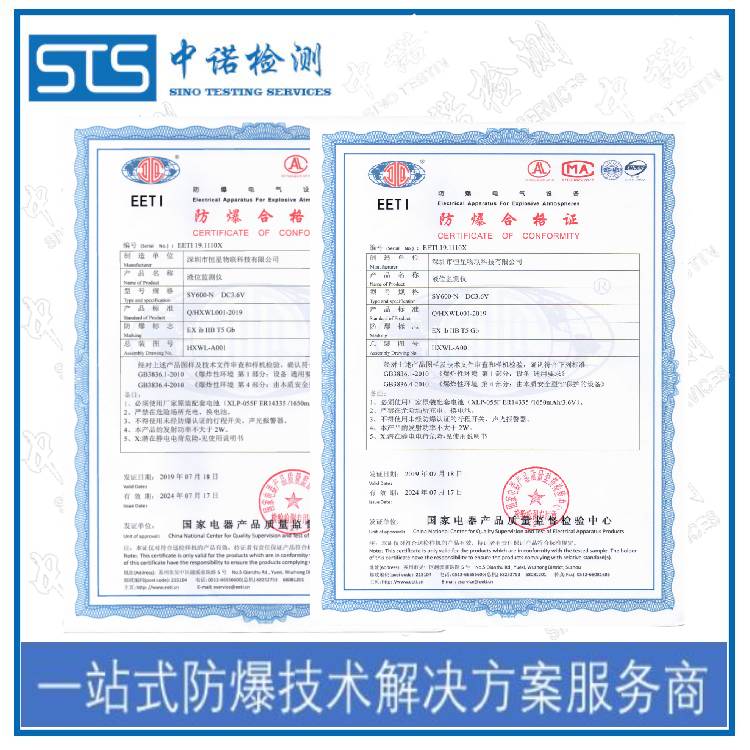
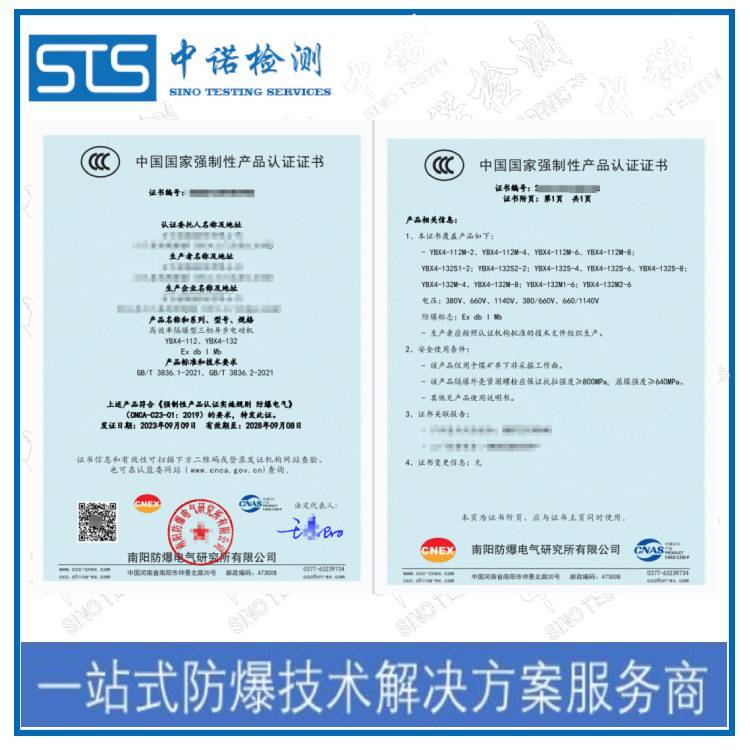

Shenzhen Zhongnuo Inspection & Technology Co., Ltd. offers on-site explosion-proof electrical inspection, explosion-proof project acceptance services, and consulting services. Additionally, we provide explosion-proof rectification and construction services for non-compliant items.
Regulations and laws regarding regular inspections of explosion-proof electrical equipment:
Throughout the entire lifecycle, from production, installation, use, inspection, maintenance, to market withdrawal, explosion-proof equipment used in hazardous explosive areas.
Regular inspections ensure robust protection of their operational condition and explosion-proof safety performance. Corresponding regulations are also established by relevant Chinese laws and regulations.
There is a clear specification in the standard AQ3009-2007 "Electrical Safety and Explosion-proof Regulations for Hazardous Areas":
Regular inspections should be entrusted to a safety production inspection agency with explosion-proof professional qualifications, with the interval generally not exceeding 3 years.
The company should promptly implement corrective measures based on the inspection results and file the inspection report and the rectification status with the安全生产监督管理 department.
The preface of AQ3009-2007 "Electrical Safety and Explosion-Proof Rules for Hazardous Areas" also explicitly states that Chapter 4, Chapter 5, Chapter 6, and Chapter 7 are mandatory and must be strictly enforced. Therefore, such safety regulations are part of the legal and regulatory framework and must be strictly enforced as mandatory!
ZhongNuo Inspection's on-site explosion-proof inspection service scope:
Explosive gas environments and hazardous areas with explosive or flammable dust in industries or fields such as oil, petrochemicals, coal, shipping, ports, marine engineering, gas engineering, pharmaceuticals, machinery, textiles, electricity, light industry, grain processing and storage, and wood processing must ensure the anti-explosion safety of these dangerous areas to safeguard the防爆safety of explosive environments and contribute to the economic development of our country and the national economy.
Examination and Acceptance Report for Explosion-Proof Electrical Construction - Applicant Institution:
It's widely known that after electrical work is completed in explosive hazard areas, a third-party organization must conduct a post-completion inspection. Only upon passing the inspection can the facility be put into use. Furthermore, in addition to the company's regular checks, a facility with explosion-proof inspection qualifications must conduct periodic inspections every three years.
What are the main items inspected during the completion acceptance here?
1. Check if the explosion-proof electrical equipment has a label, Ex mark, and clear identification of the type, class, and group of the explosion-proof equipment. Is the label marked with the explosion-proof certificate number issued by the inspection unit?
2. Verify that the type, class, group, environmental conditions, and special markings of explosion-proof electrical equipment comply with regulations.
3. Inspect the shell of explosion-proof electrical equipment for cracks or damage; check if the paint is intact, if the junction box cover is securely fastened, and if the fixing bolts and anti-loosening devices are in place.
4. Check for oil leakage and seepage in oil-filled electrical equipment, and ensure the oil level meets the requirements.
5. Ventilation and exhaust systems for explosion-proof electrical equipment with positive pressure should be unobstructed, connections should be correct, and the installation positions of the inlet and outlet should meet the requirements.
6. Are the extra inlets of explosion-proof electrical equipment properly sealed in accordance with regulations?
7. The installation of sealed or insulated devices in electrical circuits should comply with regulations.
8. The wiring project for intrinsic safety explosion-proof electrical equipment should comply with design requirements for its routing and elevation; the lines should be marked with a sky blue sign.
9. The grounding or neutral connection of explosion-proof electrical equipment, as well as static electricity grounding, should meet the design requirements and ensure a firm and reliable connection.
10. At the time of completion and acceptance, the relevant documents, materials, manufacturer's product user manuals, test records, certification of compliance, and installation drawings, among other technical files, should be submitted.
11. At the time of inspection, the following measurement records should also be submitted:
Record of single-side air gap measurement for explosion-proof motor stator and rotor with increased safety type.
(2) Adjustment records for pressure-relief devices protecting explosion-proof electrical equipment against wind and air pressure, high-temperature readings of the equipment's housing during trial operation, and test records of the grounding resistance for static-dissipative grounding.
12. Explosion-proof electrical equipment operation records
The shell temperature of explosion-proof electrical equipment, including internal temperatures of intrinsically safe and non-sparking explosion-proof electrical equipment, should not exceed the specified limit.
(2) After internal wiring in the junction box is securely fastened, the electrical clearances and creepage distances between live parts and between them and the metal housing shall comply with regulations.
(3) Exhaust outlets of explosion-proof electrical equipment with positive pressure should not emit sparks. When reducing wind pressure and air pressure, the low-pressure relay should operate reliably.
(4) The protective and interlock devices of explosion-proof electrical equipment should operate correctly and reliably.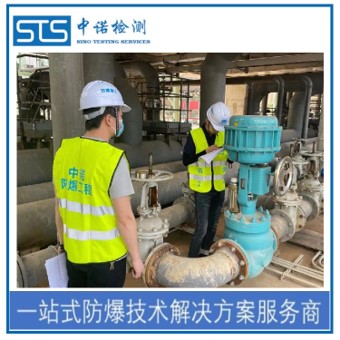
Shenzhen Zhongnuo Testing Technology Co., Ltd. summarizes the experience from previous explosion-proof electrical inspections and provides the following common non-compliance items in on-site explosion-proof inspections for reference.
Common phenomena include:
1. Corrosion and damage to explosion-proof enclosures. The protective enclosures of explosion-proof electrical equipment are damaged due to corrosion from surrounding media, leading to rust穿孔, structural deterioration, and loss of original strength, rendering the explosion-proof electrical equipment ineffective in preventing explosions.
2. Explosion-proof protective casing subjected to electrochemical corrosion and damage. The metallic casing becomes electrified in scenarios such as electrical leakage or potential drift, and when the electrified metal contacts the air medium, it behaves like a battery, causing corrosion of the metallic casing. This leads to the loss of the electrical appliance's explosion-proof capability.
3. Damage due to external forces and mechanical impacts. This includes damage to the protective casing caused by collisions with other equipment or mechanical substances on the work site, as well as damage to the casing due to excessive force during installation.
4. Shell damage due to over-temperature, caused by cold shrinkage and deformation of the protective shell material structure in cold regions due to climate adaptation issues, leading to shell cracking and subsequent damage to the protective shell.
5. Damage caused by improper installation. Damage, missing parts, and loss of protective functions resulting from the failure to follow installation requirements during the process of installing explosion-proof electrical equipment.
6. Inadequate sealing, including improper handling of sealing materials during installation and maintenance, loose mating of sealing surfaces, damaged sealing components, unsuitable or missing fasteners for sealing fixation, all contribute to the lack or weakness of explosion-proof performance.
7. Quality issues with explosion-proof electrical equipment, including substandard material for the explosion-proof housing and an unreasonable structural design that fails to meet required load-bearing capacity; internal wiring is prone to loosening, and an irrational internal circuit can easily cause sparking or overheating; unreasonable mechanical structure components, excessive equipment temperature, and internal water accumulation may lead to malfunctions in explosion-proof electrical equipment.
8. Due to actual changes in hazardous areas caused by production facility modifications, the electrical equipment in the area has not been promptly upgraded to explosion-proof equipment.
9. Incorrect selection of explosion-proof electrical equipment; intrinsic safety electrical equipment used with non-intrinsic safety voltage, and increased safety enclosures used for lighting, heating, and other circuitry equipment.
As an end-user of explosion-proof electrical equipment, it is necessary to conduct regular explosion-proof inspections even when explosion-proof electrical equipment is installed and used in hazardous explosive areas. This is both a requirement of various departments and a high level of attention to the safety of personnel and property.
On-site Explosion Proof Electrical Equipment Regular Inspection Consulting Service - Shenzhen ZhongNuo Inspection Technology Co., Ltd.
WeChat Official Account

Scan to follow Official Account