

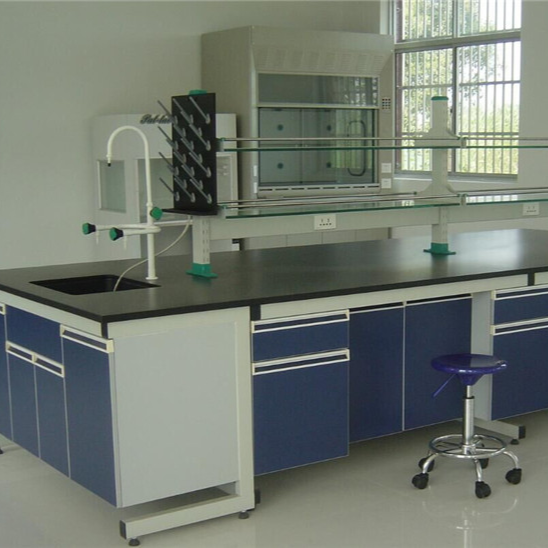
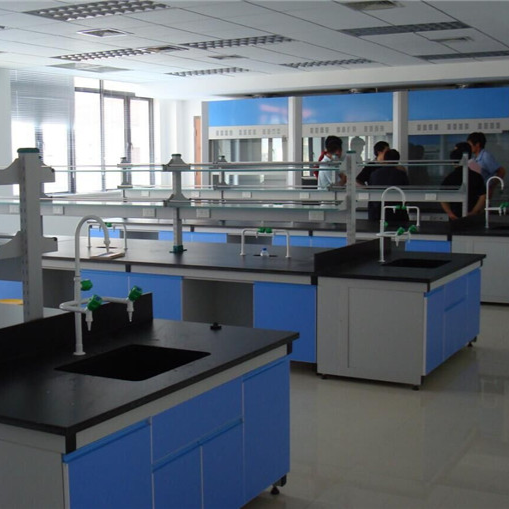









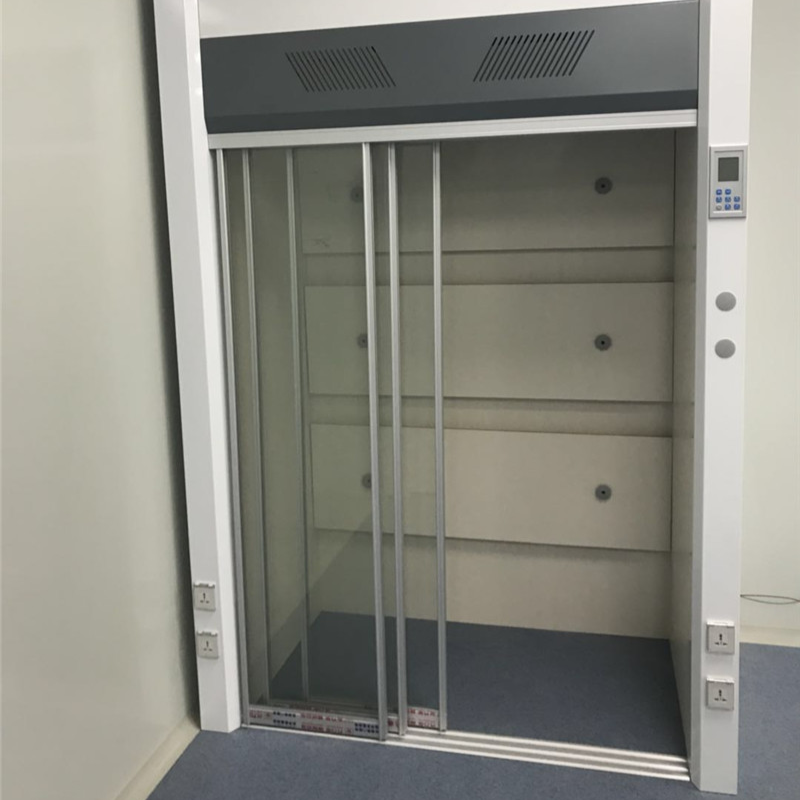

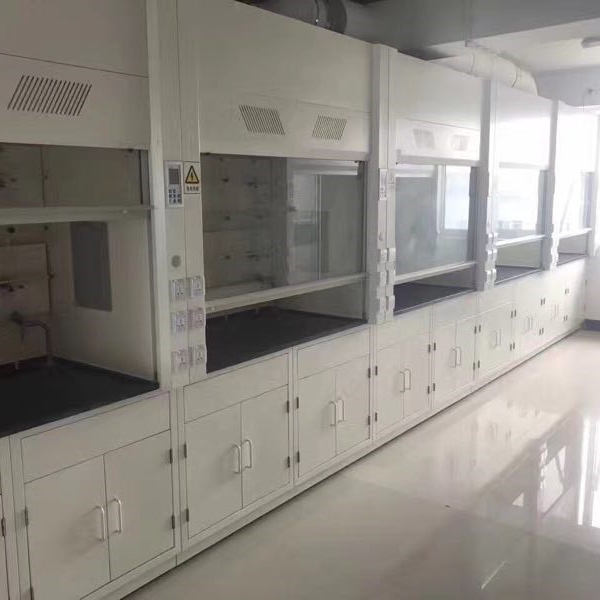
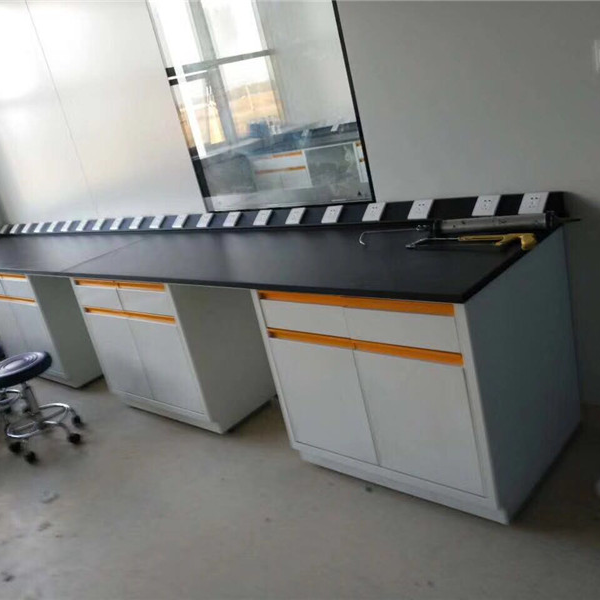
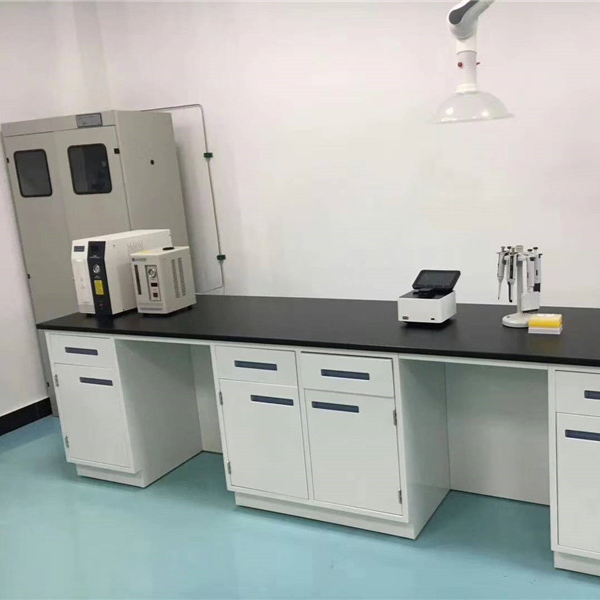
A steel-wood central cabinet is a laboratory furniture that combines steel and wood, featuring excellent stability, durability, flexible customization, wide applicability, and aesthetic comfort. It is widely used in various laboratory settings.
I. Structural Features
- Frame materialThe main frame is typically made of high-quality cold-rolled steel plate or square steel, with a surface treated through processes such as acid washing, phosphatizing, and electrostatic powder coating, offering excellent corrosion resistance and wear resistance.
- Counter MaterialStandard solid-core boards, epoxy resin boards, ceramic boards, or stainless steel boards are used, featuring resistance to acids and alkalis, corrosion, and high temperatures, catering to various experimental requirements.
- Cabinet MaterialThe wooden cabinets are often made of high-density boards or solid wood, with fire-resistant panels or wood veneer on the surface, offering both aesthetics and practicality. Some steel-wooden central desks also feature all-steel cabinets, enhancing their corrosion resistance.
- Structural DesignCombining steel and wood, the frame is made of steel while the cabinet is of wood, ensuring structural stability while also reducing costs. Modular design allows for flexible combination and adjustment according to the lab space and requirements.
II. Core Advantages
- Good stabilityThe steel-wood structure combines steel frames with wooden surfaces, offering robust load-bearing and compressive strength, and is resistant to deformation or damage over long-term use.
- High durabilityThe steel sections are corrosion-resistant, the wooden parts offer sound insulation, ensuring a long service life and reducing maintenance costs.
- Flexible CustomizationAdjustable desk height to accommodate different experimental projects, with increased or reduced storage space, featuring drawers, cabinets, adjustable platforms, etc., for enhanced storage and operational space.
- Broad applicabilitySuited for various environments such as chemical, physics, medical laboratories, and school classroom labs, catering to diverse experimental requirements.
- Aesthetically pleasing and comfortableCombining the robustness of steel with the warmth of wood, it makes the laboratory environment more cozy and comfortable, reduces the cold feel of steel, and enhances the overall visual appeal of the lab.