





















Shandong Zhongjie Special Equipment (formerly Heze Boiler Factory Co., Ltd.) holds an A-grade boiler manufacturing license, an A2-grade pressure vessel manufacturing license, an A2-grade pressure vessel design license, a B-grade boiler installation license, and GB2/GB3-grade pressure pipeline installation licenses, as well as a mechanical and electrical equipment installation contracting qualification. It is a member of the China Boiler and Water Treatment Association, the China Chemical Equipment Association, and the director unit of the Shandong Equipment Manufacturing Association. The company has also passed the ISO9001 Quality Management System, ISO14001 Environmental Management System, OHSAS18001 Occupational Health and Safety Management System certifications, and the U.S. ASME/U2 certification.
A gas thermal oil boiler is a device that uses gas as fuel to heat thermal oil through the heat energy produced by combustion. Here are some basic facts about gas thermal oil boilers:
Operating Principle: The working principle of a gas thermal oil boiler involves mixing gas with air, burning it to produce high-temperature flue gas. This flue gas is then passed through a flue and a heat exchanger to exchange heat with the thermal oil, transferring heat energy to the oil and raising its temperature. The thermal oil circulates within the boiler, transferring heat energy to the equipment or process that requires heating.
Thermal Oil: The thermal oil used in gas thermal oil boilers is typically an organic heat carrier, such as mineral oil or synthetic oil. It has high thermal conductivity and stability, allowing it to operate stably at high temperatures and transfer heat energy to the heated equipment.
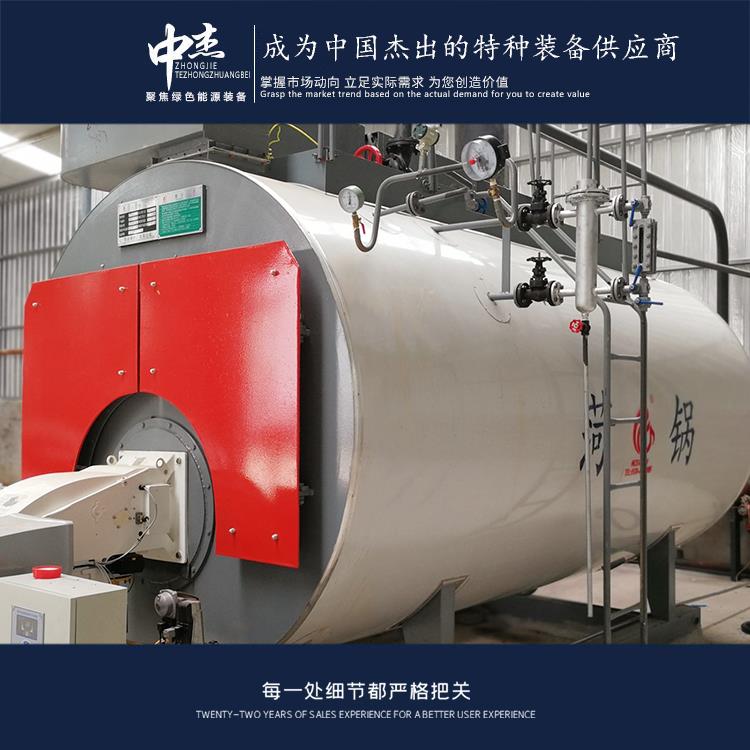
Gas Combustion System: Gas thermal oil boilers are equipped with a gas combustion system, including a burner, gas supply system, and control system. The burner is responsible for mixing gas with air and burning it to produce heat. The gas supply system provides the gas and adjusts the supply quantity as needed. The control system monitors and controls the combustion process to maintain a stable operating state.
Safety Protection Devices: Gas thermal oil boilers are equipped with various safety protection devices to ensure safe operation of the equipment. Common safety devices include overheat protection, overpressure protection, and water level protection. They monitor and control the boiler's operating status to prevent equipment damage and safety accidents.
Application Fields: Gas thermal oil boilers are widely used in industrial sectors such as chemicals, textiles, food processing, and papermaking. They can provide stable high temperatures for various applications.
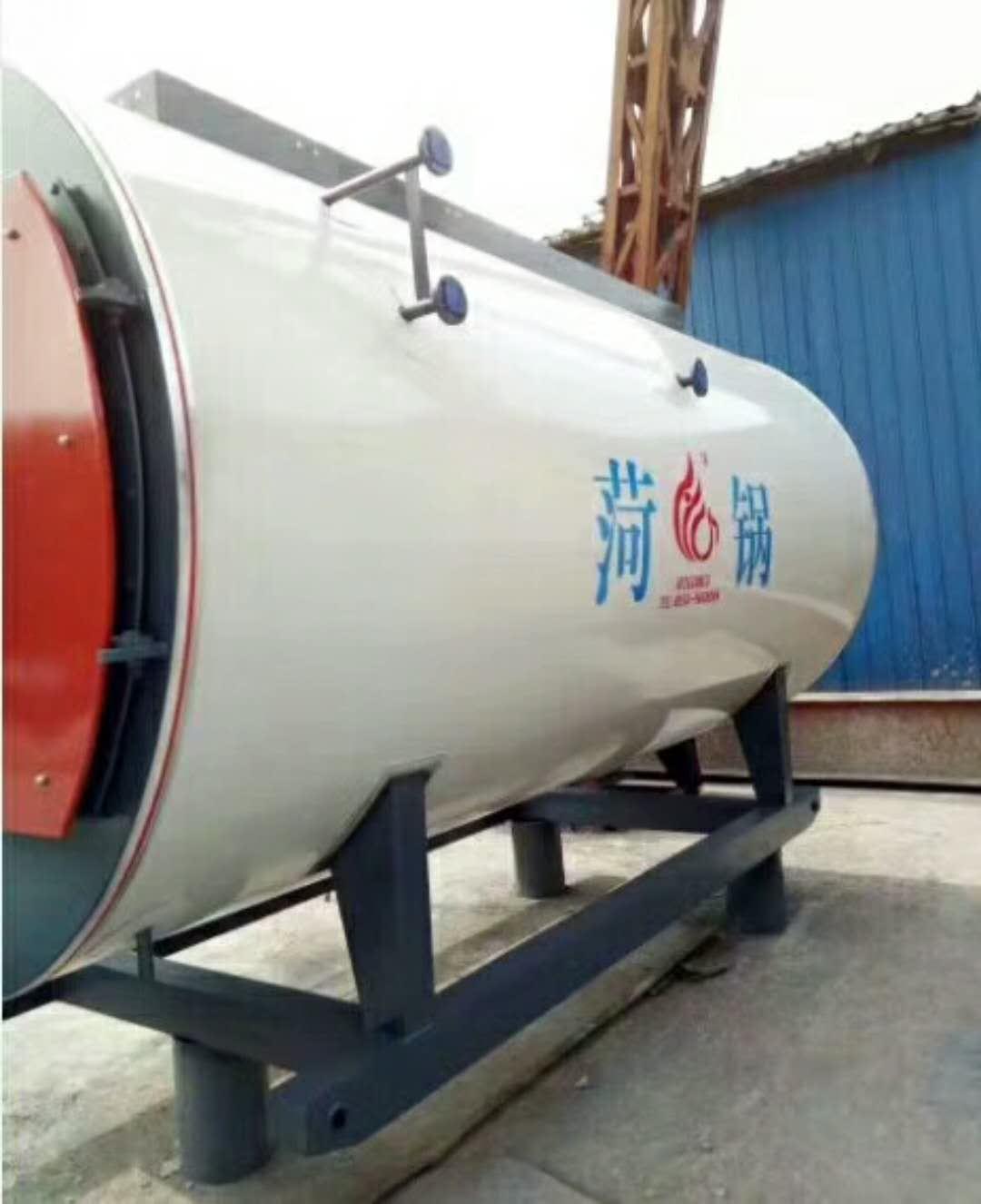
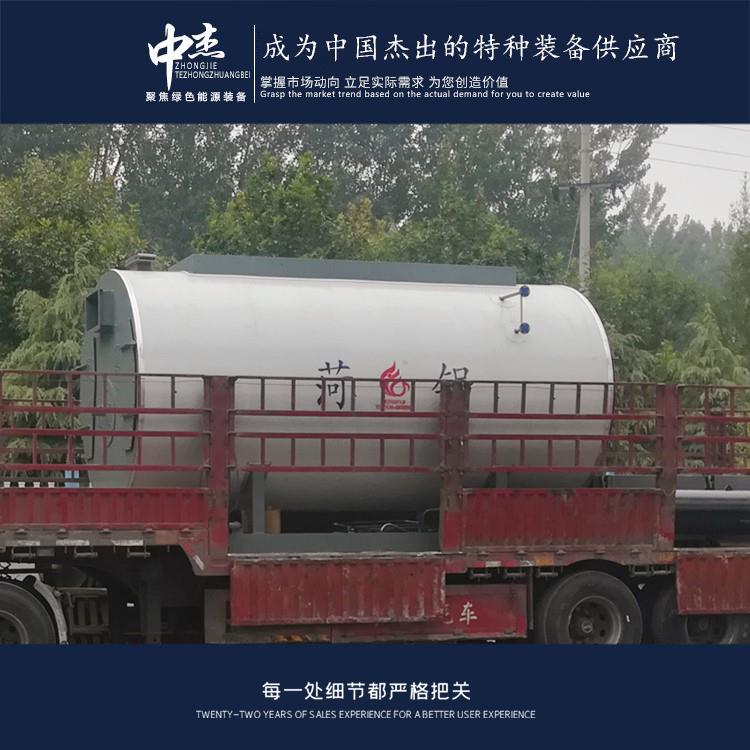
The Zhongjie Portable Heat Transfer Oil Furnace is a common industrial thermal energy equipment featuring the following product characteristics:
- High Thermal Efficiency: The Zhongjie Portable Heat Transfer Oil Furnace employs advanced combustion technology and heat exchanger design, effectively transferring the heat energy produced by fuel combustion to the heat transfer oil, achieving energy utilization and enhancing thermal efficiency.
- Stable and Reliable: The materials used and precise manufacturing process of the furnace ensure excellent high-temperature resistance and stable operational status, enabling long-term stable operation with high reliability.
- Temperature Control: The temperature control system of the Zhongjie Portable Heat Transfer Oil Furnace allows for real-time monitoring and adjustment of the heat transfer oil temperature, ensuring precise and stable temperature control during the process.
- Multiple Safety Protection: The furnace is equipped with multiple safety protection devices such as overheating protection, pressure protection, and burner fault protection, effectively preventing accidents. Additionally, the furnace utilizes clean combustion technology with minimal emissions, friendly to the environment.
- Easy Operation: The Zhongjie Portable Heat Transfer Oil Furnace features an intelligent control system with a user-friendly interface and easy parameter adjustments, simplifying operation and reducing difficulty and labor costs.
In summary, the Zhongjie Portable Heat Transfer Oil Furnace boasts stability and reliability, suitable for various industrial fields such as chemicals, textiles, and food processing, providing users with reliable thermal energy supply and process temperature control.
Excessive exhaust gas temperature in a thermal oil boiler may be due to several reasons: Incomplete combustion: If the fuel is not fully combusted during the boiler's combustion process, it leads to a high concentration of unburned fuel and harmful substances in the flue gas, increasing the exhaust gas temperature. Possible causes include insufficient fuel supply, improper adjustment of the burner, and burner wear. Excessive air: Excessive air can lower the combustion temperature, making the heat in the flue gas insufficient to reduce the flue gas temperature to a reasonable range. Possible causes include improper burner adjustment and excessive opening of the air door. Flue blockage: Accumulated ash,焦炭, or other impurities in the flue can obstruct flue gas flow, increasing the residence time of the flue gas and raising the exhaust gas temperature. Abnormal thermal oil flow: Abnormal thermal oil flow, either too high or too low, can lead to uneven heat transfer, raising the flue gas temperature. Boiler overheating: Improper temperature control in the thermal oil boiler can cause overheating, increasing the exhaust gas temperature. Design issues: Design problems such as a narrow flue or poor flue gas flow may also lead to excessive exhaust gas temperature. To address the issue of high exhaust gas temperature, a comprehensive inspection and analysis of the thermal oil boiler is required. Solutions may include adjusting burner parameters, cleaning the flue, checking thermal oil flow and temperature control, etc. In severe cases, boiler system modification or repair may be necessary. Additionally, regular maintenance and inspections are crucial preventive measures against excessive exhaust gas temperature.
The drainage devices for steam boilers mainly include the following types: Drain Valves: Drain valves are commonly installed on steam boilers to discharge waste water and impurities from within the boiler. Typically located at the bottom or side of the boiler, opening the drain valve allows the waste water to be expelled, maintaining cleanliness inside the boiler. Drain Pumps: For large steam boilers or situations requiring remote waste water discharge, drain pumps may be used. These pumps can extract waste water from the boiler and transport it through pipes to designated discharge points. Automatic Drainage Systems: Some steam boilers are equipped with automatic drainage systems. These systems can automatically discharge waste water from the boiler based on pre-set time intervals or water contamination levels, enhancing efficiency and accuracy in drainage. Waste Water Treatment Equipment: In certain cases, steam boilers may require waste water treatment equipment. These units process the discharged water to remove impurities and pollutants, meeting environmental protection standards. It is important to note that the selection and use of steam boiler drainage devices should be determined based on the specific type, scale, and operating environment of the boiler. When using drainage devices, it is crucial to follow relevant operational procedures and safety requirements to ensure a safe and effective drainage process.
Shandong Zhongjie Special Equipment, welcome customers to our factory for business discussions.
WeChat Official Account

Scan to follow Official Account



















