


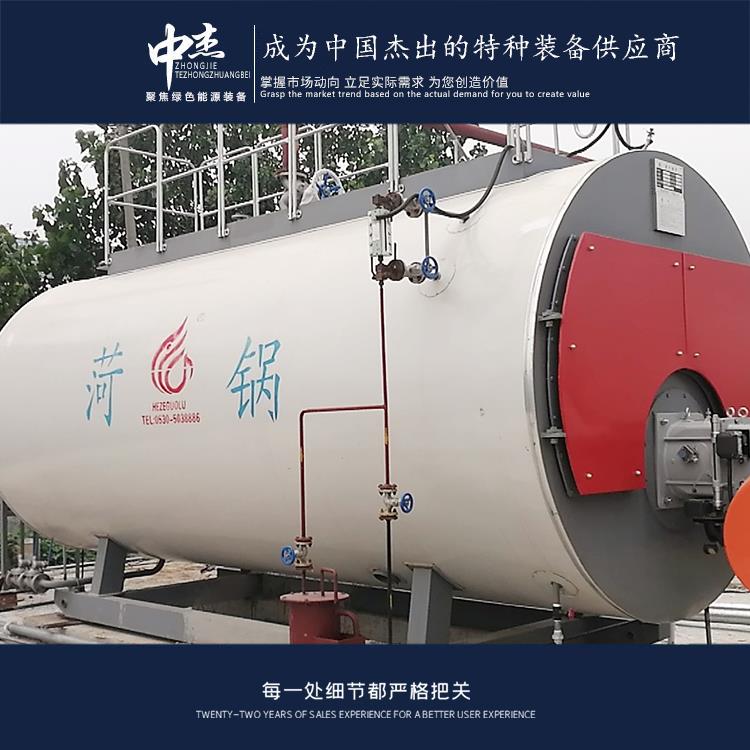

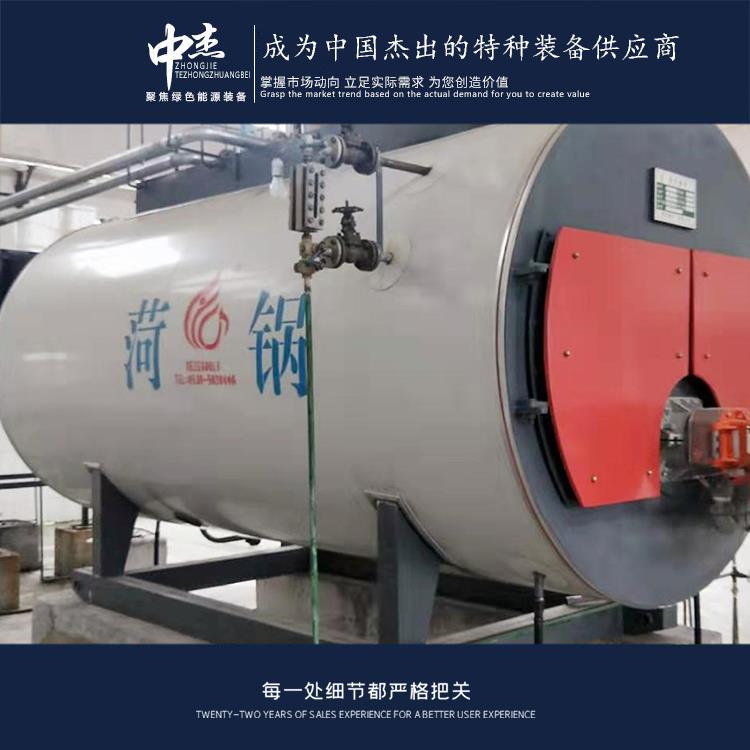
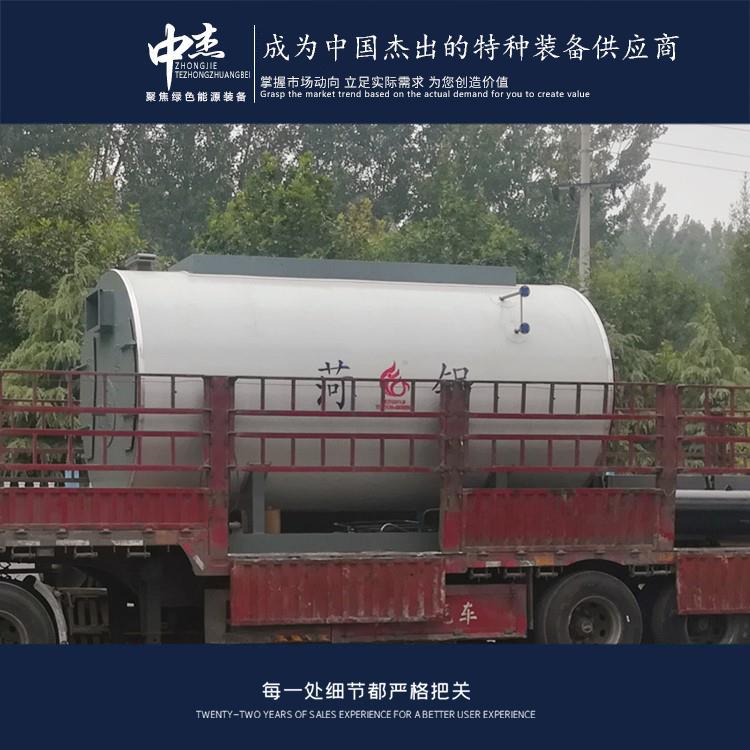


















Shandong Zhongjie Special Equipment (formerly Heze Boiler Factory Co., Ltd.) holds an A-grade boiler manufacturing license, an A2-grade pressure vessel manufacturing license, an A2-grade pressure vessel design license, a B-grade boiler installation license, and GB2/Class and GC2/Class pressure pipeline installation licenses, as well as a mechanical and electrical equipment installation contracting qualification. It is a member of the China Boiler and Water Treatment Association, the China Chemical Equipment Association, and the理事 member of the Shandong Equipment Manufacturing Association. The company has also passed certifications for the ISO9001 Quality Management System, ISO14001 Environmental Management System, OHSAS18001 Occupational Health and Safety Management System, and the American ASME/U2 certification.
Steam boiler equipment water treatment refers to the process of treating water in steam boilers to ensure normal operation and extend the lifespan of the equipment. Below are the basic principles of steam boiler equipment water treatment:
Water Quality Requirements: The water quality in steam boilers is of high standard, usually requiring the removal of impurities, dissolved oxygen, and hardness substances. Impurities and hardness substances can lead to scaling and corrosion on the boiler's inner walls, while dissolved oxygen can cause corrosion and the formation of bubbles.
Removal of Impurities: Common methods for removing water impurities include sedimentation, filtration, and ion exchange. Sedimentation involves adding chemicals to make impurities settle, filtration removes impurities through filtering media, and ion exchange uses resin to adsorb and exchange ions to remove impurities from the water.
Adjusting Hardness: The hardness substances in water are mainly calcium and magnesium salts, which can cause scaling on the boiler's inner walls. Hardness can be adjusted by adding chemicals or using water softening equipment to prevent scaling issues.
Removing Dissolved Oxygen: Dissolved oxygen can cause corrosion and the formation of bubbles. It can be removed by adding oxidizing agents or using deaeration equipment.
Controlling pH Level: The pH level of water in steam boilers affects equipment corrosion and scaling. It is usually necessary to control the water pH within an appropriate range using buffers or regulators.
Regular Testing and Maintenance: Regular water quality testing of the steam boiler equipment should be conducted, including measuring hardness, dissolved oxygen, and pH levels. Appropriate water treatment measures and maintenance should be taken based on the test results.
Steam boiler equipment water treatment is a crucial aspect for ensuring normal boiler operation and extending equipment lifespan. Rational water treatment measures can effectively prevent scaling, corrosion, and malfunctions on the boiler's inner walls.
When operating gas boilers, there are three important points to note:
1. Safe Operation: Gas boilers are thermal energy equipment and require safe operation. First, ensure that the operator has the relevant skills and knowledge, understanding the boiler's working principle and operation procedures. Second, strictly prohibit placing flammable materials around the boiler and maintain good ventilation. Additionally, regularly inspect and maintain the safety valve, pressure gauge, and other safety devices to ensure proper functioning.
2. Proper Gas Supply Adjustment: The combustion of gas boilers requires an appropriate amount of gas supply. During operation, adjust the gas supply according to actual needs to ensure stable combustion. At the same time, regularly check the sealing of the gas pipeline and valves to prevent gas leaks.
3. Regular Maintenance and Cleaning: Regular maintenance and cleaning of gas boilers are crucial for maintaining proper operation and extending their lifespan. Regularly inspect all parts of the boiler, clean the burner, flue, and heat exchanger of accumulated dust and dirt to ensure heat transfer efficiency and combustion effectiveness. Furthermore, regularly replace filters and clean water treatment equipment to ensure clean water quality, preventing scale and corrosion.
It should be noted that the above three points are just basic operation tips, and specific operational and maintenance requirements may vary depending on the model and specifications of different gas boilers. Therefore, before operating a gas boiler, it is advisable to refer to the boiler's operation manual or consult with experts to ensure correct and safe operation.
In addressing issues with gas boilers during the heating process, consider the following aspects:
- Check gas supply: Ensure a normal gas supply and inspect for any blockages or leaks in the gas pipelines. If any issues are found, promptly repair or replace the gas pipelines.
- Clean burners and combustion chambers: Regularly clean burners and combustion chambers to remove accumulated dust and dirt. This enhances combustion efficiency and reduces gas waste.
- Check and adjust the ratio of gas to air: Ensure the correct ratio of gas to air for optimal combustion. An incorrect ratio can lead to incomplete combustion or excessive exhaust emissions.
- Inspect and clean heat exchangers: Regularly inspect and clean heat exchangers to remove dust and dirt. This improves heat exchange efficiency and ensures effective heat transfer to the heating system.
- Check and maintain circulating pumps and valves: Ensure the proper operation of circulating pumps and valves to allow smooth flow of hot water or steam into the heating system.
- Inspect and maintain control systems: Ensure the control system of the gas boiler operates correctly, accurately controlling parameters such as temperature, pressure, and flow. If problems arise, promptly repair or replace the controller.
- Regular maintenance: Perform regular maintenance on gas boilers, including cleaning, lubricating, and tightening bolts. This extends the lifespan of the boiler and reduces the occurrence of malfunctions.
- Training and awareness enhancement: Provide employee training to strengthen awareness of operating and maintaining gas boilers. Enhanced knowledge and skills among employees aid in effective management and problem-solving during the heating process.
- If issues cannot be resolved or there are safety
The main benefits of installing expansion tanks in a thermal oil furnace include:
- Alleviating thermal expansion and contraction: During operation, the thermal oil furnace experiences thermal expansion and contraction due to temperature changes. The expansion tank provides space for the thermal oil to expand, mitigating the impact on equipment and pipelines from thermal expansion and contraction, and preventing stress concentration and equipment deformation caused by these effects.
- Protecting equipment and pipelines: The expansion tank absorbs the expansion and contraction of the thermal oil, reducing impact and vibration on equipment and pipelines. This helps extend the service life of equipment and pipelines, reducing the frequency of maintenance and replacements.
- Reducing leakage risks: The expansion tank provides a sealed space, minimizing the risk of thermal oil leakage. When the thermal oil expands, excess oil can be accommodated through the expansion tank, preventing leakage and environmental pollution.
- Facilitating maintenance and repairs: The presence of an expansion tank makes it easier to maintain and repair the thermal oil furnace system. When equipment or pipelines need to be repaired or replaced, the flow and shutdown of the thermal oil can be controlled through the expansion tank, reducing downtime and repair complexity.
- In summary, the expansion tank plays a role in alleviating thermal expansion and contraction, protecting equipment and pipelines, reducing leakage risks, and facilitating maintenance and repairs in the thermal oil furnace system. It is an important design element that contributes to the safety and reliability of the system.
Our company attaches great importance to technological innovation and R&D, boasting 1 municipal-level enterprise technology center in Heze City. We have established testing facilities for non-destructive testing, physical and chemical testing, welding testing, hydrostatic testing, etc., and are equipped with over 600 various instruments and equipment such as CNC machine tools, X-ray flaw detectors, digital ultrasonic flaw detectors, mechanical property testing machines, chemical analyzers, spectrometers, tensile testing machines, and plasma welding machines. The key products and technologies we have developed, such as temperature and pressure vessel welding, biomass boiler emission reduction, and waste heat utilization, have successively been selected for multiple Shandong Provincial Department of Industry and Information Technology scientific and technological innovation projects, key projects in Shandong Province, and Heze City innovation and excellence projects. We have accumulated a total of 27 authorized utility models, 16 authorized inventions, participated in drafting 2 standards, 2 industry standards, and registered 15 trademarks. The technical team of our company, in collaboration with Professor Yajiang Li from Shandong University, has developed deep cryogenic container processing technology using the international plasma arc + filler wire tungsten inert gas arc welding (PAW-GTAW) technology. After being appraised as a provincial-level scientific and technological achievement, our technology level has reached an international standard in the field of deep cryogenic container manufacturing.
Choose ZJET Customized Solutions, let's create brilliance together!
WeChat Official Account

Scan to follow Official Account



















