


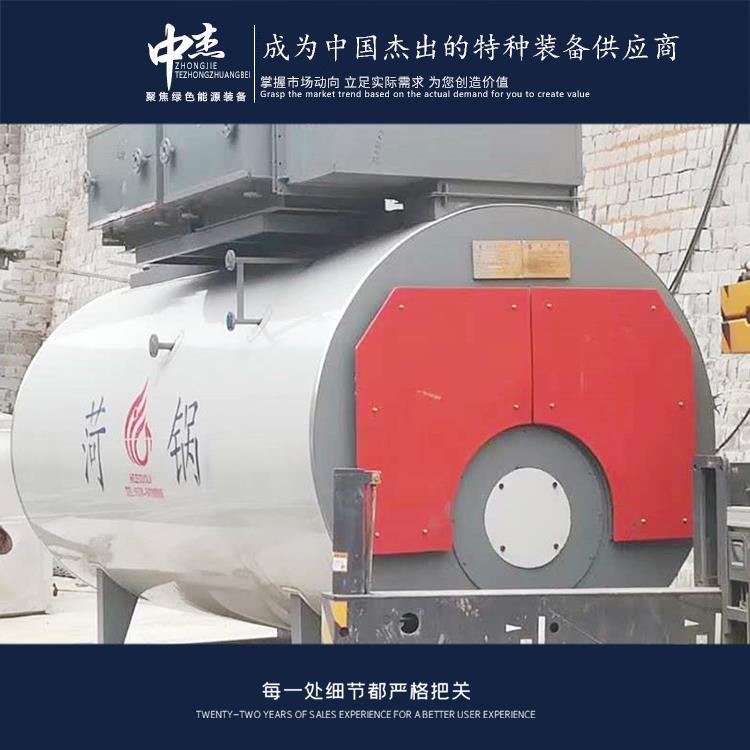

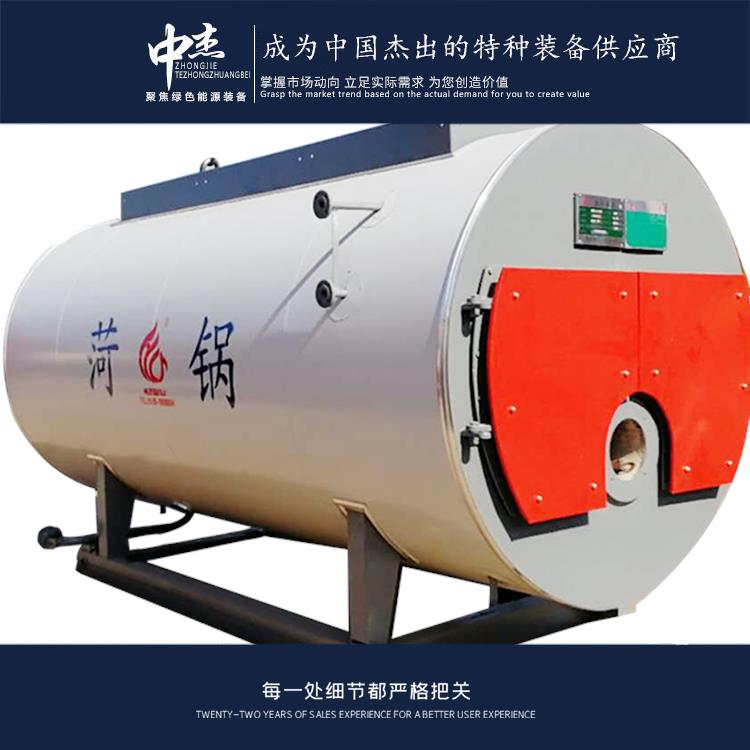
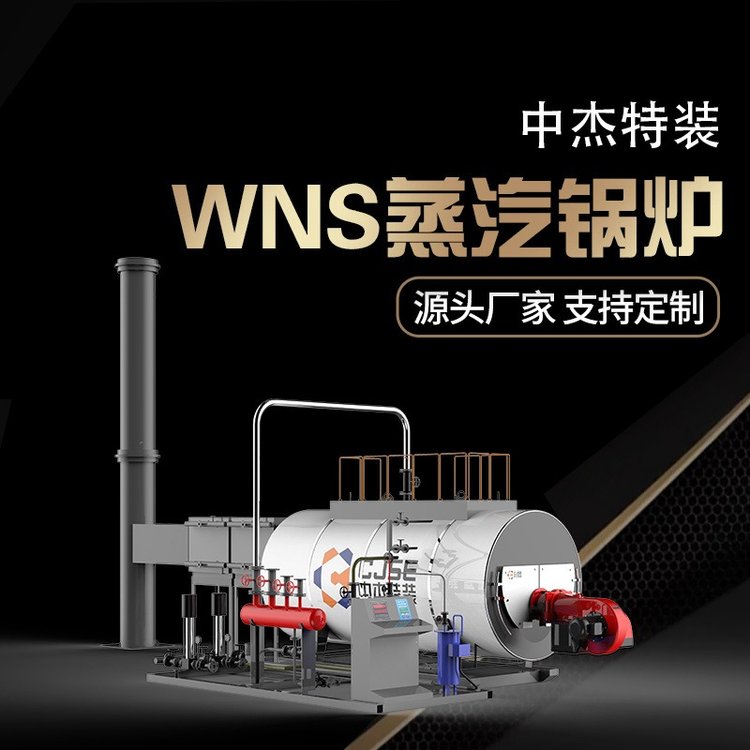


















Shandong Zhongjie Special Equipment's main products include: fuel (gas) boilers, organic heat carrier boilers, biomass boilers, waste heat recovery boilers, and other boiler products; vacuum insulation cryogenic pressure vessels such as LNG tanks, oxygen/nitrogen/argon tanks, and CO2 tanks; pressure vessel products such as denitrification engineering equipment, heat storage and energy storage equipment, and complete chemical equipment; central air conditioning and HVAC equipment such as ground (water) source heat pumps, air source units, water-cooled screw units, and air-cooled modular units. Planned products include large-scale energy centers, LNG transport vehicles, LNG tank containers, and other green energy equipment.
Excessive exhaust gas temperature in a heat transfer oil boiler may be caused by several factors: Incomplete combustion: If fuel is not fully combusted during the combustion process of a heat transfer oil boiler, it results in a large amount of unburned fuel and harmful substances in the flue gas, raising the exhaust gas temperature. Possible reasons include insufficient fuel supply, improper burner adjustment, and burner wear. Excessive air: Excess air can lower the combustion temperature, making the heat in the flue gas insufficient to reduce the gas temperature to a reasonable level. Possible causes of excessive air include improper burner adjustment and overly wide opening of the air gate. Flue blockage: Accumulation of ash,焦结物, or other impurities in the flue can obstruct flue gas flow, increasing the residence time and raising the exhaust gas temperature. Abnormal heat transfer oil flow: An abnormal flow of heat transfer oil, whether too high or too low, can cause uneven heat transfer, leading to an increase in flue gas temperature. Overheating: Improper temperature control in a heat transfer oil boiler can cause overheating, resulting in higher exhaust gas temperature. Design issues: Design problems, such as a small flue or poor flue gas flow, can also lead to high exhaust gas temperature. To resolve the issue of excessive exhaust gas temperature, a comprehensive inspection and analysis of the heat transfer oil boiler is required. Solutions may include adjusting burner parameters, cleaning the flue, checking heat transfer oil flow and temperature control. For severe issues, boiler system modifications or repairs may be necessary. Additionally, regular maintenance and inspections are important preventive measures against excessive exhaust gas temperature.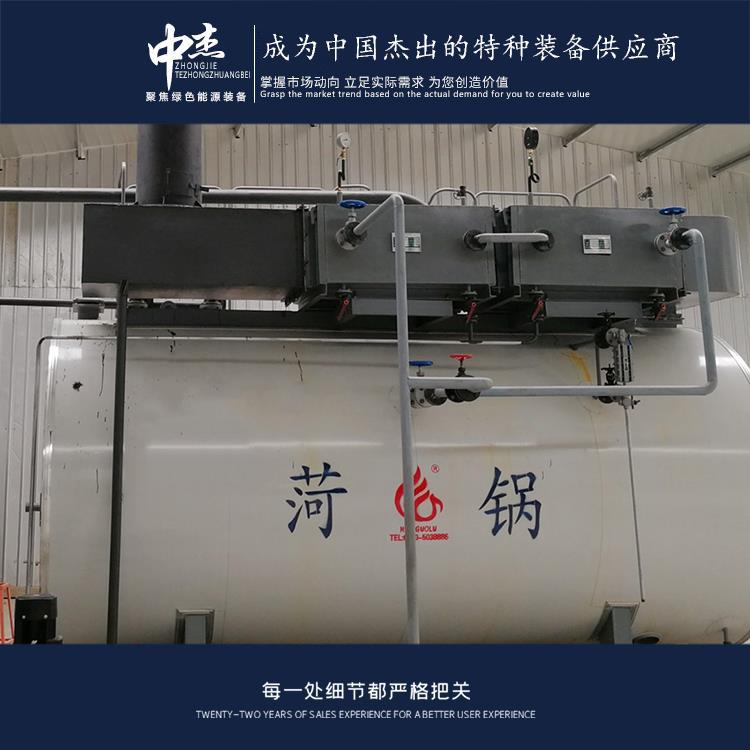
Potential causes of uneven heat distribution in steam boilers may include the following aspects:
- Uneven combustion: During the combustion process, if the mixture of fuel and air is uneven, or if the burner's design and adjustment are not reasonable, uneven combustion can occur. This results in some areas producing more heat while others produce less.
- Pipe blockage: The presence of blockages or scaling in the steam boiler's transport pipes can lead to uneven heat transfer. Blockages or scaling hinder steam flow, limiting heat transfer in certain areas while allowing it to be relatively better in others.
- Heat exchanger issues: If the heat exchangers in the steam boiler have scaling, corrosion, or blockages, they can cause uneven heat transfer. These issues affect the heat conduction efficiency of the heat exchangers, impacting heat transfer in certain areas.
- Water level problems: Inaccurate or unstable water level control in the steam boiler can lead to uneven steam generation. Both high and low water levels can affect steam production and distribution, causing uneven heat distribution.
- Boiler load changes: Changes in the boiler load can also lead to uneven heat distribution. When the load suddenly increases or decreases, the boiler may not adjust heat generation and distribution in time, resulting in uneven heat distribution.
To address the issue of uneven heat distribution in steam boilers, regular inspection and maintenance of the boiler equipment are necessary to ensure the normal operation of combustion and heat exchange processes. Additionally, it's important to adjust burners and control systems reasonably, maintain stable water levels, clean pipes and heat exchangers to improve...
In the burner of a thermal oil furnace, adjusting the air shutter during low flame conditions is crucial. Here are some common sense tips and注意事项: The function of the air shutter: The air shutter is a key component in the burner that controls the supply of combustion air. By adjusting the opening of the air shutter, the flow of combustion air can be controlled, thereby affecting the oxygen supply and combustion effect during the combustion process. Adjusting during low flame conditions: In low flame conditions, the burner needs to maintain stable combustion to ensure combustion efficiency and heat output. In this case, it is necessary to adjust the opening of the air shutter appropriately to maintain an adequate supply of combustion air. Typically, the opening of the air shutter is relatively small during low flame conditions to maintain an appropriate oxygen supply and avoid incomplete combustion or instability. The ratio of combustion air to fuel: In low flame conditions, it is necessary to ensure that the ratio of combustion air to fuel is appropriate. Excessive combustion air can lead to incomplete combustion and energy waste, while insufficient combustion air can lead to unstable combustion and the production of harmful gases. By adjusting the opening of the air shutter, the ratio of combustion air to fuel can be controlled to achieve a stable combustion effect. Tuning and optimization of the burner: During the installation and tuning of the burner of a thermal oil furnace, appropriate tuning and optimization are required. Through actual operation and monitoring, adjust the opening of the air shutter and other parameters to achieve the best combustion effect and energy efficiency performance. This requires root
The necessity of flow control in thermal oil heaters is primarily reflected in the following aspects: thermal energy transfer efficiency: The efficiency of thermal energy transfer in thermal oil heaters is closely related to the flow rate of the thermal oil. An appropriate flow rate of thermal oil ensures that thermal energy is fully transferred in the heat exchanger, improving the efficiency of energy utilization. An excessively low flow rate may lead to insufficient heat exchange and affect the effect of thermal energy transfer; an excessively high flow rate will increase energy consumption and operating costs. temperature control: The flow control of thermal oil heaters is also closely related to temperature control. By adjusting the flow rate of thermal oil, the temperature inside the furnace can be controlled, ensuring stable operation within the set working temperature range. An excessively low flow rate may cause the temperature to rise too high, while an excessively high flow rate may cause the temperature to drop too low, both of which can affect the normal operation of the equipment. system stability: An appropriate flow rate of thermal oil can enhance system stability. Through flow control, the supply and demand of thermal energy can be balanced, avoiding overheating or underheating, and maintaining stable system operation. Stable operation helps extend the service life of the equipment and reduce the frequency of failures and repairs. safety: The flow control of thermal oil heaters is also closely related to safety. Appropriate flow control can prevent excessive accumulation of thermal oil in the system, reducing the risk of leakage and explosion. At the same time, flow control can ensure that the system pressure remains within a safe range, avoiding overpressure and other safety issues. In summary, flow control in thermal oil heaters is necessary for improving thermal energy transfer efficiency, temperature control, system stability, and safety. Through reasonable flow control, the operation of the thermal oil heater can be optimized, energy utilization efficiency can be increased, operating costs can be reduced, and the safety and stable operation of the equipment can be ensured.
Our company places great emphasis on technological innovation and R&D design. We possess one municipal-level enterprise technology center in Heze City, with facilities for non-destructive testing, physical and chemical testing, welding testing, hydrostatic testing, and more. We are equipped with over 600 types of instruments and equipment, including CNC machine tools, X-ray flaw detectors, digital ultrasonic flaw detectors, mechanical property testing machines, chemical analyzers, spectrometers, tensile testing machines, plasma welding machines, and others. Our key products, such as welding of temperature and pressure vessels, biomass boiler emissions reduction, and waste heat utilization, have successively been shortlisted for multiple Shandong Provincial Department of Industry and Information Technology science and technology innovation projects, key projects in Shandong Province, and Heze City innovation and excellence projects. We have cumulatively obtained 27 authorized utility model patents, 16 authorized invention patents, participated in drafting 2 standards, 2 industry standards, and registered 15 trademarks. The technical team of our company, in collaboration with Professor Yajiang Li of Shandong University, has developed deep cryogenic container processing technology using the international plasma arc + wire-filled tungsten inert gas arc welding (PAW-GTAW) technology. The provincial-level scientific and technological achievement appraisal has determined that the technology level in the deep cryogenic container manufacturing field has reached an international standard.
Choose ZJET Customization, let's create brilliance together!
WeChat Official Account

Scan to follow Official Account



















