


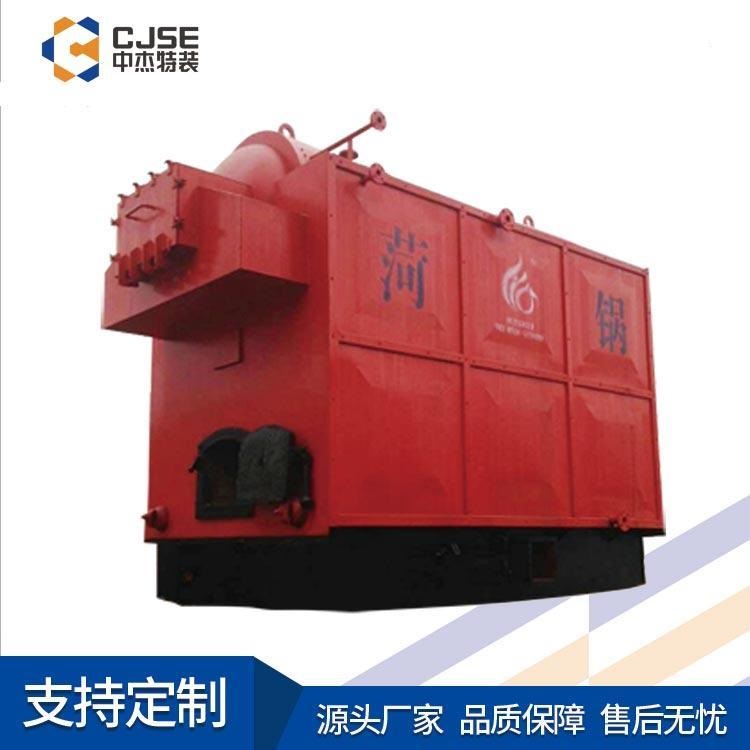

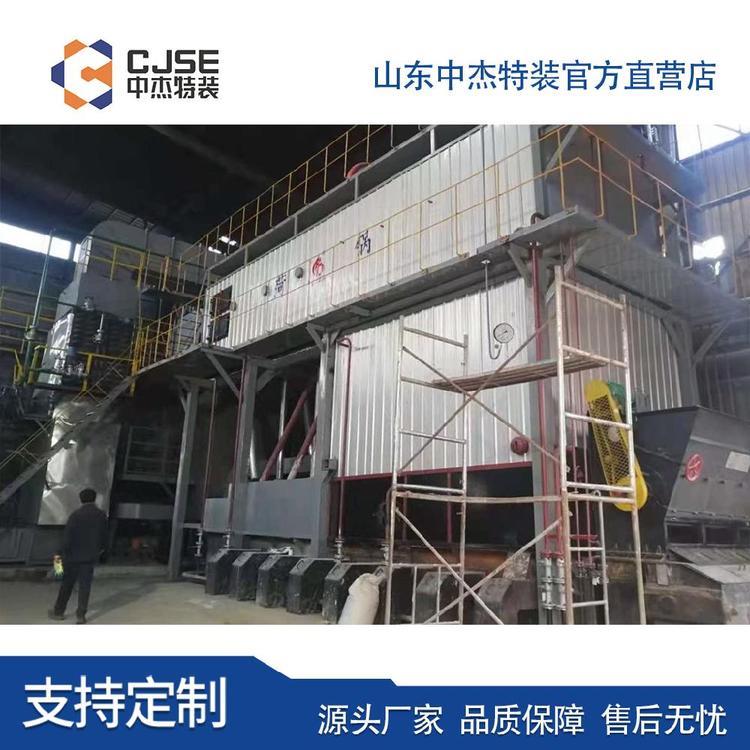
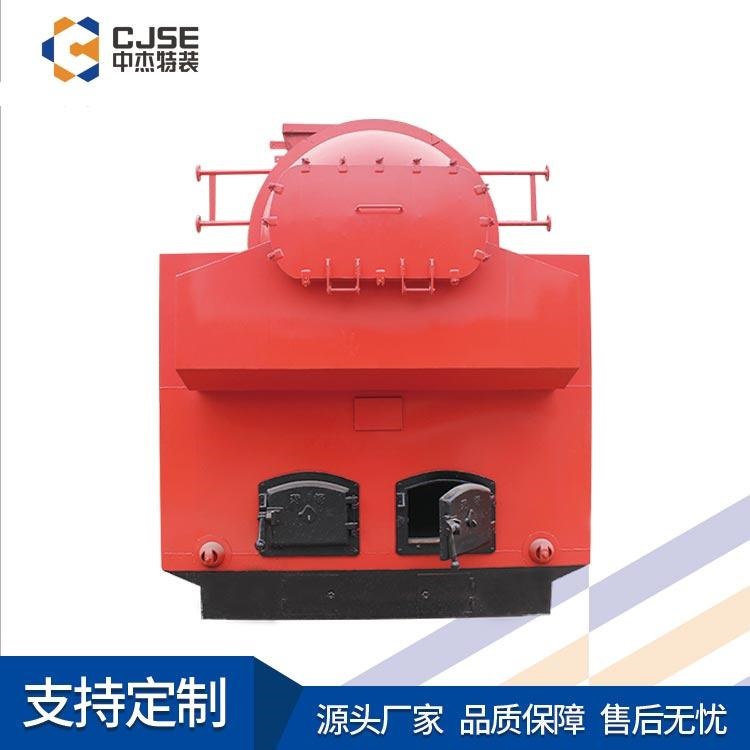


















Shandong Zhongjie Special Equipment's main products include: fuel (gas) boilers, organic heat carrier boilers, biomass boilers, waste heat boilers, and other boiler products; vacuum insulation cryogenic pressure vessels such as LNG tanks, oxygen/nitrogen/argon tanks, and CO2 tanks; pressure vessel products such as denitrification engineering equipment, heat storage and energy storage equipment, and complete chemical equipment; central air conditioning and ventilation equipment such as ground (water) source heat pumps, air source units, water-cooled screw units, and air-cooled modular units. Planned products include large-scale energy centers, LNG transport vehicles, LNG tank containers, and other green energy equipment.
Advantages of biomass fuel:
Renewable Energy: Biomass fuel is a renewable energy source with a wide range of sources, including wood, straw, and waste, etc. Compared to fossil fuels, the supply of biomass fuel is more sustainable.
Eco-friendly & Low Carbon: The combustion of biomass fuel releases approximately the same amount of carbon dioxide as it absorbs during its growth process, resulting in almost no net increase in CO2 emissions, which has a positive effect on mitigating climate change.
Reduce Waste Disposal: Biomass fuel can utilize agricultural straw, wood waste, and other waste materials, thereby reducing waste disposal and emission issues.
High energy utilization efficiency: Biomass fuel has a high calorific value and high combustion efficiency, which can be effectively converted into thermal or electrical energy, providing a reliable energy supply.
The use of biomass boilers:
Heating Systems: Biomass boilers can be utilized in heating systems such as central heating, warm water, and steam supply, widely applied in residential areas, industrial factories, and commercial buildings.
Industrial Production: Biomass boilers can provide thermal energy for industrial production, such as in the pulp and paper, food processing, and chemical industries, meeting the thermal energy needs throughout the production process.
Power Generation System: Biomass boilers can be combined with steam turbine generator sets to convert the thermal energy from combustion into electrical power for power supply.
Hot Water Supply: Biomass boilers can be used for hot water supply, such as for swimming pools, hot springs, hotels, and other venues.
Agricultural Utilization: Biomass boilers can utilize agricultural waste like crop straw to address energy issues in rural areas, providing the required thermal energy for agricultural production.
The use of biomass boilers is environmentally friendly, sustainable, and efficient, enabling effective utilization of biomass resources, reducing dependence on fossil fuels, lowering carbon emissions, and promoting sustainable development.
A fully automatic biomass boiler refers to a biomass boiler equipped with a full automatic control system. Here are some points to note:
Regular Maintenance: Although the fully automatic biomass boiler is equipped with an automatic control system, regular maintenance is still necessary. This includes cleaning the combustion chamber, heat exchanger, flue, etc., inspecting and replacing worn parts, to ensure the normal operation of the boiler.
Water Treatment: The quality of water in biomass boilers is crucial for their normal operation. Regularly inspect and treat water quality, including hardness, alkalinity, and impurities in the water. Implement corresponding water treatment measures based on water conditions to prevent scale and corrosion, and protect the boiler's heat exchangers and pipes.
Fuel Quality Control: The quality of fuel for biomass boilers is crucial for combustion efficiency and the stable operation of the boiler. Selecting the appropriate amount of biomass fuel and implementing proper quality control measures, including moisture content and particle size of the fuel, ensures that the fuel meets the boiler's requirements and avoids issues such as incomplete combustion and blockages.
Regular Cleaning of the Combustion System: The combustion system of fully automatic biomass boilers requires regular cleaning, including the combustion chamber, burners, and burner nozzles. Accumulated soot, sediments, and dirt should be removed to maintain the smooth operation of the combustion system, preventing issues such as incomplete combustion and unstable flames.
Regular inspections of the control system: The control system of a fully automatic biomass boiler requires regular checks and tests to ensure proper operation. This includes verifying the accuracy of sensors and the stability of controllers. Promptly identify and resolve issues with the control system to ensure stable boiler operation.
Maintain records and monitoring: Document operating parameters and fault conditions of all active biomass boilers, and conduct monitoring and analysis. Identify and resolve issues promptly to prevent faults from occurring or escalating.
The above are some precautions when using fully automatic biomass boilers. Through reasonable maintenance, quality control, and operation, the stable operation and performance of the boiler can be ensured.
To adapt biomass boilers to the market, consider the following aspects:
Technological Innovation: Continuously innovate in technology to enhance the combustion efficiency, heat recovery efficiency, and environmental performance of biomass boilers. For instance, the adopted combustion system, flue gas purification technology, and automatic control system improve the energy efficiency and operational convenience of the boiler.
Diverse Product Range: Develop a variety of biomass boiler products to meet market demands, catering to different user needs. Consider biomass boilers in various sizes, fuel adaptability, and application scenarios to offer a wider selection.
Reduced: Through technological improvements and production optimization, the manufacturing cost of biomass boilers is reduced, enhancing their competitiveness. Simultaneously, optimizing the fuel supply chain and transportation methods cuts fuel costs and boosts market competitiveness.
Establish a comprehensive after-sales service system: Provide timely after-sales support, including installation and debugging, maintenance and care, and fault rectification, to enhance users' trust and satisfaction in biomass boilers.
Enhance market promotion and publicity: Strengthen the promotion and publicity of biomass boilers through advertising, exhibitions, technical training, and other means, to enhance users' awareness and understanding of biomass boilers.
Policy Support: Actively seek government policy support and incentives to promote the popularization and application of biomass boilers, enhancing market demand.
In summary, through measures such as technological innovation, product diversification, cost reduction, enhanced after-sales service, market promotion, and policy support, biomass boilers can be adapted to the market, meet user demands, and promote the sustainable development of biomass energy.
When abnormal conditions occur in the operation of the biomass boiler, the following measures can be taken:
Inspect Fuel Supply: Examine the biomass supply system to ensure normal fuel supply. Check fuel storage containers, conveyance systems, and feed devices to eliminate issues of insufficient fuel supply or blockages.
Inspect the combustion system: Check the combustion system, including the ignition device, burner, and combustion chamber. Ensure the burner operates normally and the combustion in the combustion chamber is stable. Clean the burner and combustion chamber, removing carbon deposits and debris.
Inspect smoke emissions: Examine the smoke emissions system, including chimneys and smoke purification equipment. Ensure unobstructed smoke emissions and proper operation of the purification equipment. Clean the chimneys and smoke purification equipment, remove blockages and dust accumulation.
Inspect Water Circulation System: Check the water circulation system, including pumps, tanks, pipes, and valves. Ensure normal water circulation with stable water pressure and level. Clean the pumps and pipes to exclude blockages and leaks.
Inspect Control Systems: Verify the control systems, including temperature, pressure, and flow control. Ensure that control parameters are set correctly and that sensors and actuators are functioning properly. Adjust control parameters to ensure stable boiler operation.
Inspect Safety Devices: Check the safety devices, including pressure gauges, temperature gauges, safety valves, and alarms. Ensure that the safety equipment is sensitive and reliable, and promptly issues alarms and initiates protective measures.
Seek assistance: If the above solutions do not resolve the issue, it is important to promptly seek help from a boiler maintenance and repair expert. They can conduct a more thorough fault diagnosis and repair, ensuring the normal operation of the biomass boiler.
When dealing with abnormal operation of biomass boilers, safety is paramount. Always adhere to relevant operational procedures and safety protocols. Promptly identify issues and take appropriate actions.
Our company attaches great importance to technological innovation and research and development. We have one municipal enterprise technology center in Heze City, with testing facilities for non-destructive testing, physical and chemical tests, welding tests, hydrostatic tests, etc. We are equipped with over 600 various instruments and equipment, including CNC machine tools, X-ray flaw detectors, digital ultrasonic flaw detectors, mechanical property test machines, chemical analyzers, spectrometers, tensile testing machines, plasma welding machines, and more. Our key products and technologies, such as thermal pressure vessel welding, biomass boiler emission reduction, and waste heat utilization, have been selected for multiple Shandong Provincial Department of Industry and Information Technology science and technology projects, Shandong Provincial key projects, and Heze City innovation and excellence projects. We have累计 obtained 27 authorized utility models, 16 authorized inventions, participated in drafting 2 standards, 2 industry standards, and registered 15 trademarks. Our technical team, in collaboration with Professor Li Yajiang of Shandong University, has developed deep cryogenic container processing technology using the international plasma arc + filler wire argon arc combination welding (PAW-GTAW) technology. After the provincial scientific and technological achievement evaluation, the technology level has reached an international standard in the field of deep cryogenic container manufacturing. Choose Zhongjie Special Equipment, and let's create brilliance together!
WeChat Official Account

Scan to follow Official Account



















