


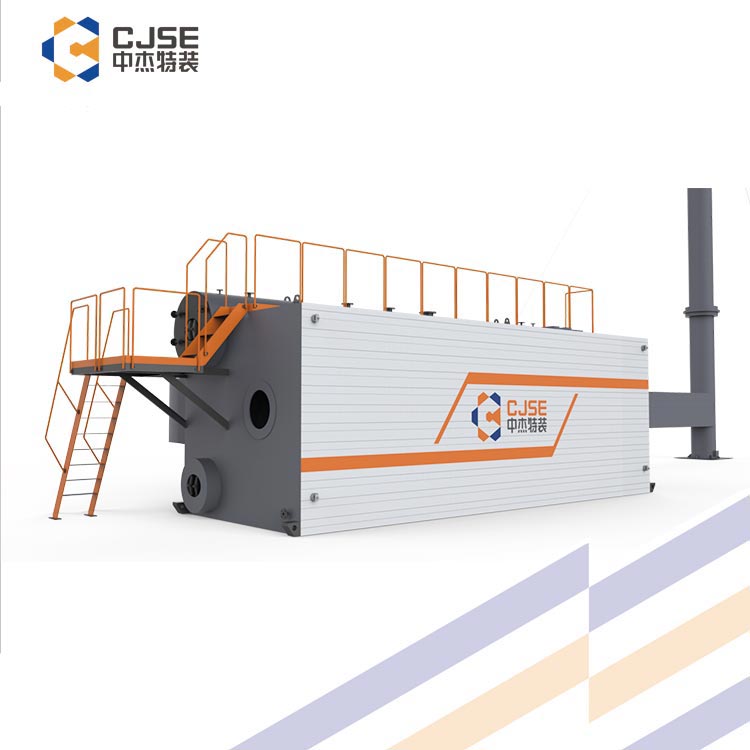

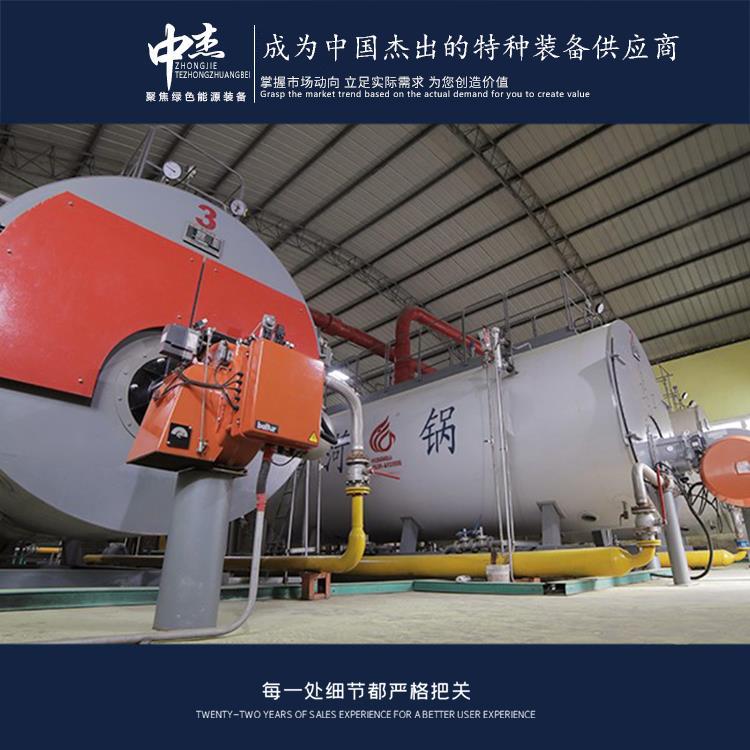
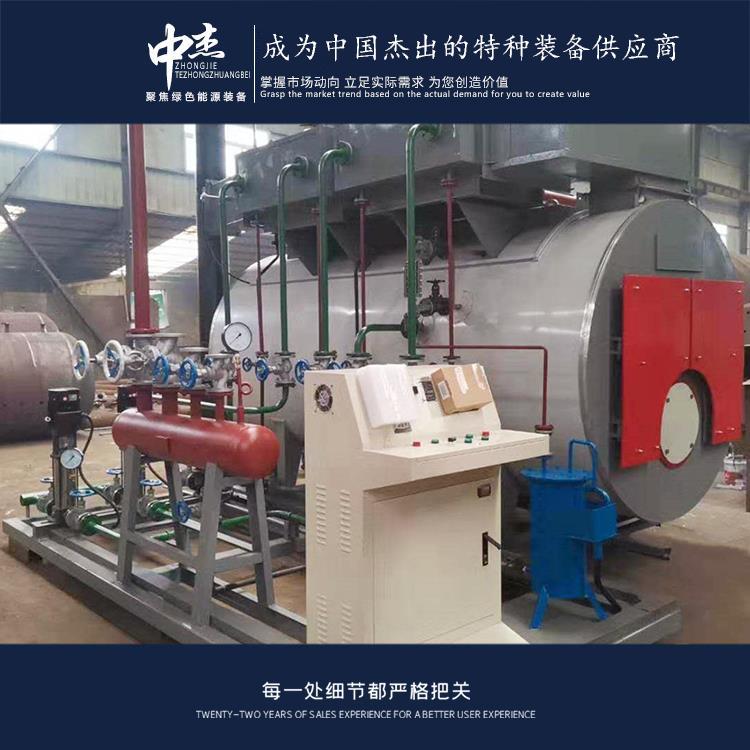


















Shandong Zhongjie Special Equipment (formerly Heze Boiler Factory Co., Ltd.) was established in 2001, located at No. 2218 Jinnan Road, Development Zone, Heze City, with a registered capital of 50 million yuan and total assets of 500 million yuan. The company has 7 business centers: boilers, deep-freeze containers, pressure vessels, central air conditioning, engineering installation, international trade, and Internet of Things. It has three factory sites on Jinnan Road, East Changjiang Road, and Bohai Road, covering a total of 200,000 square meters, with the main workshop spanning 83,000 square meters. It currently employs 710 people, including 247 engineers and technicians, and 82 intermediate-level technicians. In December 2016, it was recognized as a "High-tech Enterprise" by the Science and Technology Department. In June 2021, it was identified as a "Specialized and New Enterprise in Shandong Province" by the Ministry of Industry and Information Technology. In June 2022, it was recognized as a "Gazelle Enterprise in Shandong Province" and in August 2022, it was identified as a "Specialized and New Small Giant Enterprise" by the Ministry of Industry and Information Technology.
WNS Low-Nitrogen Condensing Hot Water Boilers offer the following advantages:
- Low Nitrogen Emissions: Utilizing low-nitrogen combustion technology, these boilers significantly reduce NOx emissions through optimized combustion processes and burner design. This aids in reducing environmental pollution.
- High Thermal Efficiency: With condensing technology, these boilers enhance energy utilization by recovering heat from flue gases, typically achieving thermal efficiencies over 90%, surpassing traditional hot water boilers. This contributes to energy savings and lower operating costs.
- Safety and Reliability: Equipped with advanced control systems and safety devices, these boilers offer excellent safety performance. They come with multiple safety features such as overheat protection, overpressure protection, and water level protection, which automatically monitor and control the boiler's operation to ensure safe operation.
- Flexibility: Suitable for various applications including industrial, commercial, and residential settings, these boilers can accommodate different thermal load requirements, demonstrating strong flexibility. They can also be integrated with other systems like solar hot water systems and ground-source heat pump systems to further improve energy efficiency.
- Easy Operation and Maintenance: The operation and maintenance of WNS Low-Nitrogen Condensing Hot Water Boilers are straightforward.
The main benefits of installing expansion tanks in a thermal oil furnace are as follows:
- Alleviate thermal expansion and contraction: During operation, the thermal oil furnace experiences thermal expansion and contraction due to temperature changes. The expansion tank provides space for the thermal oil to expand, mitigating the impact of thermal expansion and contraction on equipment and pipelines, and preventing stress concentration and equipment deformation caused by it.
- Protect equipment and pipelines: The expansion tank absorbs the expansion and contraction of the thermal oil, reducing impact and vibration on equipment and pipelines. This helps extend the service life of equipment and pipelines, and decrease the frequency of maintenance and replacement.
- Reduce leakage risk: The expansion tank provides a sealed space, minimizing the risk of thermal oil leakage. When the thermal oil expands, excess oil can be accommodated through the expansion tank, preventing leakage and environmental pollution.
- Facilitate maintenance and repair: The presence of an expansion tank makes it easier to maintain and repair the thermal oil furnace system. When equipment or pipelines need to be repaired or replaced, the flow and shutdown of the thermal oil can be controlled through the expansion tank, reducing downtime and the difficulty of maintenance.
- In summary, the expansion tank plays a role in alleviating thermal expansion and contraction, protecting equipment and pipelines, reducing leakage risk, and facilitating maintenance and repair in the thermal oil furnace system. It is an important design element that contributes to the safety and reliability of the thermal oil furnace system.
To optimize and improve the planning of gas boiler systems, consider the following aspects:
1. Energy Audit and Assessment: Conduct a comprehensive energy audit and assessment to understand the energy consumption of the gas boiler system and identify potential energy-saving opportunities. Through data analysis and energy measurement, determine the main sources of energy consumption and bottlenecks to provide a basis for subsequent optimization.
2. Combustion System Optimization: Optimize the combustion system of the gas boiler, including adjustments and cleaning of burners, control of the gas-to-air ratio, and maintenance of the combustion chamber. Ensure high combustion efficiency and gas utilization, reducing energy waste.
3. Heat Recovery Utilization: Consider installing heat recovery devices such as waste heat recovery units or flue gas heat exchangers. These devices can utilize the excess heat from the flue gas emitted by the gas boiler to heat water or other equipment requiring heat, improving energy efficiency.
4. Pipe Insulation and Leak Inspection: Ensure that the insulation of gas and hot water pipes is effective to reduce energy loss. Regularly inspect for pipe leaks and repair them promptly to avoid energy waste and safety hazards.
5. Control System Upgrade: Consider upgrading the control system of the gas boiler with automated control technology. Through precise control and adjustment, achieve optimal operation of the gas boiler.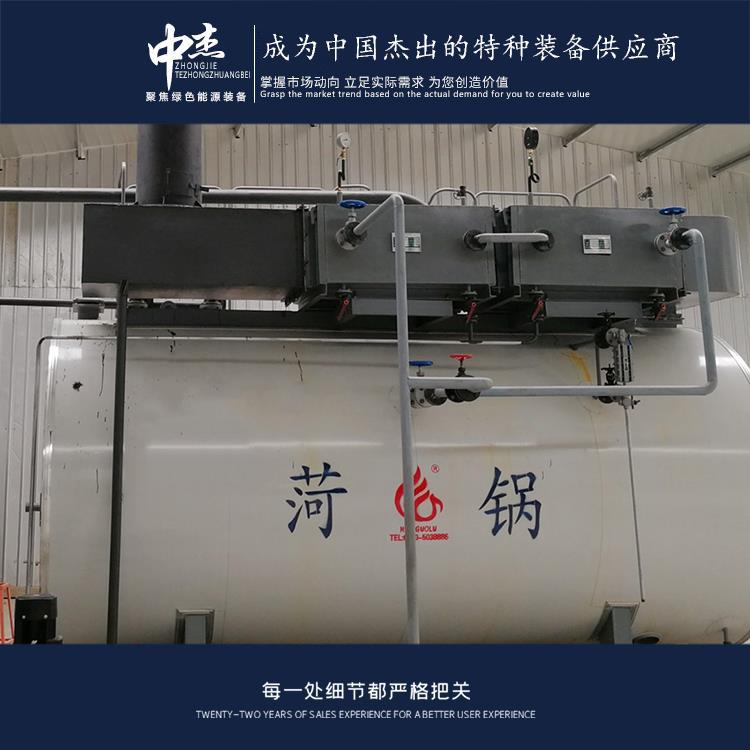
When operating gas boilers, there are three crucial points to be aware of:
1. Safe Operation: Gas boilers are heat energy equipment and require safe operation. Firstly, ensure that the operators have the relevant skills and knowledge, and understand the boiler's working principles and operating procedures. Secondly, strictly prohibit the storage of flammable materials around the boiler and maintain good ventilation. Additionally, regularly inspect and maintain the safety valve, pressure gauge, and other safety devices to ensure they function properly.
2. Proper Gas Supply Adjustment: The combustion of gas boilers requires an appropriate gas supply. During operation, adjust the gas supply based on actual needs to ensure stable combustion. At the same time, regularly check the sealing integrity of the gas pipeline and valves to prevent gas leaks.
3. Regular Maintenance and Cleaning: Regular maintenance and cleaning of gas boilers are essential for maintaining normal operation and extending their lifespan. Regularly inspect the boiler's components, clean the burner, flue, and heat exchanger to remove dust and dirt, ensuring heat transfer efficiency and combustion effectiveness. Moreover, regularly replace filters and clean water treatment equipment to ensure clean water quality and prevent scale and corrosion.
It's important to note that these three points are only basic operational guidelines, and specific operational and maintenance requirements may vary depending on the model and specifications of different gas boilers. Therefore, it is advisable to refer to the boiler's operation manual or consult with experts before operating a gas boiler to ensure correct and safe operation.
Our company attaches great importance to technological innovation and R&D, with 1 municipal-level enterprise technology center in Heze City. We have established testing facilities for non-destructive testing, physical and chemical testing, welding testing, hydrostatic testing, etc. Equipped with over 600 various instruments and equipment such as CNC machine tools, X-ray flaw detectors, digital ultrasonic flaw detectors, mechanical property testing machines, chemical analyzers, spectrometers, tensile testing machines, and plasma welding machines. The key products and technologies developed, including welding for temperature and pressure vessels, biomass boiler emissions reduction, and waste heat utilization, have successively been shortlisted for multiple Shandong Provincial Department of Industry and Information Technology science and technology innovation projects, key provincial projects, and Heze City innovation and excellence projects. We have accumulated a total of 27 authorized utility models, 16 authorized inventions, participated in drafting 2 standards, 2 industry standards, and registered 15 trademarks. The technical team, in collaboration with Professor Li Yajiang of Shandong University, has developed deep cryogenic vessel processing technology using the internationally recognized plasma arc + filler wire argon arc welding (PAW-GTAW) technology, which has been appraised as reaching international standards at the provincial level.
Choose ZJET Customization, let's create brilliance together!
WeChat Official Account

Scan to follow Official Account



















