


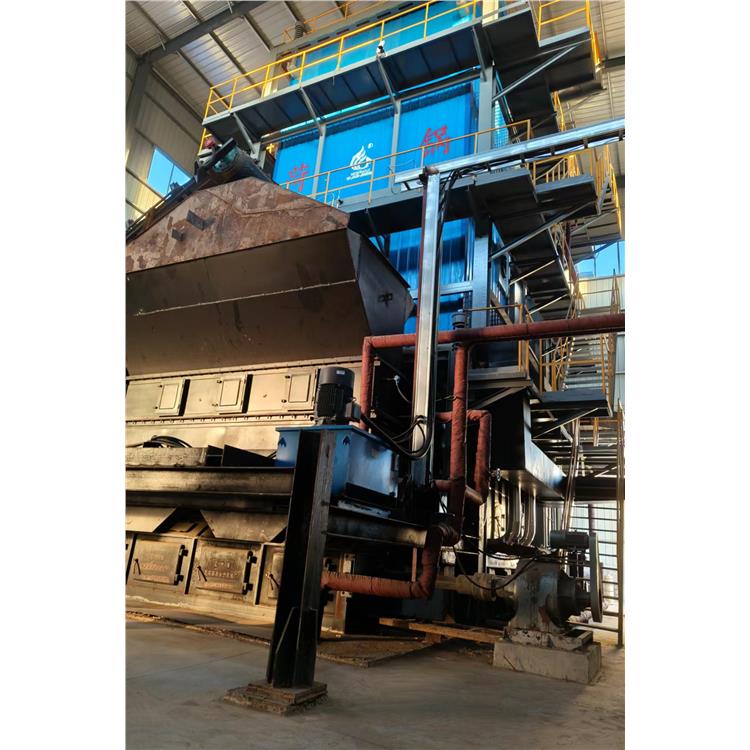

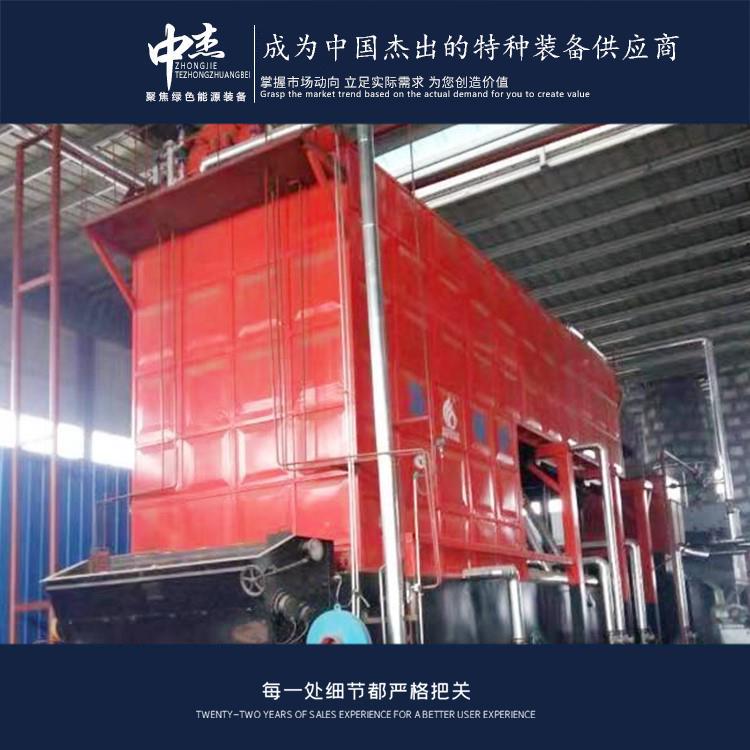
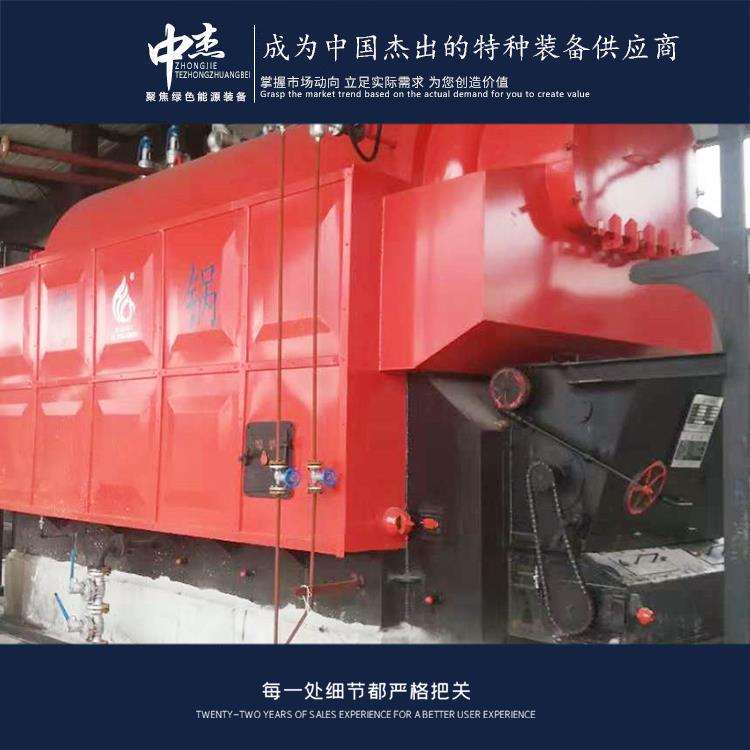


















Shandong Zhongjie Special Equipment (formerly Heze Boiler Factory Co., Ltd.) was established in 2001, located at No. 2218 Jinnan Road, Development Zone, Heze City. With a registered capital of 50 million yuan and total assets of 500 million yuan, the company operates seven business centers: boilers, deep-freeze containers, pressure vessels, central air conditioning, engineering installation, international trade, and Internet of Things. It has three factory sites on Jinnan Road, East Changjiang Road, and Bohai Road, covering a total of 200,000 square meters. The main workshop spans 83,000 square meters. It currently employs 710 staff, including 247 engineers and technicians and 82 intermediate-level technicians. In December 2016, it was recognized as a "High-tech Enterprise" by the Science and Technology Department. In June 2021, it was named a "Specialized and New Enterprise in Shandong Province" by the Ministry of Industry and Information Technology. In June 2022, it was identified as a "Gazelle Enterprise in Shandong Province" and in August 2022, it was recognized as a "Specialized and New Small Giant Enterprise" by the Ministry of Industry and Information Technology.
Biomass boiler pellets are a common form of biomass fuel, also known as biomass pellets or wood pellets. They are small granular fuels produced by processing biomass raw materials (such as wood chips, straw, wheat straw, fruit shells, etc.) through processes like crushing, drying, and pressing.
Biomass boiler pellets fuel features include:
High Energy Density: Biomass pellet fuel boasts a high energy density, allowing for more energy to be stored in a relatively smaller volume, making it convenient for transportation and storage.
Easy to Burn: Biomass pellets have regular shapes and uniform sizes, ensuring a stable combustion process, easy control over combustion parameters, and improved combustion efficiency.
Low humidity and low ash content: The biomass pellet fuel has been dried and processed, featuring low humidity and low ash content. This reduces water evaporation and ash production during combustion, enhancing combustion efficiency and minimizing pollutant emissions.
Renewable and Eco-friendly: Biomass pellet fuel is a renewable energy source, which can be recycled through the regeneration process. The carbon dioxide released during combustion can be absorbed by biomass regeneration, forming a cycle with minimal environmental impact.
Wide combustion adaptability: Biomass pellet fuel is suitable for biomass boilers and boasts strong combustion adaptability. Different types and specifications of pellet fuel can be chosen according to actual conditions to meet the needs of various boilers.
Biomass pellet fuel is widely used in biomass boilers. It's a clean, renewable energy source that plays a significant role in reducing carbon emissions and protecting the environment.
Biomass boilers can be categorized according to different classification criteria. Here are some common ways of classification:
By combustion method classification:
Direct Combustion Boiler: Directly burns biomass fuel to produce heat energy.
Gasification Boiler: Converts biomass fuel into combustible gas, which is then burned.
Pyrolysis Boiler: Converts biomass fuel into combustible gases and solid carbon through pyrolysis, followed by combustion.
By fuel type:
Wood biomass boiler: Utilizes wood chips, wood shavings, cassava residue, and other wood-based fuels.
Crop Biomass Boiler: Utilizes crop residues such as straw, rice husk, wheat straw, etc., as fuel.
Industrial waste biomass boiler: Utilizes industrial waste such as sawdust and pulp sludge as fuel.
By boiler type:
Water tube biomass boiler: Heat is transferred through water pipes arranged inside the combustion chamber.
Fire-tube biomass boiler: The combustion chamber is equipped with fire tubes, which transfer heat energy through the tubes.
Hybrid biomass boiler: Combines the features of water-tube and fire-tube designs, featuring both water tubes and fire tubes.
By power scale classification:
Small biomass boiler: Power typically ranges from 1 to 10 MW, suitable for small buildings and rural heating.
Medium-sized biomass boiler: Power typically ranges from 10 to 50 MW, suitable for medium-sized industrial plants and large buildings.
Large biomass boiler: Power over 50MW, suitable for large industrial plants and centralized heating.
These categorization methods merely provide a general overview of biomass boilers; in reality, there are more specific subcategories and combinations. Different types of biomass boilers may vary in their application scenarios and technical characteristics.
Energy-saving methods for biomass hot water boilers mainly include the following aspects:
Fuel Selection: Choose biomass fuels in appropriate quantities, such as wood chips and straw, ensuring the moisture content and particle size meet the boiler requirements. Low moisture content and suitable particle size of the fuel can enhance combustion efficiency and reduce energy waste.
Combustion Optimization: Enhance combustion efficiency by optimizing the combustion process. Adjust combustion parameters such as combustion temperature and duration to achieve more complete combustion and reduce fuel waste.
Heat Recovery Utilization: Utilizes waste heat from flue gas for energy recovery. By installing a flue gas waste heat recovery unit, the remaining heat in the flue gas is captured and used for other heating needs, such as heating and hot water, enhancing energy efficiency.
Boiler Insulation: Enhance the insulation of the boiler to reduce heat loss. Insulate the boiler shell and pipes to minimize heat dissipation and improve the thermal efficiency of the boiler.
Control System Optimization: Optimize the boiler's control system to achieve temperature and pressure control. Through reasonable control strategies, reduce energy waste and enhance the boiler's operational efficiency.
Regular Maintenance: Perform regular maintenance on biomass hot water boilers to ensure normal operation. Clean the combustion chamber, heat exchangers, and other components, inspect and replace worn-out parts to ensure the boiler's performance.
Energy Management: Establish a scientific energy management system, monitor and analyze energy consumption, and formulate reasonable energy-saving measures. Continuously optimize the operation of boilers through energy management methods to achieve energy-saving goals.
By integrating the above energy-saving methods, the energy utilization efficiency of biomass hot water boilers can be improved, energy waste reduced, and the goal of energy conservation and environmental protection achieved.
Several advantages come with choosing biomass boilers:
Renewable Energy: Fuel for biomass boilers comes from organic matter such as plants, animals, and microorganisms, making it a renewable energy source. Compared to traditional fossil fuels, biomass fuel has lower carbon emissions and a smaller environmental impact, contributing to the reduction of greenhouse gas emissions and being more environmentally friendly.
Diverse Fuel Sources: Biomass fuel sources are extensive, encompassing wood, straw, waste crops, food scraps, and urban solid waste, among others. This diversity in fuel sources allows biomass boilers to be flexible and adaptable, utilizing waste and by-products from plants and animals, thereby reducing resource waste.
Environmental Friendliness: The carbon dioxide produced during the combustion of biomass boilers can be absorbed by plants, forming a cycle and reducing air pollution. Additionally, the emissions and ash produced during the combustion process of biomass boilers are relatively low, resulting in less environmental impact.
Energy Security: Biomass, as a local renewable energy source, can reduce dependence on imported energy and enhance energy security. In areas with scarce resources, the use of biomass boilers can provide a reliable energy supply.
Economic Efficiency: Biomass fuel is relatively cost-effective, which can reduce energy costs. Moreover, the technology and equipment for biomass boilers are continuously evolving and maturing, making them even more economically viable.
Zhongjie Special Equipment adheres to the great vision of "realizing employees' dreams, creating customer value, and striving for the prosperity and strength of our motherland," focusing on the development of green energy equipment industry, and dedicating high-value products and services to society!
WeChat Official Account

Scan to follow Official Account



















