


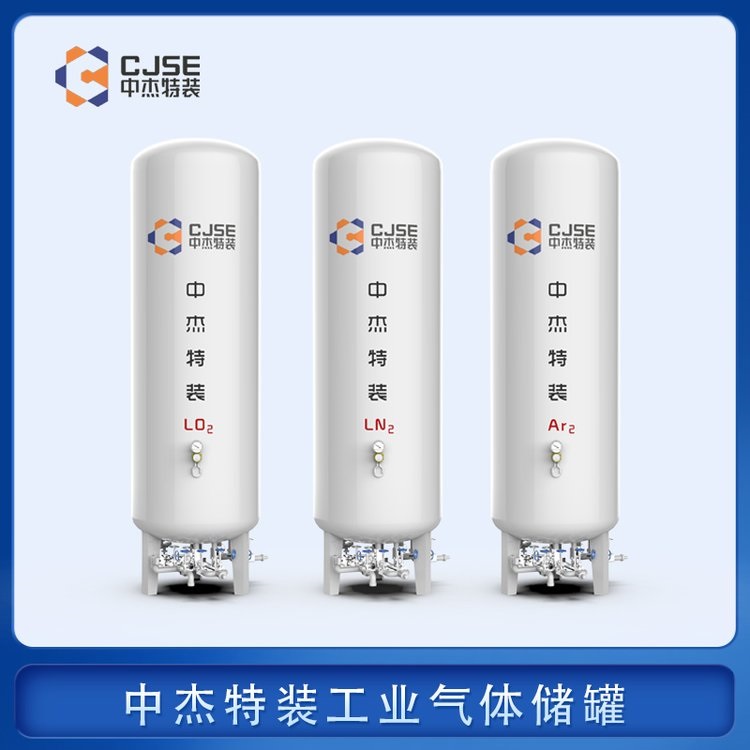

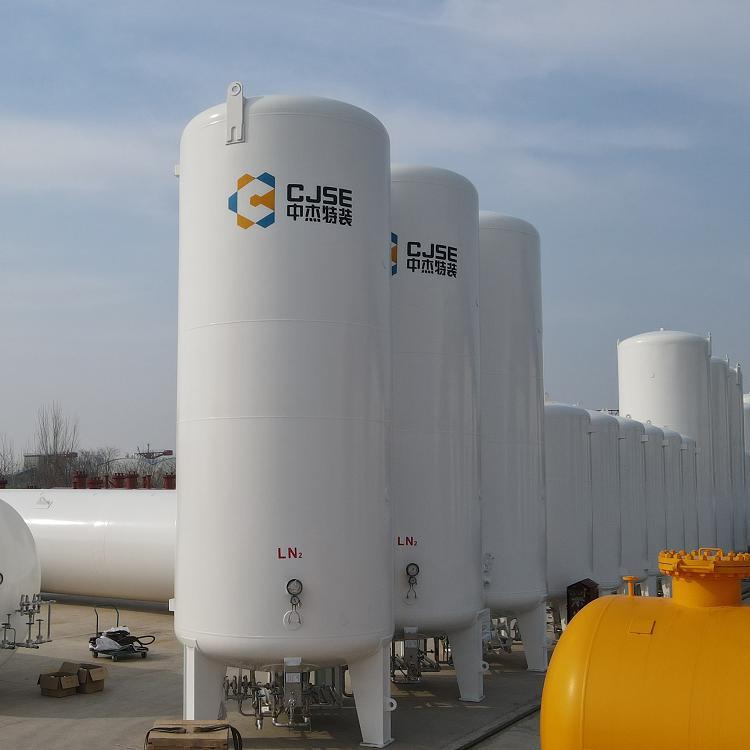
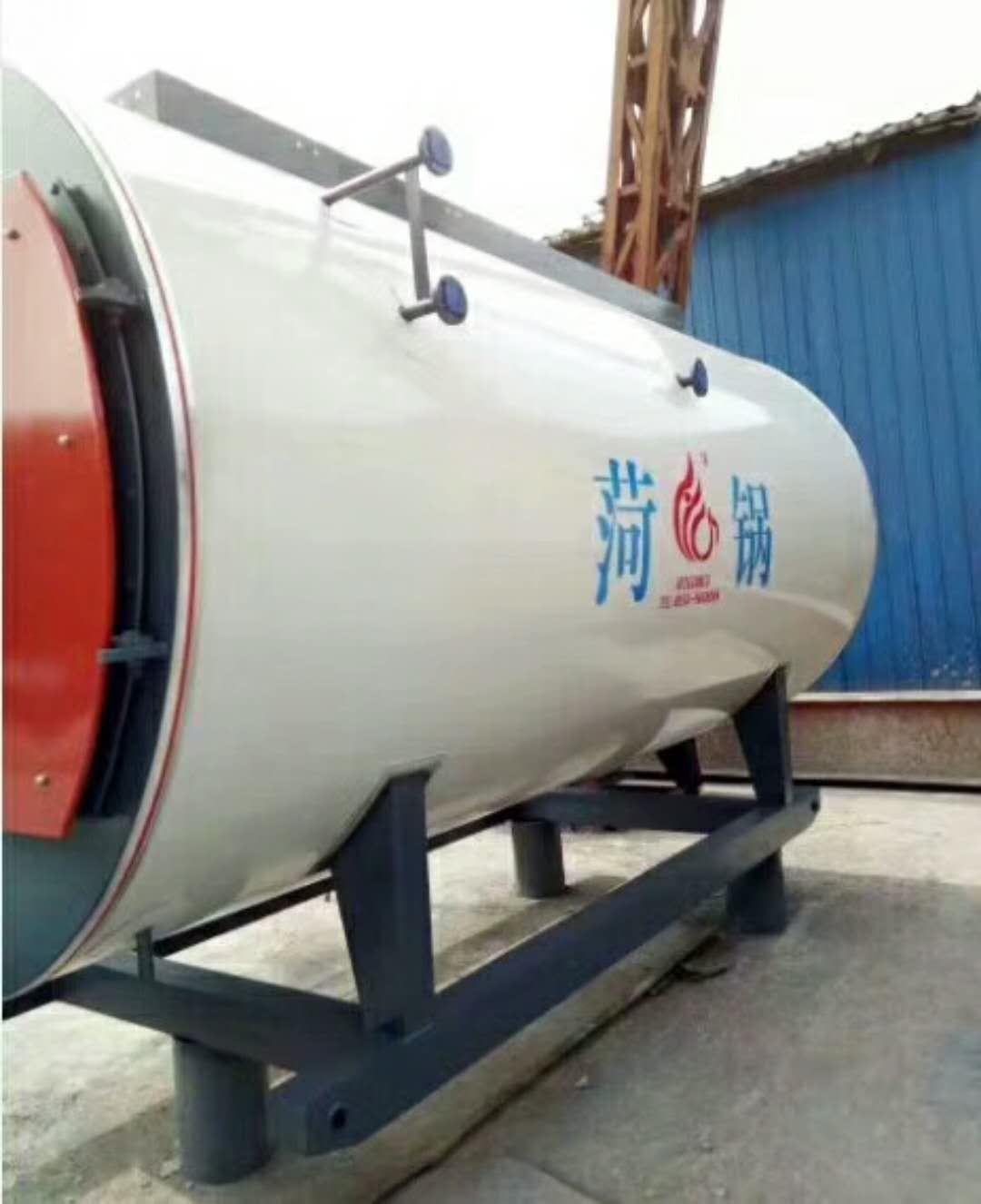


















Shandong Zhongjie Special Equipment Co., Ltd. specializes in the following products: fuel (gas) boilers, organic heat carrier boilers, biomass boilers, waste heat recovery boilers, and other boiler products; vacuum insulation cryogenic pressure vessels such as LNG storage tanks, oxygen/nitrogen/argon storage tanks, and CO2 storage tanks; pressure vessel products including denitrification engineering equipment, heat storage and energy storage equipment, and complete chemical equipment; central air conditioning and HVAC equipment such as ground (water) source heat pumps, air source units, water-cooled screw units, and air-cooled modular units. Planned products include large-scale energy centers, LNG transport vehicles, LNG tank containers, and other green energy equipment.
Proper installation of a CO2 storage tank requires the following steps:
Site Preparation: Choose an appropriate site for installation, ensuring it is level, stable, and meets safety distance requirements. Clear the site to ensure there are no obstructions or fire sources.
Foundation Construction: Construct the foundation based on the tank's size and weight. The foundation must be sufficiently strong and stable to support the tank's weight and pressure.
Tank Installation: Place the tank on the foundation, ensuring there is adequate cushioning and securing equipment between the tank and the foundation. Connect and secure the tank according to its design specifications.
Pipe Connection: Connect the tank to the piping system as needed. Ensure the connections are sealed properly to prevent leaks.
Safety Equipment Installation: Install the required safety equipment for the tank, such as safety valves, pressure sensors, and temperature sensors. Ensure these devices are correctly installed and connected.
System Testing: Conduct system tests after installation, including pressure tests and leak tests, to ensure the tank and piping system operate safely and properly.
Identification and Warning Signs: Set up necessary identification and warning signs on the tank and piping system, including tank capacity and pressure information, to remind operators to maintain safety.
Tank Maintenance: After installation, perform regular maintenance and upkeep on the tank, including cleaning, lubricating, and inspections, to ensure smooth operation and extend the tank's lifespan.
Installation of CO2 storage tanks should be carried out by qualified installers and follow relevant safety operation procedures and standards. Seek advice and guidance from experts.
Routine inspections and maintenance of CO2 storage tanks can be carried out following these steps:
- Visual Inspection: Check for any visible damage, corrosion, or oil leakage on the tank's exterior. Pay attention to any abnormalities in the tank shell, valves, and pipeline connections.
- Internal Inspection: If accessible, perform an internal check. Look for corrosion, scaling, or blockages in the inner lining, valves, and pipelines.
- Valve and Pipeline Inspection: Verify that the tank's inlet and outlet valves and pipeline connections are functioning properly, for any leaks or loose fittings. Ensure valves operate smoothly and reliably.
- Pressure Relief Device Inspection: Check if the tank's pressure relief devices (such as safety valves) are operating correctly. Confirm that the set pressure of the pressure relief devices meets the requirements.
- Measurement and Control System Inspection: Ensure the tank's level, pressure, and temperature measurement and control systems are working properly. Calibrate and test the accuracy of measuring equipment.
- Cleaning and Drainage: Regularly clean the tank interior of accumulated impurities and sediments. Also, periodically drain the tank's liquid and gas impurities.
- Maintenance and Repairs: Conduct necessary maintenance and repair work based on inspection results. Repair damaged components, replace worn-out seals, etc., to ensure the tank's normal operation.
- Record and Report: Document the inspection and maintenance process, including the date of inspection, contents of the inspection, identified issues, and measures taken. Submit inspection reports to relevant departments or management as needed.
- The above are general steps for routine inspections and maintenance of CO2 storage tanks. Specific operations should be conducted according to the tank's characteristics and requirements. When performing inspections and maintenance, follow relevant safety operation procedures and have personnel operate them.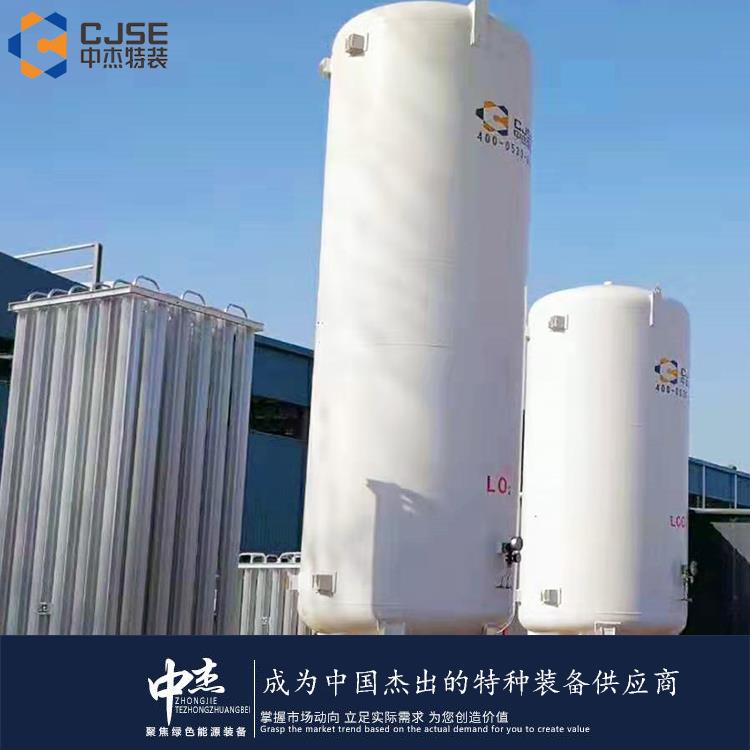
The liquid level of a carbon dioxide storage tank varies depending on specific design and operational requirements. Generally, the liquid level in a liquid carbon dioxide tank is maintained between 80% and 95%. There are several reasons for keeping the tank level within this range:
- Space retention: Maintaining a certain level of liquid provides steam space inside the tank, preventing over-pressurization and the risk of tank explosion.
- Storage capacity: Keeping a higher level maximizes the tank's capacity, allowing for more carbon dioxide storage.
- Stable supply: Maintaining an appropriate level ensures a steady supply of carbon dioxide to meet usage needs.
However, specific level requirements may vary due to different applications and industries. When using a carbon dioxide storage tank, follow the manufacturer's recommendations and relevant regulations and standards to ensure the tank's level is controlled within a safe and suitable range.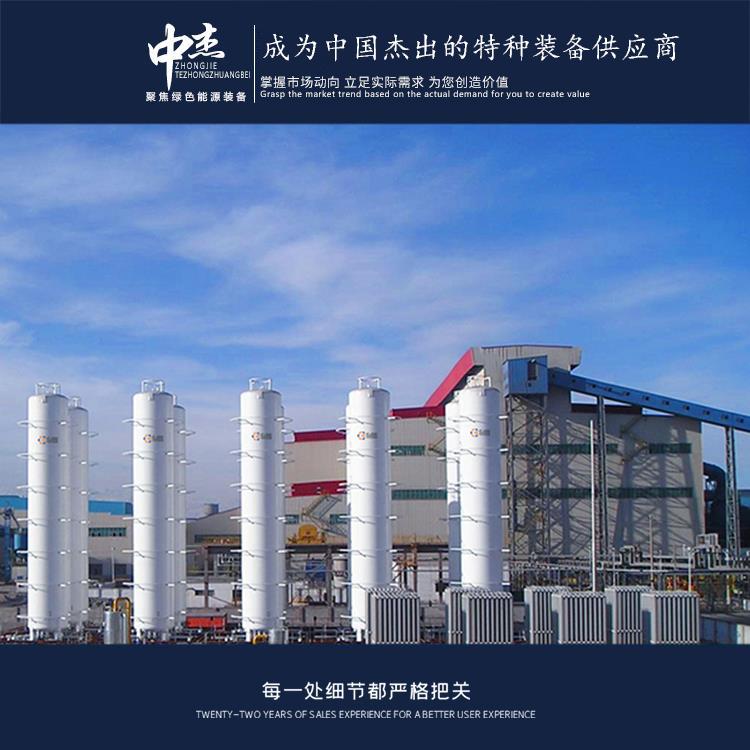
The design requirements for carbon dioxide storage tanks typically include the following aspects: Pressure Vessel Design: Carbon dioxide storage tanks are generally designed as high-pressure vessels capable of withstanding high pressure. The design must comply with relevant standards and regulations, such as Standard GB150 "Steel Pressure Vessels." Material Selection: The choice of materials for the tank should consider the properties of carbon dioxide, such as high pressure, high oxidizing, and corrosive nature. Common materials include carbon steel and stainless steel, with selection based on specific working conditions and requirements. Safety Valves and Pressure Control: The tank should be equipped with safety valves and pressure control devices to ensure the internal pressure remains within a safe range. Safety valves should be selected according to design requirements and undergo regular inspections and testing to ensure proper operation. Insulation Performance: Since carbon dioxide needs to remain in a liquid state at low temperatures, the tank should have good insulation properties to prevent excessive evaporation of liquid carbon dioxide and energy loss. The selection and design of insulation materials and layers should consider working temperatures and environmental conditions. Leak Detection and Alarm: The tank should be equipped with leak detection devices and alarm systems, along with corresponding monitoring equipment. These devices can detect leaks in a timely manner and trigger alarms to take appropriate actions. Structural Strength and Stability: The structural design of the tank should have sufficient strength and stability to withstand internal pressure and external loads. The structural design must comply with relevant standards and regulations, such as Standard GB12337 "Pressure Vessel Design Specification." Safe Operation and Maintenance: The design of the tank should consider the ease of safe operation and maintenance, such as the placement of manholes, inspection openings, and drain outlets.
Our company places great emphasis on technological innovation and research and development, boasting one municipal-level enterprise technology center in Heze City. We have established testing facilities for non-destructive testing, physical and chemical testing, welding testing, hydrostatic testing, and more. We are equipped with over 600 pieces of various instruments and equipment, including CNC machine tools, X-ray flaw detectors, digital ultrasonic flaw detectors, mechanical property testing machines, chemical analyzers, spectrometers, tensile testing machines, plasma welding machines, and others. The key products and technologies we have developed, such as temperature-pressure vessels for welding, biomass boiler emission reduction, and waste heat utilization, have successively been selected for multiple Shandong Provincial Department of Industry and Information Technology science and technology innovation projects, key provincial projects, and Heze City innovation and excellence projects. We have accumulated a total of 27 authorized utility models, 16 authorized inventions, participated in drafting 2 standards, 2 industry standards, and registered 15 trademarks. Our technical team, in collaboration with Professor Yajiang Li from Shandong University, has jointly developed deep cryogenic container processing technology, utilizing the international plasma arc + wire filling tungsten inert gas arc welding (PAW-GTAW) technology. After being appraised as a provincial-level scientific and technological achievement, our technology level has reached an international standard in the field of deep cryogenic container manufacturing. Choose Zhongjie Special Equipment, let's create brilliance together!
WeChat Official Account

Scan to follow Official Account



















