


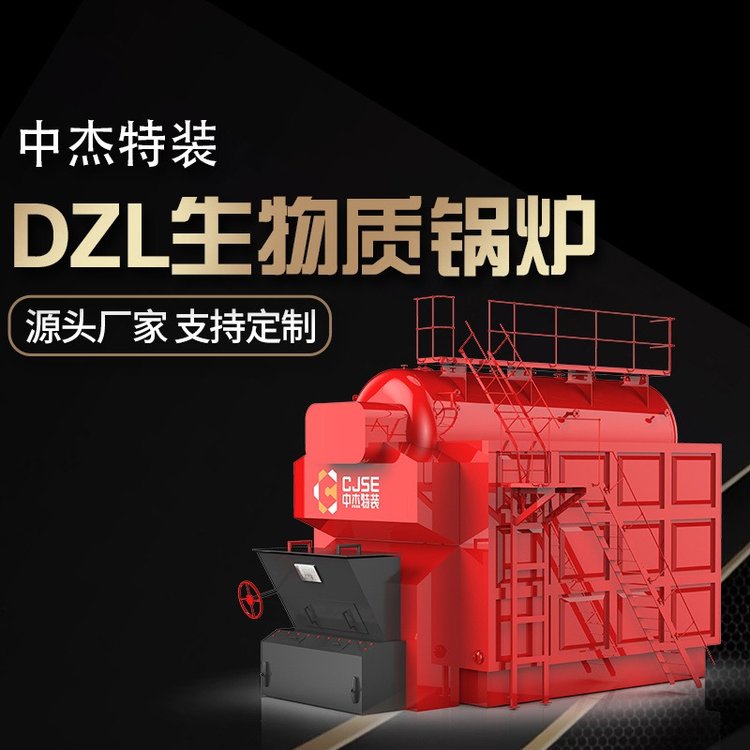

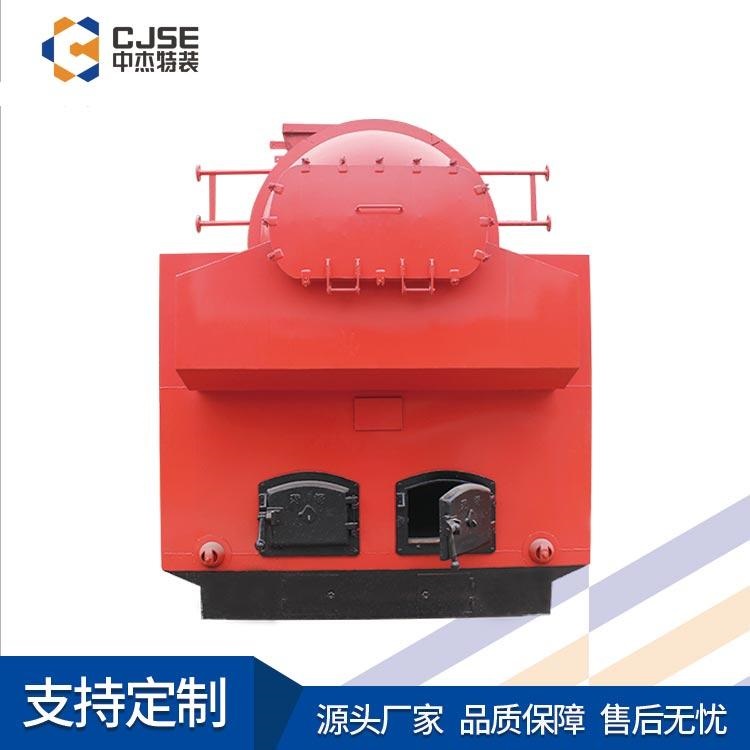
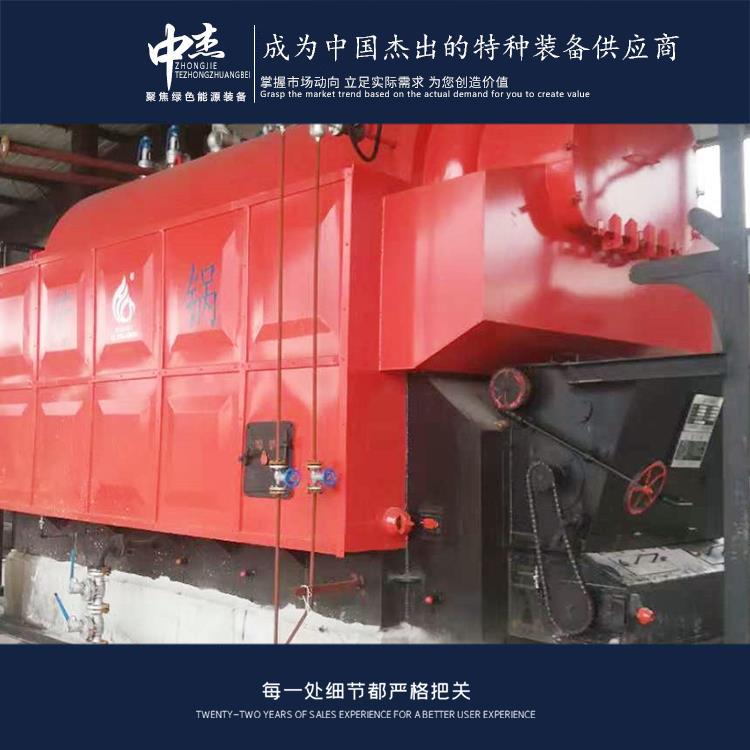


















Shandong Zhongjie Special Equipment's main products include: fuel (gas) boilers, organic heat carrier boilers, biomass boilers, waste heat recovery boilers, and other boiler products; vacuum insulation cryogenic pressure vessels such as LNG tanks, oxygen/nitrogen/argon tanks, and CO2 tanks; pressure vessel products like denitrification engineering equipment, heat storage and energy storage equipment, and complete chemical equipment sets; central air conditioning and HVAC equipment such as ground (water) source heat pumps, air source units, water-cooled screw units, and air-cooled modular units. Planned products include large-scale energy centers, LNG transport vehicles, LNG tank containers, and other green energy equipment.
A biomass organic heat carrier boiler is a boiler equipment that uses biomass as fuel to transfer heat energy through an organic heat carrier. Compared to traditional steam boilers, the biomass organic heat carrier boiler has the following performance advantages:
High thermal efficiency: The biomass organic thermal carrier furnace uses organic thermal carriers as the heat transfer medium, boasting a high heat transfer efficiency. Organic thermal carriers can achieve liquid phase heat transfer at low temperatures, resulting in minimal heat loss and allowing for more efficient utilization of the fuel's thermal energy, thereby enhancing thermal efficiency.
Flexibility: The biomass organic heat carrier boiler is suitable for various biomass fuels such as wood chips, straw, etc. Due to the abundance of biomass resources, different biomass fuels can be chosen based on actual conditions, enhancing the substitutability and flexibility of the fuel.
Environmental Friendliness: The biomass organic heat carrier furnace produces relatively little waste gas and residue during the combustion process, with low emissions of pollutants. The biomass fuel itself has low nitrogen characteristics, and the waste residue after combustion can be reused as organic fertilizer or biomass fuel, reducing environmental pollution.
Safety: Biomass organic heat carrier boilers use organic heat carriers as the heat transfer medium, featuring lower operating pressure, thus reducing safety risks during boiler operation. Additionally, compared to fossil fuels, biomass fuel has a lower risk of explosion and fire during the combustion process.
Renewability: Biomass organic thermal carrier boilers use biomass as fuel, which is a renewable resource that can be continuously replenished through planting and cultivation. Compared to fossil fuels, the use of biomass fuel has a smaller environmental impact, promoting sustainable development.
The emission characteristics of biomass fuel boiler flue gases primarily include the following aspects:
Particulate Emissions: During the combustion process of biomass fuel boilers, particulates are produced, including visible dust and fine particles. The amount of particulate emissions is related to fuel characteristics, combustion temperature, and combustion equipment, among other factors. Generally, biomass fuel boilers have lower particulate emissions than coal boilers, but still require dust removal equipment for treatment.
(SO2) Emissions: The content of SO2 in biomass fuel is generally low, so the SO2 emissions from biomass fuel boilers are usually low. However, in certain situations, such as using waste as fuel, the SO2 emissions may increase. Measures such as combustion control and desulfurization units can be adopted to control SO2 emissions.
NOx emissions: The NOx emissions from biomass fuel boilers are related to fuel characteristics, combustion temperature, and combustion equipment factors. Biomass fuel has a higher nitrogen content, which generates a certain amount of NOx during combustion. To control NOx emissions, measures such as low-NOx combustion technology, combustion control, and denitrification devices can be adopted.
(CO) Emission: Carbon monoxide emissions from biomass fuel boilers are typically low due to the relatively complete combustion process of biomass fuel. However, under conditions of incomplete combustion or unstable burning, CO emissions may increase. To control CO emissions, it is necessary to ensure a thorough and stable combustion process.
Volatile Organic Compounds (VOCs) Emissions: The VOCs emissions from biomass fuel boilers are related to the fuel characteristics and combustion conditions. Some biomass fuels contain volatile organic compounds.
When selecting an appropriate atmospheric pressure hot water boiler, consider the following factors:
Heating Area: First, determine the size of the area to be heated, which will decide the heat power required for the hot water boiler. Generally, the larger the heating area, the greater the required heat power.
Thermal Load Calculation: Conduct a thermal load calculation, taking into account the insulation performance of the heating area, indoor temperature requirements, and external climate conditions to determine the required thermal power. Please have someone perform a thermal load calculation to ensure the selected hot water boiler meets the heating needs.
Fuel Type: Atmospheric pressure hot water boilers can use various fuels such as gas, coal, etc. Choose the appropriate fuel type based on the local fuel supply and cost considerations.
Boiler Efficiency: Focus on the energy efficiency of hot water boilers and choose products with higher efficiency. High-efficiency hot water boilers can provide superior heating performance while reducing energy consumption and operating costs.
Boilers and Quality: Choose hot water boilers produced by reputable manufacturers to ensure reliable product quality and comprehensive after-sales service.
Safety and Environmental Protection: Focus on the safety and environmental performance of hot water boilers, selecting products with safety protection devices and low emissions.
Budget Consideration: Select a suitable hot water boiler based on budget constraints. In addition to the purchase cost, consider the subsequent operational and maintenance costs.
Considering the above factors, a suitable atmospheric pressure hot water boiler can be chosen to meet heating requirements, while achieving good performance in terms of energy efficiency, safety, and environmental protection. It is recommended to consult professionals or hot water boiler experts during the selection process.
In terms of biomass boiler technology, the following three issues need to be addressed with emphasis:
Enhanced Combustion Efficiency: Biomass fuel has different characteristics from traditional fossil fuels, which often produce particulate matter like straw and wood shavings during combustion, leading to lower combustion efficiency. Therefore, research and development and improvement of combustion systems are necessary to optimize the combustion process, increase combustion efficiency, and reduce energy waste.
High-Temperature Corrosion Issues: Ash and elements like chlorine in biomass fuel can easily cause corrosion at high temperatures, damaging the metal components of boilers. To address high-temperature corrosion, it is necessary to develop and apply corrosion-resistant materials, control combustion conditions, and reduce the occurrence of corrosion.
Ash and slag handling and utilization: Biomass fuel combustion generates a large amount of ash and slag, including waste, ash content, and unburnt materials. The handling and disposal of ash and slag is a critical issue, requiring the development and application of ash and slag handling technologies, including recycling, resource utilization, and chemical treatment.
By addressing these three issues, the combustion efficiency of biomass boilers can be further enhanced, corrosion risks reduced, and the effective handling and utilization of ash and slag achieved, promoting the sustainable development of biomass energy.
Zhongjie Special Equipment upholds the grand vision of "realizing employees' dreams, creating value for customers, and striving for the prosperity and strength of our motherland," and is dedicated to the development of the green energy equipment industry. We commit to society with high-quality products and services at competitive prices!
WeChat Official Account

Scan to follow Official Account



















