


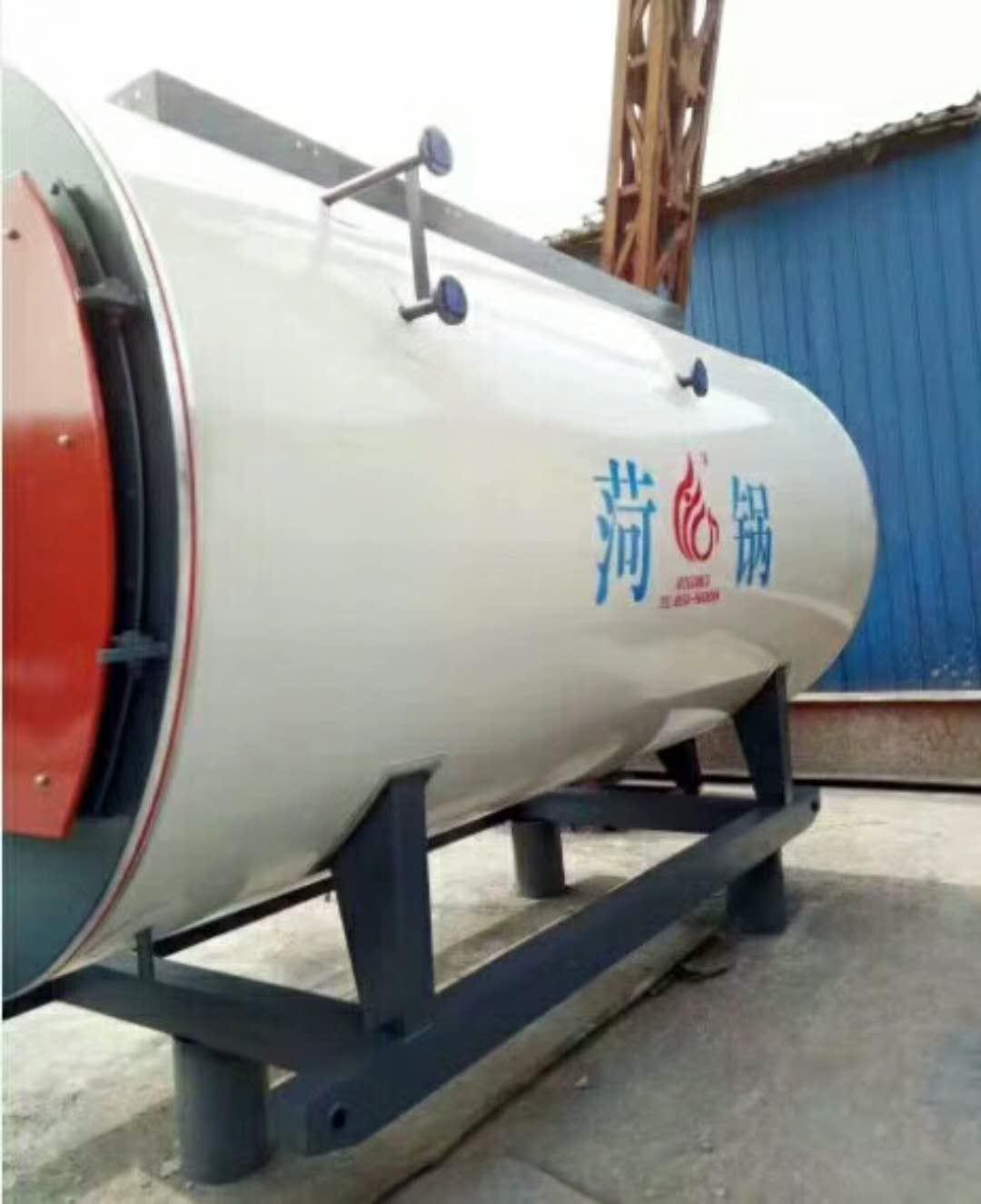

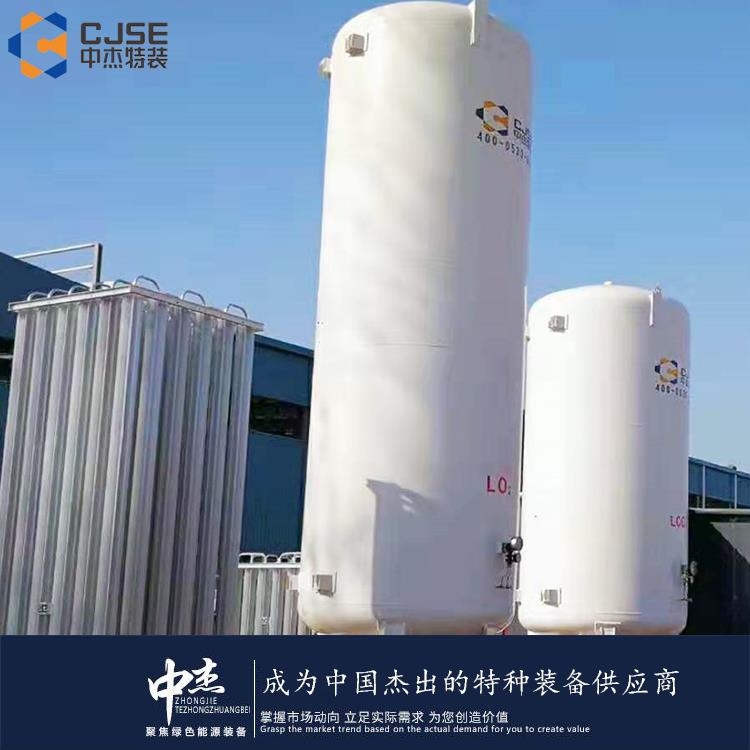


















Shandong Zhongjie Special Equipment (formerly Heze Boiler Factory Co., Ltd.) was established in 2001, located at No. 2218 Jinnan Road, Development Zone, Heze City, with a registered capital of 50 million yuan and total assets of 500 million yuan. The company has 7 business centers: boilers, deep-freeze vessels, pressure vessels, central air conditioning, engineering installation, international trade, and Internet of Things. It operates three factory sites at Jinnan Road, East Changjiang Road, and Bohai Road, covering a total of 200,000 square meters, with the main workshop spanning 83,000 square meters. It currently employs 710 staff, including 247 engineering and technical personnel and 82 intermediate-level technicians. In December 2016, it was recognized as a "High-Tech Enterprise" by the Science and Technology Department. In June 2021, it was identified as a "Specialized and New Enterprise of Shandong Province" by the Ministry of Industry and Information Technology. In June 2022, it was recognized as a "Gazelle Enterprise of Shandong Province" and in August 2022, it was identified as a "Specialized and New Small Giant Enterprise" by the Ministry of Industry and Information Technology.
Low-temperature carbon dioxide storage tanks offer several advantages:
- Low-temperature storage capacity: These tanks can store carbon dioxide at low temperatures, typically between -40°C and -70°C. This low-temperature storage capability allows carbon dioxide to be stored in liquid form, significantly reducing the required storage space.
- High storage density: Due to carbon dioxide being stored as a liquid at low temperatures, its storage density is relatively high. Compared to gaseous storage, liquid storage can hold more carbon dioxide in a smaller tank, enhancing storage efficiency.
- Environmental and renewable: Carbon dioxide is an environmentally friendly gas, with minimal harmful emissions during storage and use. Moreover, it can be reused through capture and recovery technologies, reducing environmental impact.
- High safety: Low-temperature carbon dioxide storage tanks are made from high-strength materials with excellent sealing and corrosion resistance. They are equipped with safety valves and pressure relief devices to effectively control internal pressure and temperature, ensuring safety during storage.
- Wide application: These tanks are widely used in various industries, including food and beverage, pharmaceutical, and chemical industries. They can be used for frozen food, refrigeration equipment, gas supply, and more, meeting diverse needs.
In summary, low-temperature carbon dioxide storage tanks provide low-temperature storage capacity, high storage density, environmental friendliness, renewable properties, high safety, and broad applications. These benefits make them crucial equipment for storing and using carbon dioxide in many industries.
Technical specifications for carbon dioxide storage tanks can be formulated based on different application fields and/or regional standards. The following are some common technical specifications and standards for reference:
- ASME Standards: The American Society of Mechanical Engineers (ASME) has issued a series of standards for pressure vessels, including specifications for carbon dioxide storage tanks, such as ASME BPVC Section VIII Division 1 and ASME BPVC Section VIII Division 2.
- ISO Standards: The International Organization for Standardization (ISO) has published some standards related to pressure vessels, such as ISO 9809-1 and ISO 9809-2, covering design, manufacturing, and inspection requirements for steel gas cylinders.
- GB Standards: The China National Committee for Standardization has issued a series of standards related to pressure vessels, such as GB 150 "Pressure Vessels" and GB 5099 "Steel Gas Cylinders," which include design, manufacturing, and inspection requirements for carbon dioxide storage tanks.
- DOT Standards: The United States Department of Transportation (DOT) has issued some standards related to pressure vessels and cylinders, such as DOT-3AA and DOT-4BA, covering design, manufacturing, and transportation requirements for liquefied gas storage tanks.
- EN Standards: The European Committee for Standardization (CEN) has published some standards related to pressure vessels, such as EN 13445 and EN 14382, covering design, manufacturing, and inspection requirements for liquefied gas storage tanks.
- Additionally, there may be other industry standards and specifications applicable to carbon dioxide storage tanks based on specific application needs, such as relevant standards in the food and beverage industry, etc.
When using carbon dioxide storage tanks, appropriate technical specifications should be selected based on specific application requirements and local regulations, ensuring that the design, manufacturing, and use of the tanks comply with the corresponding standards and specifications.
Detailed parameters of carbon dioxide storage tanks can vary based on specific design and usage requirements. Here are some common parameters of carbon dioxide storage tanks:
- Capacity: The capacity of carbon dioxide storage tanks can differ according to needs, with common ranges from a few thousand to tens of thousands of liters.
- Pressure: The design working pressure of carbon dioxide storage tanks typically falls between 15-25 MPa (Megapascals), with the specific pressure depending on the application scenario and requirements.
- Material: Carbon dioxide storage tanks are usually made of high-strength materials such as carbon steel or stainless steel. The choice of material depends on the storage environment and requirements.
- Dimensions: The external dimensions of carbon dioxide storage tanks can also vary based on capacity and design. Common shapes include cylindrical, spherical, or cuboid.
- Level Control: Carbon dioxide storage tanks are often equipped with level control systems for monitoring and controlling the liquid level of carbon dioxide. These systems typically include level sensors and control valves.
- Pressure Control: Internal pressure control systems are usually installed in carbon dioxide storage tanks to monitor and control the gas pressure inside. These systems commonly include pressure sensors and safety valves.
Note that specific parameters of carbon dioxide storage tanks may vary among different manufacturers, application scenarios, and standards. When selecting and using carbon dioxide storage tanks, it is essential to follow relevant safety operating procedures and guidelines, and consult with experts to obtain accurate parameter information.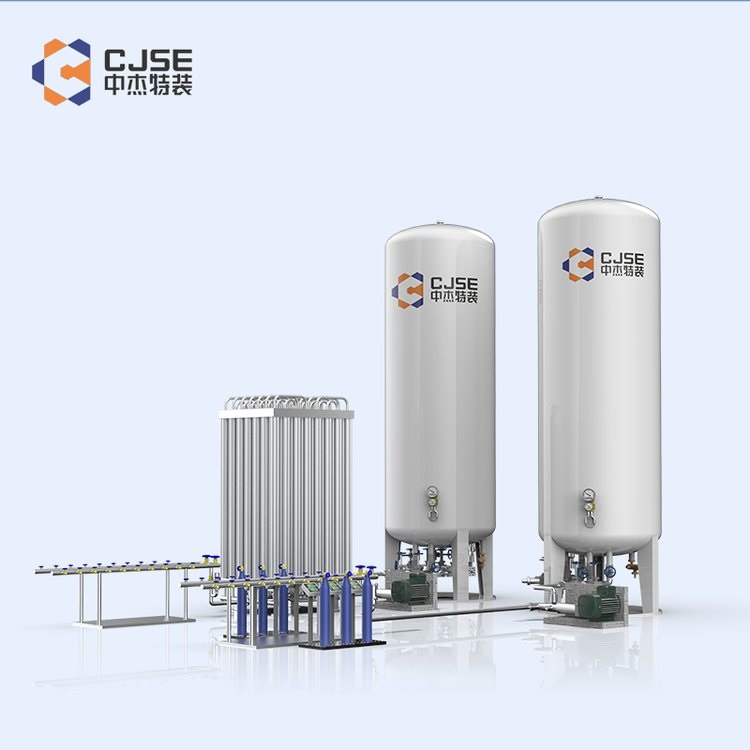
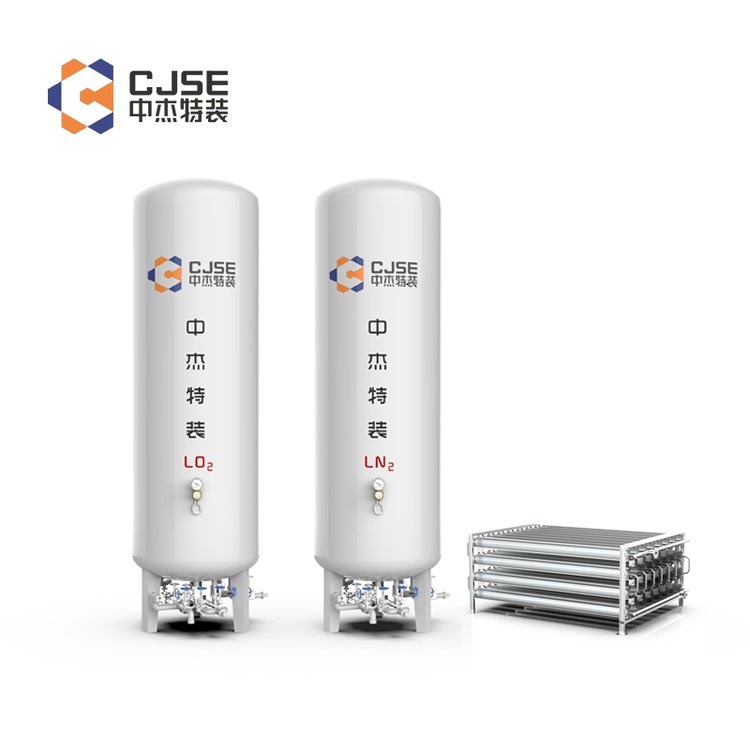
Carbon dioxide storage tanks come in various sizes and structures, tailored to specific application and capacity requirements. Here are some common dimensions and configurations:
Dimensions: Carbon dioxide tanks range from small to large, varying in size based on capacity. Common sizes include thousands to tens of thousands of liters.
Structure: Typically, carbon dioxide tanks feature a double-walled design, with the inner wall for storing liquid CO2 and the outer wall for insulation. The inner wall is usually made of stainless steel or aluminum alloy, offering excellent corrosion resistance.
Insulation: To maintain the low temperature of liquid CO2, the outer wall of the tank is insulated to reduce heat transfer and maintain低温. Insulation can be in multi-layered forms, such as polyester foam or glass wool.
Pressure Relief Devices: Carbon dioxide tanks usually come with pressure relief devices, such as safety valves, to control internal tank pressure. The set pressure of these devices must meet relevant requirements and be regularly inspected and maintained.
Connecting Pipes: The connection between the tank and the pipes is typically done using appropriate methods, such as flange or threaded connections. The connecting pipes must comply with relevant standards and specifications to ensure a tight and reliable fit with no leaks.
Support Structure: Large carbon dioxide tanks often require a support structure to bear their weight. This can be in the form of steel or concrete structures, ensuring stability and safety.
It's important to note that specific dimensions and structures of carbon dioxide storage tanks may vary depending on different applications and needs. When selecting and using carbon dioxide tanks, one should consider the following factors...
Our company attaches great importance to technological innovation and R&D design. We have one city-level enterprise technology center in Heze City, equipped with testing facilities for non-destructive testing, physical and chemical testing, welding testing, hydrostatic testing, and more. We have over 600 various instruments and equipment, including CNC machine tools, X-ray flaw detectors, digital ultrasonic flaw detectors, mechanical property testing machines, chemical analyzers, spectrometers, tensile testing machines, plasma welding machines, and others. The key products and technologies we have developed, such as temperature and pressure vessel welding, biomass boiler emission reduction, and waste heat utilization, have successively been selected for multiple Shandong Provincial Department of Industry and Information Technology scientific and technological innovation projects, Shandong Provincial key projects, and Heze City innovative and excellent projects. We have cumulatively obtained 27 authorized utility models, 16 authorized inventions, participated in drafting 2 standards, 2 industry standards, and registered 15 trademarks. Our technical team, in collaboration with Professor Yajiang Li of Shandong University, has developed deep cryogenic container processing technology using the international plasma arc + filler wire tungsten inert gas arc welding (PAW-GTAW) technique. This technology has been appraised as reaching international standards in the field of deep cryogenic container manufacturing at the provincial level. Choose Zhongjie Special Equipment, and let's create brilliance together!
WeChat Official Account

Scan to follow Official Account



















