


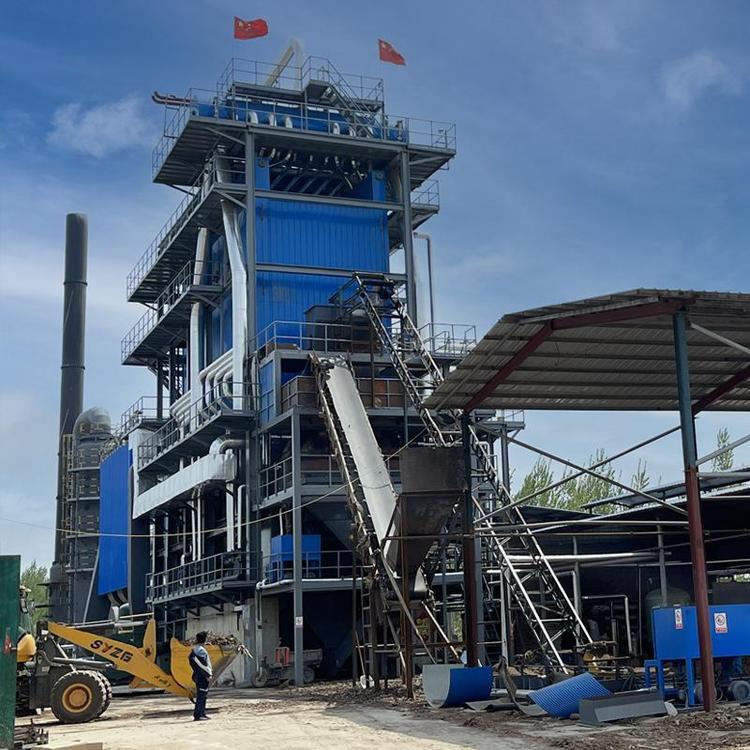

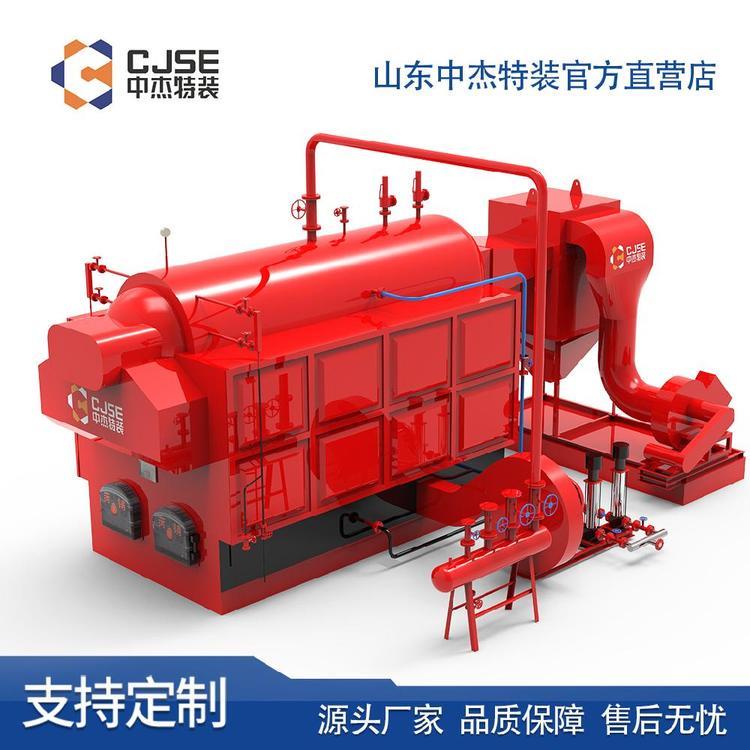
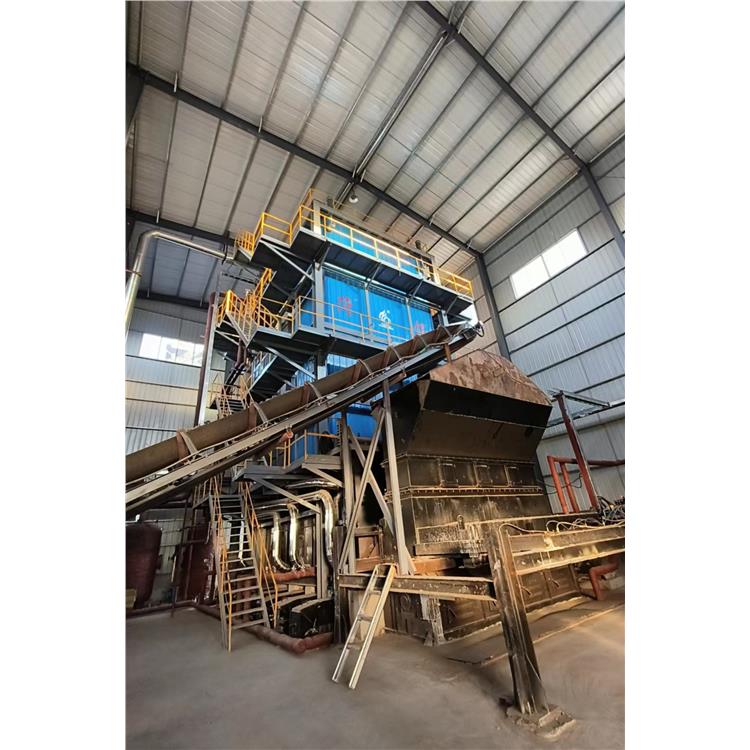


















Shandong Zhongjie Special Equipment (formerly Heze Boiler Factory Co., Ltd.) holds an A-grade boiler manufacturing license, an A2-grade pressure vessel manufacturing license, an A2-grade pressure vessel design license, a B-grade boiler installation license, and GB2/Class, GC2/Class pressure pipeline installation licenses, as well as an electromechanical equipment installation contracting qualification. It is a member of the China Boiler and Water Treatment Association, the China Chemical Equipment Association, and the Council Member of the Shandong Equipment Manufacturing Association. The company has also passed certifications for the ISO9001 Quality Management System, ISO14001 Environmental Management System, OHSAS18001 Occupational Health and Safety Management System, and the American ASME/U2 certification.
Transforming coal-fired boilers into biomass boilers can offer the following benefits:
Environmentally Friendly: The fuel for biomass boilers comes from organic matter such as plants, animals, and microorganisms. Compared to coal-fired boilers, biomass boilers emit less carbon dioxide during combustion, reducing greenhouse gas emissions and being more environmentally friendly.
Energy-saving and emission reduction: Biomass boilers, utilizing combustion technology and heat recovery systems, enhance energy efficiency and minimize waste. Moreover, the combustion of biomass fuel produces relatively less ash and pollutants, reducing environmental pollution.
Energy Security: Biomass, as a domestic renewable energy source, can reduce dependence on imported energy and enhance energy security. In areas with scarce resources, switching to biomass boilers can provide a reliable energy supply.
Economic benefits: Biomass fuel is relatively cost-effective, capable of reducing energy costs. Moreover, the technology and equipment for biomass boilers are continuously evolving and maturing, making them more economically competitive.
Waste Utilization: Transforming coal-fired boilers into biomass boilers can utilize agricultural by-products such as straw and wood waste, effectively utilizing waste resources and reducing resource waste.
It's important to note that converting coal-fired boilers to biomass boilers requires corresponding technical upgrades and equipment updates, including the combustion system, fuel supply system, and flue gas treatment system. The conversion process must consider fuel characteristics, combustion properties, and equipment compatibility to ensure the stable operation of the biomass boiler and the achievement of the anticipated energy-saving and emission-reduction effects. Therefore, it is advisable to seek engineering technical support and consultation when undergoing coal boiler conversion.
The biomass boiler body is typically composed of the following components, each serving a specific function:
Furnace Chamber: The furnace chamber is the area where biomass fuel is burned, serving as the space for combustion and heat exchange. The fuel inside the chamber releases heat energy during the combustion process, while flue gases exchange heat with water through the furnace chamber.
Chimney Flue: The flue is a passage for smoke gas flow, guiding the flue gas from the furnace to the chimney for排放. The flue gas inside exchanges heat with the boiler's water, transferring heat from the flue gas to the water, thereby improving thermal efficiency.
Drum: The drum is the main part containing water and steam, where water is heated to convert into steam. The drum is equipped with a water level control device to regulate the water level, ensuring the safe operation of the boiler.
Grate: A grate is a device used to support and burn biomass fuel, its function being to evenly distribute the fuel within the furnace chamber and to provide air supply to promote the combustion process.
Superheater: A superheater is a device that heats the saturated steam in a boiler to increase its temperature and pressure. It transfers heat from the flue gases to the steam through heat exchange between the two.
Condenser: A condenser is a device used to condense steam into water, releasing the heat from the steam. By exchanging heat with a cooling medium (such as cold water), a condenser converts the heat in the steam into thermal energy, thereby improving thermal efficiency.
Chimney: A chimney is a conduit for releasing flue gases into the atmosphere, serving the purpose of exhaust.
The fully automatic biomass boiler features the following characteristics:
Automation Control: The fully automatic biomass boiler is equipped with an automated control system that enables automatic ignition, fuel supply, and automatic adjustment of combustion parameters. Through the coordination of sensors and controllers, intelligent control of the boiler and monitoring of its operating status are achieved.
Energy-saving: The fully automatic biomass boiler utilizes advanced combustion technology and heat recovery techniques to maximize the thermal energy of biomass fuel, enhancing energy efficiency. Additionally, the automated control system can intelligently adjust to actual needs, reducing energy waste.
Low-emission and environmental friendly: The combustion process of fully automatic biomass boilers produces relatively low levels of pollutants. Through reasonable combustion adjustment and supplementary pollution control equipment such as dust collectors and nitrogen oxide control devices, emissions of particulates and nitrogen oxides in flue gas can be further reduced.
Multiple Fuel Adaptability: The fully automatic biomass boiler boasts strong fuel adaptability, capable of using a variety of biomass fuels such as wood chips, straw, wheat straw, fruit shells, etc. This allows for the selection of the appropriate fuel based on actual conditions, enhancing flexibility and sustainability.
Safety and Reliability: Our fully automatic biomass boilers are designed and manufactured with safety and reliability in mind, featuring multiple safety protection devices such as overheat protection, pressure protection, and burner fault protection. Additionally, the automated control system can monitor and alert in real-time, ensuring the safe operation of the boiler.
Overall, fully automatic biomass boilers feature automated control, energy-saving, low emission and environmental protection, versatility in fuel types, and safety and reliability.
The utilization of waste heat from biomass boilers is a crucial means to enhance energy efficiency and reduce energy consumption and emissions. Below are some common applications and analyses of waste heat recovery technologies in biomass boilers:
Economic Air Preheater: Biomass boiler combustion generates flue gas containing a large amount of heat energy. The economic air preheater recovers and utilizes the waste heat from the flue gas to preheat the air entering the boiler, enhancing combustion efficiency. By recovering waste heat, fuel consumption can be reduced and flue gas emissions minimized.
Economizer: An economizer is a device used to recover waste heat from flue gases by transferring the heat to the boiler feed water, thereby increasing the feed water temperature and reducing fuel consumption. The application of an economizer can effectively lower the flue gas temperature of the boiler and improve thermal efficiency.
Waste Heat Boiler from Biomass Boiler Flue Gas: This is a device that utilizes the waste heat from the flue gas of a biomass boiler to produce steam or hot water. By converting the waste heat in the flue gas into usable thermal energy, it achieves the reuse of energy and improves the energy utilization efficiency.
Direct Utilization of Flue Gas: Waste heat from biomass boiler flue gas can be directly used for heating or drying processes, reducing the need for other energy sources. For instance, flue gas is transported through chimneys or pipelines to the location requiring heating, directly utilizing the heat energy of the flue gas.
Flue Gas Waste Heat Recovery System: The flue gas waste heat recovery system captures and utilizes the residual heat from biomass boiler flue gases, supplying it to other equipment or systems such as air conditioning, heating, and hot water. This achieves comprehensive energy utilization and improves overall energy efficiency.
Zhejiang Zhejet Co., Ltd. upholds the great vision of "realizing employees' dreams, creating customer value, and striving for the prosperity and strength of our motherland," devoting itself wholeheartedly to the development of green energy equipment. We dedicate products and services with high cost-performance to the society!
WeChat Official Account

Scan to follow Official Account



















