



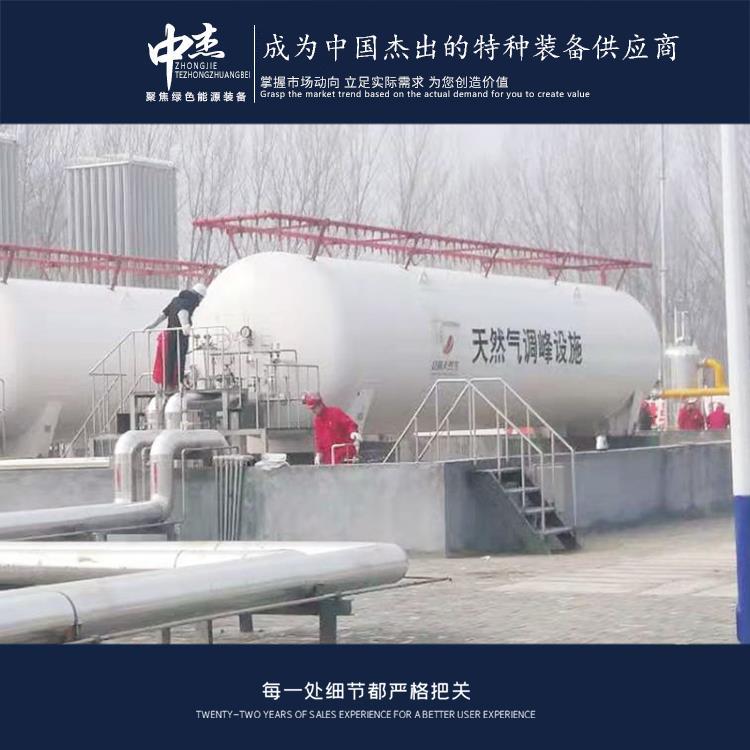


















Shandong Zhongjie Special Equipment Co., Ltd. (formerly Heze Boiler Factory Co., Ltd.) was established in 2001, located at No. 2218 Jinnan Road, Economic and Technological Development Zone, Heze City. With a registered capital of 50 million yuan and total assets of 500 million yuan, the company operates 7 business centers: boilers, deep-freeze vessels, pressure vessels, central air conditioning, engineering installation, international trade, and the Internet of Things. It has three manufacturing sites on Jinnan Road, East Changjiang Road, and Bohai Road, covering a total of 200,000 square meters. The main workshop spans 83,000 square meters. Currently, the company employs 710 people, including 247 engineering and technical personnel and 82 intermediate-level technicians. In December 2016, it was recognized as a "High-Tech Enterprise" by the Science and Technology Department. In June 2021, it was named a "Specialized and New Enterprise in Shandong Province" by the Industry and Information Technology Department. In June 2022, it was identified as a "Deer Enterprise in Shandong Province" and in August 2022, as a "Specialized and New Small Giant Enterprise" by the Ministry of Industry and Information Technology.
Carbon dioxide has several key applications in the battery industry:
- Solvent in Electrolytes: Carbon dioxide can serve as one of the solvents in battery electrolytes. In certain battery types, it can be mixed with organic solvents to enhance the performance and stability of the electrolyte.
- Protective Gas in Battery Manufacturing: During the battery manufacturing process, carbon dioxide can be used as a protective gas. For instance, during assembly and encapsulation, it can replace air to prevent oxidation and corrosion of battery materials due to oxygen and moisture in the battery.
- Battery Performance Improvement: Carbon dioxide can improve battery performance by altering the atmosphere within the battery. For example, injecting carbon dioxide gas into the battery can regulate pressure and temperature, enhancing the battery's cycle life and safety.
- Carbon Dioxide Capture and Storage: The production of batteries generates carbon dioxide emissions. Carbon dioxide capture and storage technologies can be employed to reduce these emissions. By capturing and storing carbon dioxide, atmospheric emissions can be minimized, reducing environmental impact.
- Note: The application of carbon dioxide in the battery industry is continuously evolving and being researched. With technological advancements and innovation, there may be more breakthroughs and developments in the use of carbon dioxide in this field.
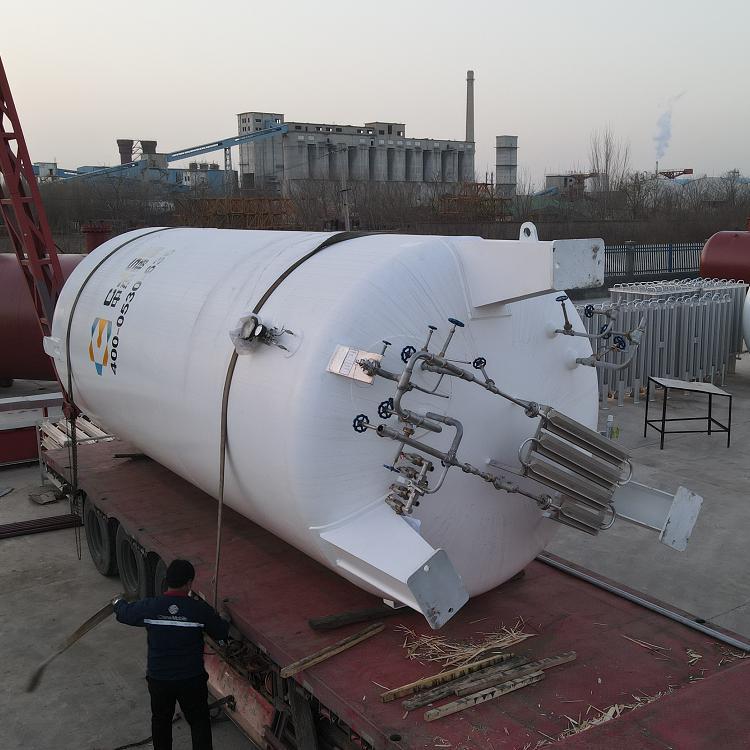
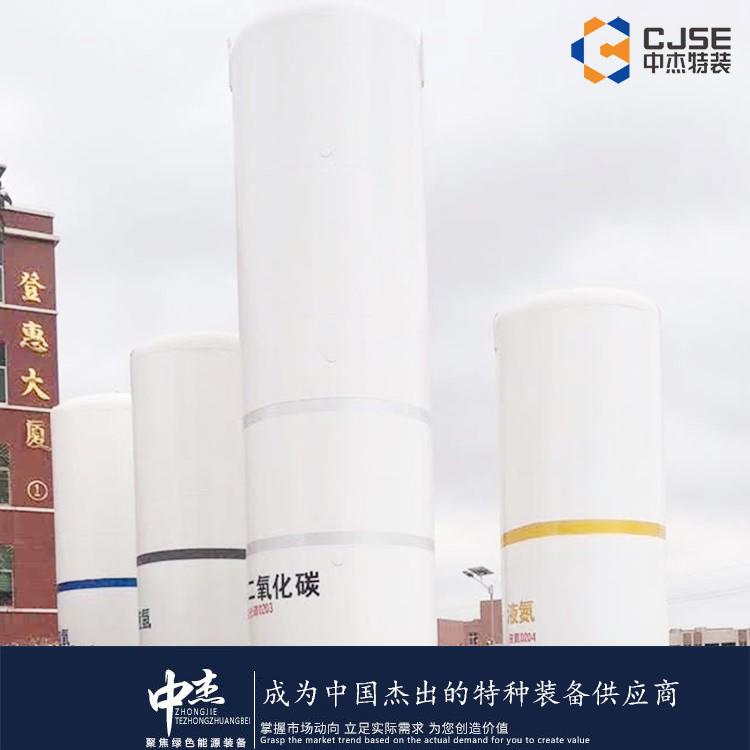
Low-temperature CO2 storage tanks are equipment used for storing and transporting low-temperature liquid CO2. Here are some facts about low-temperature CO2 storage tanks: Tank Structure: These tanks typically feature a double-walled design, with the inner wall for liquid CO2 storage and the outer wall for insulation. The interior is usually made of stainless steel or aluminum alloy, offering excellent corrosion resistance. Storage Temperature: The storage temperature for low-temperature CO2 tanks usually ranges from -40°C to -196°C, depending on specific application requirements. Temperature control is crucial for maintaining the stability and safety of the liquid CO2. Storage Capacity: The capacity of low-temperature CO2 storage tanks can be selected based on actual needs, typically ranging from a few thousand to tens of thousands of liters. The capacity selection should consider storage requirements, supply frequency, and spatial constraints. Safety Protection: Low-temperature CO2 storage tanks must be equipped with safety devices such as pressure relief valves, pressure sensors, and temperature sensors to ensure internal pressure and temperature remain within safe limits. Transportation: These tanks can be transported via road, rail, or ship. Proper insulation measures must be taken during transportation to maintain the low-temperature state of the liquid CO2 inside. Safe Operation: The operation of low-temperature CO2 storage tanks requires training and adherence to safety procedures. Operators should be familiar with the tank's characteristics and safety precautions to ensure safe and effective operation. Regular Inspection and Maintenance: Regular checks and maintenance are necessary for low-temperature CO2 storage tanks, including visual inspections, valve and pipeline checks, and pressure relief device checks. Regular maintenance ensures the tank's normal operation and safety. The above information covers some key aspects of low-temperature CO2 storage tanks. When using and operating these tanks, it is essential to follow relevant safety regulations and standards, and consult experts to ensure safety and effectiveness.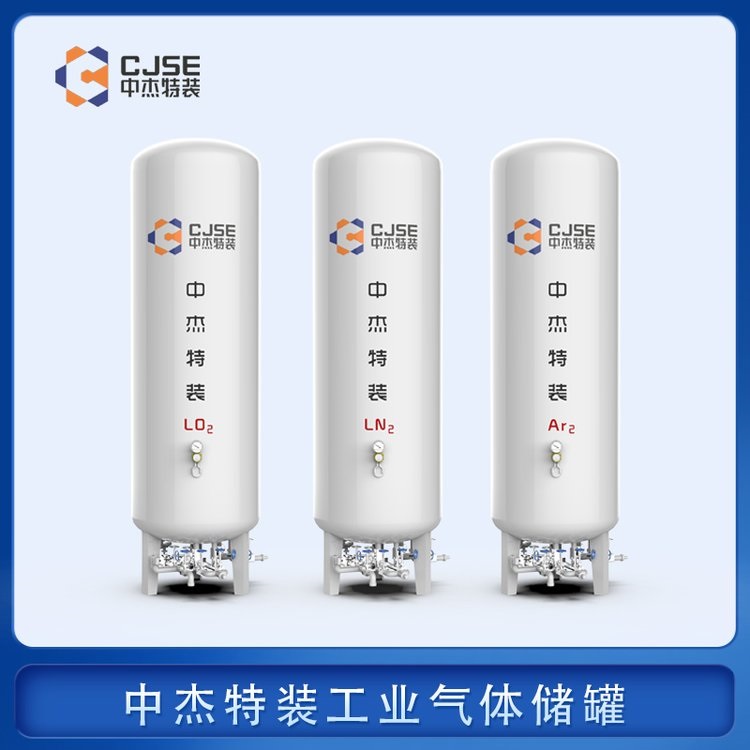
A carbon dioxide storage tank pressure maintenance system is a system designed to maintain the internal pressure of a carbon dioxide storage tank. Since carbon dioxide is a gas at room temperature, it needs to be compressed into a liquid state during storage to increase storage density. The primary function of the pressure maintenance system is to monitor and adjust the pressure inside the tank, ensuring that the carbon dioxide within stays within a safe and stable pressure range. The system typically consists of the following components:
- Pressure Sensor: Installed inside the tank, it monitors the pressure in real-time and transmits pressure signals to the control system.
- Control System: Receives signals from the pressure sensor and controls operations based on pre-set pressure ranges. It triggers appropriate control measures when the pressure inside the tank exceeds or falls below the set range.
- Pressure Regulating Valve: Adjusts the pressure inside the tank according to the control system's instructions. When pressure is too high, the valve opens to release some gas to lower the pressure. When pressure is too low, the valve closes to prevent further gas release, increasing the pressure.
- Pressure Reserve Device: Usually a pressure vessel used to store additional gas for providing extra pressure support when needed. When the pressure inside the tank drops, the reserve device releases gas to maintain the pressure within the tank.
Through the coordinated work of these components, the carbon dioxide storage tank pressure maintenance system ensures that the pressure inside the tank remains within a safe and stable range, which is crucial for the normal operation and safety of the tank.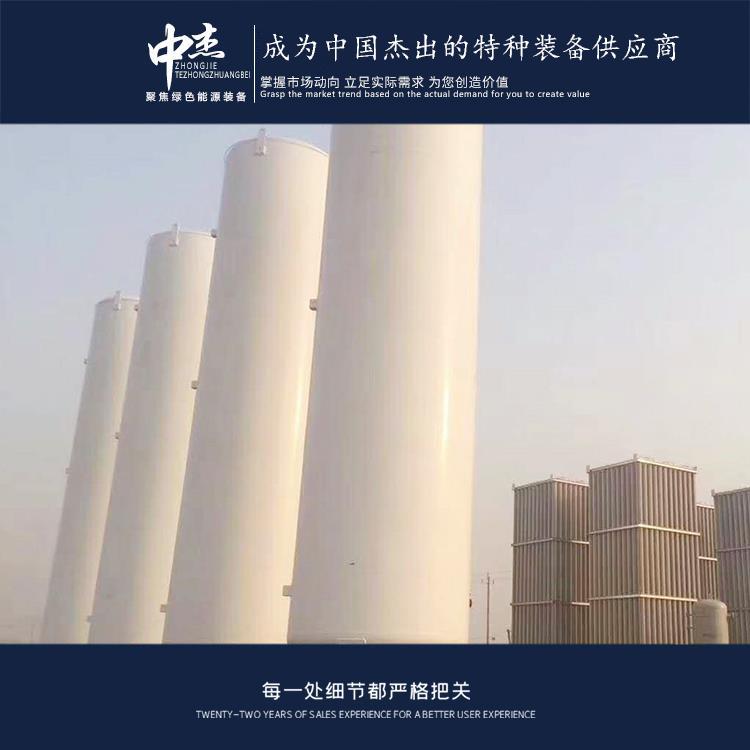
Leakage issues in CO2 storage tanks may be caused by the following reasons: Material Corrosion: CO2 has some corrosive properties, and prolonged contact may lead to corrosion of the tank material. Corrosion can damage the surface protective layer of the tank, causing it to lose its sealing properties and resulting in leaks. Welding Defects: The welding joints of the tank may contain defects, such as cracks in the welds or blow holes. These defects can weaken the strength of the welded areas, leading to leaks. Design Defects: Inadequate design or defects in the tank may also cause leaks. For example, poorly designed interface connections or unreasonable structural designs can lead to leakage problems in the tank. Excessive Pressure: If the internal pressure of the tank exceeds its capacity, it may cause deformation or cracking of the tank, leading to leaks. Temperature Fluctuations: During temperature changes, due to thermal expansion and contraction effects, CO2 storage tanks may deform or experience stress concentration, causing leaks. Incorrect Operation: Improper operation and maintenance can also lead to tank leaks. For example, over-tightening valves or inappropriate maintenance measures can reduce the tank's sealing performance. External Damage: External impacts, scratches, or corrosion on the tank can cause surface damage or corrosion, resulting in leaks. To avoid leakage issues in CO2 storage tanks, select appropriate materials, reasonable design, and manufacturing processes, and conduct regular inspections and maintenance. Additionally, operators should receive training and adhere to operational procedures to ensure safe operation of the tank.
ZJ Special Equipment adheres to the great vision of "realizing employees' dreams, creating value for customers, and striving for the prosperity and strength of our motherland," devoting itself to the development of green energy equipment. We dedicate high-value products and services to society!
WeChat Official Account

Scan to follow Official Account



















