


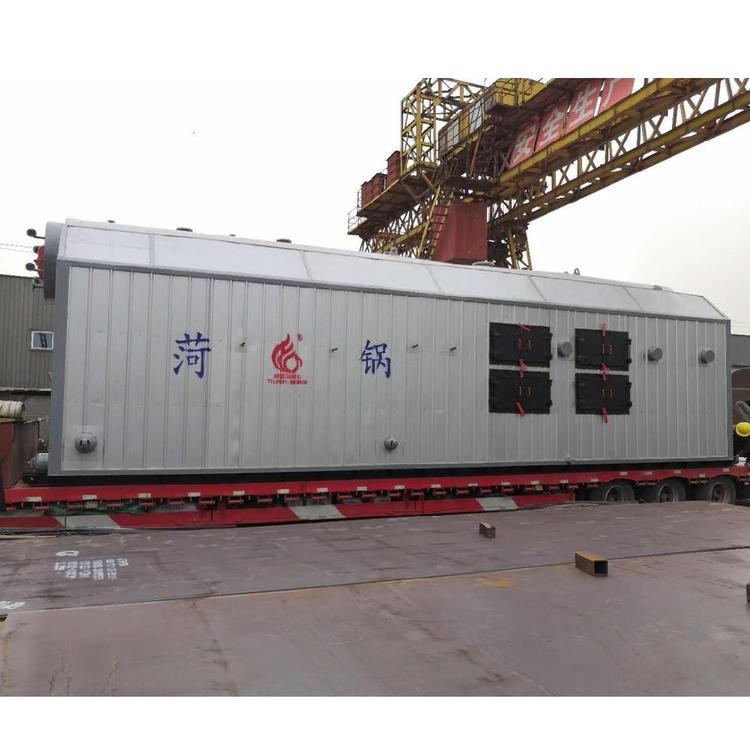

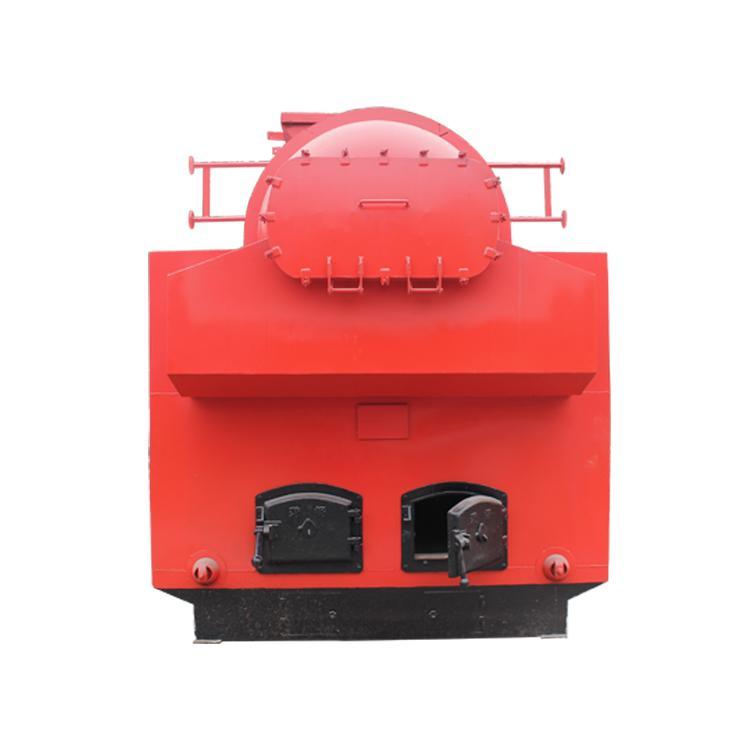
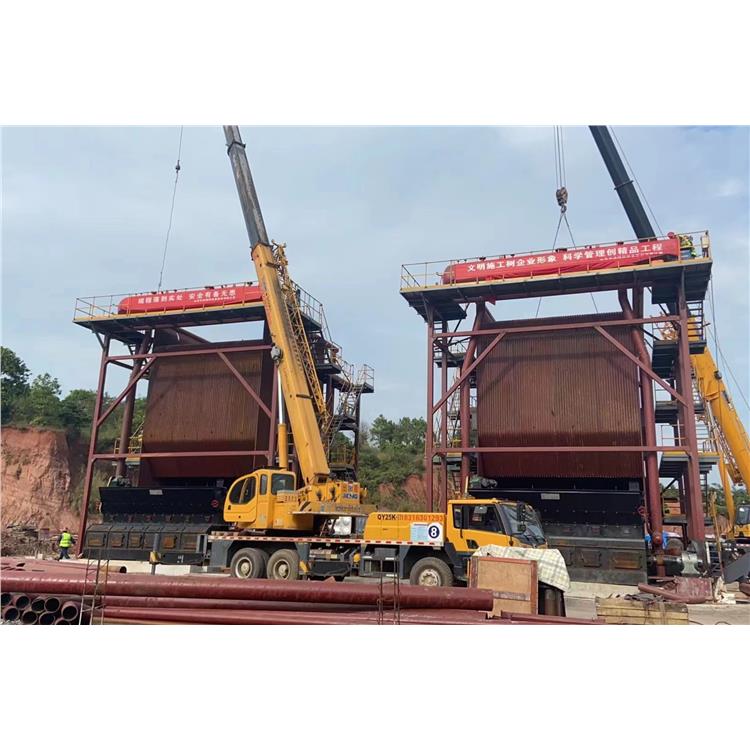


















Shandong Zhongjie Special Equipment (formerly Heze Boiler Factory Co., Ltd.) was established in 2001, located at No. 2218 Jinnan Road, Economic and Technological Development Zone, Heze City. With a registered capital of 50 million yuan and total assets of 500 million yuan, the company has seven business centers: boilers, deep-freeze containers, pressure vessels, central air conditioning, engineering installation, international trade, and Internet of Things. It has three factory areas on Jinnan Road, East Yangtze Road, and Bohai Road, covering a total of 200,000 square meters. The main workshop spans 83,000 square meters. Currently, there are 710 employees, including 247 engineers and technicians, and 82 intermediate-level technical personnel. In December 2016, it was recognized as a "High-Tech Enterprise" by the Science and Technology Department. In June 2021, it was identified as a "Specialized and New Enterprise in Shandong Province" by the Ministry of Industry and Information Technology. In June 2022, it was recognized as a "Gazelle Enterprise in Shandong Province." In August 2022, it was identified as a "Specialized and New Small Giant Enterprise" by the Ministry of Industry and Information Technology.
The application of biomass boilers holds significant importance for energy conservation and emission reduction:
Reducing Carbon Emissions: Fuel for biomass boilers comes from organic matter such as plants, animals, and microorganisms. The carbon dioxide released during combustion can be absorbed by plants, creating a cycle. Compared to traditional fossil fuels, biomass fuel has a lower carbon emission rate, effectively reducing greenhouse gas emissions and is crucial in combating climate change.
Reduce Energy Consumption: Biomass boilers, utilizing combustion technology and a heat recovery system, can enhance energy utilization efficiency and minimize waste. By conserving energy, energy costs can be reduced and the benefits of energy use can be improved.
Reducing Dependence on Fossil Fuels: Biomass, as a local renewable energy source, can decrease reliance on imported fossil fuels and enhance energy security. In areas with scarce resources, the use of biomass boilers can provide a reliable energy supply, reducing dependence on external energy sources.
Promoting Agricultural and Forestry Development: The fuel for biomass boilers primarily comes from agricultural residues like straw, wood, and other by-products of agriculture and forestry, which fosters the sustainable development of these sectors. By effectively utilizing agricultural and forestry waste, resource wastage can be reduced and the comprehensive benefits of the agricultural and forestry industries can be enhanced.
Promote Environmental Protection: Biomass boilers produce relatively low emissions and ash during combustion, resulting in minimal environmental impact. Additionally, using biomass boilers can reduce the exploitation and destruction of natural resources, thereby protecting the ecological environment.
In summary, utilizing biomass boilers is of great significance for energy conservation and emission reduction.
Dust removal technology for coal-fired boilers is designed to reduce particulate emissions during the combustion process, protecting the environment and improving air quality. Here are several common dust removal techniques for coal-fired boilers:
Mechanical Dust Collectors: Mechanical dust collectors are among the common dust removal equipment, separating particulate matter from flue gas through physical principles. Common types include gravity dust collectors, inertial dust collectors, bag dust collectors, etc. The working principle of mechanical dust collectors is to utilize the inertia, gravity, or filtering effect of particulate matter to separate it from the flue gas.
Electrostatic precipitator: An electrostatic precipitator uses the force of an electric field to charge particles in flue gas, then collects the charged particles by the action of the electric field. There are two types of electrostatic precipitators: dry and wet. The dry electrostatic precipitator is suitable for high-temperature flue gas, while the wet electrostatic precipitator is suitable for flue gas with high humidity.
Wet-type Dust Collector: The wet-type dust collector utilizes spray water or other liquids to humidify particulates in flue gas, and then separates the humidified particulates from the flue gas through gravity or inertia. It is suitable for the treatment of flue gas with high humidity and adhesive particulates.
Electrostatic Precipitator: An electrostatic precipitator utilizes the force of an electric field to charge particles in flue gas, then collects the charged particles by the action of the electric field. Suitable for the treatment of high-temperature flue gas and fine particles.
Integrated dedusting technology: The integrated dedusting technology combines the two processes of desulfurization and dedusting into one, achieving integrated treatment by sharing equipment and jointly processing flue gas. This technology reduces the footprint of equipment, lowers investment and operational costs.
Above are common coal-fired boiler dust removal technologies. Different dust removal technologies are suitable for different flue gas and particulate matter characteristics. In practical applications, an appropriate combination of dust removal technologies can be selected based on specific circumstances to achieve the goal of reducing particulate matter emissions.
The extinguishing process and maintenance methods for the fully automatic biomass boiler are as follows:
Extinguishing Process:
Cease fuel supply: Prior to extinguishing the biomass boiler, stop the fuel supply first to ensure the fuel supply pipeline is closed.
Turn off the burner: Switch the burner's switch or the extinguish button on the control panel to the off position to stop the burner from operating.
Allow to cool: Wait for the boiler to cool down to a safe temperature, which usually takes some time. Do not operate during this period to avoid any accidents.
Shut off power: After the boiler has completely cooled down, turn off the power switch of the boiler to ensure the boiler is de-energized.
Maintenance Instructions:
Clean combustion chamber: Regularly clean the combustion chamber to remove ash and dirt generated during the combustion process. Use appropriate tools and cleaning agents to ensure the chamber remains clear and clean.
Heat Exchanger Cleaning: Regularly clean heat exchangers, particularly those on the flue side. Combustion may produce particulates and slag in the flue gases, which can adhere to the heat exchanger surface, affecting heat transfer efficiency. Appropriate cleaning methods, such as mechanical or chemical cleaning, can reduce the accumulation of dirt.
Inspect and Replace Critical Components: Regularly inspect and replace critical components such as burners, valves, sensors, etc. Ensure the normal operation and performance of these parts, avoiding malfunctions and safety hazards.
Water Treatment: Perform appropriate water treatment for the boiler supply to prevent impurities and sediments from accumulating inside the boiler. Methods such as water softening, deoxygenation, and scale removal can be employed to maintain the cleanliness and stability of the supply.
Please provide the Chinese content that needs to be translated into American English.
To prevent the issue of slagging in biomass boilers, the following measures can be taken:
Choose the right fuel: Opt for biomass fuel with good quality and moderate humidity, avoiding overly wet or excessively impure fuel, as this helps reduce the risk of coking.
Regulate fuel supply rate: Control the rate of fuel supply to avoid too fast or too slow feeding, ensuring complete combustion of fuel and minimizing the risk of coking.
Maintain an appropriate combustion temperature: Keep the combustion temperature at an appropriate level, avoiding both too low and too high temperatures. Too low temperatures can lead to coking, while too high temperatures may cause incomplete combustion.
Control Air Supply: Properly regulate the air supply to ensure complete fuel combustion, avoiding excessive air entering the combustion chamber to minimize the risk of coking.
Regular cleaning and maintenance: Regularly clean the ash and carbon deposits in the combustion chamber to maintain the boiler's cleanliness and prevent the occurrence of scaling issues.
Install焦垢MonitoringEquipment: Install a coking monitoring device to continuously monitor the coking situation within the combustion chamber, and take timely measures for treatment to prevent the further development of coking issues.
Above are some common measures to prevent biomass boiler slagging. Specific preventive measures should be adjusted and optimized based on the specific conditions and operational requirements of the boiler.
Zhongjie Special Equipment adheres to the great vision of "realizing employees' dreams, creating customer value, and striving for the prosperity and strength of our motherland," and is dedicated to the development of the green energy equipment industry, contributing high-value products and services to society!
WeChat Official Account

Scan to follow Official Account



















