


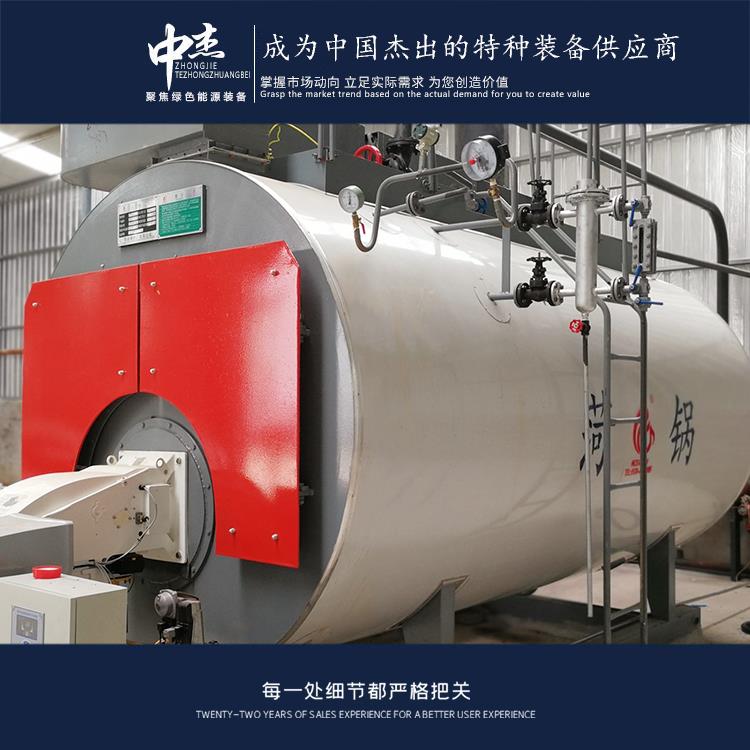

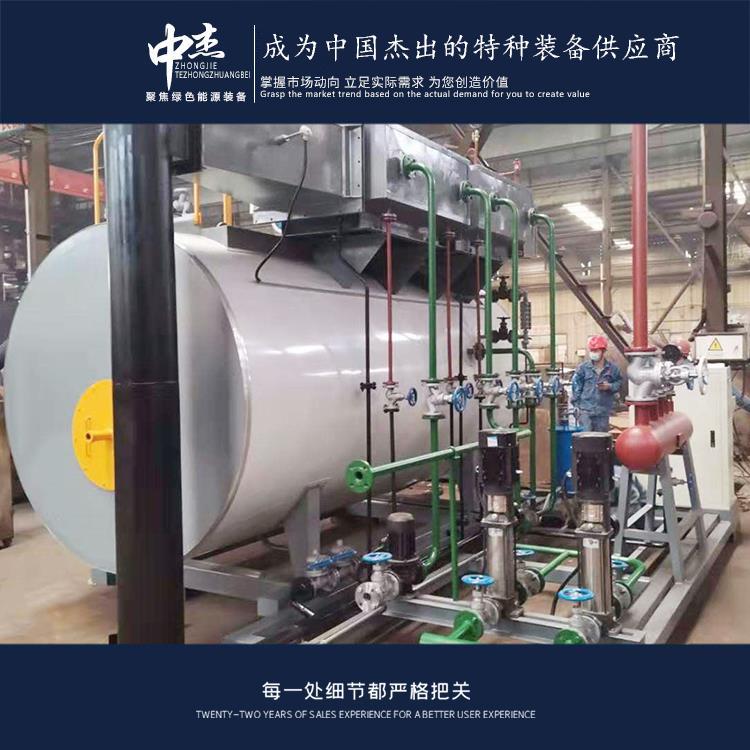
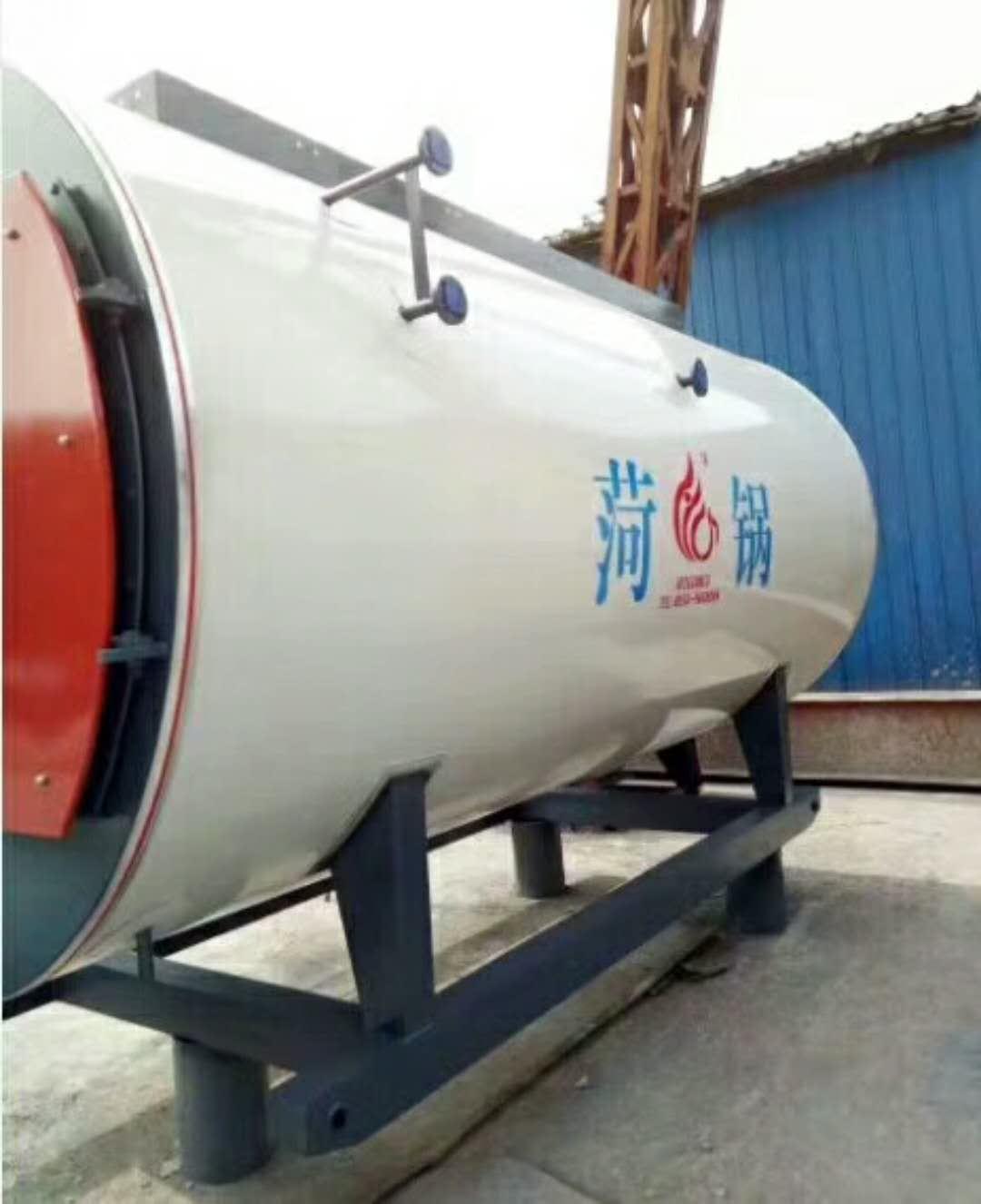


















Shandong Zhongjie Special Equipment Co., Ltd. (formerly Heze Boiler Factory Co., Ltd.) was established in 2001, located at No. 2218 Jinnan Road, Development Zone, Heze City. With a registered capital of 50 million yuan and total assets of 500 million yuan, the company operates 7 major business centers: boilers, deep-freezing vessels, pressure vessels, central air conditioning, engineering installation, international trade, and the Internet of Things. It has three factory sites on Jinnan Road, East Changjiang Road, and Bohai Road, covering a total of 200,000 square meters, with the main workshop spanning 83,000 square meters. The company currently employs 710 people, including 247 engineers and technicians, and 82 middle-level technical personnel. In December 2016, it was recognized as a "High-tech Enterprise" by the Science and Technology Department. In June 2021, it was named a "Specialized and New Enterprise of Shandong Province" by the Industrial and Information Technology Department. In June 2022, it was identified as a "Gazelle Enterprise of Shandong Province" and in August 2022, it was recognized as a "Specialized and New Small Giant Enterprise" by the Ministry of Industry and Information Technology.
When designing a fuel-gas boiler room, the following points should be considered:
Safety Considerations: Ensure that the design of the boiler room complies with relevant safety standards and regulations. Account for fire risks and set up appropriate firewalls, fire doors, and fire isolation facilities. Ensure good ventilation in the boiler room, with suitable ventilation equipment and flue systems to expel harmful gases produced by combustion.
Space and Layout: Plan the space and layout of the boiler room based on the number and size of the boilers. Ensure there is sufficient space for operation, maintenance, and cleaning. Arrange the boilers, fuel storage equipment, flue systems, and pipe layouts in a manner that facilitates operation and maintenance.
Fuel Supply and Storage: Consider the requirements for fuel supply and storage. Ensure the safety and reliability of fuel supply pipelines and equipment to avoid leaks and contamination. Plan the capacity and location of fuel storage equipment reasonably to ensure an adequate fuel supply and compliance with relevant safety requirements.
Emission and Exhaust Gas Treatment: Consider the exhaust gas emissions and treatment resulting from combustion. Set up appropriate flue systems and exhaust gas treatment equipment to reduce the impact of emissions on the environment. Ensure that the design and layout of the flue system are reasonable and can effectively expel smoke and exhaust gases.
Control and Monitoring Systems: Design suitable control and monitoring systems to ensure the safety and operation of the boiler. This includes monitoring and control equipment for parameters such as temperature, pressure, and flow, as well as alarm and automatic shutdown devices. Ensure that operators can promptly understand the operating status of the boiler and take appropriate actions.
During the operation of a thermal oil furnace, several important matters should be noted:
- Temperature Control: During the operation of the thermal oil furnace, it is crucial to closely monitor and control the temperature of the thermal oil. Ensure the temperature remains within a safe range to avoid decomposition of the oil at high temperatures or condensation and scaling at low temperatures. Regularly inspect and calibrate the temperature sensors to ensure accurate temperature measurements.
- Pressure Control: Maintain an appropriate operating pressure during the operation of the thermal oil furnace. Excessive pressure can lead to equipment damage or leaks, while insufficient pressure may reduce heat transfer efficiency. Regularly inspect and maintain the pressure gauge and safety valve to ensure accurate and safe pressure control.
- Oil Quality and Cleanliness: The quality and cleanliness of the thermal oil are vital for the normal operation of the furnace. Regularly inspect and replace the thermal oil to ensure it meets the required quality and performance standards. Regularly clean and maintain the heat exchanger, burner, and flue components to prevent the accumulation of dust and dirt, which can affect heat transfer efficiency.
- Regular Maintenance and Inspection: Regular maintenance and inspection of the thermal oil furnace are necessary to ensure its proper operation and extend its lifespan. Regularly inspect and clean the burner, flue, and heat exchanger components, check and replace seals and valves, inspect and calibrate safety devices, and ensure the equipment's safety and reliability.
- Safe Operation: Adhere strictly to operational procedures and safety protocols during the operation of the thermal oil furnace. Operators must possess the relevant skills and knowledge.
Steam boilers produce a certain amount of waste water during operation, which requires effluent treatment. Here are the general steps for steam boiler effluent discharge:
Preparation: Before discharging, ensure the steam boiler is shut down and the pressure inside the boiler has been reduced to a safe level.
Open the Drain Valve: Locate the appropriate drain valve according to the steam boiler's design and open it. The drain valve is typically found on the bottom or near the bottom of the boiler's drain pipe.
Discharge Waste Water: Once the drain valve is open, waste water will flow out of the drain pipe. Depending on the situation, use a drain pump or gravity to expel the waste water.
Observe the Waste Water: During the discharge process, observe the color, turbidity, and odor of the waste water to determine if there are any abnormalities, such as sediment, impurities, or strange odors.
Close the Drain Valve: Close the drain valve when the waste water has been fully discharged or the predetermined effluent target has been reached.
Clean the Drain System: Regularly clean the drain system to prevent blockages or accumulation of debris, ensuring the system remains clear.
Note that the specific steps and frequency of steam boiler effluent discharge may vary depending on the model, usage conditions, and operational requirements of the boiler. Therefore, it is advisable to refer to the boiler's operation manual or consult with experts for proper and safe operation.
Clean and environmentally friendly gas boilers offer several advantages:
- Low emissions: The exhaust emissions from gas combustion are relatively low, with lesser amounts of pollutants like nitrogen oxides and particulates. Compared to coal or oil-fired boilers, gas boilers have lower emissions, causing less environmental pollution.
- High thermal efficiency: Gas combustion has a higher thermal efficiency, allowing for maximum energy utilization from the fuel, reducing energy waste. Compared to other traditional fuels like coal and oil, gas combustion is more efficient, providing more heat energy.
- Clean combustion: Gas combustion does not produce ash or dust, reducing the accumulation of carbon and dirt inside the boiler and in the flue. This reduces the cleaning and maintenance of the boiler, extending its lifespan.
- Stable combustion: The combustion performance of gas is stable, minimizing flame fluctuations and explosion risks during combustion. This makes gas boilers safer and more reliable in operation.
- Quick start and stop: Gas boilers have faster and more flexible start-up and shutdown processes compared to other fuels. This makes them suitable for scenarios requiring frequent start and stop, such as seasonal heating and hot water needs.
- Renewable energy integration: As a clean fuel, gas can be combined with renewable energy sources, such as solar hot water systems and biomass fuel. This integration can further enhance energy utilization efficiency and environmental friendliness.
Our company attaches great importance to technological innovation and research and development. We have one municipal-level enterprise technology center in Heze City, equipped with testing facilities for non-destructive testing, physical and chemical testing, welding testing, hydrostatic testing, etc. We have over 600 types of equipment, including CNC machine tools, X-ray flaw detectors, digital ultrasonic flaw detectors, mechanical property testing machines, chemical analyzers, spectrometers, tensile testing machines, plasma welding machines, and more. The key products and technologies we have developed, such as welding of temperature-pressure vessels, emissions reduction of biomass boilers, and waste heat utilization, have successively been selected for multiple Shandong Provincial Department of Industry and Information Technology science and technology innovation projects, Shandong Provincial key projects, and Heze City innovation and excellence projects. We have accumulated a total of 27 authorized utility models, 16 authorized inventions, participated in drafting 2 standards, 2 industry standards, and registered 15 trademarks. The technical team of our company, in collaboration with Professor Yajiang Li of Shandong University, has developed deep cryogenic container processing technology using the international plasma arc + wire filling argon arc welding (PAW-GTAW) technology, which has reached international standards in the field of deep cryogenic container manufacturing after being appraised as a provincial-level scientific and technological achievement.
Choose ZJET Tailor-Made Solutions, let's join hands to create brilliance!
WeChat Official Account

Scan to follow Official Account



















