


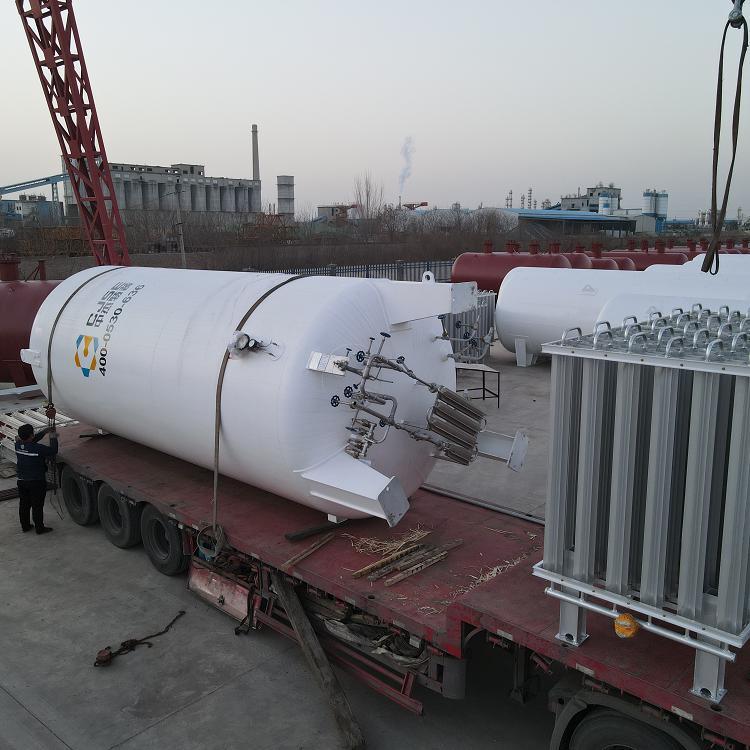

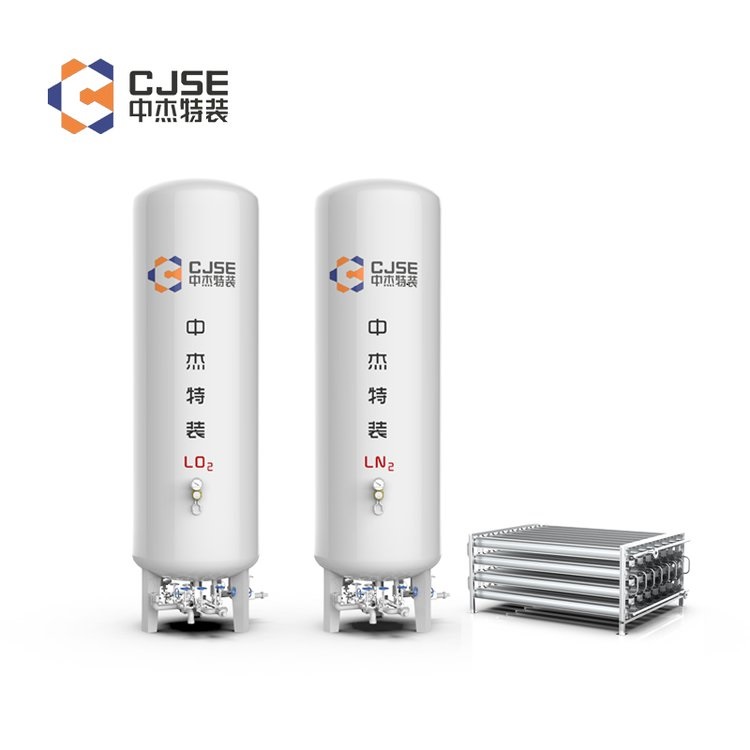
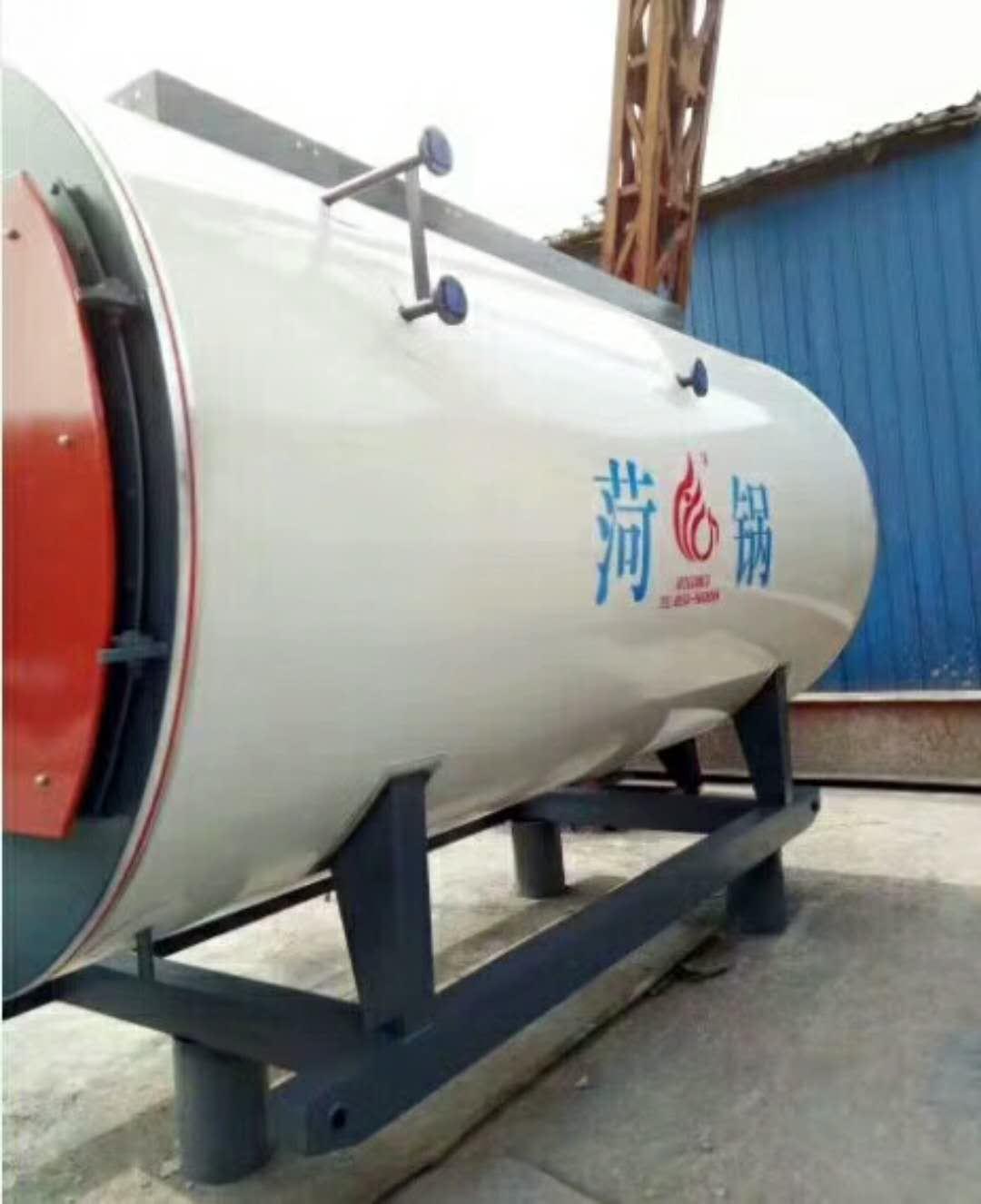


















Shandong Zhongjie Special Equipment's main products include: fuel (gas) boilers, organic heat carrier boilers, biomass boilers, waste heat boilers, and other boiler products; vacuum insulation cryogenic pressure vessels such as LNG tanks, oxygen-nitrogen-argon tanks, and CO2 tanks; pressure vessel products such as denitrification engineering equipment, heat storage and energy storage equipment, and complete chemical equipment; central air conditioning and HVAC equipment such as ground (water) source heat pumps, air source units, water-cooled screw units, and air-cooled modules. Planned products include large-scale energy centers, LNG transport vehicles, LNG tank containers, and other green energy equipment.
The dimensions and structure of liquid oxygen storage tanks can vary depending on specific requirements and applications. The following are common sizes and structures of liquid oxygen storage tanks:
Dimensions: The size of liquid oxygen tanks is typically determined by the storage or transportation capacity of liquid oxygen. Common capacities range from a few thousand to several tens of thousands of liters.
Structure: The structure of the liquid oxygen tank mainly includes the inner shell, outer shell, insulation layer, and supporting structure, etc.
Inner Vessel: The inner vessel of a liquid oxygen tank is designed to store liquid oxygen, commonly made of materials such as stainless steel or aluminum alloy, which offer excellent corrosion resistance and sealing properties.
Shell: The shell of the liquid oxygen tank is the external structure that protects the inner lining, commonly made of carbon steel or stainless steel, featuring sufficient strength and corrosion resistance.
Insulation Layer: The insulation layer of the liquid oxygen storage tank is used to reduce heat conduction and loss, maintaining the low-temperature state of the liquid oxygen. Common insulation materials include polyethylene foam, glass fiber, and aerogel, etc.
Support Structure: The support structure of the liquid oxygen tank is used to support and secure the inner shell and outer shell of the tank. The support structure is typically made of steel, offering sufficient strength and stability.
The dimensions and structural design of liquid oxygen tanks must consider the properties of liquid oxygen, storage or transportation requirements, safety standards, and other factors. When using liquid oxygen tanks, strict adherence to relevant operational specifications and safety requirements is necessary to ensure safe usage.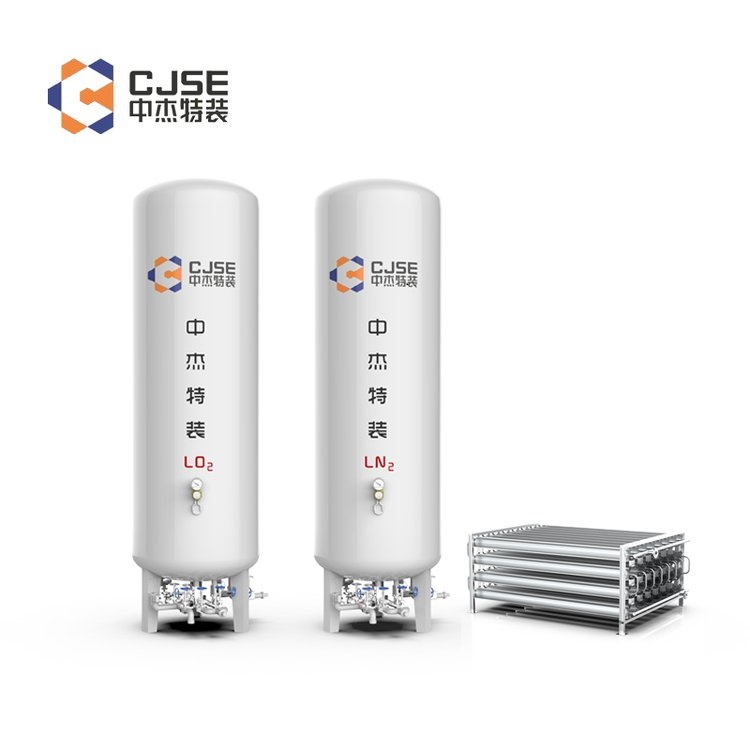
A liquid oxygen tank is a device used for storing liquid oxygen. Liquid oxygen is the liquid form obtained by cooling oxygen below its boiling point and is commonly used in fields such as medical, industrial production, and equipment. Liquid oxygen tanks are typically made of high-strength materials like stainless steel to ensure they can withstand the low temperatures and high pressures of liquid oxygen. The interior of the tank usually has an insulating layer to minimize evaporation of the liquid oxygen and maintain its低温 state. The design and manufacturing of liquid oxygen tanks must consider safety and reliability to prevent leaks and explosions. When using liquid oxygen tanks, strict operational procedures and safety standards must be followed to ensure the safety of personnel and equipment. The development and manufacturing of liquid oxygen tanks are carried out by engineers and technical teams, involving knowledge and technology from various fields such as materials science, mechanical engineering, and chemical engineering. Different manufacturers may use different design and manufacturing methods to meet the needs and application scenarios of different users.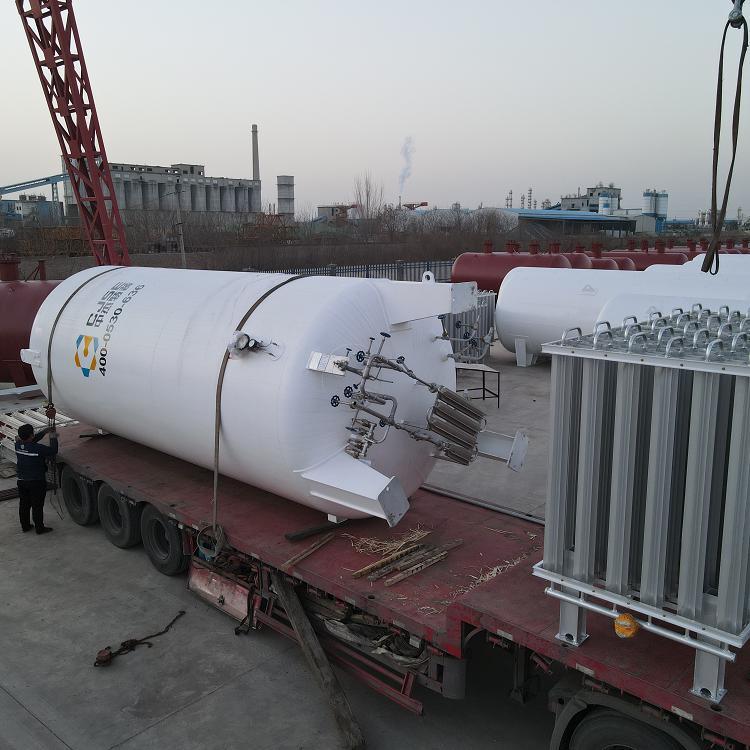
The safety distance for liquid oxygen storage tanks refers to the distance that must be maintained around the tank to ensure the safety of personnel and equipment. The specific requirements for safety distances may vary depending on different regions and application sites. Below are some common principles for safety distances:
Buildings and Equipment: Liquid oxygen tanks should be kept at a certain safe distance from buildings, equipment, and other storage tanks to prevent the spread of fires, explosions, and leaks. The specific safety distance requirements should be evaluated and determined based on local regulations and standards.
Fire Sources and Heat Sources: Liquid oxygen is highly oxidizing and prone to causing fires and explosions. Therefore, liquid oxygen tanks should be kept at a sufficient safe distance from fire sources, heat sources, and flammable materials to prevent fires and explosions.
Ventilation and Exhaust: Good ventilation and exhaust should be maintained around liquid oxygen storage tanks to prevent the accumulation of vapor and the formation of explosive mixtures. The design and operation of the ventilation and exhaust systems should comply with relevant safety standards and specifications.
Personnel and Traffic: Personnel and traffic around liquid oxygen storage tanks should be restricted and controlled to ensure personnel safety and the normal operation of the tank. Warning signs, safety fences, and restricted areas should be established to prevent unauthorized personnel from entering the tank area.
It is important to note that the safety distance for liquid oxygen storage tanks should be assessed and determined based on the specific application site and safety requirements. When designing, installing, and operating liquid oxygen storage tanks, relevant regulations, standards, and safety guidelines should be followed to ensure the safety and reliability of the tank.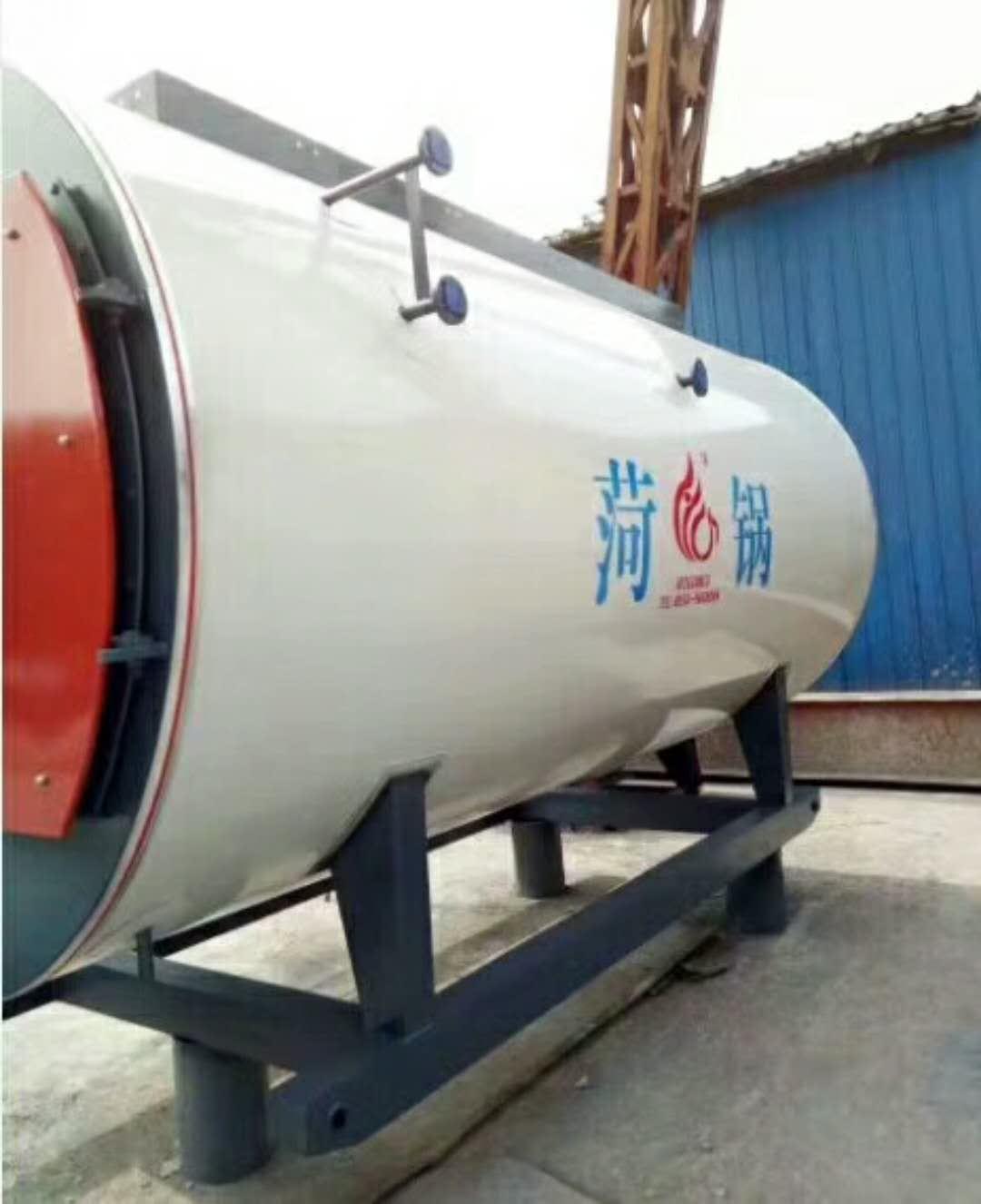
When selecting a liquid oxygen storage tank with a medical oxygen concentrator, consider the following factors:
Requirements: First, determine the oxygen demand of the institution or individual. Select the appropriate oxygen concentrator model and specification based on the required oxygen flow rate and pressure.
Safety and Reliability: Ensure the selected oxygen concentrator has high safety and reliability. Choose products that comply with relevant standards and regulations, featuring safety functions such as overpressure protection, leakage protection, and overload protection.
Operational ease: Select an oxygen concentrator that is simple to operate and user-friendly. Consider the methods of adjusting oxygen flow and concentration, as well as the clarity and readability of the operational interface.
Quality and Reputation: Choose an oxygen concentrator with excellent quality and reliability. Refer to customer reviews, word-of-mouth, and institutional recommendations when selecting a product.
Maintenance and After-Sales Service: Familiarize yourself with the maintenance requirements and after-sales support for oxygen generators. Ensure timely access to repairs and technical assistance to ensure the normal operation and maintenance of the oxygen generator.
Cost-Effective: Considering the price, performance, and features of the oxygenator, choose a product with a good cost-performance ratio. Select an oxygenator that suits your actual needs and budget.
Be mindful that when selecting liquid oxygen storage tanks with medical oxygen concentrators, adhere to the relevant equipment procurement regulations and standards. It's advisable to consult with equipment suppliers or relevant institutions to ensure the chosen concentrator meets your requirements and safety standards.
Our company places great emphasis on technological innovation and R&D, boasting 1 municipal-level enterprise technology center in Heze City. We have established testing facilities for non-destructive testing, physical and chemical testing, welding testing, hydrostatic testing, and more. Equipped with over 600 units of various equipment such as CNC machine tools, X-ray flaw detectors, digital ultrasonic flaw detectors, mechanical property testing machines, chemical analyzers, spectrometers, tensile testing machines, and plasma welding machines, our key products and technologies like welding for temperature-pressure vessels, biomass boiler emissions reduction, and waste heat utilization have successively been selected for multiple Shandong Provincial Department of Industry and Information Technology science and technology innovation projects, key provincial projects, and Heze City innovation and excellence projects. We have cumulatively obtained 27 authorized utility models, 16 authorized inventions, participated in drafting 2 standards, 2 industry standards, and registered 15 trademarks. Our technical team, in collaboration with Professor Yajiang Li of Shandong University, has developed deep cryogenic vessel processing technology using the internationally recognized plasma arc + filler wire tungsten inert gas (PAW-GTAW) welding technology, which has been appraised as reaching international standards in the field of deep cryogenic vessel manufacturing at the provincial level. Choose Zhongjie Special Equipment, and let's create brilliance together!
WeChat Official Account

Scan to follow Official Account



















