


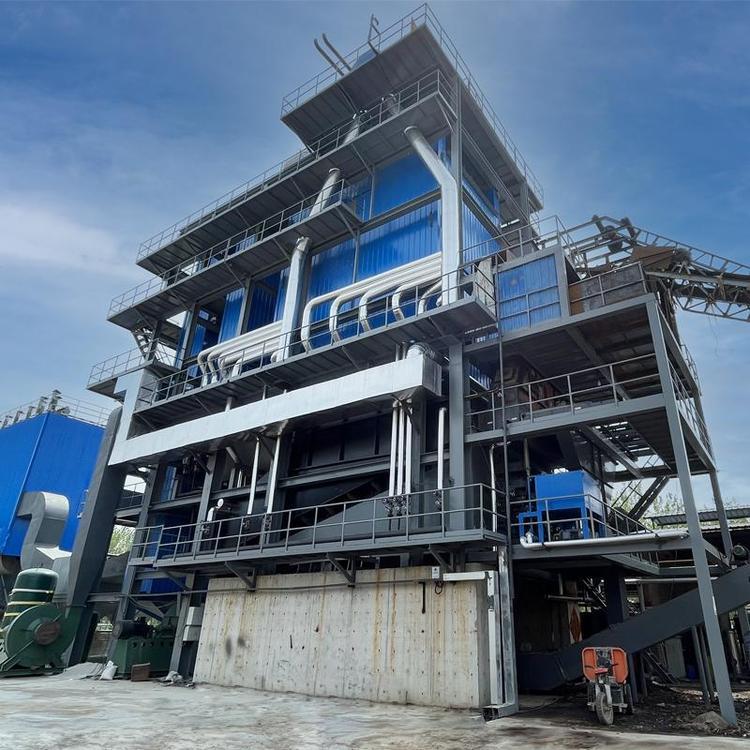

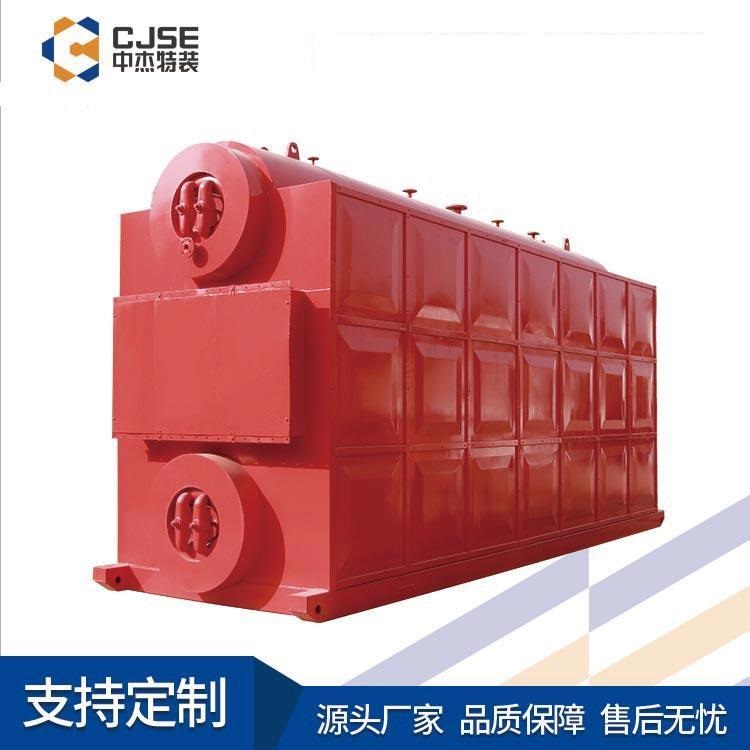
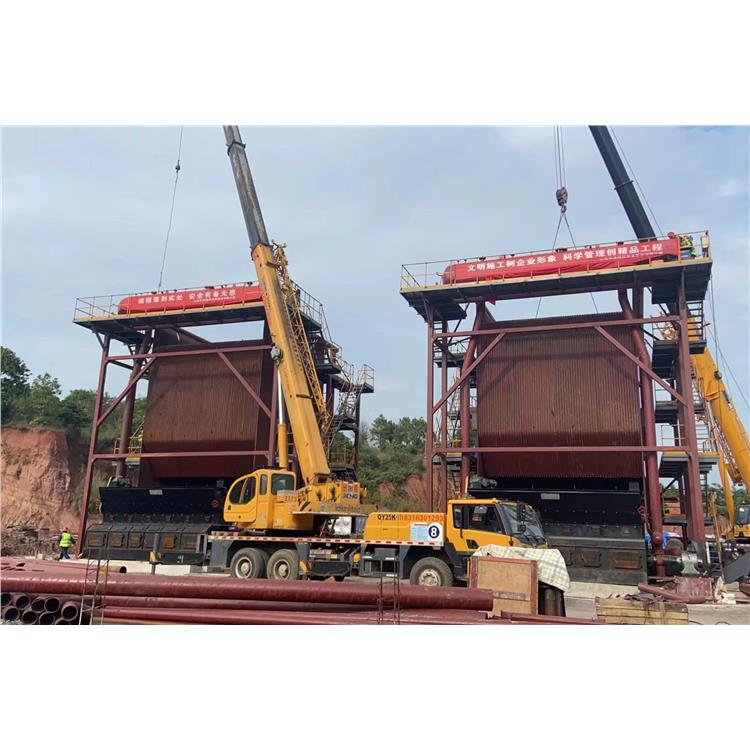


















Shandong Zhongjie Special Equipment (formerly Heze Boiler Factory Co., Ltd.) holds an A-grade boiler manufacturing license, an A2-grade pressure vessel manufacturing license, an A2-grade pressure vessel design license, a B-grade boiler installation license, and GB2/Class, GC2/Class pressure pipeline installation licenses, as well as a mechanical and electrical equipment installation contracting qualification. It is a member of the China Boiler and Water Treatment Association, the China Chemical Equipment Association, and the理事 unit of the Shandong Equipment Manufacturing Association. The company has also passed the ISO9001 Quality Management System, ISO14001 Environmental Management System, OHSAS18001 Occupational Health and Safety Management System certifications, and the American ASME/U2 certification.
Biofuel boilers may produce scale during operation, affecting their thermal efficiency and operational stability. Here are several methods to reduce scale in biofuel boilers:
Fuel Pretreatment: Pre-treat biomass fuel, such as drying and sieving. Reducing the moisture content and impurity levels of the fuel can minimize the formation of soot.
Combustion Control: Utilizes a combustion control system that monitors and adjusts parameters such as temperature and oxygen content in real-time during the combustion process. By adjusting combustion parameters rationally, incomplete combustion of fuel can be reduced, and the formation of soot can be minimized.
Clean Combustion Chamber: Regularly clean the soot inside the combustion chamber, including the chamber walls and internal accumulation. Regular cleaning prevents soot buildup and maintains the chamber's flow.
Regularly Clean Heat Exchangers: Heat exchangers in biomass boilers are prone to fouling, affecting heat transfer efficiency. Regular cleaning of heat exchangers removes dirt and dust, enhancing their heat transfer efficiency.
Water Treatment: The water quality of biomass boilers also affects scaling. Appropriate water treatment measures, such as water softening and deoxygenation, can reduce the formation of scale and deposits.
Regular Maintenance: Regular maintenance of biomass boilers includes cleaning, inspection, and replacement of parts. Promptly identifying and addressing issues can reduce the formation and accumulation of dirt.
By integrating these measures, effectively reducing the formation of scale in biomass boilers can be achieved, maintaining the operation and stability of the boiler.
Control methods for biomass boiler combustion systems can include the following aspects:
Fuel Supply Control: Regulate the supply quantity and speed of biomass fuel to ensure stable fuel supply. This can be achieved by adjusting the feeder's speed or on/off.
Air Supply Control: Regulate the air supply during the combustion process to ensure complete fuel combustion. This can be achieved by adjusting the fan speed or by switching it on/off.
Combustion Temperature Control: Monitors the temperature inside the combustion chamber and adjusts it according to the set values. The combustion temperature can be controlled by adjusting the air supply or fuel supply to the combustion chamber.
Combustion Process Monitoring: Monitor parameters during the combustion process, such as combustion temperature and pressure inside the combustion chamber, to real-time supervise the combustion status and adjust accordingly based on the monitoring results.
Oxygen Content Control: By monitoring the oxygen levels within the combustion chamber and adjusting according to set values, full combustion of the fuel is ensured. This can be achieved by installing an oxygen content sensor and adjusting the air supply.
Dust Removal System Control: Manages the operation of dust removal equipment, promptly burning off ash in the combustion chamber to ensure combustion efficiency and the normal operation of the system.
Above are some common control methods for biomass boiler combustion systems. Specific control strategies and methods may vary depending on different boiler models and system designs.
Biomass boilers offer several advantages:
Renewable Energy: Fuel for biomass boilers comes from organic matter such as plants, animals, and microorganisms, making it a renewable energy source. Compared to traditional fossil fuels, biomass fuel has lower carbon emissions and environmental impact, contributing to the reduction of greenhouse gas emissions and being more environmentally friendly.
Diverse Fuel Sources: Biomass fuel sources are widespread, including wood, straw, waste crops, food scraps, and urban solid waste. This diversity in fuel sources allows biomass boilers to be flexible and adaptable, utilizing waste and by-products from plants and animals.
Environmental Friendliness: The carbon dioxide produced during the combustion of biomass boilers can be absorbed by plants, forming a cycle and reducing air pollution. Additionally, the emissions and ash produced by biomass boilers are relatively low, causing less environmental impact.
Energy Security: Biomass, as a native renewable energy source, can reduce dependence on imported energy and enhance energy security. In regions with scarce resources, the use of biomass boilers can provide a reliable energy supply.
Economic Efficiency: Biomass fuel is relatively cost-effective, helping to reduce energy costs. Moreover, the technology and equipment for biomass boilers are continuously evolving and maturing, making them more economically competitive.
Waste Utilization: Biomass boilers can make use of agricultural residue like straw from crops and wood waste, effectively utilizing waste resources and reducing resource wastage.
In summary, biomass boilers offer advantages such as renewable energy, diverse fuel sources, environmental friendliness, energy security, cost-effectiveness, and waste utilization, making them a sustainable energy option.
Biomass boiler pellets are a common form of biomass fuel, also known as biomass pellets or wood pellets. They are small granular fuels made by processing biomass raw materials (such as wood chips, straw, wheat straw, fruit shells, etc.) through processes like crushing, drying, and pressing.
Biomass boiler pellet fuel features the following characteristics:
High Energy Density: Biomass pellet fuel boasts a high energy density, allowing for more energy to be stored in a relatively smaller volume, making it convenient for transportation and storage.
Easy to Burn: Biomass pellet fuel is uniformly shaped and sized, ensuring a stable combustion process, easy control of combustion parameters, and enhanced combustion efficiency.
Low humidity and low ash content: Biomass pellet fuel is dried and processed, resulting in low humidity and relatively low ash content. This reduces water evaporation and ash residue during combustion, improving combustion efficiency and reducing pollutant emissions.
Renewable and Eco-Friendly: Biomass pellets are a renewable energy source, capable of being recycled through the regeneration process. The carbon dioxide emitted during combustion can be absorbed by the biomass for regeneration, creating a cycle with minimal environmental impact.
Wide combustion adaptability: Biomass pellet fuel is suitable for biomass boilers and boasts strong combustion adaptability. Different types and specifications of pellet fuel can be chosen according to actual conditions to meet the needs of various boilers.
Biomass pellet fuel is widely used in biomass boilers, serving as a clean and renewable energy source that is crucial for reducing carbon emissions and protecting the environment.
Our company highly values technological innovation and research and development, boasting one municipal-level enterprise technology center in Heze City. We have established testing facilities for non-destructive testing, physical and chemical testing, welding testing, hydrostatic testing, and more, equipped with over 600 various instruments and equipment such as CNC machine tools, X-ray flaw detectors, digital ultrasonic flaw detectors, mechanical property testing machines, chemical analyzers, spectrometers, tensile testing machines, and plasma welding machines. The key products and technologies we have developed, including welding of temperature and pressure vessels, emissions reduction of biomass boilers, and waste heat utilization, have successively been selected for multiple Shandong Provincial Department of Industry and Information Technology scientific and technological innovation projects, key provincial projects, and Heze City innovative and excellent projects. We have cumulatively obtained 27 authorized utility models, 16 authorized inventions, participated in drafting 2 standards, 2 industry standards, and registered 15 trademarks. Our technical team, in collaboration with Professor Yajiang Li of Shandong University, has jointly developed deep cryogenic container processing technology, utilizing the international plasma arc + filler wire argon arc welding (PAW-GTAW) technology, which has been appraised as an international-level technology in the field of deep cryogenic container manufacturing at the provincial level. Choose Zhongjie Special Equipment, and let's create brilliance together!
WeChat Official Account

Scan to follow Official Account



















